
حوّل رؤى الذكاء الاصطناعي إلى أفعال منسّقة

الرائج الآن
Categories
Boeing Strengthens Supplier Oversight to Reduce Defects in Aircraft Production
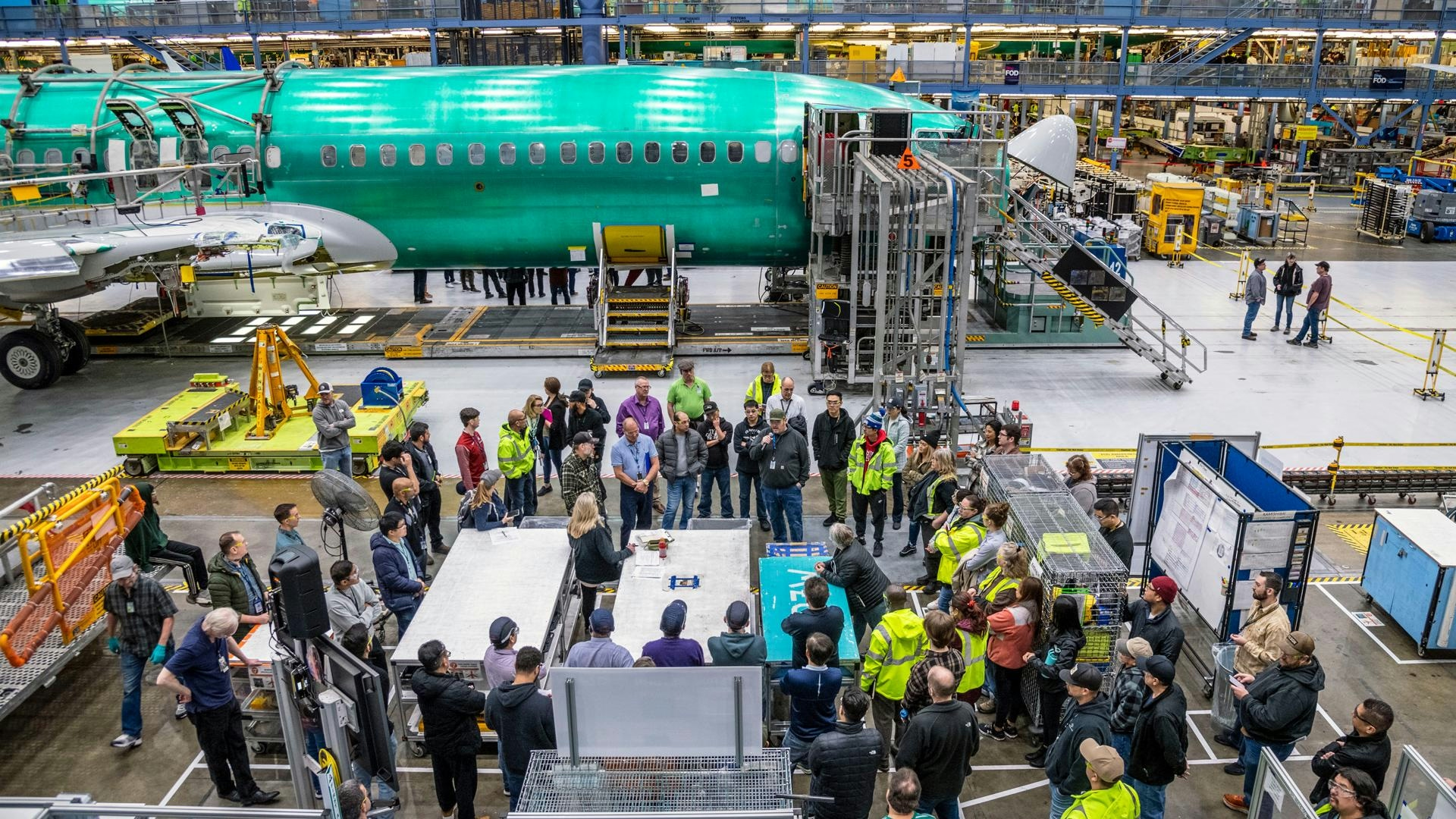
Boeing Strengthens Supplier Oversight to Reduce Defects in Aircraft Production
Enhanced Supplier Management Amid Supply Chain Challenges
Boeing has intensified its oversight of a vast global supplier network in an effort to reduce defects and streamline aircraft production. Company executives report that these measures are already yielding significant improvements as the aerospace giant works to stabilize its complex supply chain. India remains a pivotal market for Boeing, with over 325 suppliers contributing more than $1.25 billion annually in sourcing. The country operates more than 265 Boeing commercial and military aircraft, underscoring its strategic importance within Boeing’s global operations.
The aviation industry has faced persistent supply chain disruptions in recent years, largely due to the COVID-19 pandemic and ongoing geopolitical uncertainties. These challenges have resulted in delayed aircraft deliveries and shortages of critical components and materials, prompting Boeing to adopt a more rigorous approach to supplier management.
Impact of Increased Oversight and Data-Driven Risk Mitigation
Hector Silva, Vice President of Regulatory Compliance & Quality Core for Boeing Commercial Airplanes, revealed that since March 2024, the company has significantly ramped up its supplier oversight. This initiative has contributed to a reduction in defects by as much as 40 percent. Additionally, pending jobs on aircraft prior to delivery have decreased by 60 percent. Silva highlighted the proactive use of data analytics as a key tool in identifying and mitigating supply chain risks, enabling Boeing to address potential issues before they impact production.
Scott Stocker, Vice President and General Manager of the 787 Program and Boeing South Carolina Site Leader, emphasized the scale and complexity of Boeing’s supply chain organization, which employs several thousand personnel. He explained that the company continuously monitors factors that could affect suppliers and is prepared to allocate resources to support them when necessary. This includes conducting detailed production reviews focusing on supplier capacity, staffing, and the health of sub-tier supply chains. These efforts form part of Boeing’s “rate readiness” process, designed to support planned increases in monthly 787 production rates.
Addressing concerns that heightened oversight might impede production, Stocker stated that the opposite has occurred. The enhanced focus on the supply chain has actually facilitated Boeing’s ramp-up plans by improving operational clarity and responsiveness.
Strategic Supplier Partnerships and Future Outlook
Katie Ringgold, Vice President and General Manager of the 737 Program and Renton Site Leader, underscored India’s critical role in Boeing’s supply chain. She noted that a robust supply chain is essential for maintaining factory stability and that recent diversification of suppliers has positioned Boeing well for future growth. Key Indian partners include Tata Advanced Systems Ltd, which supplies floor beams for Dreamliners, and Mahindra Aerostructures Pvt Ltd, responsible for inlet outer barrel components.
Boeing’s intensified supplier oversight coincides with the company’s broader strategic initiatives, including a shift toward greater vertical integration following its acquisition of Spirit AeroSystems. Managing the seamless integration of new production lines and mitigating potential supply chain disruptions remain top priorities. The market has responded favorably to these developments, with Boeing’s stock rising following the completion of the Spirit AeroSystems deal. Meanwhile, competitors are reassessing their own supply chain strategies, and suppliers to both Boeing and Airbus anticipate increased production demands and potential price adjustments beginning in 2026.
As Boeing strives to stabilize production and achieve positive free cash flow by 2026, its supply chain management strategies continue to attract close attention from investors and industry analysts alike.

Etihad Airways Suspends Airbus A380 Flights on Key Route

Aditya Birla Group Seeks Approval for Aircraft Leasing in GIFT City

Qatar Airways Highlights Innovation and Connectivity at Arabian Travel Market 2026

Hong Kong's Five-Year Plan Includes Andrew Fan's Aircraft Parts Processing Hub Proposal

ACIA Aero Leasing Delivers ATR72-600 to Air Nostrum

RTX Appoints Jill Albertelli as Head of Pratt & Whitney

TAT Technologies Joins Beyond Aero Hydrogen Aircraft Program

AURAK Study Highlights Barriers to Air Taxi Adoption in Emerging Economies

Xiamen Air Selects Altitude for 787 Maintenance at Heathrow

Etihad and Swissport Extend Global Partnership
