صورة

حوّل رؤى الذكاء الاصطناعي إلى أفعال منسّقة

انضم إلى قائمة الانتظار لـ AeroGenie اليوم!

الرائج الآن

Categories

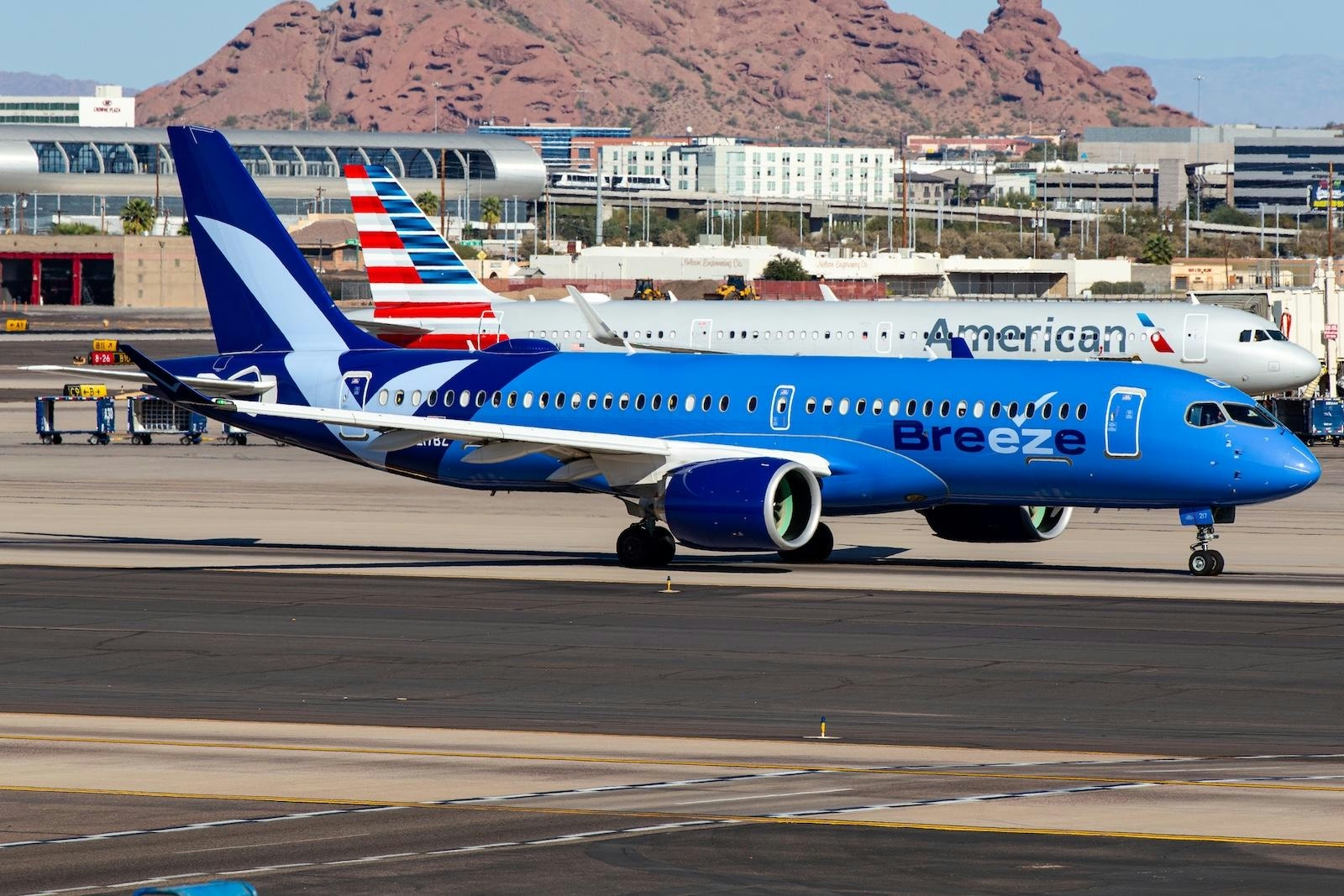
Breeze Secures Financing for A220 Aircraft
March 26, 2026By ePlane AI
Breeze Secures Financing for A220 Aircraft
0
0
Breeze Airways
Airbus A220
Aircraft Financing

Breeze Airways Secures Financing to Acquire Airbus A220 Aircraft

Breeze Airways has finalized a structured debt financing agreement with Novus Aviation Capital and PK AirFinance to facilitate the acquisition of three Airbus A220 aircraft. This transaction underscores the airline’s ongoing commitment to fleet modernization and network expansion. Under the terms of the agreement, PK AirFinance will provide senior debt financing, while Novus, through its Tamweel Aviation Finance platform—a junior debt fund specializing in Airbus aircraft—will supply mezzanine financing. This combined financial structure is designed to enable Breeze to take delivery of the three A220s in the fourth quarter of 2025.

Strategic Importance of the A220 in Breeze’s Growth

The Airbus A220, recognized for its operational efficiency and reduced environmental footprint, remains central to Breeze’s long-term growth strategy. Currently serving 86 cities across North America and the Caribbean, the airline continues to prioritize next-generation aircraft as it scales its operations. The financing arrangement not only reflects confidence in Breeze’s business model but also highlights the enduring asset value of the A220 within the aviation finance market.

Trent Porter, Chief Financial Officer of Breeze Airways, emphasized the critical role of strategic financing partnerships in supporting the airline’s expansion. He noted that backing from institutions such as PK AirFinance and Novus is instrumental in delivering Breeze’s vision of providing convenient, premium travel experiences across its growing route network.

Market Dynamics and Competitive Challenges

Breeze faces a competitive environment as other carriers, including Air Canada and lessor Azorra, express interest in the stretched A220-500 variant. This rising demand for the A220 family is likely to intensify competition for both aircraft and market share. Market reactions to Breeze’s aggressive expansion are mixed; while some investors remain optimistic about the airline’s distinctive route strategy, others voice caution regarding the rapid pace of growth. Competitor responses are also evolving, with reports indicating that JetBlue may consider a sale to rivals, potentially reshaping market dynamics. Meanwhile, African carriers are gaining access to more attractive financing options, which could divert some investment attention away from North American operators like Breeze.

From the lender’s perspective, the transaction signals sustained market confidence in both Breeze and the A220 platform. Eelco van de Stadt, President of PK AirFinance, highlighted that the deal underscores belief in Breeze’s operating model and the long-term value proposition of the A220. He further emphasized the importance of disciplined capital deployment and effective financial structuring in supporting airline growth amid a shifting competitive landscape.

As Breeze prepares to integrate the new aircraft into its fleet, the airline remains focused on leveraging strategic partnerships and advanced aircraft technology to strengthen its position in an increasingly dynamic market.

More news
Lynchburg Regional Airport Receives $5.2 Million Federal Grant for Infrastructure Expansion

Lynchburg Regional Airport Receives $5.2 Million Federal Grant for Infrastructure Expansion

Lynchburg Regional Airport Awarded $5.2 Million Federal Grant for Infrastructure Expansion Lynchburg Regional Airport in Virginia has secured a $5.2 million federal grant from the Federal Aviation Administration, funded through the Infrastructure Investment and Jobs Act, marking a significant step forward in its development plans. The funding will support the North Development Project, which includes the construction of roads, parking facilities, and other site improvements adjacent to a recently completed apron and taxiway. These enhancements are intended to facilitate the future construction of a hangar facility, thereby expanding the airport’s operational capacity and opening new avenues for growth. Preparing for Future Growth and Economic Impact Airport Director Cedric Simon highlighted that the grant represents an investment in the airport’s next phase of development, with particular emphasis on the potential establishment of a maintenance, repair, and overhaul (MRO) facility. Simon noted that such a facility could create a pipeline for local talent, allowing individuals to train at nearby Liberty University and subsequently build careers within the region. “It really is an investment in the community,” he stated, underscoring the broader economic benefits anticipated from the project. The expansion arrives at a critical juncture for local aviation businesses, which are currently constrained by limited space. Kyle Falwell, owner of Bon Air—a Lynchburg-based company specializing in medical transport and private charter flights—described the increasing demand for aviation services. Bon Air operates a fleet of 10 jets, with plans to add three more, intensifying the need for additional hangar space. Falwell emphasized the challenges of managing a diverse fleet in limited quarters, noting that “hangar space is a commodity” and that maximizing operating room is essential, especially when accommodating both jets and smaller piston aircraft. Addressing Capacity Constraints and Attracting Investment The federal grant is expected to alleviate some of these spatial limitations, although accommodating a wide range of aircraft types remains a complex task. By expanding its infrastructure, Lynchburg Regional Airport aims to attract private investment and enhance its aviation capabilities, positioning itself as a competitive hub within the region. The improvements are anticipated to generate positive market reactions by fostering new business opportunities and creating well-paying jobs in the aviation sector. Falwell views the infrastructure investment as a catalyst for broader economic development, observing that enhanced facilities enable surrounding businesses to grow. As airport officials collaborate with contractors to finalize construction timelines, regional competitors may respond by upgrading their own facilities or monitoring the economic impact of Lynchburg’s expansion. This federal grant firmly establishes Lynchburg Regional Airport as a key player in the regional aviation landscape, poised to capitalize on emerging opportunities.
Archer Aviation Projects $5 Million Revenue and $263.2 Million Net Loss for 2026

Archer Aviation Projects $5 Million Revenue and $263.2 Million Net Loss for 2026

Archer Aviation Forecasts $5 Million Revenue and $263.2 Million Net Loss for 2026 Archer Aviation Inc. has announced projections indicating a modest revenue of $5 million alongside a substantial net loss of $263.2 million for the year 2026. This forecast marks the company’s initial transition into revenue generation, even as its financial losses deepen due to aggressive investments in aircraft development and operational expansion. Compared to the previous year, Archer expects revenue to rise from zero, while the net loss attributable to common stockholders is anticipated to increase from $206 million. Despite the widening loss, diluted loss per share is projected to improve slightly, moving from ($0.36) to ($0.34). Financial Performance and Revenue Drivers The projected revenue growth is primarily attributed to new income streams from leases at Hawthorne Airport and fixed-base operator (FBO) services, which have contributed $6.6 million year-to-date, alongside increased utilization of hangar facilities. Archer continues to advance the certification process for its Midnight electric vertical takeoff and landing (eVTOL) aircraft, with plans to initiate international deliveries, particularly targeting the United Arab Emirates. The company aims to commence initial passenger operations within the forecast period. Strategic partnerships remain a cornerstone of Archer’s expansion strategy. The company has been selected to participate in the U.S. eVTOL Integration Pilot Program and is collaborating with airlines, infrastructure providers, and defense technology firm Anduril. These collaborations focus on exploring both commercial applications and defense uses for Archer’s Halo unmanned aerial system (UAS) platform. Operationally, Archer has increased spending on research and development as well as general and administrative expenses to accelerate aircraft development, scale manufacturing capabilities, and deploy its aviation artificial intelligence system, ZEE. Challenges and Competitive Landscape Despite these advancements, Archer anticipates an adjusted EBITDA loss ranging from $170 million to $200 million in the second quarter of 2026, reflecting the high cash burn associated with ongoing R&D and certification efforts. Investor sentiment remains mixed, with some expressing caution over the company’s financial trajectory and concerns about potential dilution from insider share sales. Conversely, others maintain optimism regarding Archer’s progress toward Federal Aviation Administration (FAA) certification and the planned launch of commercial operations. The competitive environment is intensifying as rivals such as Joby Aviation pursue similar timelines for FAA certification and commercial eVTOL service launches. Established aerospace companies like Boeing are also demonstrating improved financial performance and regulatory compliance, potentially increasing competitive pressures as the urban air mobility sector evolves. Archer’s capacity to balance its ambitious growth objectives with financial discipline will be critical as it strives to secure a leading position in the emerging market for urban air mobility.
DeSantis Announces Air Taxi Testing in Central Florida by Year-End

DeSantis Announces Air Taxi Testing in Central Florida by Year-End

DeSantis Announces Air Taxi Testing in Central Florida by Year-End Florida is set to commence testing of electric air taxis in Central Florida by the end of this year, Governor Ron DeSantis announced on Monday. The initiative represents a significant advancement in the state’s efforts to embrace emerging transportation technologies. Speaking at the SunTrax testing facility in Auburndale, DeSantis outlined the potential of electric vertical takeoff and landing aircraft (eVTOLs) to revolutionize regional travel by enabling passenger transport between major Florida cities without reliance on traditional airports or runways. Advancing Air Mobility in Florida “These aircraft don’t need a runway,” DeSantis explained. “They’re going to lift off, fly, land, and bring people to different places, then come back.” He emphasized the prospect of establishing air taxi services between Tampa and Orlando, providing an alternative to the heavily congested Interstate 4 corridor. DeSantis likened the concept to “an Uber taxi in the air,” highlighting the convenience and efficiency such services could offer. Beyond passenger transport, he also noted the potential applications of eVTOLs in cargo delivery and emergency response operations. Florida’s selection by the Federal Aviation Administration (FAA) to participate in an Advanced Air Mobility integration pilot program places the state at the forefront of efforts to integrate these technologies into everyday transportation networks. This initiative arrives amid a complex industry landscape, where sustained venture capital investment underscores confidence in the sector’s future, even as companies face challenges related to high capital demands and rapid cash burn. The market remains fragmented, with a limited number of key players competing for dominance, intensifying the focus on scaling production and strengthening supply chains as technological differentiation narrows. The state’s commitment to this emerging sector includes plans to develop infrastructure such as air taxi pads. Notably, $200 million initially allocated for electric vehicle charging stations has been redirected to support the construction of vertiports and related facilities. However, integrating these new infrastructures into existing urban environments may present regulatory and logistical challenges. Autonomous Vehicle Testing and Safety Emphasis In addition to air mobility, DeSantis highlighted Florida’s ongoing initiatives in autonomous vehicle testing. The SunTrax facility offers companies a controlled environment to trial self-driving vehicles under conditions that simulate real-world scenarios, including adverse weather, urban congestion, pedestrian crossings, and varied terrain. Referencing vehicles such as Waymo’s Jaguar and Tesla’s Cybercab technology, DeSantis underscored the paramount importance of safety in the deployment of autonomous systems. “Clearly these things could potentially be very beneficial, but safety is important,” he stated. “They’ve got to pass these safety tests. You don’t want to be in an autonomous vehicle and it drives you into a ditch.” By advancing both autonomous vehicle and advanced air mobility technologies, Florida aims to enhance transportation options while positioning itself as a national hub for testing and innovation. Testing of eVTOL aircraft in Central Florida is anticipated to begin before the close of 2026.
Boeing Maintains Access to Wisk’s Autonomous Flight Technology After Divestment

Boeing Maintains Access to Wisk’s Autonomous Flight Technology After Divestment

Boeing Maintains Access to Wisk’s Autonomous Flight Technology After Divestment Boeing’s recent decision to divest its autonomous air taxi subsidiary, Wisk Aero, has attracted significant attention, particularly because the buyer is Archer Aviation, a former competitor. Industry analysts had long anticipated that Wisk, which lies outside Boeing’s primary focus on large commercial aircraft, might eventually be sold. This transaction highlights Boeing’s strategic emphasis on Wisk’s autonomous flight technology rather than its air taxi business model. Details of the Transaction and Strategic Implications Under the terms of the agreement, Archer will acquire Wisk along with related autonomy assets SkyGrid and Insitu. Boeing will retain access to Wisk’s core technology through a cross-licensing arrangement and will take an approximate 20% equity stake in Archer. Valued at around $1 billion and expected to close by the end of the year, the deal enables Boeing to reduce financial risk, free up capital, and maintain a significant position in critical autonomous flight systems. Jefferies analysts described the arrangement as an “intellectual property cross-license agreement” that ensures Boeing’s continued access to Wisk’s autonomous flight technology. Brian Yutko, Boeing’s vice president of commercial airplanes product development, characterized the deal as a “win-win,” emphasizing that it allows Wisk, SkyGrid, and Insitu to accelerate their development efforts while enabling Boeing to benefit from its two decades of investment in these technologies. Industry Context and Future Prospects The transaction occurs amid increased scrutiny of the Federal Aviation Administration’s certification process for autonomous flight systems, raising concerns about potential operational disruptions and the long-term sustainability of such partnerships. Competitors are likely to respond by intensifying marketing efforts or enhancing their own technological offerings to secure similar contracts with airlines, thereby heightening competition in the sector. Market observers are closely monitoring how Boeing’s continued access to Wisk’s technology will translate into operational advantages and cost efficiencies over time. This deal also marks a significant shift in the relationship between Archer and Wisk, who previously engaged in a protracted legal dispute over trade secrets and engineer retention. That conflict was resolved in 2023, with both companies committing to collaborate on potential autonomous variants of Archer’s Midnight air taxi. At the recent Farnborough International Airshow, Yutko—formerly Wisk’s CEO—rejected the characterization of Wisk as merely a technology incubator for Boeing. He stressed that genuine market engagement is essential for technological breakthroughs to achieve real-world impact. Wisk has made substantial progress in developing its Gen 6 electric vertical take-off and landing (eVTOL) aircraft, with ongoing flight tests of two prototypes advancing beyond what many industry observers had anticipated. The future of the Gen 6 aircraft under Archer’s ownership remains uncertain. In April, Yutko outlined Boeing’s vision for leveraging Wisk’s four-passenger eVTOL technology to drive next-generation aviation capabilities. As the industry assesses the implications of this deal, attention will focus on how Boeing and its partners navigate regulatory challenges and competitive pressures while striving to deliver tangible value from autonomous flight innovations.
JetBlue Flight Attendants Call in Sick Amid New Software Glitch

JetBlue Flight Attendants Call in Sick Amid New Software Glitch

JetBlue Flight Attendants Call in Sick Amid Software Glitch Disruptions JetBlue Airways is grappling with renewed operational challenges following a software malfunction that disrupted its crew scheduling system on August 9, 2026. The technical failure, which lasted from late morning until mid-evening, prevented flight attendants and pilots from picking up or swapping trips, exacerbating an already strained staffing situation. This latest glitch has contributed to a surge in flight attendants calling in sick, further complicating the airline’s efforts to maintain its flight schedule. Compounding Operational Difficulties The scheduling system outage came amid a series of difficulties for JetBlue, including severe weather conditions and Air Traffic Control (ATC) delays. These factors combined to make JetBlue the U.S. airline with the highest number of cancellations last week. Data from FlightAware indicates that on August 9 alone, the airline experienced 504 delays and 78 cancellations. These disruptions have intensified the pressure on JetBlue’s operational capacity and customer service. JetBlue’s scheduling problems have persisted for over a month, prompting the airline to offer financial incentives to retain staff. Flight attendants were recently offered bonuses of $5,000 for flying at least 150 hours in August. Despite these efforts, ongoing technical failures continue to undermine the airline’s ability to stabilize operations and maintain reliability. Industry and Employee Reactions The airline’s difficulties have attracted growing scrutiny from passengers and industry observers alike. Online complaints have highlighted not only the frequency of cancellations but also the lack of JetBlue personnel available to assist stranded travelers, raising concerns about the company’s customer service standards. The airline’s reputation faces significant risk, with potential financial consequences if disruptions persist. Competitors such as WestJet and Air Canada are reportedly preparing to capitalize on JetBlue’s troubles. Industry analysts anticipate that rival carriers will intensify marketing efforts, emphasizing their own operational reliability to attract dissatisfied JetBlue customers. JetBlue’s internal challenges have also drawn criticism from employee representatives. Captain Wayne Scales, chairman of the JetBlue Master Executive Council and a member of the Air Line Pilots Association (ALPA), identified the scheduling system outages as a key factor behind recent operational failures. In a recent ALPA press release, Scales stated, “Crews were unable to be positioned where they were needed most due to ongoing outages in the company’s scheduling system.” He further noted that pilots and crew members faced prolonged hold times and, in some cases, were left stranded at airports without overnight accommodations. Scales called on JetBlue management to provide reliable scheduling software, adequate hotel accommodations for crew rest, and sufficient resources to staff flights and meet customer expectations. He criticized the airline’s leadership for repeatedly failing to stabilize operations, saying, “JetBlue management claims that they are working to stabilize the airline and build consumer trust only to have these systems collapse week after week.” As JetBlue endeavors to address its software and staffing challenges, the airline faces mounting pressure to restore operational stability and regain customer confidence. Efforts to reach JetBlue for comment were unsuccessful prior to publication.
Boeing to Sell Three eVTOL Subsidiaries to Archer Aviation

Boeing to Sell Three eVTOL Subsidiaries to Archer Aviation

Boeing to Divest Three eVTOL Subsidiaries to Archer Aviation Boeing has announced its intention to sell three subsidiaries specializing in electric vertical takeoff and landing (eVTOL) technology to Archer Aviation, signaling a strategic realignment for both companies within the burgeoning urban air mobility sector. The transaction, anticipated to conclude by the end of 2026 subject to regulatory approval, will transfer ownership of Wisk Aero, SkyGrid, and Insitu from Boeing to Archer. Strategic Implications and Transaction Details As part of the agreement, Boeing will acquire an equity stake of nearly 20 percent in Archer Aviation, along with warrants and a seat on Archer’s board of directors. Financial terms of the deal have not been publicly disclosed. The acquisition provides Archer with access to a portfolio of advanced technologies and businesses: Wisk Aero, which focuses on autonomous electric aircraft development; SkyGrid, a provider of air traffic management software tailored for urban air taxi operations; and Insitu, a manufacturer of high-altitude drones utilized by the U.S. Navy. This consolidation is expected to broaden Archer’s revenue base and expedite its efforts to commercialize electric air taxi services. Archer has previously outlined plans to initiate pilot air taxi operations in key U.S. markets, including New York, Texas, and Florida, by the end of the year. Additionally, the company is expanding its footprint in the defense sector, recently unveiling a new eVTOL aircraft developed in collaboration with Anduril, a defense technology firm founded by Palmer Luckey. For Boeing, the divestiture allows a sharpened focus on its core commercial and defense manufacturing operations. Despite the sale, Boeing will maintain access to Wisk’s autonomous flight systems through cross-licensing and technology exchange agreements, ensuring continued integration of these technologies into its current and future projects. Brian Utko, Boeing’s vice president of commercial aircraft product development, characterized the deal as “mutually beneficial,” highlighting the potential for both companies to strengthen their positions in the rapidly evolving eVTOL and urban air mobility markets. Industry Context and Outlook Analysts suggest that this partnership could enhance Archer’s competitive position in the race to launch commercial electric air taxi services, while enabling Boeing to retain exposure to next-generation aviation technologies without direct operational involvement. Boeing currently holds an order backlog valued at $715 billion, with over 6,200 aircraft pending production. The company continues to face heightened regulatory scrutiny following several high-profile safety incidents, including a 2024 event in which a section of a Boeing 737 Max fuselage detached during flight. This transaction reflects the dynamic shifts occurring within the aerospace industry, as established manufacturers and emerging startups compete to lead the future of urban air transportation.
Dominican AI Aviation Technology Named Among Latin America’s Most Disruptive

Dominican AI Aviation Technology Named Among Latin America’s Most Disruptive

Dominican AI Aviation Technology Recognized Among Latin America’s Most Disruptive Innovations Santo Domingo—The Dominican Republic has earned a distinguished position among Latin America’s top five most disruptive technological innovations at the Women in Tech® LATAM Awards 2026. Olga Isabel Pérez Encarnación, an experienced air traffic controller at the Dominican Institute of Civil Aviation (IDAC), was named a Top Five Finalist in the Most Disruptive Award category for her pioneering leadership in the development of SARA (System AI Real-time for Aviation). SARA: Transforming Aviation Through Artificial Intelligence SARA is an artificial intelligence assistant specifically designed for the aviation industry, offering air traffic controllers, pilots, flight dispatchers, and other professionals rapid, reliable, and traceable access to critical information. The system pays homage to Sara Castaños, the Dominican Republic’s first female air traffic controller. Developed in partnership with Nolim Studios, a US-based software and AI firm staffed by Dominican talent, SARA is currently undergoing evaluation by aviation experts and students across six countries. Furthermore, it serves as the foundation for an international scientific research proposal exploring AI applications in aviation. The project’s innovative nature has already attracted international acclaim. In 2025, SARA secured first place in the initial phase of the ENAIRE Open Innovation International Business Ideas Competition, organized by Spain’s national air navigation authority, triumphing over more than 70 global submissions. Leadership and Advocacy in Aviation and STEM Olga Isabel Pérez Encarnación’s career reflects a deep commitment to innovation and education within the aviation sector. She is the creator and producer of "Quiero Ser Piloto," the Dominican Republic’s first aviation competition and the world’s first educational aviation reality show, which has awarded scholarships and training opportunities to hundreds of young participants. In 2025, she was recognized as Runner-up at the Air Traffic Management Awards by CANSO during Airspace World in Lisbon, Portugal. Beyond her technical contributions, Pérez Encarnación has championed the first female fly-in event in the Dominican Republic and actively leads initiatives promoting STEM education. She also contributes as a specialized journalist for El Nuevo Diario. Challenges and Prospects for AI in Aviation The recognition of SARA as one of Latin America’s most disruptive technologies arrives at a critical juncture for the AI aviation sector, which is projected to reach a market value of USD 20.63 million by 2034. This accolade, however, introduces new challenges. SARA will face stiff competition from established industry players, accompanied by increased scrutiny regarding transparency and operational efficacy. Market dynamics may accelerate innovation, stimulate investment, and foster collaborations as competitors strive to maintain or expand their market presence. The future success of SARA will depend on its capacity to deliver measurable improvements in aviation operations while navigating the complex regulatory and competitive environment. Women in Tech® LATAM Awards: Promoting Female Leadership in STEM The Women in Tech® LATAM Awards, part of a global initiative founded by Ayumi Moore Aoki, seek to address the gender gap in technology and promote female leadership in STEM fields. The 2026 awards ceremony is scheduled for August 27 in Cartagena de Indias, Colombia, where regional winners will be announced and will subsequently represent Latin America at the Women in Tech® Global Awards.
Gulfstream Partners with Suppliers to Test Sustainable Aviation Fuel

Gulfstream Partners with Suppliers to Test Sustainable Aviation Fuel

Gulfstream Advances Sustainable Aviation Fuel Testing Through Supplier Partnerships The aviation industry, responsible for approximately 2.5% of global energy-related carbon dioxide emissions according to the Aviation Environment Foundation, is intensifying efforts to mitigate its environmental impact. Business aviation manufacturers, in particular, are focusing on innovative fuel types and aircraft design to reduce carbon emissions and promote sustainability. Gulfstream Aerospace has emerged as a leader in this transition, having completed a series of testing programs and forged strategic partnerships aimed at developing lower-emission operations. Central to these efforts is the collaboration with suppliers to test sustainable aviation fuel (SAF), which offers the potential to reduce net CO2 lifecycle emissions by up to 80% compared to conventional jet fuel. This significant reduction positions SAF as a promising alternative in the pursuit of greener aviation. Despite its environmental advantages, the widespread adoption of SAF faces considerable challenges, primarily due to its higher cost relative to traditional jet fuel. This price disparity continues to hinder broader market penetration, even as demand for sustainable alternatives grows. The aviation fuel market remains dominated by conventional jet fuel in terms of volume, but SAF is gradually increasing its share as the industry undergoes a structural shift toward greener solutions. Other key players in the sector are responding to these developments with similar initiatives. Aircraft manufacturers and engine producers, including Rolls-Royce, are advancing their own environmental performance programs, adopting comparable testing and certification processes to facilitate the integration of sustainable fuels and technologies. This collective movement reflects a shared recognition of the importance of innovation and collaboration in addressing the sector’s environmental challenges. Gulfstream’s ongoing SAF testing and supplier partnerships exemplify the broader industry commitment to reducing aviation’s carbon footprint. These efforts highlight the critical role of cooperative innovation in driving meaningful progress toward sustainable aviation.
GE and RTX Compete to Supply Engines for Boeing and Airbus

GE and RTX Compete to Supply Engines for Boeing and Airbus

GE and RTX Compete to Supply Engines for Boeing and Airbus Airbus has delivered 418 aircraft through July, including 67 in the month alone, yet faces the formidable task of averaging approximately 90 deliveries per month for the remainder of 2026 to meet its annual target of around 870 aircraft. Meanwhile, Boeing is working through a substantial commercial backlog as it accelerates production. This intense manufacturing pace has shifted industry focus to the engine suppliers—primarily GE Aerospace and RTX’s Pratt & Whitney—who now find themselves at the heart of aviation’s most pressing challenges. GE’s Expansion Amid Supply Chain Constraints GE Aerospace entered the second half of 2026 with a backlog exceeding $210 billion, encompassing commercial engines, services, and related businesses. In the first half of the year, GE reported a 31% increase in total engine deliveries, with its LEAP engines—produced through the CFM International joint venture with Safran and powering Boeing’s 737 MAX and Airbus’ A320neo family—experiencing a 41% rise in deliveries. The company also recorded a double-digit increase in materials received from priority suppliers during the second quarter, signaling progress in addressing one of the industry’s most significant obstacles: securing sufficient components to increase output. Despite these advances, the broader aviation sector continues to face severe supply chain challenges, particularly in the aftermarket. High fleet utilization rates, ongoing original equipment manufacturer (OEM) delivery delays, and maintenance bottlenecks have intensified pressure on suppliers like GE to meet growing demand. Nevertheless, GE recently secured a major contract with Copa Airlines for up to 120 LEAP-1B engines, further strengthening its already substantial order book. RTX Confronts Demand and Maintenance Pressures RTX’s Pratt & Whitney is also experiencing robust demand, especially for its geared turbofan (GTF) engine, which powers the Airbus A320neo family. Recent orders include up to 220 GTF engines from BOC Aviation, alongside a selection from aircraft lessor Jackson Square Aviation. However, the company’s experience also highlights ongoing industry difficulties. Persistent issues with the GTF engine have led to temporary groundings of aircraft for inspections and repairs, exacerbating supply chain pressures and contributing to maintenance backlogs. RTX’s second-quarter financial results reflect this complex dynamic. While commercial original-equipment sales declined by 8%, aftermarket sales—revenue generated from maintaining and repairing engines already in service—increased by 25%. This trend underscores a critical development in the sector: as airlines extend the operational life of older fleets due to delivery delays, demand for maintenance and spare parts surges, benefiting suppliers across both new equipment and aftermarket services. Intensifying Competition Amid Backlogs and Bottlenecks The rivalry between GE and RTX is further intensified by the global order backlog and the focus on CFM56-powered narrowbody aircraft, heightening the competition to secure contracts with Boeing and Airbus. Market scrutiny of production timelines and delivery schedules is increasing, placing pressure on both companies to invest in supply chain enhancements and strategic partnerships to sustain their market positions. As Boeing and Airbus endeavor to convert their massive backlogs into deliveries, the true bottleneck—and opportunity—resides with the engine manufacturers. Each additional aircraft requires not only engines but also years of aftermarket support. In this environment, the ultimate winners may extend beyond the airframe producers. GE and RTX are engaged in a race not only to deliver engines but also to ensure the aftermarket infrastructure is prepared to support the global airline industry for years to come.
Malaysia Secures $192 Million Boost for Aerospace Sector at Farnborough Airshow

Malaysia Secures $192 Million Boost for Aerospace Sector at Farnborough Airshow

Malaysia Secures $192 Million Boost for Aerospace Sector at Farnborough Airshow Malaysia is accelerating its efforts to establish itself as a premier aerospace hub in Southeast Asia, having secured a $192 million investment boost at the 2026 Farnborough International Airshow. This development forms a key part of the country’s comprehensive strategy to expand its aerospace manufacturing, maintenance, repair, and overhaul (MRO) capabilities, as well as its export footprint by 2030. Dato’ Abu Bakar Yusof, CEO of the Malaysia External Trade Development Corporation (MATRADE), emphasized the government’s ambitious vision, which is anchored by the Malaysia Aerospace Industry Blueprint 2030 (MAIB 2030). This blueprint aims to position Malaysia as a significant player within the global aerospace supply chain. Ambitious Growth Targets and Industry Expansion In 2025, Malaysia’s aerospace sector generated RM32.5 billion ($7.9 billion) in revenue, with exports contributing RM7.95 billion ($1.93 billion), representing nearly a quarter of the total industry output. The MAIB 2030 sets a target to elevate annual revenue to RM55.2 billion ($13.4 billion) by the end of the decade. This growth is expected to be driven by several key segments. The MRO sector aims to achieve RM20.4 billion ($4.96 billion) in revenue, capturing 5% of the global MRO market and up to half of Southeast Asia’s MRO activities by 2030. Aerospace manufacturing is projected to reach RM21.2 billion ($5.15 billion), while engineering and design services are forecasted to generate RM13.6 billion ($3.31 billion). The sector is also expected to create more than 32,000 high-income jobs, reflecting its role as a catalyst for skilled employment. Investment inflows have been robust, with approximately RM1.5 billion ($365 million) in approved investments recorded in 2024 alone. The focus is increasingly on advanced aerostructures, engine components, and digitally enabled MRO services. Key aerospace clusters in Selangor, Johor, and Penang are central to these developments, serving as hubs for innovation and production. Global Integration and Competitive Landscape The Farnborough Airshow serves as a vital platform for Malaysia’s aerospace ambitions, providing more than just international exposure. The Malaysia Pavilion in 2026 featured 15 exhibitors representing sectors such as aerostructures, precision machining, electronics, MRO, and aviation services. MATRADE utilized the event to facilitate business matching, supply chain discussions, and direct engagement with global aerospace leaders. Dato’ Abu Bakar highlighted the importance of connecting domestic companies with international players through a series of business meetings, seminars, and pitching sessions. He described the Farnborough International Airshow as a crucial venue for fostering collaboration between Malaysian exhibitors and major global aerospace and MRO companies. Despite these advances, Malaysia faces significant challenges in sustaining its competitiveness against well-established aerospace hubs in the United States and Europe. While the $192 million investment has bolstered investor confidence and enhanced Malaysia’s international profile, it may also prompt competitors to intensify their own export strategies and market presence. The government’s commitment to supporting the sector is further demonstrated through initiatives such as MATRADE’s partnership with DHL to provide export training tailored for micro, small, and medium enterprises (MSMEs). However, the effective implementation and adequate resourcing of such programs remain critical challenges as Malaysia strives to consolidate its position within the global aerospace industry.
line









