
حوّل رؤى الذكاء الاصطناعي إلى أفعال منسّقة

الرائج الآن
Categories
Challenges Facing African Airlines Amid Expansion Efforts
Challenges Facing African Airlines Amid Expansion Efforts
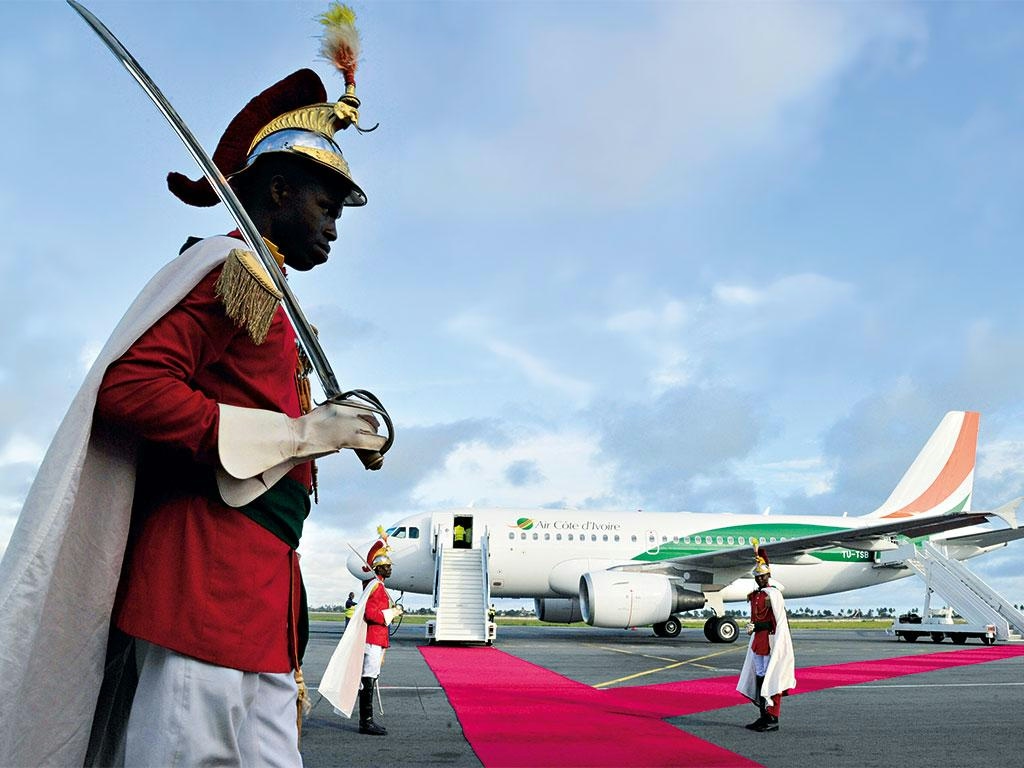
African airlines find themselves trapped in a challenging cycle: the necessity to modernize fleets and expand cross-border operations to achieve economies of scale contrasts sharply with their limited financial resources and constrained market reach. The continent’s aviation history is punctuated by the rise and fall of ambitious carriers—such as the iconic Air Afrique and numerous national and private operators—whose failures highlight enduring structural difficulties within the industry.
Structural and Financial Barriers to Growth
At the heart of the issue lies a paradox. Competing effectively in the global aviation market requires operating modern, fuel-efficient aircraft at scale. In established markets like North America, Europe, and Southeast Asia, profitability depends on high fleet utilization, dense route networks, and the ability to distribute fixed costs—including maintenance, crew training, and spare parts—across a large operation. African airlines, however, typically operate small fleets of three to six aircraft on fragmented routes. This limited scale inflates their Cost per Available Seat Kilometre (CASK), rendering them highly susceptible to operational disruptions. For instance, grounding a single aircraft for technical reasons can eliminate up to a third of an airline’s schedule, leaving passengers stranded and forcing costly emergency leasing arrangements.
Industry experts recommend a minimum fleet size of 15 to 20 standardized aircraft to build operational resilience. Yet, acquiring such fleets remains a formidable challenge. African carriers face significant financing obstacles as international lessors and financiers remain cautious due to sovereign risk, currency volatility, and legal uncertainties—particularly concerning aircraft repossession. Despite the protections offered by the Cape Town Convention, bureaucratic delays in deregistration and recovery processes have undermined lessor confidence. Consequently, African airlines often must pay three to six months of lease rentals upfront, tying up vital working capital. Moreover, they incur monthly dry-lease rates that are 25% to 45% higher than those paid by European or Asian counterparts for identical aircraft models.
Operational Challenges and Competitive Pressures
These financial constraints are exacerbated by rising operational costs, geopolitical uncertainties, and potential delays in aircraft deliveries. Reliable access to materials and spare parts is essential, yet supply chain disruptions further increase costs and reduce operational efficiency. Meanwhile, the competitive environment is intensifying. Africa is emerging as one of the fastest-growing air travel markets globally, with carriers like Ethiopian Airlines aggressively expanding their fleets and setting benchmarks that may compel other regional operators to follow. However, the concentration of capacity among a few large carriers underscores the uneven competitive landscape and the mounting pressures faced by smaller airlines.
In this complex and demanding environment, African airlines must navigate a web of financial, operational, and regulatory challenges merely to survive, let alone prosper. Without substantial investment in fleet modernization and regional integration, the persistent cycle of underperformance and collapse is likely to continue, even as demand for air travel across the continent grows.

Etihad Airways Suspends Airbus A380 Flights on Key Route

Aditya Birla Group Seeks Approval for Aircraft Leasing in GIFT City

Qatar Airways Highlights Innovation and Connectivity at Arabian Travel Market 2026

Hong Kong's Five-Year Plan Includes Andrew Fan's Aircraft Parts Processing Hub Proposal

ACIA Aero Leasing Delivers ATR72-600 to Air Nostrum

RTX Appoints Jill Albertelli as Head of Pratt & Whitney

TAT Technologies Joins Beyond Aero Hydrogen Aircraft Program

AURAK Study Highlights Barriers to Air Taxi Adoption in Emerging Economies

Xiamen Air Selects Altitude for 787 Maintenance at Heathrow

Etihad and Swissport Extend Global Partnership
