
حوّل رؤى الذكاء الاصطناعي إلى أفعال منسّقة

الرائج الآن
Categories
China Airlines launches cargo AI customer service bot
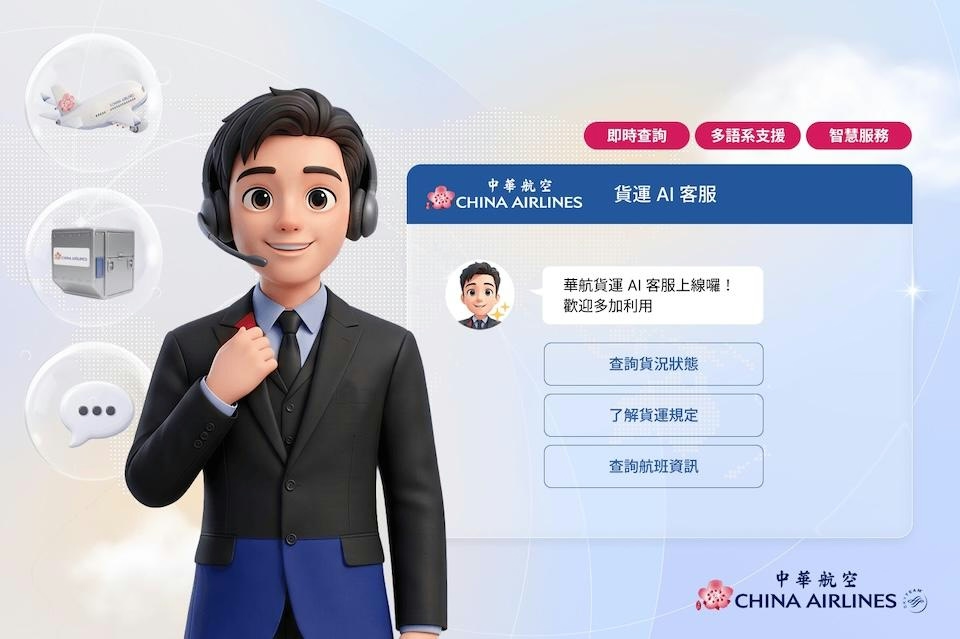
China Airlines Introduces AI-Powered Customer Service Bot for Cargo Operations
China Airlines has launched an artificial intelligence-driven customer service assistant tailored for its cargo division, aiming to enhance response times and improve operational efficiency. The Taiwan-based carrier revealed that its new Cargo AI Customer Service bot utilizes advanced “Agentic AI technology” and is seamlessly integrated with the airline’s air cargo scheduling system. This integration enables the bot to provide three core services: flight information, shipment tracking, and updates on cargo regulations.
Enhancing Customer Support with Advanced AI
Designed to address complex inquiries from cargo owners and shipping agents, the AI assistant offers round-the-clock multilingual support. Customers can obtain real-time updates on flight statuses and schedules, track the current location and condition of their shipments, and access the latest cargo regulations compiled from official sources. The system’s capacity to comprehend and respond to spoken queries in multiple languages is intended to facilitate smoother communication for an international customer base.
To ensure consistent performance and sustainability, China Airlines has deployed a cloud-based smart load-balancing platform. This infrastructure not only maintains stable service during peak demand but also reduces energy consumption during off-peak periods, aligning with the airline’s commitment to carbon reduction.
Challenges and Industry Context
Despite the potential benefits, the implementation of AI in customer service presents notable challenges. Ensuring the accuracy and dependability of automated responses remains a critical issue, especially in complex or high-stakes situations. The airline must also uphold transparency regarding data collection and pricing, while proactively managing potential AI system failures—concerns that have previously affected other carriers such as Air Canada. Industry analysts observe that although AI can improve efficiency, skepticism persists about its ability to fully replace human expertise in nuanced customer interactions. Competitors are expected to respond either by adopting similar AI technologies or by enhancing their own customer service capabilities to remain competitive.
China Airlines has indicated plans to expand the AI system’s functionalities, incorporating additional features frequently used by shipping agents to create a more comprehensive “one-stop smart cargo experience.”
Strategic Investments in Fleet and Technology
This digital innovation initiative coincides with China Airlines’ ongoing efforts to modernize its fleet. Late last year, the airline increased its order for Boeing 777-8F freighters by four units, bringing the total to eight, and also acquired four Boeing 777Fs. Concurrently, the carrier announced the sale of four older Boeing 747-400 freighters, with two being purchased by Cargolux. These strategic moves underscore China Airlines’ broader objective to upgrade its cargo operations through the deployment of advanced aircraft and technology-driven services.

Bangladesh Launches Initiative to Become Regional Aviation Hub
Russia Transports PD-8 Engine to India for International Certification

Kyrgyzstan to Adopt EMPIC GmbH Software for Flight Safety Oversight

Why Hawaiian Airlines Is Waiting Until 2028 To Add A Premium Economy Cabin To Its Airbus A330 Fleet

Engine Fault Causes Royal Navy Helicopter Crash Fatality

Joby Aviation Begins Texas Air Taxi Test Flights Amid Stock Decline

Iberia Receives Full Approval for Airbus A350 Heavy Maintenance

NetJets to Construct Terminal and Hangar at Dallas Love Field

Using AI in Aircraft Purchases

CIAM Unveils RPD-150T Engine to Replace Rotax 150 hp Model
