
حوّل رؤى الذكاء الاصطناعي إلى أفعال منسّقة

الرائج الآن
Categories
China Unveils E20 Hybrid Electric Air Taxi with Rapid Charging
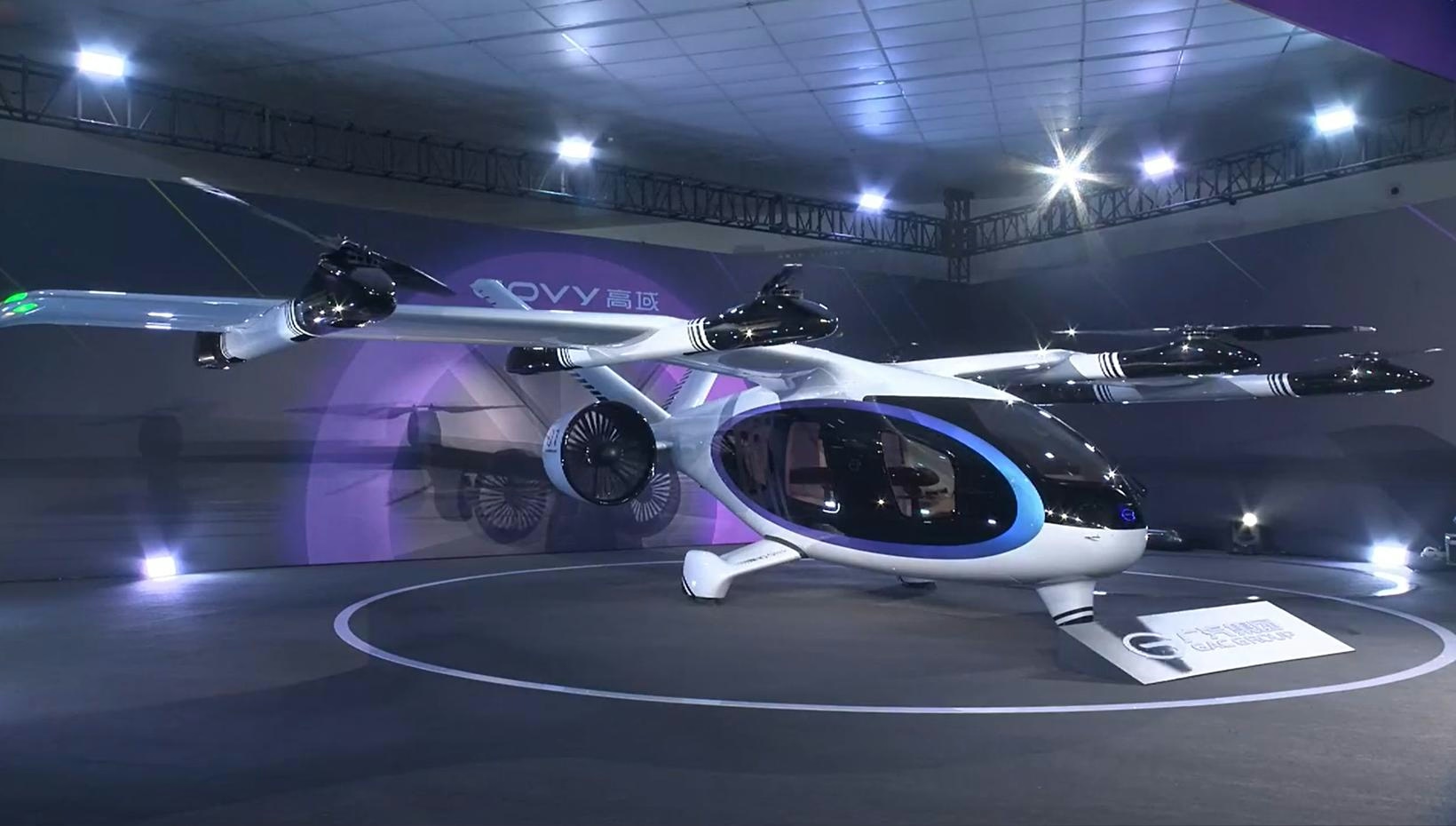
China Unveils E20 Hybrid Electric Air Taxi with Rapid Charging
A Milestone in Urban Air Mobility
Shanghai-based TCab Tech has achieved a significant breakthrough with the successful completion of the "transition flight" for its full-scale E20 hybrid electric air taxi demonstrator. This milestone represents a critical advancement in urban air mobility, demonstrating the aircraft’s ability to shift seamlessly from vertical take-off and landing (VTOL) mode to conventional airplane flight. The transition flight, a complex maneuver where the vehicle moves from hovering like a drone to flying efficiently using its wings, marks a pivotal moment in the development of electric vertical take-off and landing (eVTOL) technology. TCab Tech’s accomplishment underscores the engineering prowess behind the E20, which also boasts rapid charging capabilities designed to enhance operational efficiency.
Challenges on the Path to Commercialization
Despite this technical success, the journey toward commercial deployment of the E20 remains fraught with challenges. Regulatory frameworks for eVTOL aircraft are still in their infancy, requiring authorities to establish comprehensive safety standards and airspace management protocols. The development of supporting infrastructure is equally critical; rapid charging stations and mobile landing platforms, such as those proposed by companies like AutoFlight, will be essential to facilitate widespread adoption and operational viability.
The competitive landscape further complicates the E20’s prospects. TCab Tech faces formidable rivals, including established players like Joby Aviation in the United States and innovators in the electric vehicle sector such as Tesla. These competitors are not only advancing their own air mobility technologies but are also forging strategic partnerships with technology firms to develop integrated services, intensifying the race to bring urban air taxis to market.
Market Reception and Future Outlook
Reactions to the E20’s debut have been mixed. While some investors are optimistic about the potential for rapid, environmentally friendly urban transportation and the innovation embodied by hybrid electric flight, others remain cautious. Concerns persist regarding passenger safety, regulatory uncertainties, and the environmental implications of scaling up eVTOL fleets.
The successful transition flight of the E20 is a noteworthy achievement, yet it represents only the initial step in a complex process. The future of urban air taxis in China and globally will depend on overcoming regulatory obstacles, establishing robust infrastructure, and maintaining a competitive edge amid intense international rivalry. Beyond rapid charging technology, the E20’s continued progress will require coordinated efforts across technological innovation, policy development, and market acceptance to realize its full potential.

Etihad Airways Suspends Airbus A380 Flights on Key Route

Aditya Birla Group Seeks Approval for Aircraft Leasing in GIFT City

Qatar Airways Highlights Innovation and Connectivity at Arabian Travel Market 2026

Hong Kong's Five-Year Plan Includes Andrew Fan's Aircraft Parts Processing Hub Proposal

ACIA Aero Leasing Delivers ATR72-600 to Air Nostrum

RTX Appoints Jill Albertelli as Head of Pratt & Whitney

TAT Technologies Joins Beyond Aero Hydrogen Aircraft Program

AURAK Study Highlights Barriers to Air Taxi Adoption in Emerging Economies

Xiamen Air Selects Altitude for 787 Maintenance at Heathrow

Etihad and Swissport Extend Global Partnership
