
حوّل رؤى الذكاء الاصطناعي إلى أفعال منسّقة

الرائج الآن
Categories
Corsair Completes First In-House C Check on Airbus A330neo at Paris-Orly
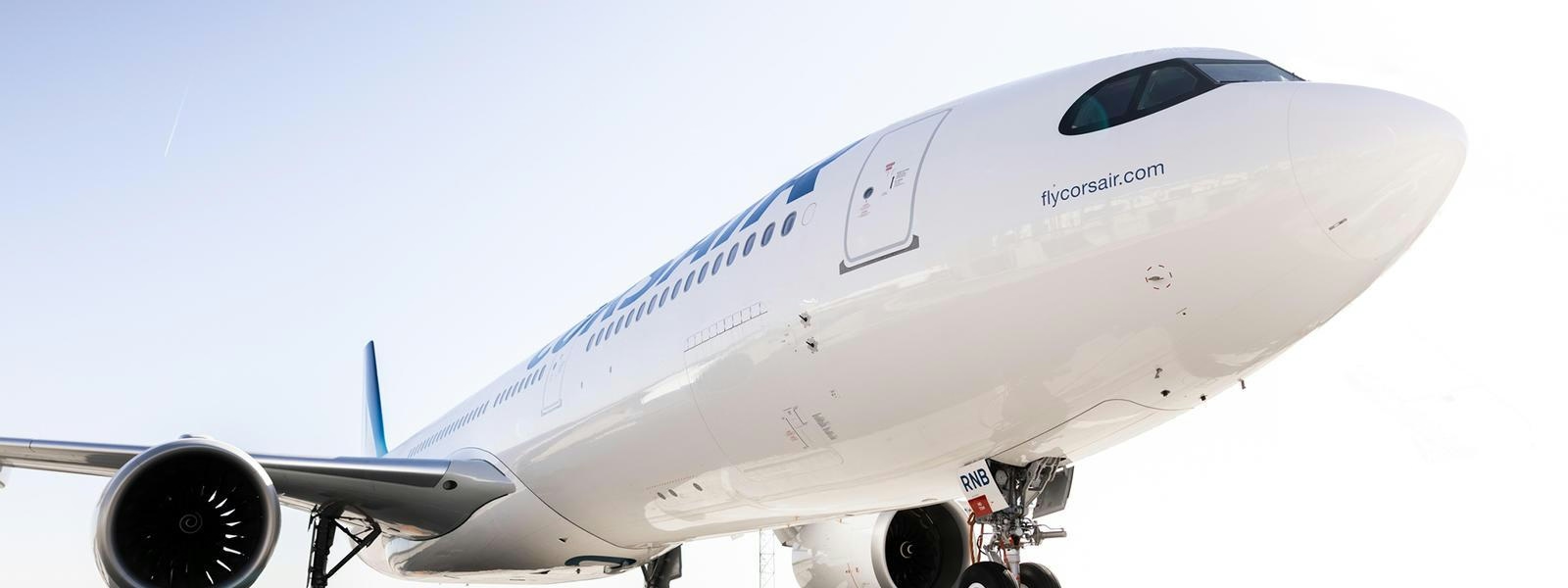
Corsair Completes First In-House C Check on Airbus A330neo at Paris-Orly
Corsair has achieved a significant milestone by successfully completing its first in-house C check on an Airbus A330-900neo at Paris-Orly Airport. The French airline’s technical teams conducted the comprehensive maintenance visit over two and a half weeks within the HN7 hangar, highlighting the carrier’s expanding internal maintenance capabilities.
Transition to Internalized Heavy Maintenance
This development occurs at a critical juncture for Corsair and the broader aviation sector. During a November 2024 visit to Corsair’s maintenance, repair, and overhaul (MRO) facilities, it was evident that the airline’s maintenance organization was shifting focus. Having recently concentrated on fleet renewal and aircraft transitions—such as returning A330ceo aircraft to lessors—Corsair is now moving toward internalizing major maintenance operations. Technical Director Bertrand Vitet has spearheaded efforts to bring key tasks, including Trent 7000 engine removals and C1 and C2 checks, under the airline’s direct control. Historically, these heavy maintenance checks were outsourced to third-party providers.
By internalizing C checks, Corsair aims to bolster its technical expertise, improve operational oversight, and optimize maintenance expenditures. This strategic move also enhances flexibility amid ongoing supply chain disruptions, including delays in parts delivery and rising component costs. For this inaugural in-house C check, Corsair implemented a suite of digital maintenance tools designed to enhance work traceability, increase team productivity, and eliminate reliance on paper-based processes, thereby modernizing its technical operations.
Industry Context and Implications
Corsair’s progress unfolds amid heightened scrutiny of Airbus, following recent quality concerns affecting the A320 family that have unsettled investors and led to a sharp decline in Airbus shares. Although Airbus has sought to reassure the market that the impact of the A320 recall may be less severe than initially feared, the industry remains cautious. Confidence in Airbus products endures, as demonstrated by competitor activity: Aerolíneas Argentinas is planning a major fleet renewal incorporating the Airbus A330neo alongside Boeing 737 MAX aircraft, while Etihad Airways has placed orders for both the A330-900neo and A350-1000 models.
In this environment, Corsair’s ability to independently manage heavy maintenance on its A330neo fleet not only represents a significant advancement in operational resilience but also reflects broader industry trends toward in-house technical capabilities and digital transformation. As airlines contend with supply chain challenges and evolving fleet strategies, Corsair’s initiative positions the carrier to respond more agilely to future demands while maintaining confidence in the Airbus widebody platform.

Etihad Airways Suspends Airbus A380 Flights on Key Route

Aditya Birla Group Seeks Approval for Aircraft Leasing in GIFT City

Qatar Airways Highlights Innovation and Connectivity at Arabian Travel Market 2026

Hong Kong's Five-Year Plan Includes Andrew Fan's Aircraft Parts Processing Hub Proposal

ACIA Aero Leasing Delivers ATR72-600 to Air Nostrum

RTX Appoints Jill Albertelli as Head of Pratt & Whitney

TAT Technologies Joins Beyond Aero Hydrogen Aircraft Program

AURAK Study Highlights Barriers to Air Taxi Adoption in Emerging Economies

Xiamen Air Selects Altitude for 787 Maintenance at Heathrow

Etihad and Swissport Extend Global Partnership
