
حوّل رؤى الذكاء الاصطناعي إلى أفعال منسّقة

الرائج الآن
Categories
CT7-2E1 Engine Surpasses 500,000 Flight Hours
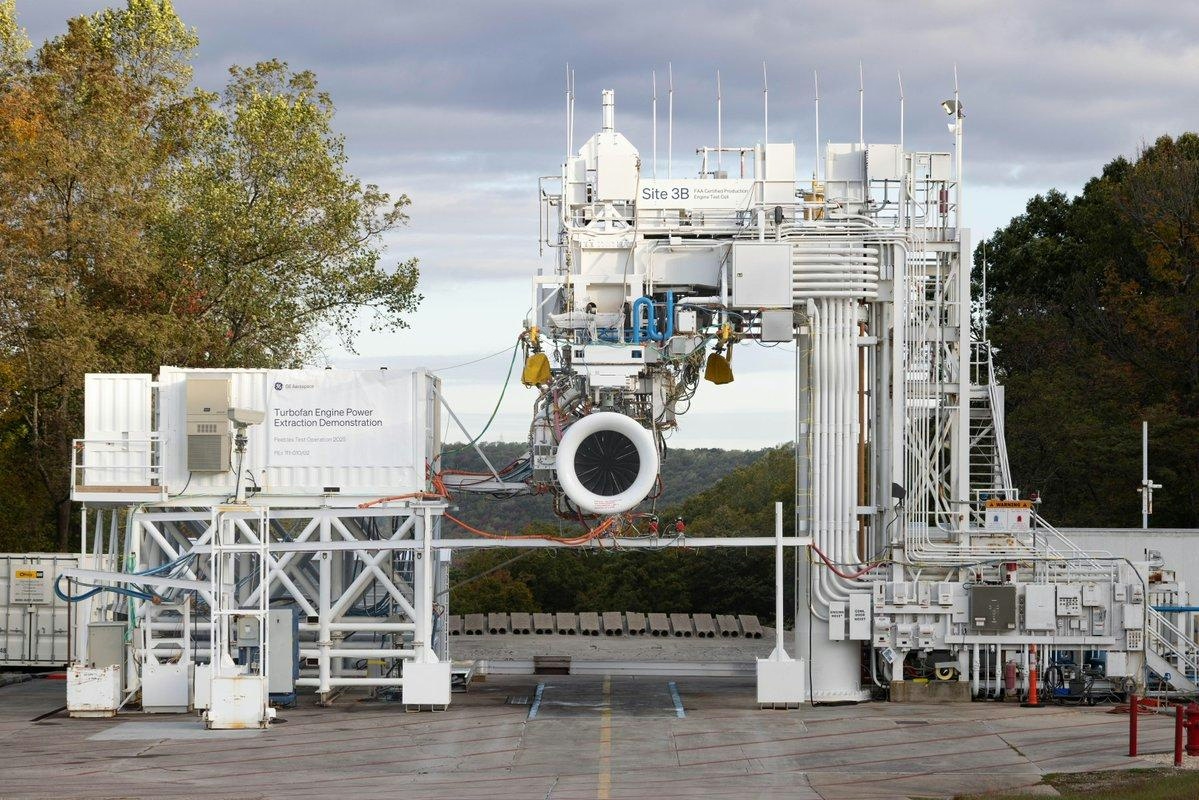
CT7-2E1 Engine Surpasses 500,000 Flight Hours
GE Aerospace’s CT7-2E1 engine has reached a significant milestone, surpassing 500,000 in-service flight hours. This achievement highlights the engine’s durability and reliability, particularly as it powers the Leonardo AW149 and AW189 helicopter fleets. The CT7-2E1 is built on the established CT7/T700 engine family platform, which collectively has accumulated over 100 million flight hours. Designed for long-range and high-speed performance, the engine incorporates Full Authority Digital Engine Control (FADEC), advanced materials, and a lighter construction that reduces fuel consumption and maintenance costs relative to competing models. Additionally, the CT7-2E1 is certified to operate on select Sustainable Aviation Fuel (SAF) blends, aligning with the aviation sector’s increasing focus on sustainability.
Industry Context and Challenges
This milestone arrives amid growing scrutiny of engine durability and reliability across the aviation industry. Competitors such as Rolls-Royce have been actively working to restore operator confidence in engine longevity, particularly in the widebody market segment where the Trent 7000 DE package has notably extended time-on-wing intervals by a factor of three. Meanwhile, the General Electric CF34 engine faces an impending maintenance surge, raising concerns about potential service slot shortages and longer turnaround times. With the global commercial fleet projected to double by 2044, a full replacement cycle is anticipated, intensifying competition among engine manufacturers.
Supply chain constraints and ongoing durability challenges remain pressing issues. The Engine Lease Finance Corporation has identified time-on-wing intervals for Pratt & Whitney’s GTF and CFM International’s Leap engines as critical concerns for operators and lessors. Against this backdrop, the CT7-2E1’s milestone underscores the value of dependable engine performance in an increasingly demanding operational environment.
Elissa Lee, executive director for commercial turboshaft engines at GE Aerospace, emphasized the significance of this achievement, stating, “Crossing half a million flight hours is a testament to the CT7-2E1 engine’s performance, and we’re proud of the close partnerships we’ve built with customers around the globe that rely on this engine to power their helicopters to execute critical missions every day. The CT7-2E1 engine continues to deliver the dependability our customers need.”
As the aviation industry adapts to evolving operational pressures and sustainability goals, milestones such as the CT7-2E1’s flight hour achievement highlight the essential role of engine reliability and innovation in supporting both current and future fleet demands.

Etihad Airways Suspends Airbus A380 Flights on Key Route

Aditya Birla Group Seeks Approval for Aircraft Leasing in GIFT City

Qatar Airways Highlights Innovation and Connectivity at Arabian Travel Market 2026

Hong Kong's Five-Year Plan Includes Andrew Fan's Aircraft Parts Processing Hub Proposal

ACIA Aero Leasing Delivers ATR72-600 to Air Nostrum

RTX Appoints Jill Albertelli as Head of Pratt & Whitney

TAT Technologies Joins Beyond Aero Hydrogen Aircraft Program

AURAK Study Highlights Barriers to Air Taxi Adoption in Emerging Economies

Xiamen Air Selects Altitude for 787 Maintenance at Heathrow

Etihad and Swissport Extend Global Partnership
