
حوّل رؤى الذكاء الاصطناعي إلى أفعال منسّقة

الرائج الآن
Categories
Delays in Boeing 777X Program Match Airbus A350's Total Development Cost
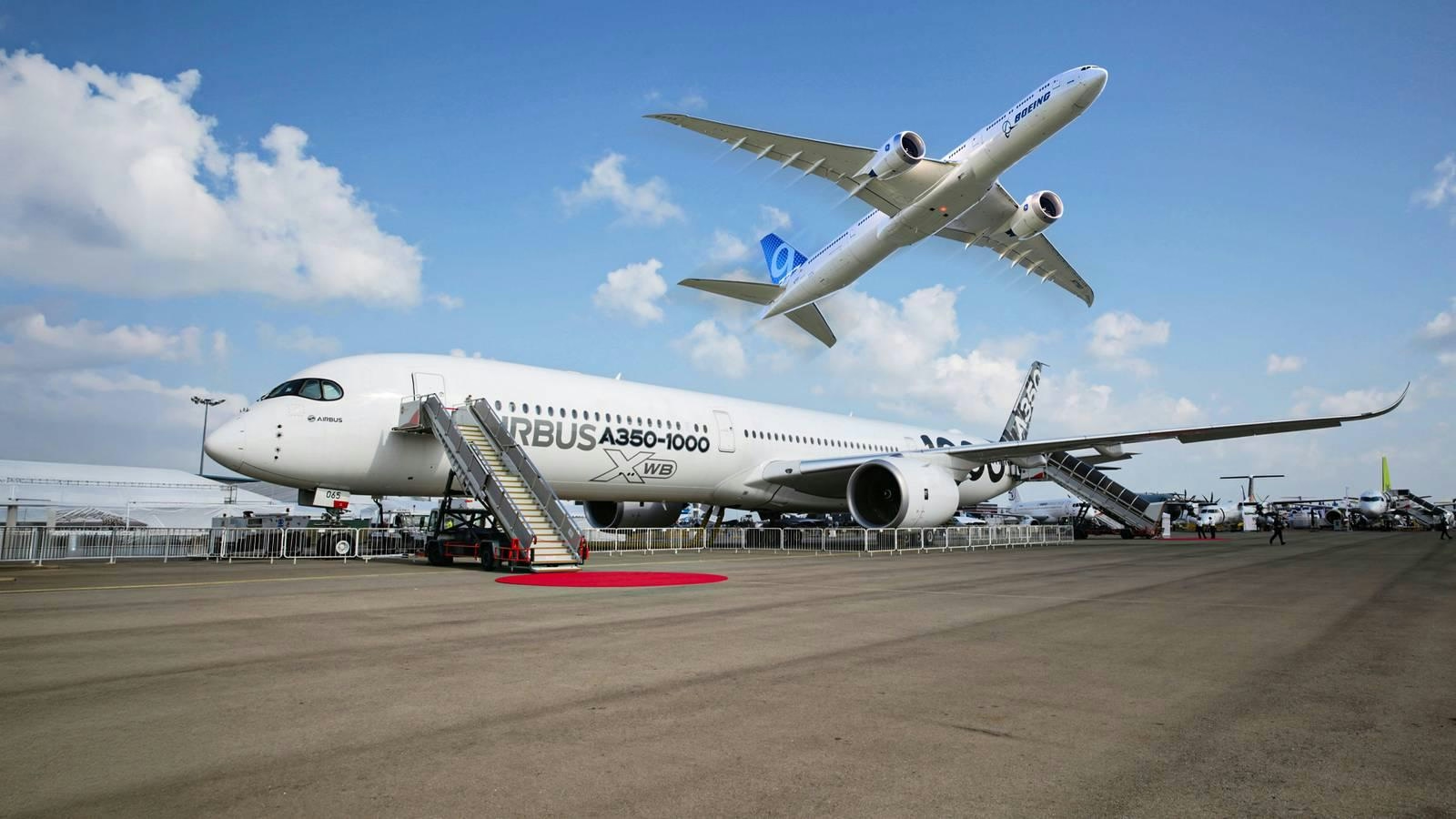
Delays in Boeing 777X Program Match Airbus A350's Total Development Cost
A Costly Evolution of a Proven Platform
The Boeing 777X was initially conceived as a low-risk, cost-effective successor to the highly successful 777-300ER. Rather than embarking on a clean-sheet design, Boeing chose to evolve the established 777 platform by integrating advanced composite wings, GE9X engines, folding wingtips, and updated systems. This strategy aimed to provide airlines with a familiar and efficient aircraft while significantly reducing development expenses compared to designing an entirely new model.
Contrary to expectations, the program has encountered substantial financial challenges. Cumulative accounting charges for the 777X have now reached approximately $15 billion, positioning it among the most expensive derivative aircraft programs in aviation history. These costs rival, and may even surpass, the estimated $15 billion Airbus invested in developing the clean-sheet A350 family, according to Aeronautics Magazine. The financial pressures on Boeing stem from a combination of certification hurdles, supply chain disruptions, and considerable customer compensation.
Certification Challenges and Operational Setbacks
When Boeing launched the 777X program in 2013, it was promoted as a logical progression of the 777, promising reduced certification costs and accelerated delivery schedules. Airlines were drawn to the prospect of minimal pilot retraining, compatibility with existing maintenance infrastructure, and seamless airport operations. However, a series of setbacks have significantly altered the program’s trajectory and financial outlook.
Originally scheduled to enter service in 2020, the 777X is now expected to be delivered in 2027, marking a seven-year delay that few had anticipated. The grounding of the 737 MAX fundamentally reshaped the regulatory environment, leading the Federal Aviation Administration (FAA) to impose far more stringent oversight. This included additional design reviews, extensive documentation requirements, and more comprehensive flight testing, all of which contributed to escalating certification costs and shifting regulatory targets.
These delays have had profound operational consequences. Airlines such as Lufthansa and Emirates have expressed concerns regarding early-built 777X aircraft, which now require extensive modifications due to design changes implemented during the extended development period. Supplier disruptions and production inefficiencies have further exacerbated Boeing’s challenges, resulting in ongoing program losses and increased inventory costs.
Market Implications and Competitive Dynamics
Meanwhile, Airbus is closely monitoring Boeing’s difficulties and is reportedly considering the launch of a larger version of the A350 to directly compete with the delayed 777X. First deliveries of this potential new model are targeted for the early 2030s, underscoring the high stakes in the widebody aircraft market and the intense rivalry between the two aerospace giants.
Despite these obstacles, the Boeing 777X remains a highly anticipated aircraft, with more than 500 firm orders from over a dozen airlines. Its advanced technology and operational efficiencies continue to position it as a formidable competitor to the Airbus A350, ensuring that the contest for dominance in the long-haul market remains fiercely contested.

Etihad Airways Suspends Airbus A380 Flights on Key Route

Aditya Birla Group Seeks Approval for Aircraft Leasing in GIFT City

Qatar Airways Highlights Innovation and Connectivity at Arabian Travel Market 2026

Hong Kong's Five-Year Plan Includes Andrew Fan's Aircraft Parts Processing Hub Proposal

ACIA Aero Leasing Delivers ATR72-600 to Air Nostrum

RTX Appoints Jill Albertelli as Head of Pratt & Whitney

TAT Technologies Joins Beyond Aero Hydrogen Aircraft Program

AURAK Study Highlights Barriers to Air Taxi Adoption in Emerging Economies

Xiamen Air Selects Altitude for 787 Maintenance at Heathrow

Etihad and Swissport Extend Global Partnership
