صورة

أيروجيني — مساعدك الذكي للطيران.

اسأل عن أي شيء. قم بتحليل كل شيء. تصرف فورًا.

الرائج الآن

Categories

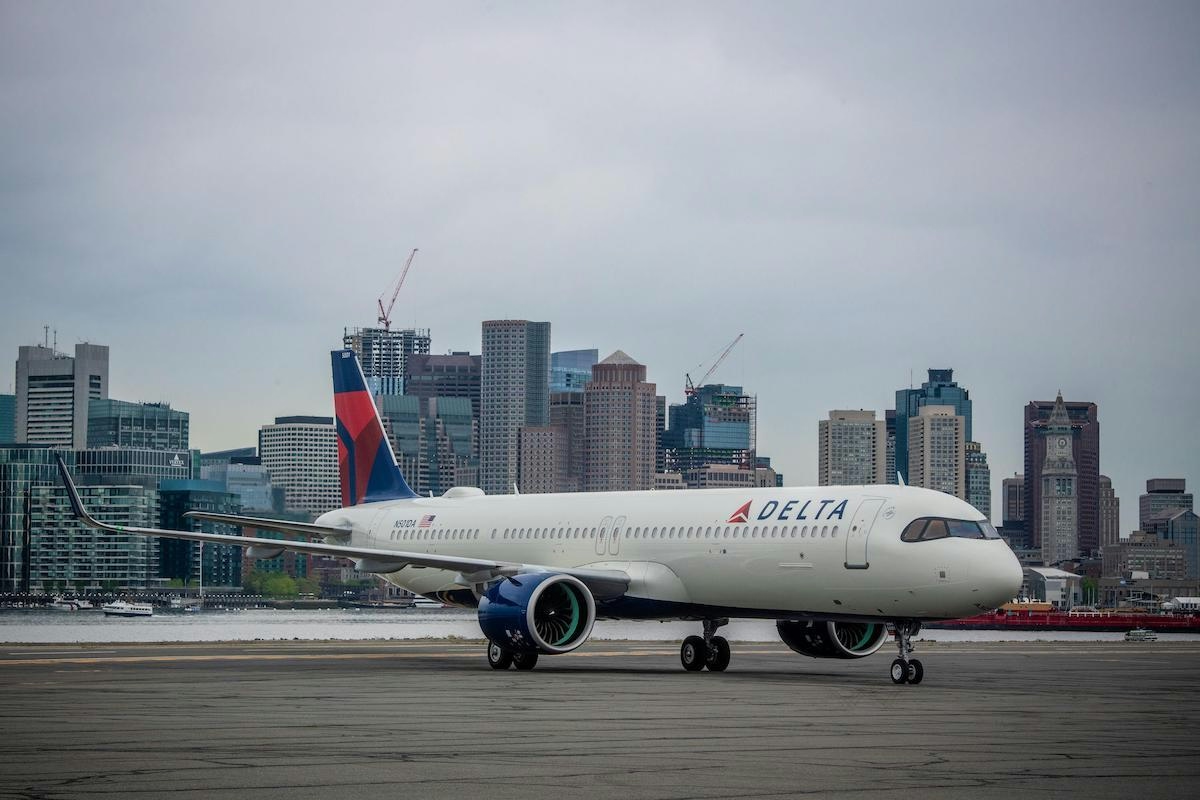
Delta orders 34 more Airbus A321neo jets in fleet renewal push
February 27, 2026By ePlane AI
Delta orders 34 more Airbus A321neo jets in fleet renewal push
0
0
Delta Air Lines
Airbus A321neo
Fleet Renewal

Delta Expands Fleet with Order for 34 Additional Airbus A321neo Jets

Delta Air Lines has announced an order for 34 more Airbus A321neo aircraft, reinforcing its ongoing fleet renewal strategy centered on fuel efficiency and enhanced premium seating. The new jets are expected to enter service beginning in 2029, further modernizing the airline’s narrowbody fleet.

Strengthening the Narrowbody Fleet

With this latest acquisition, Delta’s total commitment to the A321neo model rises to 189 aircraft. The carrier currently operates 92 of these jets, with 97 more on firm order and options for an additional 36. The A321neo has become a cornerstone of Delta’s domestic and short-haul international operations, prized for its low operating cost per seat and its configuration that offers more first-class and extra-legroom seats than any other single-aisle aircraft in the airline’s fleet.

This order follows two other significant aircraft announcements by Delta in 2026. In January, the airline placed an order for 30 Boeing 787-10 widebody jets, followed by a commitment to 31 additional Airbus widebody aircraft. These moves collectively underscore Delta’s focus on fleet modernization through the acquisition of newer, more fuel-efficient planes that support its strategy of expanding premium cabin offerings. The airline has emphasized that most of its planned seat capacity growth will come from higher-priced premium cabins rather than the main cabin, aiming to increase revenue and improve the passenger experience.

Market Implications and Challenges

Delta’s decision arrives amid a competitive environment where rivals such as Southwest Airlines may reconsider their own fleet strategies. The expanded order is likely to intensify competition in the narrowbody aircraft market, particularly as airlines seek to attract premium travelers. Market analysts view Delta’s investment in modern, fuel-efficient jets as a positive signal to investors, reflecting a commitment to operational efficiency and long-term growth.

Nevertheless, the airline’s ambitious fleet renewal faces potential challenges. Industry-wide supply chain disruptions and possible delivery delays could affect the integration timeline for the new aircraft. Additionally, heightened competition among aircraft manufacturers may influence future negotiations and fleet planning decisions.

The new A321neo jets will be equipped with Pratt & Whitney GTF engines supplied by RTX, aligning with Delta’s goals for sustainability and operational efficiency.

More news
USF Researcher Advances Flying Taxi Project in Florida

USF Researcher Advances Flying Taxi Project in Florida

USF Researcher Advances Flying Taxi Project in Florida Flying taxis are edging closer to becoming a practical component of daily transportation as Tampa joins a statewide initiative to incorporate air travel into routine commutes. This effort seeks to utilize low-altitude airspace to alleviate congestion on Florida’s heavily trafficked roads and bridges. While limited service may commence in the near future, a comprehensive rollout will require time for the necessary technology and infrastructure to mature. Pioneering Urban Air Mobility in Florida At the forefront of this initiative is a University of South Florida researcher leading efforts to integrate electric vertical takeoff and landing aircraft, or eVTOLs, into the state’s transportation network. These aircraft are designed to operate between 500 and 3,000 feet above ground, traveling at speeds ranging from 100 to 200 miles per hour. They offer a promising alternative to the gridlock that frequently plagues Florida’s highways. Florida’s rapidly expanding population is placing increasing strain on existing transportation systems, particularly in the Bay Area, where limited bridge access often creates significant bottlenecks. In the absence of a high-speed rail system, experts emphasize the need for innovative solutions. Flying taxis have the potential to reduce commute times and ease the burden on current infrastructure. Dr. Yu April Zhang, who directs the Advanced Air Mobility program at USF, is spearheading efforts to capitalize on underutilized low-altitude airspace for urban travel. “Can we utilize the low altitude airspace so that people can avoid the congestion on the ground?” Zhang remarked. She anticipates a gradual adoption process, noting, “I envision it will have a slow start… but later, the maturity level will increase.” USF researchers have identified several potential vertiport locations—dedicated takeoff and landing hubs for air taxis—including Downtown Tampa, Westshore, and Downtown St. Petersburg. Dr. Zhang has also developed AI-driven tools to simulate passenger demand and flight patterns throughout the region, providing critical data to guide implementation. Regulatory and Market Challenges Despite the promise of flying taxis, significant challenges remain. Regulatory approval stands as a major hurdle, with multiple companies awaiting federal clearance to launch air taxi services in Florida. The Federal Aviation Administration (FAA) is still finalizing airworthiness certifications for eVTOL aircraft, leaving the timeline for commercial operations uncertain. The competitive landscape is intensifying, with firms such as Archer Aviation and Joby Aviation embroiled in legal disputes over alleged trade secret theft and concerns regarding foreign affiliations. Other contenders, including Vertical Aerospace and Doroni Aerospace, are preparing to introduce air taxi services in South Florida, contingent upon certification. Meanwhile, the federal government’s pilot program aims to accelerate eVTOL integration, but the development of vertiports and charging infrastructure remains a formidable challenge. If the FAA grants the necessary approvals, limited flying taxi services could begin as early as the end of this year, with gradual expansion expected as technology advances and infrastructure is established. For now, the Tampa Bay Area stands at the forefront of a transportation revolution that may soon elevate commuters above the persistent traffic below.
Aviation Leasing Firms Connected to Saudi Travel Tycoon Shut Down

Aviation Leasing Firms Connected to Saudi Travel Tycoon Shut Down

Aviation Leasing Firms Linked to Saudi Travel Tycoon Nasser Al Tayyar Shut Down Two Irish aircraft leasing companies associated with Saudi travel and aviation magnate Nasser Al Tayyar are currently being wound up after several years of inactivity. Sara Aircraft Leasing and Tara Aircraft Leasing, both established over a decade ago, have not submitted financial accounts for more than four years. The last available filings reveal that the companies were originally formed to acquire a narrow-body Airbus aircraft intended for leasing to a client, with delivery initially scheduled for 2022. However, neither firm appears to have advanced these plans, and both are now undergoing liquidation. Industry Context and Market Pressures The closure of these firms occurs amid broader challenges confronting the aviation leasing sector, particularly for companies linked to prominent industry figures. A decline in demand for leased aircraft in recent years has intensified scrutiny on lessors, raising concerns about their financial stability and prompting many to reevaluate their business models. The prolonged inactivity and subsequent shutdown of Sara and Tara Aircraft Leasing exemplify these pressures, reflecting the shifting dynamics within the global aviation market. Industry analysts suggest that the departure of leasing firms connected to Al Tayyar may provoke a competitive response from rival companies. Competitors are likely to seek opportunities to capture the market share left vacant by offering more favorable leasing terms or expanding their fleets through alternative financing arrangements. This evolving landscape is expected to drive a reassessment of leasing strategies across the sector as firms adapt to fluctuating demand and changing market conditions. Regulatory Compliance and Strategic Implications The winding up of Sara and Tara Aircraft Leasing also highlights the critical importance of regulatory compliance and timely financial reporting within the aviation leasing industry. As market participants navigate ongoing uncertainty, the fate of these companies serves as a cautionary example of the risks associated with prolonged inactivity. It underscores the necessity for agile and responsive business strategies in a sector characterized by rapid change and volatility.
Fuel Shortage Disrupts Flights in Sydney, Melbourne, and Brisbane

Fuel Shortage Disrupts Flights in Sydney, Melbourne, and Brisbane

Fuel Shortage Grounds Flights Across Sydney, Melbourne, and Brisbane A severe jet fuel shortage has caused significant disruption at Australia’s busiest airports, grounding 33 flights and delaying 385 others as airlines struggle to cope with rapidly diminishing supplies. Sydney, Melbourne, and Brisbane airports have been the most affected, revealing the fragility of global aviation supply chains amid rising geopolitical tensions and escalating fuel prices. Impact on Australian Airports and Airlines Sydney Airport, the nation’s primary international gateway, has experienced the most severe consequences, with 245 delays and 12 cancellations reported. Melbourne Tullamarine and Brisbane airports have also faced substantial operational challenges. Major carriers including Qantas, Jetstar, QantasLink, and Virgin Australia have been compelled to implement emergency measures, such as flight cancellations and reduced schedules, leaving thousands of passengers stranded and raising concerns about prolonged disruptions in the days ahead. The shortage originates from a breakdown in fuel distribution networks, exacerbated by soaring global oil prices and the intensifying conflict in the Middle East. This geopolitical instability has tightened jet fuel supplies worldwide, with industry experts warning that key international hubs, including those in Australia, are at risk of critical shortages. Sydney Airport management has issued a cautionary statement regarding the uncertainty of receiving scheduled jet fuel shipments next week, heightening fears of further operational interruptions. Jetstar has reported nine cancellations and 121 delays, primarily affecting domestic routes. Qantas has faced six cancellations and 107 delays across both domestic and international flights. QantasLink’s regional services have seen six cancellations and 57 delays, while Virgin Australia has experienced one cancellation and 100 delays. In response, airlines are prioritizing essential flights and enacting contingency plans such as fuel rationing and selective cancellations to manage the crisis. Global Implications and Market Responses The fuel shortage in Australia reflects a broader global challenge. International carriers are similarly impacted, with Scandinavian Airlines having canceled 1,000 flights in April due to rising oil and jet fuel costs. Etihad Airways has responded by reducing long-haul fares by up to 50 percent in an effort to sustain passenger demand amid soaring expenses. Within Australia, airlines face mounting pressure to absorb increased operational costs, with fuel now accounting for as much as 30 percent of major carriers’ expenditures. Passengers may encounter higher ticket prices, additional surcharges, and changes to baggage fees as airlines adjust their pricing strategies to mitigate financial losses. This crisis may also accelerate the industry’s transition toward more fuel-efficient aircraft and alternative energy sources. Industry Outlook Australia’s aviation sector, dominated by the Qantas Group and Virgin Australia, confronts escalating challenges stemming from fuel price volatility and supply chain vulnerabilities. As domestic disruptions continue, competitors such as Air New Zealand and other international carriers may capitalize on shifting market dynamics. The ongoing fuel shortage underscores the precarious nature of global aviation logistics and the urgent need for more resilient supply strategies in an increasingly uncertain geopolitical environment.
Lufthansa at 100: A Century of Fleet Evolution to the Airbus A350-900 and Boeing 777X

Lufthansa at 100: A Century of Fleet Evolution to the Airbus A350-900 and Boeing 777X

Lufthansa at 100: A Century of Fleet Evolution to the Airbus A350-900 and Boeing 777X On April 6, a deep-blue Airbus A350-900, adorned with a striking super crane emblem and the years 1926 | 2026 in silver, taxied across Berlin Brandenburg Airport. This flight to Zurich was far from routine; it served as a high-tech tribute to a century of German aviation history. Exactly 100 years earlier, a Fokker-Grulich F II had taken off from Berlin-Tempelhof, marking the founding of Deutsche Luft Hansa AG. From these modest origins, Lufthansa has grown into a global aviation powerhouse, now defined by the advanced carbon-fiber wings of the A350 and the anticipated folding wingtips of the Boeing 777X. Humble Beginnings German commercial aviation began with bold ambition on April 6, 1926. From the grassy fields of Berlin-Tempelhof, Deutsche Luft Hansa AG launched its inaugural services to Zurich and Cologne using the Fokker-Grulich F II and Dornier Komet III aircraft. These early flights were a stark contrast to today’s sophisticated air travel: pilots navigated visually, and passengers were seated on wicker chairs inside wood-and-fabric fuselages. With cruising speeds of just 140 km/h (87 mph), the Berlin-Zurich route was an all-day journey, and unpressurized cabins left travelers exposed to the elements. Despite the absence of modern comforts, this pioneering era established the operational framework for European connectivity. By the late 1920s, Lufthansa’s fleet had transitioned to all-metal aircraft such as the Junkers G 24 and the iconic Ju 52, enhancing durability and passenger capacity. These three-engine workhorses enabled the airline to expand its reach toward the Far East and South America, laying the groundwork for a global network well before the advent of the jet age. Postwar Rebirth and Jet Age Transformation Following a wartime hiatus, Lufthansa resumed operations in 1955. The airline’s true transformation occurred five years later with the introduction of the Boeing 707, which revolutionized transatlantic travel by reducing journey times from several days to approximately ten hours. This milestone marked Lufthansa’s emergence on the global stage and set the pace for decades of innovation and expansion. Modern Challenges and Fleet Evolution Lufthansa’s fleet evolution continues today with the integration of the Airbus A350-900 and the forthcoming Boeing 777X. These aircraft embody the airline’s commitment to efficiency and sustainability, incorporating advanced materials and cutting-edge technology. However, this new era has not been without challenges. Recent consecutive strikes by pilots and flight attendants have disrupted operations for five out of seven days, testing Lufthansa’s ability to maintain its ambitious schedule. The competitive landscape is also undergoing significant shifts. Taiwan’s China Airlines is scaling back its Airbus orders, while Austrian Airlines, a member of the Lufthansa Group, is considering expanding its Boeing 787 long-haul fleet. In response, Lufthansa Group executives are implementing rapid market response strategies, adjusting capacity and flight schedules on a daily basis to navigate ongoing labor unrest and evolving market dynamics. A Century of Adaptation From open-cockpit biplanes to state-of-the-art widebody jets, Lufthansa’s history is one of continuous adaptation. Over the course of ten decades, the airline has endured industrial revolutions, economic crises, and the complete transformation of global air travel. As Lufthansa celebrates its centenary, its journey encapsulates both the triumphs and challenges of aviation itself—constantly evolving and perpetually reaching for new horizons.
RECARO Unveils New Aircraft Seating at AIX

RECARO Unveils New Aircraft Seating at AIX

RECARO Unveils Next-Generation Aircraft Seating at AIX RECARO Aircraft Seating, a prominent global provider of aircraft seating solutions, has introduced its latest innovations at this year’s Aircraft Interiors Expo (AIX). Building on a successful 2025 that saw double-digit growth and revenues reaching €710 million, the company continues to invest approximately 10% of its annual budget in research and development. This commitment underpins RECARO’s ongoing efforts to enhance passenger comfort, sustainability, and cabin technology. Innovations in Economy Class Seating The company’s new economy class offerings, the R1 and R2 seats, emphasize lightweight construction designed to help airlines reduce fuel consumption and meet sustainability targets. The R1 model features a pre-recline function, while the R2 provides up to five inches of recline, complemented by an adjustable headrest with premium neck support and a variety of cushion options. Both seats offer optional smart features, including integrated tablet and smartphone holders as well as USB-C charging ports, aimed at maximizing passenger comfort and space efficiency on short- and medium-haul flights. Sustainability remains a core focus, exemplified by the RECARO R Sphere, a finalist for the Crystal Cabin Award. This economy class demonstrator incorporates upcycled and certified materials such as recycled PVC cable plates, literature pockets crafted from repurposed fishing nets, and wood inlays. These sustainable components are now available as modular kits for the R1 and R2 seats, with Iberia already adopting these features. Additional eco-friendly developments include backrests made from sugarcane, armrests constructed from natural fibers, and fully recyclable seat covers, all contributing to a reduction in CO2 emissions during flight. Advancements in Business Class Seating In the business class segment, RECARO’s R7 seat sets a new benchmark for cabin innovation. Weighing approximately 20% less than comparable models, the R7 offers advanced features such as electrically operated privacy dividers, increased shell height, and full privacy doors, enabling a customizable suite experience. Designed for compatibility with aircraft including the Airbus A350, Boeing 787, and Airbus A330, the seat converts into a fully flat 78-inch bed and includes a unique Business Class Plus front-row suite option. The R7 Horizon technology demonstrator further showcases RECARO’s vision for the future of business class seating. It incorporates AI-powered seat controls with voice command functionality available in over 90 languages, allowing passengers to adjust their seats intuitively. The Lumina Sync system enhances the onboard experience by intelligently synchronizing cabin lighting with passenger preferences. Industry Challenges and Market Outlook Despite these advancements, RECARO faces ongoing industry challenges. Supply chain volatility, highlighted by partners such as ITT Enidine, continues to affect component pricing and availability. Technical issues, including excessive push-button force and elevated internal gas pressure, can cause cable wear and compromise system reliability. Addressing these concerns is critical for RECARO to uphold its reputation for quality and innovation. Market response to RECARO’s new seating solutions will be closely monitored as airlines weigh their priorities regarding passenger wellbeing, sustainability, and operational efficiency. The competitive landscape remains dynamic, as demonstrated by EasyJet’s recent transition to Mirus seats, underscoring the necessity for continuous innovation to meet evolving airline and passenger demands. With its latest product launches, RECARO aims to consolidate its leadership position in aircraft seating by balancing cutting-edge design, sustainability, and operational performance amid a rapidly evolving market environment.
Jet Aviation Expands In-House MRO and CMS Software Capabilities

Jet Aviation Expands In-House MRO and CMS Software Capabilities

Jet Aviation Advances In-House MRO and Cabin Management System Capabilities Jet Aviation has reached a pivotal milestone in expanding its in-house maintenance, repair, and overhaul (MRO) and cabin management system (CMS) software capabilities with the introduction of its first internally developed in-flight entertainment and cabin management system. The system, named IFX, was recently installed as part of a narrow-body aircraft refurbishment, marking its official entry into service following an extensive development and certification process. Development and Features of the IFX System As a subsidiary of General Dynamics, Jet Aviation offers a broad range of services including private jet charter, aircraft management, fixed-base operator (FBO) operations, and MRO services. The newly developed IFX system is entirely engineered in-house and provides a fully customizable interface that enables passengers and crew to control all aspects of in-flight entertainment and cabin management. This includes lighting, audio, video, passenger address announcements, and other bespoke functions tailored to customer preferences. The system is built on certified hardware components that comply with rigorous aviation standards and incorporates Jet Aviation-certified units for the CMS. Florent Klinger, Head of Engineering at Jet Aviation, highlighted the collaborative nature of the project, stating, “We are incredibly proud to see our in-house IFE and CMS system flying in a customer aircraft. This reflects the close collaboration between our engineers, production, and installation teams, as well as with our customer. Developing the system architecture in-house has enabled us to create a fully customizable system that can seamlessly support customer requirements throughout the aircraft lifecycle, from installation through operation and upgrades.” The installation was carried out at Jet Aviation’s Basel facility in Switzerland. Industry Challenges and Strategic Implications As Jet Aviation broadens its in-house MRO and CMS software capabilities, it confronts several challenges inherent to the sector. The integration of new facilities and the maintenance of seamless operations across an expanded footprint will be essential to uphold service quality. This strategic expansion is expected to intensify competition among MRO providers, particularly in regions such as the U.S. Midwest, where rivalry may lead to price pressures and a heightened emphasis on service differentiation. Competitors are likely to respond by enhancing their own MRO and CMS offerings, potentially through strategic partnerships or acquisitions aimed at preserving market share. Moreover, the wider MRO industry continues to face significant supply chain disruptions and escalating costs. Over recent years, these challenges have imposed a substantial financial burden on airlines, with industry estimates placing the cost at approximately $30 billion. Such pressures underscore the critical importance of robust and adaptable in-house solutions like Jet Aviation’s IFX system, which is designed to provide greater flexibility and resilience amid a rapidly evolving market environment. With the successful deployment of its proprietary CMS and in-flight entertainment software, Jet Aviation is positioning itself to better address customer demands while navigating the complexities of a competitive and dynamic MRO landscape.
Jet Fuel Prices Surge Nearly 100% in Weeks; XCF Global Notes Domestic SAF Less Affected

Jet Fuel Prices Surge Nearly 100% in Weeks; XCF Global Notes Domestic SAF Less Affected

Jet Fuel Prices Surge Nearly 100% Amid Global Supply Disruptions Jet fuel prices in the United States have nearly doubled over the past several weeks, escalating financial pressures on airlines and revealing significant vulnerabilities within the global aviation fuel supply chain. This sharp increase, driven by persistent instability in global oil markets and disruptions to critical supply routes such as the Strait of Hormuz, has intensified concerns regarding fuel availability and the overall resilience of the aviation sector. Industry data, corroborated by CNBC reports, indicate that U.S. jet fuel prices have risen from approximately $2.50 per gallon in late February to nearly $4.90 per gallon by early April. This represents one of the most rapid price escalations in recent memory. The ongoing conflict in Iran and the resulting constraints on crude oil shipments have severely limited tanker traffic, further tightening global supply and exerting upward pressure on prices. The surge in fuel costs is already impacting airlines significantly. Alaska Air has reported triple-digit increases in fuel refining expenses and has consequently revised its first-quarter financial expectations downward. Major carriers, including United Airlines, have begun reducing flight schedules and have issued warnings about potential fuel shortages in the coming weeks. European airline executives have expressed concerns that if supply disruptions persist, jet fuel shortages could emerge at major airport hubs, necessitating emergency measures and potentially driving airfares even higher. Analysts caution that sustained elevated fuel prices could eliminate industry profits by 2026, particularly if passenger demand weakens. Domestic Sustainable Aviation Fuel Offers a More Resilient Alternative This crisis has intensified scrutiny of the structural weaknesses inherent in petroleum-based aviation fuel supply chains, which remain closely linked to geopolitically sensitive crude oil markets. In contrast, domestically produced, waste-based sustainable aviation fuel (SAF) is gaining attention as a more resilient alternative. XCF Global, Inc. (Nasdaq: SAFX), a leading U.S. producer of SAF, highlights that its fuel is derived from domestic feedstocks such as used cooking oil and other waste materials—inputs largely insulated from the volatility of global oil markets. Chris Cooper, CEO of XCF Global, emphasized the significance of this distinction: “When jet fuel prices can nearly double in a matter of weeks, it exposes just how fragile crude-based aviation fuel supply chains remain. Waste-based SAF starts with domestic materials, domestic infrastructure, and domestic labor. That structural difference matters, not only for decarbonization, but for fuel security and reliability when global energy systems are under stress.” While prices for SAF can still be influenced by broader market dynamics, the underlying supply chain for waste-based SAF is fundamentally different from that of conventional jet fuel. Disruptions in crude oil markets have an immediate and direct impact on traditional jet fuel availability and pricing, whereas waste-based SAF is shielded from many of these upstream risks, providing a meaningful layer of supply-chain resilience. XCF Global operates the New Rise Renewables facility in Reno, Nevada, which has a permitted nameplate capacity of 38 million gallons per year of neat SAF. As the aviation industry grapples with increasing uncertainty over fuel pricing and availability, the company advocates for expanded domestic SAF production as a critical component in enhancing both energy security and the sector’s decarbonization efforts.
Airhart Launches New Initiative

Airhart Launches New Initiative

Airhart Launches New Initiative to Democratize Aviation Before founding Airhart Aeronautics Inc. in 2022, Nikita Ermoshkin was deeply engaged in the development of autonomous aircraft and piloting across California. A Cornell-trained electrical and computer engineer and former SpaceX avionics engineer, Ermoshkin obtained his pilot’s license in 2020, driven by a lifelong passion for aviation. He describes the freedom of flight as “very exciting,” noting that a plane can cover the 380 miles between Los Angeles and San Francisco in under two hours, compared to a six-hour car journey. Addressing Aviation’s Accessibility Challenge Ermoshkin quickly recognized the significant barriers that prevent most Americans from engaging with aviation. Despite approximately 300 million Americans living within 10 miles of a local airport, fewer than 0.3% held active airman certificates in 2023, according to the Federal Aviation Administration (FAA). High costs and safety concerns remain major obstacles. Ermoshkin’s ambition is to make aviation more accessible, safer, and easier to operate, ultimately envisioning a future where flying becomes as commonplace as driving a car. This vision inspired the creation of Airhart, a company specializing in avionics systems designed to enhance aviation safety and usability. Last month, Airhart inaugurated its first design and innovation center in Long Beach, California, and began offering public hangar tours. The company’s prototype aircraft, developed in partnership with South Africa-based Sling Aircraft, is scheduled for market introduction later this year. After raising $4.56 million in venture capital last October, Airhart has conducted cross-country flights with its prototype, which made its public debut at Santa Monica Municipal Airport in 2024. The four-seat aircraft boasts impressive fuel efficiency, consuming just 7.4 gallons per hour—significantly less than comparable models such as Textron Aviation’s Cessna 172, which averages 9.9 gallons per hour. Innovation in Avionics and Market Challenges Airhart’s avionics system seeks to simplify the flying experience through what Ermoshkin terms the “electronization of the cockpit.” The system incorporates dual-touch displays, a push-pull bar for speed control, and a joystick for directional input, automating many routine tasks to allow pilots to concentrate on critical decision-making and situational awareness. Despite the promise of this new initiative, Airhart faces considerable challenges. The competitive environment is intense, with established players in adjacent sectors—such as luxury brands in China’s recovering beauty market—demonstrating strong financial rebounds. Industry giants like Estée Lauder and L’Oréal leverage their brand heritage and innovation to maintain dominance, making it difficult for new entrants to gain market traction. Additionally, broader macroeconomic and geopolitical pressures, coupled with a venture capital landscape focused on mega IPOs and experiencing liquidity constraints, may divert attention and resources away from emerging companies like Airhart. Nonetheless, Ermoshkin remains steadfast in his commitment to making aviation safer, more accessible, and as routine as driving, with the hope of inspiring a wider public enthusiasm for flight.
Turkish Airlines Appoints New CEO and Board Chairman Amid Strategic Shift

Turkish Airlines Appoints New CEO and Board Chairman Amid Strategic Shift

Turkish Airlines Appoints New CEO and Board Chairman Amid Strategic Shift Turkish Airlines has announced significant changes in its leadership, appointing Ahmet Olmuştur as Chief Executive Officer and Prof. Murat Şeker as Board Chairman. This transition marks a strategic pivot for Turkey’s national carrier, aiming to accelerate innovation, enhance the passenger experience, and bolster its global footprint. Leadership Transition at a Critical Juncture The appointments come at a crucial time as Turkish Airlines continues to expand its international network from Istanbul, a city uniquely situated at the crossroads of Europe and Asia. The new leadership is expected to invigorate the airline’s operations and reinforce Istanbul’s position as a premier global travel hub. Ahmet Olmuştur’s rise within the company—from a part-time call center employee in 2000 to CEO—reflects a deep institutional knowledge and a commitment to customer service, pricing strategies, and route planning. His previous role as head of marketing saw him instrumental in developing the widely acclaimed “Miles&Smiles” loyalty program, underscoring his focus on passenger engagement. Prof. Murat Şeker, appointed as Board Chairman, brings extensive expertise in finance and corporate governance. His stewardship is anticipated to provide strategic oversight and stability as Turkish Airlines navigates a highly competitive and evolving aviation market. Strategic Challenges and Future Directions The new leadership team faces multiple challenges, including managing the transition smoothly to avoid operational disruptions and responding effectively to market pressures. Investors are closely monitoring how these changes will influence Turkish Airlines’ strategic trajectory and financial outcomes. Meanwhile, competitors such as Southwest and United Airlines, which are also undergoing leadership changes, may recalibrate their strategies to maintain competitiveness in the shifting landscape. Beyond personnel changes, Turkish Airlines is committed to leveraging advanced technologies, enhancing sustainability through reduced fuel consumption, and upgrading its fleet with luxury amenities. The airline’s focus remains firmly on improving passenger satisfaction and expanding its route network to key global destinations. As Olmuştur and Şeker take the helm, they embody the aspirations of thousands of employees across the airline, from pilots to ground staff, who play a vital role in the company’s ongoing success. This leadership renewal signals Turkish Airlines’ determination to maintain its status as a global industry leader, setting new benchmarks in innovation, service quality, and operational excellence. With these appointments, Turkish Airlines demonstrates its readiness to embrace future challenges, aligning both strategic vision and operational expertise to sustain growth and achievement.
Sherwood Aviation Sells 80% Stake to HEICO

Sherwood Aviation Sells 80% Stake to HEICO

Sherwood Aviation Sells 80% Stake to HEICO Amid Industry Consolidation Sherwood Avionics and Accessories, Inc. (“Sherwood Aviation”), a prominent provider of maintenance, repair, and overhaul (MRO) services for defense and select commercial aviation platforms, has sold an 80% ownership stake to HEICO Corporation (NYSE: HEI.A, HEI) through its Flight Support Group. The transaction, finalized on April 6, 2026, was exclusively advised by XLCS Partners, Inc., a middle-market investment bank specializing in aerospace and defense. Company Profile and Transaction Details Founded in 1992 and headquartered near Miami’s Opa-locka Airport, Sherwood Aviation operates as an FAA and EASA Part 145 repair station. The company is widely recognized for its technical expertise in servicing complex mechanical and electro-mechanical components, including auxiliary power units (APUs), landing gear systems, wheels and brakes, pneumatics, hydraulics, fuel and lighting systems, and avionics components. Over the years, Sherwood Aviation has built a strong reputation for excellence, earning the trust of original equipment manufacturers (OEMs), government agencies, and operators worldwide. As part of the agreement, Sherwood Aviation’s management team will retain a 20% ownership stake, ensuring operational continuity as the company embarks on its next phase of growth. Bryan Farrell, CEO of Sherwood Aviation, described the deal as a “tremendous outcome” for the company, its team, and customers. He emphasized that HEICO is an ideal partner to support Sherwood’s future growth and OEM alliances while preserving the company’s legacy since its inception. Farrell also praised XLCS Partners for their advisory role throughout the transaction. Industry Context and Market Implications The acquisition occurs amid a period of intensified consolidation within the aviation sector, characterized by increased competition and a surge in large-scale mergers and acquisitions across the U.S. market. Recent megadeals have highlighted a robust environment for such transactions, despite a slowdown in private equity exits driven by AI-related market volatility and ongoing geopolitical tensions. Industry analysts suggest that HEICO’s strategic move may trigger competitive responses from rivals aiming to counterbalance the company’s expanding influence, while also attracting interest from other potential investors. Joe Contaldo, Partner and head of XLCS Aerospace & Defense, remarked that the transaction reflects the value Sherwood Aviation has created over more than three decades. He noted that Sherwood represents the type of mission-critical, defense-focused MRO platform that sophisticated buyers actively seek. Contaldo expressed pride in advising Sherwood Aviation on this milestone deal and satisfaction with the outcome for all parties involved. XLCS Partners, led by Joe Contaldo and Vice President Reed McMahon, served as the exclusive M&A advisor to Sherwood Aviation. For further information, visit www.xlcspartners.com.
line










