
حوّل رؤى الذكاء الاصطناعي إلى أفعال منسّقة

الرائج الآن
Categories
DGCA Mandates Drug Testing for All Pilots Following Air India Phuket Incident
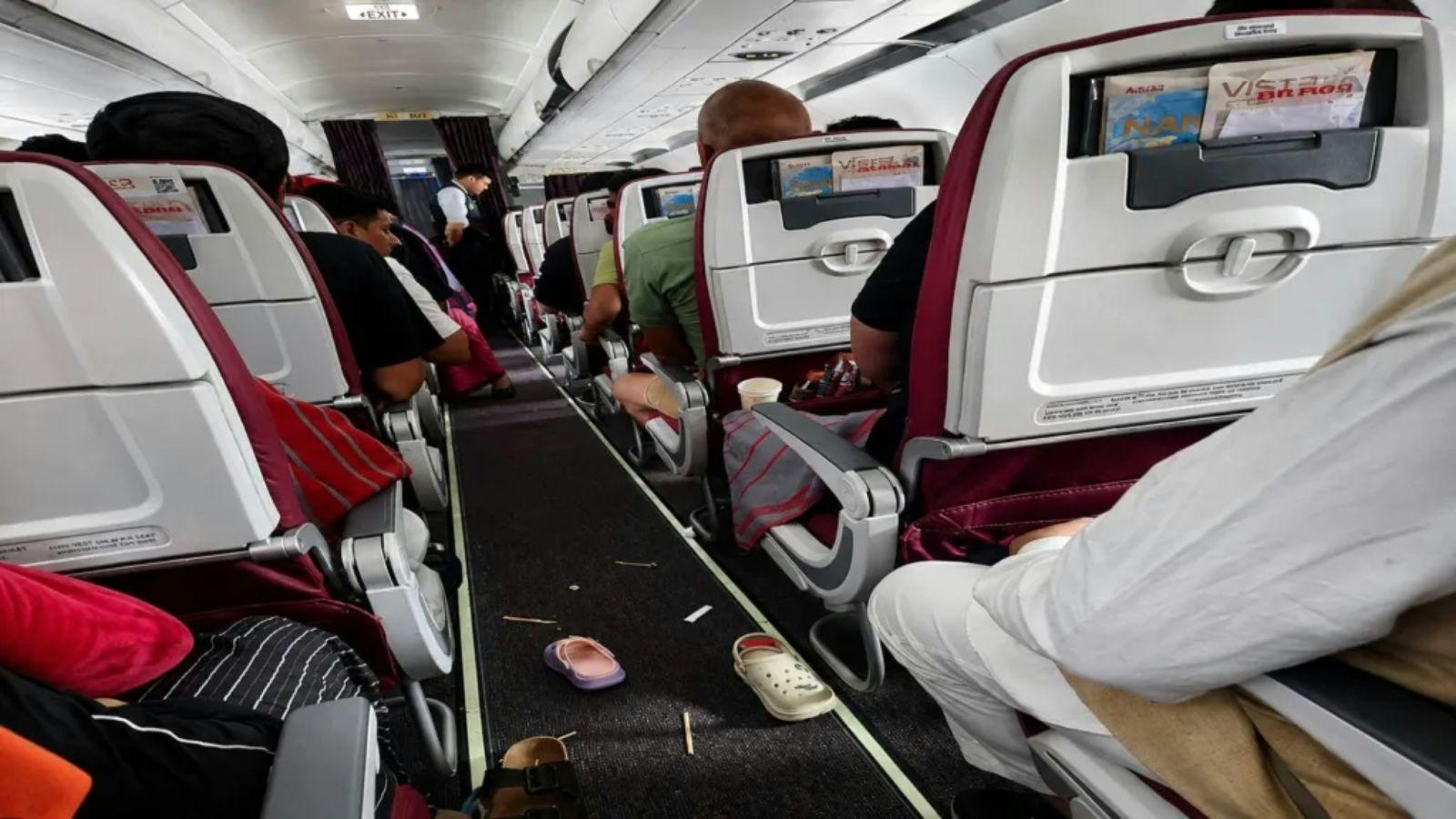
DGCA Mandates Comprehensive Drug Testing for Pilots Following Air India Incident
In the wake of a recent incident involving an Air India pilot who tested positive for marijuana after a sudden loss of altitude on a Phuket-Delhi flight, the Directorate General of Civil Aviation (DGCA) has issued a directive mandating a one-time drug test for all pilots employed by Indian airlines. This order, issued in August, requires that the tests be completed by July of next year and affects approximately 14,000 pilots across the country’s carriers.
Incident and Immediate Response
The incident on August 4 triggered swift action from Air India, which promptly initiated drug testing for all its pilots, including those at its budget subsidiary, Air India Express. The airline also introduced a voluntary self-declaration process, encouraging employees to report any use of psychoactive substances. Both pilots involved in the Phuket-Delhi flight were immediately removed from duty pending an investigation. This inquiry is being conducted jointly by Indian authorities, Airbus, and France’s air safety agency. Following the Aircraft Accident Investigation Bureau’s confirmation of the pilot-in-command’s positive drug test, Air India terminated the pilot’s employment. The airline’s CEO has since been summoned by the Ministry of Civil Aviation to address the issue.
Regulatory Framework and Proposed Changes
Under current DGCA regulations, annual random drug testing is conducted on 10% of pilots and air traffic controllers, as stipulated in the Civil Aviation Requirements (CAR) implemented on January 31, 2022. These regulations also extend to other safety-sensitive aviation personnel, including aircraft maintenance engineers, certifying staff, trainee pilots, instructors, and examiners, who undergo testing upon hiring or following specific incidents.
However, the Air India case has intensified calls for more rigorous protocols. Civil Aviation Minister K Rammohan Naidu has indicated that the DGCA is preparing to release a draft of stricter norms for testing aviation personnel for psychoactive substances by the end of the month. The Ministry of Civil Aviation has recommended moving beyond the current random sampling approach to mandate annual drug tests for all pilots.
Testing Procedures and Future Oversight
According to the existing DGCA CAR, urine samples collected for drug testing are divided into two containers. An initial screening is conducted immediately, and if the result is ‘non-negative’—indicating the possible presence of psychoactive substances—the pilot is removed from flying duties pending a confirmatory test using the second sample.
While the DGCA had been reviewing its drug testing regulations prior to the incident, the Phuket-Delhi case has accelerated efforts to implement comprehensive testing and enforce stricter disciplinary measures in confirmed cases of drug abuse. The new directive requiring all airline pilots to undergo a one-time drug test within the next 12 months represents a significant tightening of regulatory oversight aimed at enhancing aviation safety.

Etihad Airways Suspends Airbus A380 Flights on Key Route

Aditya Birla Group Seeks Approval for Aircraft Leasing in GIFT City

Qatar Airways Highlights Innovation and Connectivity at Arabian Travel Market 2026

Hong Kong's Five-Year Plan Includes Andrew Fan's Aircraft Parts Processing Hub Proposal

ACIA Aero Leasing Delivers ATR72-600 to Air Nostrum

RTX Appoints Jill Albertelli as Head of Pratt & Whitney

TAT Technologies Joins Beyond Aero Hydrogen Aircraft Program

AURAK Study Highlights Barriers to Air Taxi Adoption in Emerging Economies

Xiamen Air Selects Altitude for 787 Maintenance at Heathrow

Etihad and Swissport Extend Global Partnership
