
حوّل رؤى الذكاء الاصطناعي إلى أفعال منسّقة

الرائج الآن
Categories
Do Aircraft Engines Require Antifreeze in Winter?
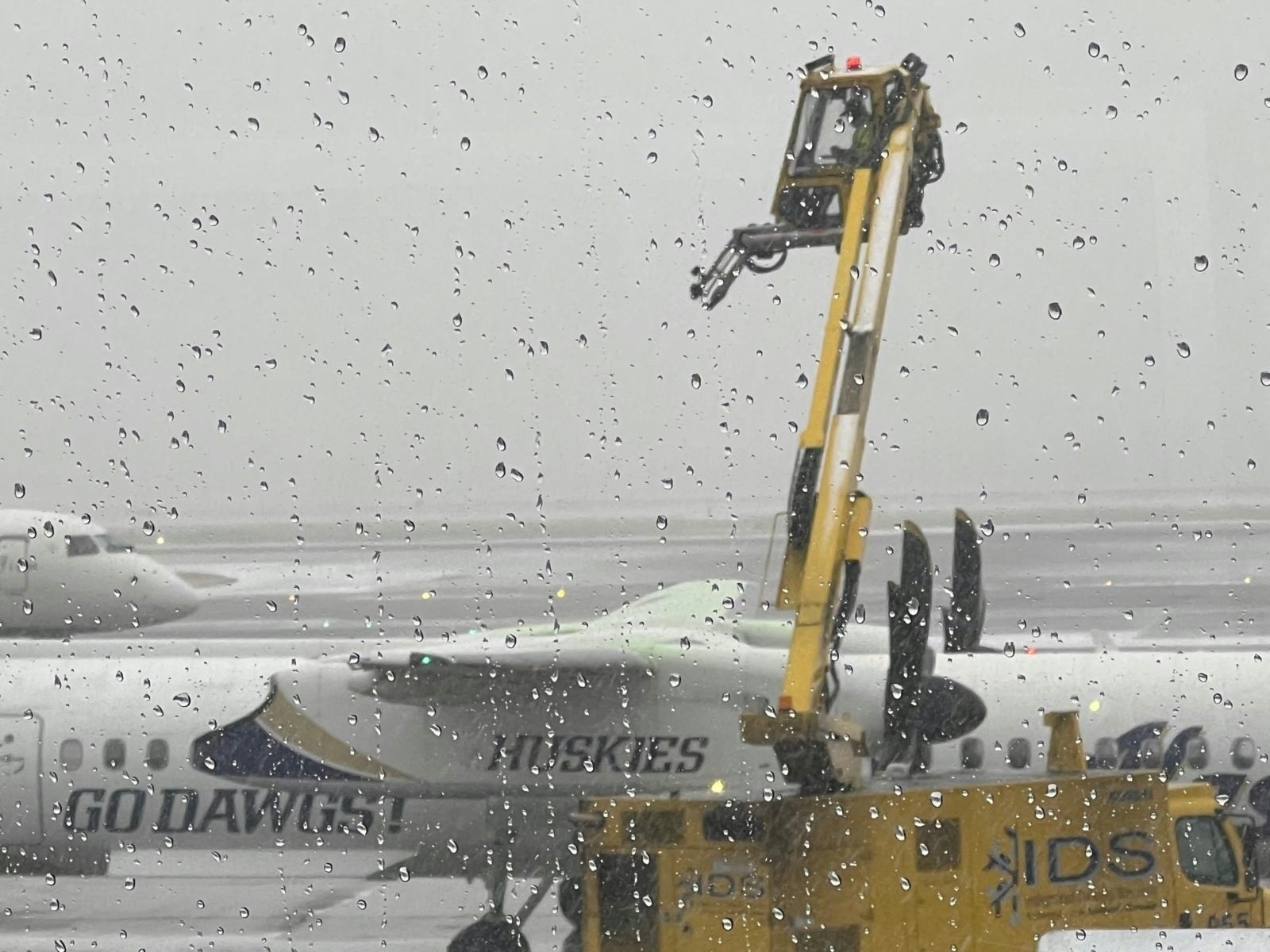
Do Aircraft Engines Require Antifreeze in Winter?
Modern jet engines are designed to endure extreme cold, but a comprehensive understanding of the interplay between fuel, oil, and temperature is essential for safe winter operations. While the notion of adding antifreeze to aircraft engines may appear reasonable, the reality is considerably more complex.
Fuel Characteristics and Cold-Weather Operations
The primary concern during cold-weather operations is the behavior of aviation fuel. Jet-A fuel, the standard for turbine engines, has a freezing point near -40°C, which generally suffices for most winter environments. Many commercial operators prefer Jet-A1, a variant enhanced with additives that lower the freezing point to approximately -47°C, offering additional safety margins for high-altitude or polar flights. Although the likelihood of fuel solidification within the tank is low at these temperatures, flight crews must remain vigilant when operating close to these thresholds.
Thermal Management Within the Engine
A vital component in many turbine engines is the Fuel Oil Heat Exchanger (FOHE), which exploits the temperature differential between hot engine oil and cold fuel. As fuel travels toward the combustion chamber, it passes through the FOHE, where it is warmed by the engine oil. This process maintains fuel fluidity while simultaneously cooling the oil, thereby optimizing engine performance. Crucially, the FOHE relies on the engine’s own thermal energy, obviating the need for chemical antifreeze additives.
Challenges of Cold Soak and Operational Procedures
Aircraft exposed to prolonged cold conditions experience a "cold soak," during which fuel, oil, hydraulic fluids, and metal components equilibrate to ambient temperatures. Under these circumstances, oil viscosity increases, potentially causing elevated oil pressures during engine start. Fuel may approach its freezing point or develop wax crystals that risk clogging filters. Hydraulic systems may respond sluggishly, and batteries or auxiliary power units can underperform.
To mitigate these risks, flight crews undertake several precautionary measures. They monitor fuel and oil temperatures prior to engine start, employ preheating methods such as heaters or external power units when available, and initiate slow, controlled engine starts while closely observing oil and hydraulic pressures. Engines are gradually warmed during taxi to prevent undue stress on cold components, and control surfaces are carefully inspected for stiffness. Adherence to detailed documentation, winter checklists, and manufacturer cold-soak limitations is critical to ensuring safe operations and preventing mechanical damage.
Industry Responses to Extreme Cold Conditions
Despite advanced engineering, extreme cold continues to pose operational challenges. Recently, Airbus imposed restrictions on cold-weather takeoffs for certain aircraft equipped with Pratt & Whitney engines, following difficulties encountered in severe conditions characterized by freezing fog and visibility below 150 meters. This development highlights the ongoing imperative for engine reliability and adaptability in harsh winter environments. Pratt & Whitney is actively pursuing solutions to these issues, underscoring that even with sophisticated systems like the FOHE and specialized fuels, winter operations demand continuous vigilance and adaptation.
Conclusion
Modern turbine engines do not require traditional antifreeze additives, owing to advanced fuel formulations and integrated thermal management systems. Nonetheless, extreme cold conditions can still challenge engine performance, as evidenced by recent operational limitations. Through rigorous procedures and ongoing technological advancements, aircraft engines continue to operate safely and efficiently amid the most demanding winter conditions.

Etihad Airways Suspends Airbus A380 Flights on Key Route

Aditya Birla Group Seeks Approval for Aircraft Leasing in GIFT City

Qatar Airways Highlights Innovation and Connectivity at Arabian Travel Market 2026

Hong Kong's Five-Year Plan Includes Andrew Fan's Aircraft Parts Processing Hub Proposal

ACIA Aero Leasing Delivers ATR72-600 to Air Nostrum

RTX Appoints Jill Albertelli as Head of Pratt & Whitney

TAT Technologies Joins Beyond Aero Hydrogen Aircraft Program

AURAK Study Highlights Barriers to Air Taxi Adoption in Emerging Economies

Xiamen Air Selects Altitude for 787 Maintenance at Heathrow

Etihad and Swissport Extend Global Partnership
