
حوّل رؤى الذكاء الاصطناعي إلى أفعال منسّقة

الرائج الآن
Categories
Editorial: How AI Companies Are Profiting from Deceased Users' Data
Editorial: How AI Companies Are Profiting from Deceased Users' Data
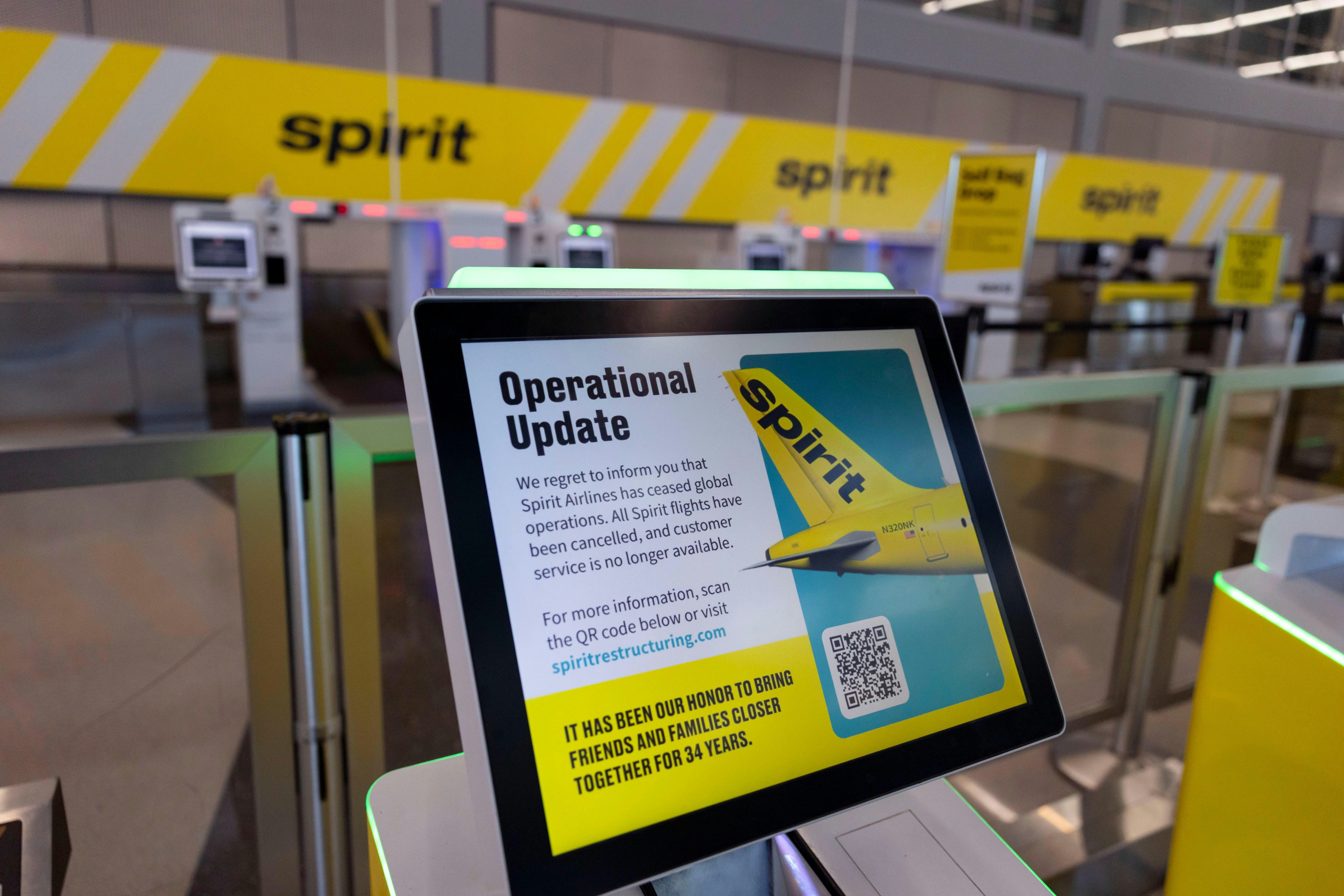
The Acquisition of Spirit Airlines’ Digital Archive
In an era where leaving a job often means losing access to one’s digital workspace, few anticipate that their former employer might profit from their digital legacy after the company ceases to exist. This scenario unfolded recently with Spirit Airlines, the now-defunct ultra-low-cost carrier. Earlier this month, Google emerged as the highest bidder in a $10 million deal—not for Spirit’s physical assets, but for its extensive digital archive. The acquisition included approximately 100 million emails, 500 million Teams messages, and vast quantities of code.
This transaction raises questions about the value of such data. For Google, Spirit’s digital records represent a valuable resource for training artificial intelligence systems. Rather than relying solely on traditional sources like books or news articles, AI can now learn from authentic business communications—ranging from out-of-office replies and customer complaints to routine operational exchanges. The objective is to enable AI to better understand human collaboration within organizations, even when those organizations have ultimately failed.
Privacy Concerns and Ethical Implications
Google has assured that the data will be randomized to safeguard individual privacy. However, given the sheer volume of information involved, skepticism remains widespread. The notion of AI systems analyzing the digital remnants of a defunct company conjures a dystopian image: algorithms dissecting human errors to improve future performance. Despite these concerns, the practice of acquiring and utilizing such data is rapidly becoming normalized amid the competitive drive for AI advancement.
This development presents significant challenges for AI companies. Cybersecurity risks loom large, as massive datasets are attractive targets for breaches. Compliance with international privacy regulations adds further complexity, especially as authorities intensify scrutiny over how personal and corporate data are repurposed. Additionally, the substantial capital investment required to acquire data and build sophisticated data centers places considerable pressure on companies to sustain profitability.
Market Dynamics and Industry Implications
Investor and public apprehension about the monetization of data—particularly from defunct organizations or deceased users—is growing. Meanwhile, competitors are aggressively investing in their own data infrastructure and AI research to avoid falling behind, intensifying the race to develop more advanced AI systems.
From the perspective of AI proponents, Google’s purchase is a strategic move. The wealth of customer complaints and internal communications from Spirit could enhance the ability of future AI agents to manage similar issues more effectively. Yet, as the industry accelerates, critical questions arise about the wisdom of relinquishing control over our collective digital histories. The broader implications for privacy, security, and the evolving nature of work remain uncertain and warrant close attention.

Etihad Airways Suspends Airbus A380 Flights on Key Route

Aditya Birla Group Seeks Approval for Aircraft Leasing in GIFT City

Qatar Airways Highlights Innovation and Connectivity at Arabian Travel Market 2026

Hong Kong's Five-Year Plan Includes Andrew Fan's Aircraft Parts Processing Hub Proposal

ACIA Aero Leasing Delivers ATR72-600 to Air Nostrum

RTX Appoints Jill Albertelli as Head of Pratt & Whitney

TAT Technologies Joins Beyond Aero Hydrogen Aircraft Program

AURAK Study Highlights Barriers to Air Taxi Adoption in Emerging Economies

Xiamen Air Selects Altitude for 787 Maintenance at Heathrow

Etihad and Swissport Extend Global Partnership
