صورة

أيروجيني — مساعدك الذكي للطيران.

اسأل عن أي شيء. قم بتحليل كل شيء. تصرّف فورًا.

الرائج الآن

Categories

Egypt Unveils Expanded Aviation Strategy Focused on Sustainability and Digital Transformation
April 22, 2026By ePlane AI
Egypt Unveils Expanded Aviation Strategy Focused on Sustainability and Digital Transformation
0
0
Egypt Aviation Strategy
Sustainability
Digital Transformation

Egypt Unveils Expanded Aviation Strategy Focused on Sustainability and Digital Transformation

Egypt’s Minister of Civil Aviation, Sameh El-Hefny, has announced a comprehensive strategy aimed at modernizing the nation’s aviation sector. The initiative seeks to enhance Egypt’s global competitiveness while emphasizing sustainability and digital innovation. Presented during a session with the House of Representatives’ tourism and aviation committee, the plan addresses pressing challenges such as rising airfares, infrastructure development, fleet expansion, and preparations for the forthcoming Hajj season.

Addressing Operational Challenges and Infrastructure Expansion

El-Hefny explained that recent increases in ticket prices, particularly on return flights from Gulf countries, stem from exceptional operational difficulties. These include extended flight routes caused by regional tensions, reduced passenger occupancy on certain routes, and escalating costs related to fuel, insurance, and operations. Despite these pressures, EgyptAir remains committed to safeguarding passenger rights and maintaining consistent flight schedules.

A pivotal component of the strategy is the construction of Terminal 4 at Cairo International Airport, which will increase the airport’s capacity to over 60 million passengers annually. This new terminal is designed to incorporate advanced technologies aimed at improving operational efficiency and enhancing the passenger experience, thereby reinforcing Cairo’s position as a key regional aviation hub.

Fleet Expansion and Tourism Integration

The expansion of EgyptAir’s fleet forms another critical element of the plan, with 34 new aircraft expected to be added by 2030/2031, increasing the total fleet size to 97. EgyptAir has improved its standing in the global aviation industry, currently ranked 68th in the 2025 Skytrax list of the world’s top 100 airlines. The airline is also targeting the elimination of accumulated financial losses within four years.

Air Cairo, recognized as a significant contributor to Egypt’s tourism sector, currently operates 41 aircraft and aims to double its fleet to 82 within the same timeframe. The airline accounts for approximately 20% of inbound tourism to Egypt and nearly 30% of arrivals at Hurghada International Airport. Efforts are underway to better integrate Air Cairo’s operations with those of EgyptAir to enhance efficiency and expand market reach.

Commitment to Sustainability and Digital Transformation

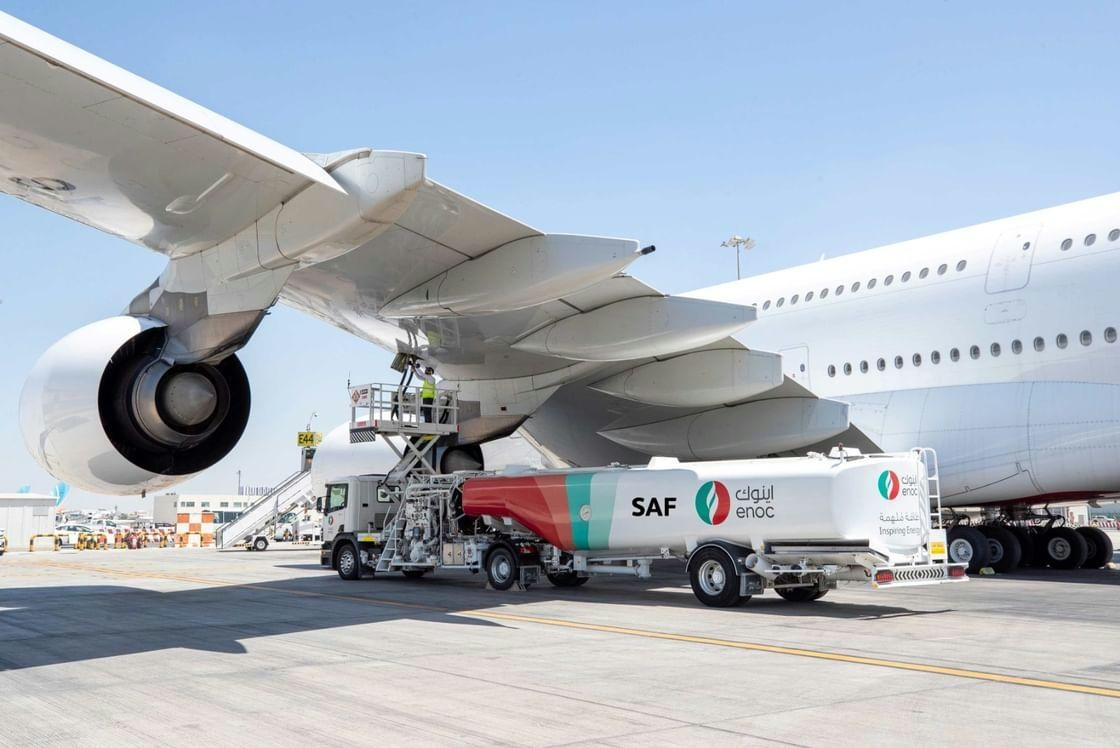
Sustainability is central to Egypt’s aviation strategy. Solar energy is already utilized at Cairo and Alexandria airports, with plans to extend this renewable energy use nationwide. The ministry is also exploring the establishment of a domestic facility for producing Sustainable Aviation Fuel (SAF), aligning with global objectives to achieve net-zero carbon emissions by 2050.

On the digital front, significant progress has been made, including the introduction of a fully digital passport system for Egyptian travelers at Cairo Airport. Developed in collaboration with the Ministry of Interior, this system will be gradually implemented at other airports, supporting the sector’s broader digital transformation goals.

Challenges and Regional Implications

Despite the ambitious scope of the strategy, challenges remain. Integrating sustainability and digital initiatives amid ongoing global air travel disruptions and increasing air traffic demands will test the resilience of Egypt’s aviation sector. Market analysts are closely monitoring Egypt’s ability to fulfill its sustainability commitments and implement digital upgrades effectively. Additionally, regional competitors may adopt similar strategies, potentially reshaping aviation partnerships and alliances within the Middle East and North Africa.

Preparations for the upcoming Hajj season were also reviewed, with enhanced operational readiness measures to ensure smooth travel for pilgrims. Members of parliament praised the ministry’s recent regulatory reforms, which aim to improve the investment climate and accelerate digital transformation within the sector.

Minister El-Hefny concluded by reaffirming the government’s dedication to building a sustainable, efficient, and globally competitive aviation industry, positioning Egypt to navigate the evolving challenges and opportunities in the international aviation landscape.

More news
Delta CEO Ed Bastian Warns Against Labeling AI as 'Scary'

Delta CEO Ed Bastian Warns Against Labeling AI as 'Scary'

Delta CEO Ed Bastian Urges Caution in AI Messaging Delta Air Lines CEO Ed Bastian has called for a more measured approach in how companies discuss artificial intelligence, cautioning that the term "AI" can unnecessarily alarm both employees and customers. In an interview with *Fortune*, Bastian explained that he intentionally avoids using the phrase "artificial intelligence" in internal and external communications, describing it as "too scary." He noted that the term often evokes fears of job displacement or loss of control before any substantive conversation about the technology’s benefits can take place. Bastian remarked, "You want to scare people? Tell them that artificial intelligence is coming for you." He stressed that business leaders bear the responsibility of framing emerging technologies in ways that foster confidence rather than anxiety. According to him, employing language laden with science-fiction connotations is a strategic misstep that can erode trust and impede the adoption of new tools. Practical Implementation and Industry Context Despite his reservations about the terminology, Bastian emphasized that Delta is actively embracing AI-driven technologies. The airline has integrated machine learning and automation into various aspects of its operations, including scheduling, predictive maintenance, and customer service. Automated systems are now instrumental in minimizing delays and efficiently rerouting passengers during disruptions. For Bastian, the emphasis should be on communicating the tangible benefits of these technologies rather than focusing on the label itself. Bastian’s comments arrive amid a broader corporate reckoning with AI adoption, as many executives seek ways to introduce these technologies to workforces concerned about job security and operational changes. His public stance highlights an ongoing debate over how best to frame AI within organizations. While investors, vendors, and the media often treat "AI" as a neutral or even positive term, frontline employees frequently associate it with uncertainty and risk. This debate is particularly salient given the mixed market reactions to AI integration. Some investors may view Bastian’s remarks as reassurance that Delta regards AI as a tool for operational improvement rather than a threat, potentially lending stability to the airline’s stock. Meanwhile, skepticism remains among those apprehensive about AI’s impact on employment and costs. Competitors may leverage this moment to showcase their own AI initiatives, positioning themselves as more aggressive adopters, while others may opt for a more cautious or reserved approach. The divergence in corporate strategies is evident across industries. In the same week as Bastian’s remarks, IBM reported strong earnings driven by AI product demand, openly embracing the AI label as a key growth factor. Simultaneously, discussions and tutorials on AI tools, such as CoinGecko’s recent guide on integrating real-time data into AI agents, demonstrate how deeply AI conversations have permeated beyond traditional technology sectors. Bastian’s perspective underscores a critical communication challenge: while the tech industry and investors may regard "AI" as a straightforward term, for many employees the word still carries significant emotional weight. As AI adoption accelerates, the manner in which companies choose to communicate about these technologies may prove as consequential as the innovations themselves.
Delta CEO Ed Bastian Avoids Term ‘Artificial Intelligence,’ Citing Public Fear

Delta CEO Ed Bastian Avoids Term ‘Artificial Intelligence,’ Citing Public Fear

Delta CEO Ed Bastian Avoids Term ‘Artificial Intelligence,’ Citing Public Fear Reframing the Technology Debate Delta Air Lines CEO Ed Bastian has deliberately avoided using the term “artificial intelligence” to describe the company’s technological advancements, citing concerns over public fear and misunderstanding. Speaking at the Great Place to Work’s For All Summit in Las Vegas, Bastian expressed that the phrase “artificial intelligence” tends to provoke unnecessary anxiety. “I think it’s a mistake to call anything artificial,” he remarked, adding that the term can alarm people by suggesting a threat to their jobs or livelihoods. Instead, Bastian advocates for the use of “augmented intelligence,” a term he believes better captures the technology’s purpose as a supportive tool rather than a replacement for human workers. He emphasized that Delta’s approach is to empower employees, enabling them to perform their roles more effectively. “I want our employees to see it as a tool to enable them to do their jobs better, not to replace them, but to enhance them,” Bastian said. He reassured that the airline has no intention of using automation to reduce headcount, but rather to redeploy staff toward improving customer service as routine tasks become automated. Industry Context and Challenges Bastian’s cautious stance on AI terminology comes amid growing scrutiny of the airline industry’s adoption of new technologies and their impact on employment. He acknowledged that job roles and skills will continue to evolve, as they have historically, but warned that the rapid pace of AI development combined with media hype can exacerbate fears unnecessarily. Highlighting Delta’s experience, he noted that automation has allowed employees to transition from traditional roles such as gate agents and reservation desk staff to more customer-facing positions, enhancing the overall travel experience. However, this reluctance to embrace the AI label may pose challenges for Delta in a competitive landscape where innovation is closely tied to investor and consumer confidence. Industry observers suggest that avoiding the term “artificial intelligence” could lead to skepticism about Delta’s technological capabilities, especially as rival airlines aggressively promote their AI initiatives to demonstrate operational efficiency and market leadership. Navigating Market Volatility and Industry Restructuring Despite these technological debates, Bastian reported that Delta’s business fundamentals remain robust. He described demand as “pretty strong” and noted that customers continue to travel despite the pressures of rising fuel costs. “Fuel prices can double in 30 days, as they just have. Wars can break out. Geopolitical shocks ripple immediately into airline demand and costs,” he said, underscoring the volatile environment airlines must manage. Bastian also addressed broader industry challenges, warning that carriers focused solely on low pricing and unable to cover their cost of capital may face significant restructuring. He referenced the recent difficulties faced by Spirit Airlines and the long history of once-prominent carriers that have disappeared, suggesting that survival will require strategic reorganization. As Delta advances its technological investments while carefully managing public perception, Bastian’s approach highlights the complex balance airlines must maintain between embracing innovation, preserving workforce stability, and sustaining market confidence.
Pratt & Whitney Opens Engine Parts Plant in Morocco

Pratt & Whitney Opens Engine Parts Plant in Morocco

Pratt & Whitney Expands Global Production with New Engine Parts Facility in Morocco Pratt & Whitney Canada has officially opened a new manufacturing plant for airplane engine parts in Morocco, marking a strategic expansion of its global production capabilities. The 130,000-square-foot facility is situated in the Midparc Industrial Zone in Nouaceur, near Casablanca. It will focus on producing detailed static and structural machined components for Pratt & Whitney Canada aircraft engines, including the widely utilized PT6 engine family. Strategic Growth and Local Impact The new plant is projected to generate around 200 jobs by 2030, aligning with the company’s objective to meet increasing customer demand for dependable aircraft engines. Maria Della Posta, president of Pratt & Whitney Canada, emphasized that the facility represents a critical extension of the company’s global production network. She highlighted the commitment to building resilient supply chains that will enable higher production volumes. Furthermore, Della Posta noted the importance of collaboration with local organizations to cultivate the next generation of aerospace professionals, reinforcing Morocco’s emerging status as a key player in the aerospace sector. Since construction began in 2024, the plant has made swift progress toward becoming fully operational. Efforts have concentrated on recruiting and training a skilled workforce, alongside installing advanced machining equipment. The facility is designed around lean manufacturing principles and incorporates digital systems intended to improve quality, efficiency, and overall operational performance. Challenges and Market Implications Despite the promising outlook, Pratt & Whitney faces several challenges as it scales up operations in Morocco. Successfully navigating the local regulatory framework, managing complex supply chain logistics, and addressing potential labor market constraints will be essential for the plant’s sustained success. The expansion has attracted significant attention from market analysts, who suggest that this move could enhance investor confidence in RTX’s broader global growth strategy. RTX, the U.S.-based parent company of Pratt & Whitney, is a prominent leader in the aviation industry. The competitive landscape is also expected to respond to Pratt & Whitney’s expansion. Rivals such as GE Aerospace may accelerate their own capacity increases or focus on developing durability improvement kits for their engines, intensifying the competition to capture a larger share of the growing aircraft engine market. RTX’s Presence in Morocco and Global Reach Pratt & Whitney, headquartered in Longueuil, Quebec, is a subsidiary of RTX, which also operates Collins Aerospace in Morocco. Collins Aerospace has maintained a presence in the country since 2012, manufacturing cockpit solutions and flight controls. Together, these RTX entities employ approximately 250 people in Morocco. Pratt & Whitney specializes in the design, manufacture, and servicing of aircraft engines and auxiliary power units for military, commercial, and civil aviation sectors. The company supports a fleet of more than 90,000 engines currently in service worldwide, underscoring its significant role in the global aerospace industry.
Airports at YVR, MUC, PIT, and YEG Advance Sustainability Through Innovation and Collaboration

Airports at YVR, MUC, PIT, and YEG Advance Sustainability Through Innovation and Collaboration

Airports at YVR, MUC, PIT, and YEG Advance Sustainability Through Innovation and Collaboration Sustainability is increasingly defining the trajectory of the air transport sector as the industry intensifies efforts to reach net-zero carbon emissions by 2050. In alignment with the Earth Day 2026 theme, “Our Power, Our Planet,” airports around the globe are transforming ambitious climate objectives into concrete actions. Recent discussions with leaders from Vancouver International Airport (YVR), Munich Airport (MUC), Pittsburgh International Airport (PIT), and Edmonton International Airport (YEG) illustrate how innovation and collaboration are driving meaningful progress despite considerable challenges. YVR: Strategic Partnerships Driving Sustainable Innovation At Vancouver International Airport, sustainability initiatives are fueled by strategic partnerships involving government bodies and industry stakeholders. Wendy Avis, Director of Climate and Environment at YVR, emphasizes collaborations with Innovate BC and the Government of British Columbia’s Integrated Marketplace program, which facilitate connections between local companies and real-world airport challenges. These partnerships have enabled projects with British Columbia-based firms such as Tap & Go and Moment Energy, advancing electric vehicle (EV) charging infrastructure, carbon credit reporting, and the exploration of second-life battery applications. YVR has set an operational target of achieving net-zero greenhouse gas emissions by 2030. To meet this goal, the airport is undertaking several key initiatives, including transitioning its fleet vehicles to electric and hydrogen power, installing air-source heat pumps that reduce emissions by approximately 100 tonnes annually, and replacing boilers with high-efficiency units. Additionally, YVR is planning one of Canada’s largest geo-exchange systems, which is projected to save 4,800 tonnes of emissions per year. Where complete elimination of fossil fuels is not yet feasible, the airport employs renewable natural gas and diesel alternatives. Beyond its own operations, YVR collaborates with airlines and partners to mitigate broader aviation impacts. It operates North America’s only low-carbon jet fuel incentive program, which has cut 61,000 tonnes of emissions over two years. The airport also supports extensive electric ground support equipment (eGSE) charging, provides ground power and pre-conditioned air at all gates, and employs Oscar, an AI-powered waste sorting assistant, alongside the annual Waste Wars competition to enhance waste management. A notable partnership with ChopValue has diverted over 1.5 million chopsticks from landfill, avoiding 77 tonnes of emissions. Furthermore, YVR utilizes Digital Twin and Deep Turnaround technologies to reduce aircraft ground time and associated emissions. Industry Challenges and Varied Market Responses Despite these advancements, airports continue to confront significant obstacles. Public awareness of aviation’s environmental footprint remains limited, complicating efforts to garner widespread support for sustainability initiatives. Operational challenges, including elevated unscheduled absences among Transportation Security Administration (TSA) officers and supply chain disruptions affecting clean energy technologies, further impede progress. Market responses to sustainability efforts are mixed. Some airports report increased passenger traffic as travelers respond favorably to green initiatives, while others experience financial pressures. Competitor airports exhibit diverse approaches: Amsterdam Airport Schiphol and London Heathrow are making substantial investments in sustainability and infrastructure, whereas airports such as Porto prioritize operational improvements. Collaboration as a Driving Force The experiences of YVR, MUC, PIT, and YEG highlight the critical role of collaboration among government entities, industry partners, and local communities in advancing sustainability within the aviation sector. As airports navigate operational, financial, and public engagement challenges, their unwavering commitment to innovation remains central to achieving net-zero ambitions and fostering a more sustainable future for air travel.
Inside New York JFK’s New Terminal 1 and Its 22 Widebody Gates

Inside New York JFK’s New Terminal 1 and Its 22 Widebody Gates

Inside New York JFK’s New Terminal 1 and Its 22 Widebody Gates The Port Authority of New York and New Jersey is advancing its comprehensive modernization of the region’s principal airports, establishing new benchmarks for terminal design and functionality in the United States. Following the acclaimed renovations of LaGuardia’s Terminals B and C, as well as Newark’s Terminal A—each recognized with five-star SkyTrax ratings and international praise—the focus has now shifted to John F. Kennedy International Airport (JFK). Although JFK has largely avoided the severe criticism directed at LaGuardia’s outdated infrastructure, several of its five terminals have fallen short of contemporary global standards. This situation is set to change with the introduction of the new Terminal One, slated for a partial opening in June 2026. Valued at $9.5 billion, this expansive project will become the largest international terminal in the United States, encompassing 2.6 million square feet and featuring 23 gates, 22 of which are capable of accommodating widebody aircraft. A New Era for JFK The terminal’s phased rollout will commence with 14 gates on the east side, accompanied by a new arrivals and departures hall. Additional gates will be brought online in stages, with five more opening on the west side by 2028 and the final five by 2030, marking the terminal’s full completion. This new Terminal One replaces the existing Terminal One and is constructed on the site of the former Terminal Two, effectively more than doubling JFK’s gate capacity. The project is financed by a consortium known as New Terminal One, comprising Ferrovial, Carlyle Group, JLC Infrastructure, and Ullico. The terminal will accommodate 22 international airlines, many of which will relocate from other JFK terminals. Notably, four gates will be equipped to handle the Airbus A380, although Korean Air remains the sole carrier currently planning to operate the superjumbo aircraft from this facility. Competitive Dynamics and Industry Impact The expansion of widebody gate capacity at JFK arrives at a critical juncture for U.S. carriers. Delta Air Lines and United Airlines have been steadily increasing their widebody fleets to leverage profitable long-haul routes. In contrast, American Airlines faces challenges due to a comparatively limited backlog of widebody aircraft, potentially constraining its ability to expand international operations. As competitors position themselves to capitalize on the enhanced capacity at JFK, industry analysts suggest that American may need to reevaluate its fleet strategy to maintain competitiveness in the evolving international travel market centered on New York. Passenger Experience and Amenities Travelers can expect a terminal that offers over 300,000 square feet of retail and dining options, designed to compete with the world’s premier airport environments. The terminal’s contemporary architecture and advanced amenities are intended to establish a new standard for passenger comfort and operational efficiency. This development underscores the Port Authority’s commitment to transforming New York’s airports into leading global gateways. With its vast scale, cutting-edge facilities, and emphasis on international connectivity, JFK’s new Terminal One is set to redefine the passenger experience while intensifying competition among airlines vying for a larger share of transatlantic and global travel markets.
Aircraft Connected to Humboldt Crashes Near Seattle

Aircraft Connected to Humboldt Crashes Near Seattle

Aircraft Connected to Humboldt County Makes Emergency Landing Near Seattle A small twin-engine aircraft linked to Humboldt County crash-landed near Seattle on Saturday, April 18, following a mid-flight engine failure. The 1964 Piper PA-30 Twin Comanche, registered as N741TJ, had been operating regularly out of Murray Field in Eureka since at least January, according to flight tracking data. Incident Details and Pilot Response The aircraft departed Eureka that morning on a journey northward, expected to last approximately two and a half hours. Midway through the flight, as the plane approached the Seattle area, the pilot reported engine trouble. Initially, the pilot aimed to land at Renton Airport, but as the situation deteriorated, the aircraft was diverted toward Auburn. Nearing Auburn, the plane lost its second engine, forcing an emergency landing at a construction site. The female pilot sustained non-life-threatening injuries and was hospitalized for evaluation, while a male passenger aboard the aircraft escaped unharmed. Aviation analyst Juan Browne, an airline pilot and former Air Force instructor who operates the blancolirio YouTube channel, reviewed the incident. Air traffic control communications reveal the pilot declared an emergency after losing one engine and later informed controllers of her intention to attempt a landing in an open area due to the loss of both engines—a rare and perilous situation for a twin-engine aircraft. Despite these challenges, the pilot successfully landed the plane without serious injury. Aircraft History and Ownership Flight records show the aircraft had been active in the Pacific Northwest region, frequently flying between Eureka and destinations including Redding, Crescent City, Portland, and Gold Beach. Many flights originated and concluded at Murray Field, indicating the plane was either based locally or regularly operated out of Humboldt County. Federal Aviation Administration records list the aircraft’s registration under Jackson Thomas R. Jr. of Spearfish, South Dakota. A source familiar with the plane informed Redheaded Blackbelt that it belongs to former Cal Poly Humboldt president Tom Jackson Jr., who is known to be a pilot and previously worked in Spearfish. Attempts to contact Jackson for confirmation have not been successful. Authorities have not disclosed the pilot’s identity. Investigation and Broader Context The cause of the dual engine failure remains under investigation. Browne noted that incidents of this nature often lead to scrutiny of fuel levels, fuel system management, and mechanical faults, though no official findings have been released. Witnesses reported hearing an engine sputter before falling silent shortly before the emergency landing, which occurred two to three miles short of Auburn Municipal Airport. This incident arrives amid heightened attention to aviation safety, coinciding with recent legislative efforts aimed at preventing midair collisions. It also unfolds against a backdrop of geopolitical tensions, particularly ongoing U.S.-China friction that threatens Boeing’s delivery schedules and order book in the Asia-Pacific region. Such developments may prompt increased scrutiny of aviation safety protocols and influence market dynamics. Boeing and its competitors have responded to these challenges by adjusting production rates and strategies, as evidenced by Boeing’s recent industrial reset and return to profitability. The investigation into the emergency landing near Seattle is ongoing, with officials working to determine the factors behind the rare dual engine failure.
First Class Air Shifts Focus to Cargo Aftermarket

First Class Air Shifts Focus to Cargo Aftermarket

First Class Air Rebrands to Strengthen Cargo Aftermarket Presence FCAH Aerospace has officially rebranded as First Class Air, consolidating five aviation aftermarket companies under a single corporate identity to sharpen its focus on the specialized cargo sector. The announcement, made ahead of MRO Americas 2026 in Orlando, brings together Cargo Repair, First Class Air Support, Cobalt Aero Services, Innodyne Systems, and Survival Products under the First Class Air umbrella. Headquartered in Louisville, Kentucky, the company aims to provide customers with a streamlined, single point of access to a comprehensive suite of services, including distribution, maintenance, repair and overhaul (MRO), designated engineering representative (DER) repair, parts manufacturing approval (PMA) production, aircraft teardown, exchange programs, and supply chain support. As part of this reorganization, the company’s AVI business has been rebranded as Survival Products, concentrating its efforts on inflatables and survival equipment under a more focused brand identity. Vice President Fred Sontag explained in an interview at MRO Americas that the rebranding addresses a longstanding challenge in communicating the company’s diverse operations. He noted that the previous FCAH Aerospace name did not clearly convey the company’s purpose or the synergy among its various business units. The new First Class Air name is intended to clarify the company’s core focus and unique value proposition for both employees and customers. Strategic Focus on Aging Cargo Fleets Amid Industry Challenges First Class Air is concentrating its efforts on supporting cargo aircraft, particularly aging freighter fleets, through parts sales, repairs, and labor-intensive MRO services. While the company maintains a smaller original equipment manufacturer (OEM) division producing evacuation slides and rafts, its primary business revolves around servicing cargo aircraft. Sontag highlighted that recent commercial distribution activities, including an imminent distribution agreement, are expected to drive new growth opportunities. The cargo aftermarket is undergoing significant transformation, influenced by aircraft retirements, part-outs, and earlier-than-anticipated parking of freighters. These developments have introduced uncertainty but also created opportunities for companies skilled in sourcing assets and supporting older fleets. Sontag emphasized the continued dominance of the Boeing 747 and 767 models in the cargo aftermarket, with the Boeing 777 increasingly gaining importance as a freighter platform. First Class Air currently manages an inventory exceeding five million parts and serves a global customer base spanning North America, Asia, Europe, and the Middle East. Despite these prospects, the company faces broader industry headwinds. Geopolitical tensions, particularly between the United States and China, threaten to disrupt Boeing’s delivery schedules and order volumes in the Asia-Pacific region, potentially dampening demand for cargo aircraft parts and services. Although air cargo demand is forecasted to grow, the rate of expansion is expected to slow due to weakening global trade. Competitors are adapting in various ways; for instance, the successful inaugural flight of AIR’s heavy-lift cargo unmanned aerial system (UAS) underscores growing interest in autonomous cargo transport. Concurrently, advancements in AI-driven “self-healing supply chains,” such as those pioneered by Flexport, signal a shift toward more resilient and automated logistics frameworks, which may reshape the competitive environment for companies like First Class Air. As the cargo aftermarket continues to evolve, First Class Air’s unified brand and refined strategic focus position it to address the sector’s emerging challenges and capitalize on new opportunities.
GE Continues Work on GE9X Mid-Seal Issue, Says 777-9 Delivery Remains on Track

GE Continues Work on GE9X Mid-Seal Issue, Says 777-9 Delivery Remains on Track

GE Advances GE9X Mid-Seal Repair, Confirms 777-9 Delivery Schedule GE Aerospace is progressing with a targeted modification to resolve a durability issue affecting the mid seal of its GE9X engine, assuring that this challenge will not disrupt Boeing’s delivery timeline for the long-delayed 777-9 aircraft. The problem, which became public in February following the discovery of a crack in a GE9X engine used in Boeing’s 777-9 test program, has prompted a concentrated engineering effort from GE. During GE’s first-quarter earnings call, CEO Larry Culp stated that the company believes it has identified the root cause of the mid-seal crack and is in the process of finalizing a corrective modification. “The crack that we uncovered during a shop visit, which is part of a flight-test engine, is something we’ve seen before. We think we are at root cause, and we’re finalising the modification as we speak,” Culp explained. He further noted that GE is updating its tooling and increasing supplier readiness for the revised component. Despite this setback, GE delivered some GE9X engines in the first quarter, although fewer than initially planned. The company anticipates ramping up deliveries in the second half of the year and does not expect the issue to affect its full-year delivery targets. Culp emphasized GE’s transparency with Boeing and the Federal Aviation Administration (FAA), affirming that the company remains aligned with the certification plan communicated to customers. Boeing continues to express confidence in its schedule for the 777-9, targeting certification and the commencement of deliveries in 2027. The manufacturer is also advancing certification efforts for its new 737 Max variants, including the Max 10 and Max 7, with deliveries expected to begin next year. Technical Challenges and Broader Aerospace Efforts The GE9X engine, certified by the FAA in 2020 with a thrust rating of 134,300 pounds (597 kN), has encountered several technical challenges throughout its development. Prior to certification, GE paused testing to address a durability issue involving stator vanes in the high-pressure compressor, which caused excessive exhaust gas temperatures and premature component wear. In 2022, Boeing temporarily suspended 777-9 flight testing after GE identified another temperature-related concern during a borescope inspection. Beyond commercial aviation, GE Aerospace is accelerating development of its T901 engine for the U.S. Army amid uncertain defense budgets. The Army is also advancing its Black Hawk engine upgrade program, highlighting GE’s broader commitment to enhancing durability and performance across its engine portfolio, particularly for operations in demanding environments. GE’s ongoing efforts to modify the GE9X mid seal underscore its dedication to resolving technical issues without jeopardizing critical aircraft programs. Both GE and Boeing maintain that the 777-9 remains on track for its planned entry into service, supported by continued transparency and collaboration with regulatory authorities.
Man Repairs Plane Engine Mid-Flight Without Parachute

Man Repairs Plane Engine Mid-Flight Without Parachute

Man Repairs Plane Engine Mid-Flight Without Parachute A Harrowing Incident in Vienna In a dramatic episode in Vienna, a mechanic found himself precariously perched atop the tail of an aircraft as it unexpectedly took off. Unaware of the mechanic’s presence, the pilot accelerated forward, leaving the man clinging desperately to the plane’s framework. Despite his frantic attempts to signal the pilot, the aircraft continued its flight, eliciting horror from onlookers below who feared a fatal outcome. The ordeal only concluded when the airdrome manager intervened, signaling the pilot to land. The mechanic, though visibly shaken, emerged unharmed and promptly resumed his duties. The Evolution of In-Flight Repairs While such incidents are rare, they highlight a growing trend in aviation where mechanics accompany test flights or long-haul journeys to perform emergency repairs mid-air. This practice has introduced complex challenges, including increased regulatory scrutiny and heightened public safety concerns. Recent cases have led to emergency landings and thorough investigations by aviation authorities, prompting airlines to reevaluate safety protocols and insurance policies. The role of airborne mechanics has a storied history. In 1929, during a record-setting non-stop flight from Los Angeles to New York, Captain Frank Hawks was accompanied by mechanic Oscar Grubb. Packed with 375 gallons of fuel, the cramped cabin forced Grubb to endure eighteen hours of continuous labor, managing fuel pumps and battling noxious fumes without respite. His resourcefulness was evident as he repurposed empty cans to create additional space during brief moments of rest. Innovations and Challenges in Mid-Air Maintenance The challenges of in-flight repairs were further exemplified during American refueling endurance flights. The aircraft known as the “Question Mark” featured a narrow catwalk beside the engine, where Staff Sergeant Roy W. Hooe attempted to clean and replace sparkplugs mid-flight. However, the instability of the aircraft compelled him to abandon the task. Learning from these difficulties, subsequent flights incorporated safer procedures. On the “Fort Worth,” mechanic James Kelly, a former cowboy, performed engine maintenance 2,000 feet above ground while balanced on a narrow plank, equipped with a parachute for safety. He successfully changed sparkplugs and installed a new tachometer shaft under these precarious conditions. In response to such daring feats, competitors in the aviation industry have strengthened safety measures and launched public relations efforts to reassure passengers. For instance, on the St. Louis “Robin,” mechanic “Red” Dale Jackson introduced a safety feature that allowed him to climb onto a six-inch-wide catwalk to inspect the engine, ensuring he could safely return to the cabin. Balancing Innovation and Safety As aviation technology advances, the risks and responsibilities borne by airborne mechanics remain under intense scrutiny. Regulatory bodies are increasing oversight, and airlines face mounting pressure to uphold rigorous safety standards. These developments underscore the ongoing tension between the pioneering spirit of early aviation and the imperative to safeguard public safety in contemporary flight operations.
Air Taxi Exterior Component Systems Market Projected to Reach $5.8 Billion by 2036

Air Taxi Exterior Component Systems Market Projected to Reach $5.8 Billion by 2036

Air Taxi Exterior Component Systems Market Projected to Reach $5.8 Billion by 2036 The global market for air taxi exterior component systems is set for significant growth, with recent analysis from Future Market Insights forecasting an expansion to USD 5.8 billion by 2036. This represents a substantial increase from an estimated USD 650 million in 2026, driven by a robust compound annual growth rate (CAGR) of 24.5%. The industry is transitioning from prototype development to full-scale commercial production of electric vertical takeoff and landing (eVTOL) aircraft, marking a pivotal phase in urban air mobility. Market Dynamics and Key Drivers The rapid growth of the air taxi exterior component systems market is underpinned by several critical factors. The commercialization of eVTOL aircraft is accelerating demand for certified exterior components, particularly as manufacturers scale production to support large urban air mobility fleets. The adoption of lightweight composite materials, especially carbon fiber composites, is a major trend, accounting for approximately 65% of the market. These materials are favored for their superior strength-to-weight ratio, durability, and contribution to extending aircraft range, addressing the limitations posed by current battery technologies. Regulatory requirements also play a significant role in shaping the market. Exterior systems must comply with stringent certification standards, including bird strike resistance, environmental durability, and lightning protection, making safety and compliance paramount. Additionally, the need for aerodynamic and acoustic optimization is driving innovation in exterior design, as quieter and more efficient aircraft are essential for urban environments. Market Structure and Industry Trends The air taxi exterior component systems sector encompasses the engineering, manufacturing, and certification of advanced aerodynamic structures for eVTOL aircraft. Within this market, fuselage and canopies represent the leading component segment, accounting for 42% of the market share due to their critical role in structural integrity, passenger safety, and regulatory compliance. The rise of urban air mobility is stimulating investment in air taxi infrastructure, further boosting demand for exterior components. Most of this demand is currently driven by original equipment manufacturers (OEMs) integrating these systems during aircraft production, with a focus on line-fit installations. However, the market faces challenges including complex regulatory certification processes, high development costs associated with advanced materials and rigorous testing, and intense competition from established aerospace manufacturers leveraging their experience and resources. In response, industry participants are expected to pursue strategic partnerships, invest in technological innovation, and expand their market presence to capitalize on the projected growth. Investor interest is anticipated to increase as the sector’s growth trajectory becomes more apparent. Outlook As the air taxi market matures, exterior component systems will remain central to innovation and regulatory scrutiny. The sector’s evolution will be driven by ongoing advancements in composite materials, certification processes, and the development of urban air mobility infrastructure, positioning it as a critical enabler of next-generation aerospace transportation.
line










