صورة

أيروجيني — مساعدك الذكي للطيران.

اسأل عن أي شيء. قم بتحليل كل شيء. تصرف فورًا.

الرائج الآن

Categories

Electric Air Taxi Companies Face Challenges Launching in South Florida

March 9, 2026By ePlane AI
Electric Air Taxi Companies Face Challenges Launching in South Florida
0
0
Electric Air Taxi
Vertical Aerospace
Archer Aviation

Electric Air Taxi Companies Face Challenges Launching in South Florida

Intensifying Competition and Legal Disputes

Last month, executives from Vertical Aerospace, the British manufacturer of a four-engine electric aircraft, visited South Florida to unveil their battery-powered air taxi, the four-seat Valo eVTOL. However, their event in Miami Beach was overshadowed by a legal challenge from American rival Archer Aviation. Just prior to the reception, Archer announced it had filed a patent infringement lawsuit against Vertical in a Texas federal court. The suit alleges that Vertical copied the “novel and award-winning design” of Archer’s Midnight eVTOL, a six-engine aircraft developed through extensive design efforts. Vertical’s CEO, Stuart Simpson, dismissed the allegations as a “pure distraction tactic,” suggesting that such legal actions are a form of flattery rather than a substantive threat.

This legal confrontation underscores the fierce competition emerging within the electric air taxi industry, which is transitioning rapidly from development to commercial rivalry. With billions of dollars in investor capital at stake, companies are racing to secure regulatory approvals and establish market dominance. Beyond litigation, firms are forging strategic partnerships to bolster their positions. For example, Joby Aviation has collaborated with Uber to develop “Uber Air” services, aiming to integrate electric vertical takeoff and landing (eVTOL) aircraft into urban transportation networks.

Regulatory and Market Challenges in South Florida

Launching electric air taxis in South Florida involves significant regulatory and operational challenges. Federal, state, and local authorities are still in the process of evaluating and certifying these new aircraft. The Federal Aviation Administration (FAA) and the U.S. Department of Transportation have initiated pilot programs such as the eVTOL Integration Pilot Program (eIPP) to facilitate the safe deployment of advanced air mobility (AAM) vehicles. These initiatives seek to establish regulatory frameworks that could transform urban transportation by reducing road congestion and enhancing emergency response capabilities.

Public acceptance remains a critical hurdle. While some investors express optimism about the potential of air taxis to alleviate traffic woes, others raise concerns regarding the high energy consumption of these aircraft and the stringent safety standards they must meet. Market reactions have been mixed, reflecting both enthusiasm for the technology’s promise and skepticism about its readiness and broader impact.

Company Plans and Uncertain Timelines

Archer Aviation, headquartered in California, reaffirmed its intention last week to begin operating its Midnight eVTOL in South Florida within the year, as part of the White House’s eIPP initiative. The company has submitted applications to operate in multiple states, including Florida, Texas, Georgia, New York, and California. In December, Archer introduced the Midnight aircraft at a historic Pan American World Airways hangar in Miami’s Coconut Grove and announced plans to develop a regional route network. This network would include landing sites at public airports and new “vertiports” constructed in partnership with investors such as billionaire Stephen Ross.

Meanwhile, Vertical Aerospace continues to promote its eVTOL services in the region, seeking to establish a foothold in the emerging market. However, the timeline for commercial passenger flights remains uncertain. Kevin Adkins, a professor of aviation, remarked, “People try to guess when it will happen,” emphasizing that the path to operational electric air taxi services in South Florida is still fraught with regulatory, technical, and competitive challenges.
More news
CDB Aviation Leases Five A321neo Jets to LATAM
CDB Aviation Leases Five A321neo Jets to LATAM

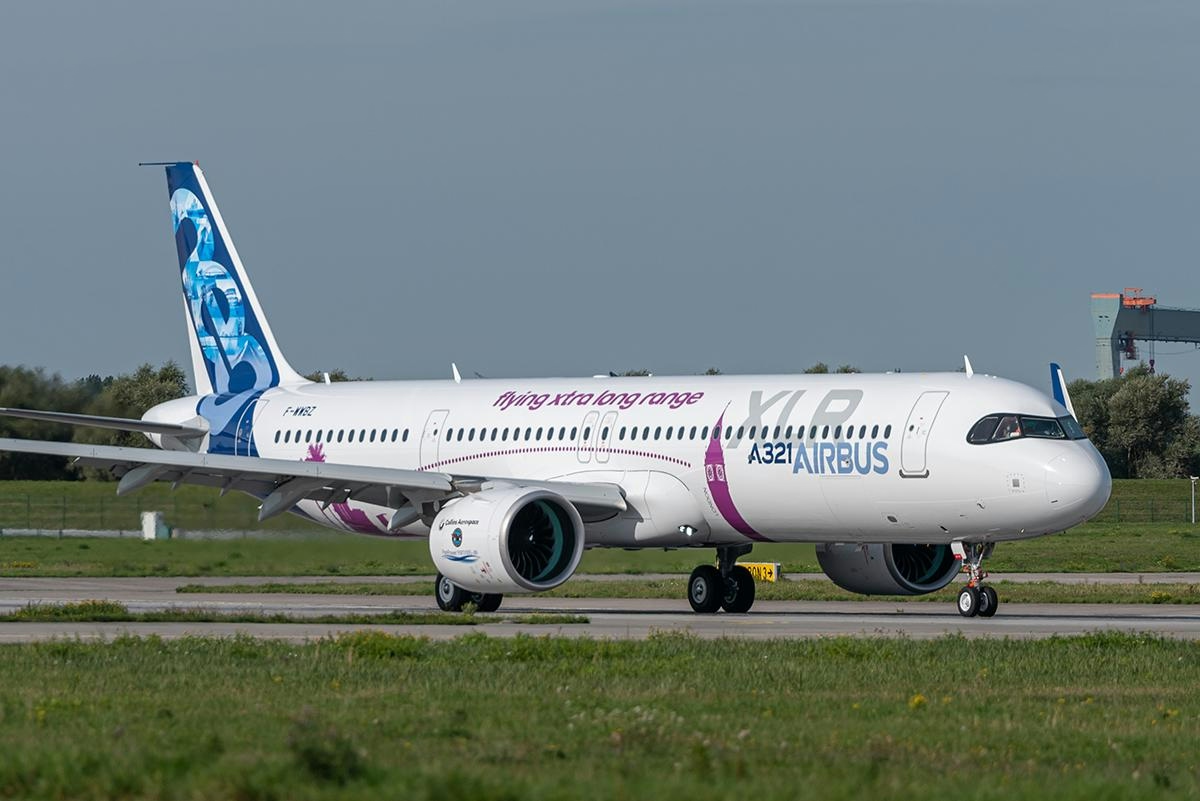
CDB Aviation to Lease Five Airbus A321neo Jets to LATAM Airlines CDB Aviation, the Irish leasing subsidiary of China Development Bank Financial Leasing Co., Ltd., has entered into agreements to lease five Airbus A321-271NX aircraft to LATAM Airlines Group S.A., the largest airline group in Latin America. The announcement was made during the ISTAT Americas conference held in San Diego. Fleet Expansion and Strategic Implications The five new A321neo jets are slated for delivery in the second quarter of 2026 and will augment LATAM’s existing fleet, which already includes one A321neo previously leased from CDB Aviation. This acquisition aligns with LATAM’s broader fleet strategy aimed at enhancing operational flexibility across its hubs while advancing its commitment to modernizing its fleet with next-generation, fuel-efficient aircraft. Luís da Silva, Head of Commercial for the Americas at CDB Aviation, highlighted the importance of this partnership, noting that as air travel demand in South America continues to grow, access to modern aircraft and innovative fleet solutions will be essential for regional carriers. Industry Context and Competitive Landscape The introduction of the A321neo jets occurs amid ongoing challenges within the aviation industry. AerCap CEO Aengus Kelly recently observed that airlines operating advanced fleets are facing increased aircraft downtime due to reliability issues, compelling carriers to acquire additional aircraft to maintain operational schedules. This dynamic is expected to sustain demand for new aircraft as airlines adjust to evolving operational requirements. LATAM’s competitors are also actively responding to market shifts. Brazilian carrier Gol is expanding its fleet with Airbus A330-900neos and is considering further diversification to maintain competitiveness. Concurrently, LATAM is pursuing operational efficiencies by retrofitting more of its Boeing 777 aircraft with AeroShark riblets from Lufthansa Technik, a modification designed to improve fuel performance. CDB Aviation’s latest leasing agreement underscores its strategic focus on expanding its footprint in the rapidly growing South American aviation market. Da Silva emphasized that the company is intensifying outreach efforts to enable carriers like LATAM to capitalize on market growth opportunities while strengthening its presence in this critical region. About LATAM Airlines Group LATAM Airlines Group S.A. operates across five domestic markets—Brazil, Chile, Colombia, Ecuador, and Peru—and provides international services throughout Latin America as well as to Europe, Oceania, Africa, the United States, and the Caribbean. Its diverse fleet includes Boeing 767, 777, 787, and Airbus A319, A320, A320neo, A321, and A321neo aircraft. Forward-Looking Statements This article contains forward-looking statements concerning CDB Aviation’s business and the broader aviation market. Actual outcomes may differ materially due to various risks and uncertainties. Readers are advised not to rely solely on these statements as predictions of future results.
The Engine Investigator

The Engine Investigator

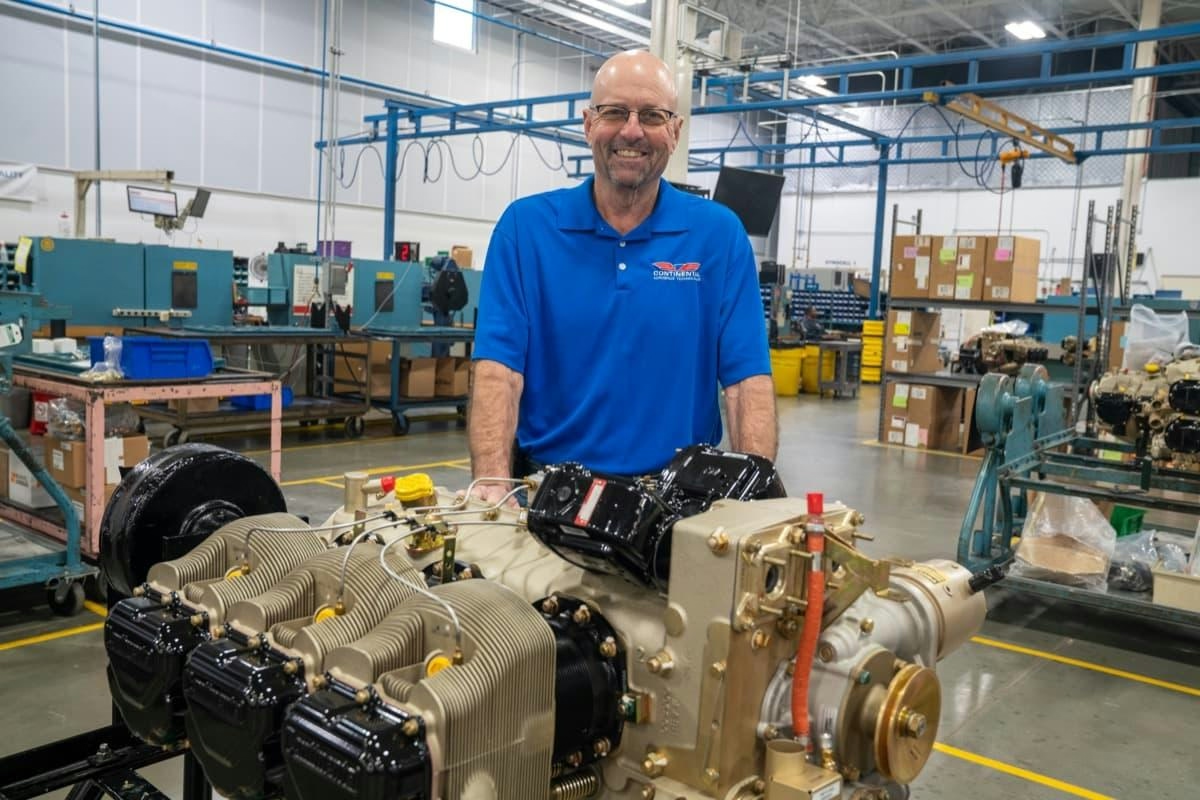
The Engine Investigator With more than three decades of experience, Phillip Grice serves as the Manager of Product Field Performance at Continental Aerospace Technologies, bringing a profound depth of aviation knowledge to his role. For Grice, an aircraft engine transcends its mechanical components; it embodies a story of reliability and innovation essential to sustaining general aviation. Grice’s connection to aviation was forged early in life, having grown up on a family-owned private airport. In a remarkable full-circle moment, he completed his private pilot check ride at the age of 17 with the same Designated Pilot Examiner who had tested his mother while she was eight months pregnant with him. For Grice, aviation has always been more than a profession—it is a lifelong home. Uncovering the Story Behind Every Engine As Continental’s chief technical investigator, Grice leads a specialized team responsible for examining engines sent by the National Transportation Safety Board (NTSB) for detailed inspection. Their primary objective is to identify the root causes of engine failures. Grice notes that improper maintenance and neglect are the most common factors contributing to these failures. Minor oversights, such as missed oil changes or undetected leaking exhaust valves, can escalate into severe and potentially catastrophic engine damage. “An engine will run quite a while with a leaking exhaust valve and the pilot really has no indication of that,” Grice explains. “If it’s not taken care of, the valve can fail, sending metal through the engine—a scenario no pilot wants to face.” He stresses the critical importance of adhering strictly to manufacturer guidelines. “Take care of your engine like you are supposed to and follow the manufacturer’s instructions,” Grice advises. “A&Ps need to follow the manufacturer’s instructions to a T.” Educating for Safety and Innovation To enhance safety and operational knowledge, Continental offers comprehensive two-week training courses designed for pilots and mechanics. The Level One AvGas Class focuses on engine theory and operational parameters, while the Level Two Class provides hands-on experience, allowing participants to disassemble and reassemble engine components. Grice highlights that a thorough understanding of engine mechanics not only improves safety but also cultivates more proficient pilots. A frequent issue encountered by Grice’s team involves incorrect through-bolt torque settings, a detail often overlooked but vital to engine integrity. “The through bolt torque is the most important torque because it holds the whole engine together,” he notes. Navigating Industry Challenges Grice’s responsibilities extend beyond technical investigation to addressing broader industry challenges, including intense market competition, rapid technological advancements, and evolving regulatory frameworks. As innovation and efficiency become increasingly prioritized, Grice and his team are tasked with ensuring Continental’s products remain at the cutting edge. Market responses to new technologies developed under his guidance are closely monitored, with competitors quick to adapt or introduce countermeasures. Despite these pressures, Grice remains steadfast in emphasizing the fundamentals: rigorous maintenance, ongoing education, and an unwavering commitment to safety. In an industry where every detail is critical, his investigative approach plays a vital role in sustaining the core of aviation.
New Sales Training Program Introduced for Business Aviation Professionals

New Sales Training Program Introduced for Business Aviation Professionals

New Credentialed Sales Training Program Launched for Business Aviation Professionals AvSales Talent, a recruitment firm specializing in aviation, in partnership with Texarkana College in Texas, has unveiled the first credentialed training program tailored specifically for business aviation sales professionals. The six-week Aviation Professional Sales Certificate Program, scheduled to commence on March 23, seeks to fill a longstanding void in structured career development within the sector’s sales roles. Program Structure and Curriculum The program’s curriculum is comprehensive, encompassing high-net-worth client psychology, consultative sales methodologies, deal structuring, and foundational aviation business knowledge. Delivered primarily through self-paced modules, it also incorporates weekly live instruction sessions and personalized coaching. Upon completion, participants receive a certificate that marks the initial stage of a three-phase career development pathway designed to cultivate skilled sales professionals. Following the certificate phase, qualified candidates advance to supervised practicum placements within aviation companies. This phase offers hands-on experience under structured mentorship, enabling participants to build industry relationships and apply their learning in real-world contexts. The final stage provides placement opportunities with AvSales Talent’s partner firms, which include jet brokerage, charter operations, parts distribution, and fixed-base operator (FBO) services. Addressing Industry Needs and Workforce Challenges Tom Lelyo, co-founder of AvSales Talent, emphasized the significance of this initiative, noting that while the aviation industry has traditionally invested heavily in technical workforce development, sales professionals have lacked a comparable credentialed pathway. “What we’ve built with Texarkana College is a legitimate credentialed starting point, a career pathway that gives new professionals the foundation they need and gives employers a pipeline of prepared talent,” Lelyo stated. The program emerges amid growing workforce development challenges in business aviation. Unlike pilots, maintenance technicians, and aviation managers—who benefit from established credentialing—sales professionals have historically depended on informal mentorship and on-the-job training. This absence of formal education has hindered the industry’s ability to consistently prepare sales talent for the increasingly complex demands of the market. Dustin Cordier, co-founder of AvSales Talent and a veteran with two decades of experience at Textron Aviation, Embraer, and leading brokerages, highlighted the program’s alignment with professional development principles across aviation. “This pathway is modeled on the same principles that define professional development across aviation: structured education, supervised experience, and progressive responsibility,” Cordier explained. He underscored the necessity for technical fluency, relationship sophistication, and execution discipline in aviation sales, advocating for a development pathway that applies the same rigor as other credentialed roles. Target Audience and Industry Implications The program is designed to attract aspiring aviation professionals, career changers with transferable sales experience, and university graduates seeking a structured entry into commercial aviation sales. However, the rapidly evolving aviation market and ongoing technological advancements present challenges in maintaining the program’s relevance, requiring continuous updates to training content and delivery methods. Industry reactions are expected to vary. Some stakeholders may welcome the enhanced training for its potential to elevate sales performance and customer satisfaction, while competitors might respond by developing similar initiatives or closely monitoring the program for strategic insights. Recent workforce pressures experienced by companies such as Supernal highlight the critical need for aviation businesses to optimize training and development strategies to sustain a skilled and adaptable workforce. Founded by sales leaders with extensive backgrounds at Textron Aviation, Embraer, and top-tier brokerages, AvSales Talent aims to introduce a new level of professionalism and structure to careers in business aviation sales through this pioneering credentialed program.
Suzuki-Backed Japanese eVTOL Nears Type Certification
Suzuki-Backed Japanese eVTOL Nears Type Certification

Suzuki-Backed Japanese eVTOL Nears Type Certification Advancing Toward Regulatory Approval SkyDrive, a Japanese company developing one of the most promising electric vertical takeoff and landing (eVTOL) aircraft and backed by automotive giant Suzuki, is approaching a critical milestone in its journey toward full type certification. This achievement is essential for unlocking access to global markets, including the United States. Originating as the creator of the world’s smallest eVTOL, SkyDrive is now pursuing simultaneous certification with both the Japan Civil Aviation Bureau (JCAB) and the U.S. Federal Aviation Administration (FAA). The past year has been pivotal for SkyDrive. The company, affiliated with Toyota, showcased its SD-05 electric aircraft at the Osaka World Expo, a significant event that brought advanced air mobility (AAM) technologies into the international spotlight. Building on this momentum, SkyDrive recently reached the fourth step in the certification process by securing an agreement with JCAB on the General Certification Plan. This plan defines the framework for compliance testing and marks the transition from regulatory planning to actual flight testing. Following this phase, the SD-05 is expected to commence its initial certification flight tests, leading to final verification. Commercial Ambitions and Industry Challenges SkyDrive aims to launch the SD-05 commercially by 2028, with ambitions to enter the U.S. market. To facilitate this, the company is working concurrently with the FAA to obtain American type certification. However, industry experts caution that the path to certification remains fraught with significant engineering challenges and requires substantial capital investment. Current estimates suggest that the probability of any eVTOL manufacturer, including SkyDrive, securing at least one FAA type certificate by the end of 2027 stands between 20% and 30%. Achieving this will depend heavily on the company’s ability to manage increased operational costs and secure necessary funding. These challenges are reflective of broader pressures within the eVTOL sector. Financial and operational difficulties have led competitors such as Supernal to drastically reduce their workforce by 80%. Despite these setbacks, the advanced air mobility market continues to be viewed as dynamic and full of potential, bolstered by strategic support from major players like Suzuki. Suzuki’s Strategic Role and SkyDrive’s Pioneering Position Suzuki’s involvement has been instrumental in SkyDrive’s progress. As the official production partner, Suzuki facilitated the commencement of SD-05 manufacturing in 2024 at one of its own facilities. The automaker has also leveraged its extensive network to connect SkyDrive with potential customers in key markets such as India. SkyDrive holds a pioneering status within Japan’s AAM landscape. It was the first company in the country to fly a piloted eVTOL and developed the SD-03, which was recognized as the world’s smallest eVTOL at the time. As SkyDrive advances toward the final stages of certification, its progress will be closely monitored as an indicator of the future trajectory of electric air taxis on a global scale.
Airhub Aviation signs strategic MRO agreement with AerCap

Airhub Aviation signs strategic MRO agreement with AerCap

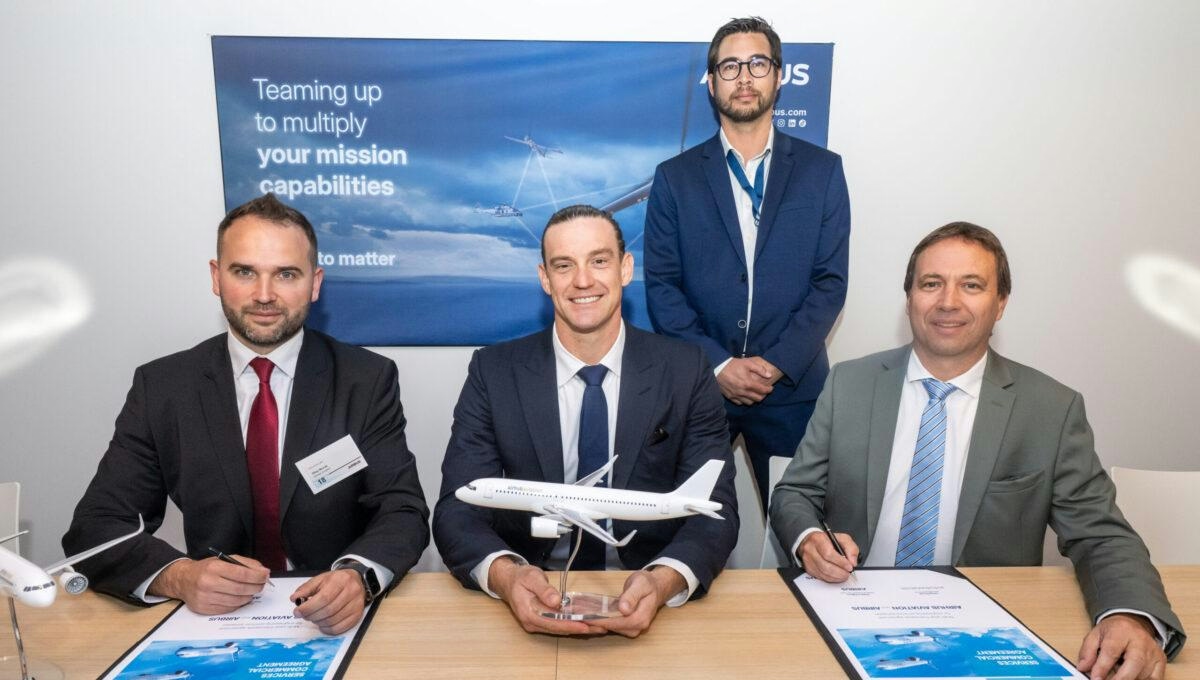
Airhub Aviation Signs Strategic MRO Agreement with AerCap Airhub Aviation has formalized a strategic maintenance, repair, and overhaul (MRO) agreement with AerCap, one of the world’s leading aircraft lessors. This partnership designates Airhub Aviation as a principal MRO provider at its Šiauliai International Airport (SQQ) facility in Lithuania. The collaboration focuses on delivering base maintenance and aircraft redelivery services, primarily supporting narrow-body aircraft transitions, deliveries, and redeliveries across Europe and the Middle East. Comprehensive Maintenance and Support Services Under the terms of the agreement, Airhub Aviation will offer a full range of EASA-approved base maintenance services. These encompass avionics upgrades, cabin reconfigurations including LOPA modifications, engine swaps, landing gear replacements, and the execution of mandatory maintenance programs tailored to AerCap’s airline customers. A dedicated ad hoc maintenance bay at the Šiauliai facility is designed to facilitate rapid aircraft induction, thereby minimizing downtime for both lessors and operators. Beyond maintenance, Airhub Aviation will apply its expertise in component management, supply chain solutions, and long-term aircraft storage. Its asset management division will provide mid-life aircraft support services such as parts harvesting, component repair management, and optimized inventory solutions for airlines and leasing companies. The Šiauliai site, with capacity for up to 25 narrow-body aircraft, ranks among the largest storage facilities in the region. Its strategic location offers cost-effective storage and transition services near key European markets, while its status as a NATO base airport ensures enhanced security and 24-hour operational flexibility. Market Context and Strategic Implications This agreement emerges amid intensifying competition within the MRO sector. Recent expansions by companies like West Star Aviation, particularly through strategic acquisitions in the Mid-Atlantic region, have heightened the race for market share. Industry analysts suggest that Airhub Aviation’s alliance with AerCap may prompt competitors to seek similar partnerships or acquisitions to bolster their MRO capabilities. Investor and stakeholder attention has increased, with close scrutiny on the financial and strategic outcomes of such agreements. AerCap’s CEO has emphasized the rising demand for reliable aircraft, underscoring the critical role of strong MRO partnerships in addressing ongoing reliability challenges. As the MRO landscape continues to evolve, Airhub Aviation’s expanded collaboration with AerCap represents a calculated effort to capture a larger share of the market and meet the evolving needs of airlines and lessors across Europe and the Middle East.
Crestone bolsters aviation platform with Arena acquisition

Crestone bolsters aviation platform with Arena acquisition

Crestone Bolsters Aviation Platform with Arena Acquisition Strategic Expansion Amid Heightened Industry Competition Crestone Air Partners, a global aviation asset management platform majority owned by Air T, Inc., has entered into a definitive agreement to acquire Arena Aviation Capital, a well-established aviation asset manager known for its diversified portfolio and strong airline relationships. Subject to customary closing conditions and regulatory approvals, the acquisition is poised to significantly enhance Crestone’s aviation lifecycle platform by expanding both its scale and operational capabilities. Following completion, the combined entity will oversee a portfolio comprising approximately 124 aircraft and 17 engines leased to airlines worldwide, with assets under management expected to surpass US$4 billion. The enlarged team will include over 55 employees across five countries, thereby strengthening Crestone’s global footprint. Arena’s experienced personnel, complementary asset portfolio, and deep technical expertise align closely with Crestone’s lifecycle-focused investment strategy. This alignment is anticipated to enable the merged organization to deliver comprehensive services across the entire aircraft ownership spectrum, encompassing acquisition, leasing, asset management, and remarketing. Enhanced Global Presence and Operational Synergies The integration will maintain key offices in Denver, Amsterdam, and Dublin, supplemented by satellite locations in Singapore and Buenos Aires. This expanded global presence is designed to deepen relationships with airline customers and capital partners while providing robust support to aircraft owners across multiple regions. Members of Arena’s management team are expected to assume significant roles within the unified organization, with Crestone emphasizing a seamless integration process that prioritizes continuity for customers, partners, and employees. The consolidation is also projected to generate operational synergies in areas such as asset management, technical services, lease administration, and market intelligence. Industry Context and Competitive Dynamics Crestone’s acquisition of Arena occurs amid a broader wave of consolidation and strategic acquisitions within the aviation and defense sectors. The competitive landscape has intensified, exemplified by recent moves such as Hensoldt’s acquisition of Dutch electro-optical sensor provider Nedinsco and Caterpillar’s purchase of RPMGlobal, reflecting an AI-driven supercycle of megadeals. These developments underscore a highly consolidated and competitive market environment, where asset managers and defense electronics specialists alike are seeking to strengthen their platforms and maintain a competitive advantage. As Crestone integrates Arena’s capabilities, it may prompt competitors to pursue their own strategic acquisitions or pivots to remain competitive. The ongoing consolidation trend suggests that further transactions could reshape the sector, as companies endeavor to expand their global reach and service offerings in response to evolving market demands. The acquisition positions Crestone to capitalize on these industry shifts, reinforcing its standing as a leading aviation asset manager and enhancing its capacity to serve a global client base in an increasingly dynamic market.
AAIB Investigation into AI 171 Crash Advancing, Report Expected Soon: Aviation Minister Naidu

AAIB Investigation into AI 171 Crash Advancing, Report Expected Soon: Aviation Minister Naidu

AAIB Investigation into AI 171 Crash Advancing, Report Expected Soon: Aviation Minister Naidu Civil Aviation Minister K Rammohan Naidu informed the Rajya Sabha on Monday that the Aircraft Accident Investigation Bureau (AAIB) is making significant progress in its probe into the fatal Air India AI 171 crash that occurred last year. The minister assured lawmakers that the final report is expected to be released “very soon,” with the ministry providing all necessary resources to support the investigation. Naidu expressed confidence that the findings would be published within the current year. Details of the AI 171 Crash and Ongoing Investigation The Air India Boeing 787-8 operating flight AI 171 from Ahmedabad to London-Gatwick crashed on June 12, 2025, resulting in the deaths of 260 people, including 241 passengers and crew onboard. The incident remains under intense scrutiny by the AAIB amid growing public and industry demands for a transparent and thorough investigation. While the official inquiry continues, the investigation faces challenges, including calls to broaden its scope. Legal expert Mike Andrews has publicly questioned the prevailing conclusion of pilot error, urging authorities to investigate potential electrical failures as a contributing factor. This perspective has gained traction among some observers who stress the importance of a comprehensive examination of all possible causes. The aviation market has responded with cautious speculation, and there is increasing pressure on Boeing and the U.S. Federal Aviation Administration (FAA) to maintain transparency throughout the process. Although competitor airlines have refrained from issuing direct statements, the global aviation community is closely monitoring the investigation for any implications it may have on international safety standards and regulatory frameworks. Government Support and Broader Aviation Safety Measures Minister Naidu reaffirmed the government’s commitment to facilitating the AAIB’s work, stating, “All the resources that are required for AAIB, the primary agency which is looking into the investigation, the ministry is providing. And I would say that very soon, within the completion of the year, the report should be out.” Addressing broader concerns about flight safety amid the ongoing conflict in West Asia, Naidu highlighted the proactive role of the Directorate General of Civil Aviation (DGCA). The DGCA has engaged extensively with airline executives and issued safety circulars to ensure secure operations to airports in the region. The ministry has also disseminated travel advisories aimed at minimizing confusion among passengers. Despite disruptions caused by airspace closures linked to escalating tensions involving the United States, Israel, and Iran, approximately 90,000 people have returned to India over the past week. Naidu expressed hope that the situation would stabilize, allowing for the safe return of more travelers. Looking ahead, the minister outlined the government’s long-term vision for the civil aviation sector, which includes plans to develop 200 additional airports over the next two decades as part of India’s broader development goals for 2047.
Presidential Helicopter Receives Engine and Gearbox Upgrades
Presidential Helicopter Receives Engine and Gearbox Upgrades

Presidential Helicopter Receives Engine and Gearbox Upgrades The Sikorsky S-92, a prominent helicopter widely used for transporting heads of state and fulfilling diverse roles across multiple sectors, is undergoing significant enhancements to improve its performance and reliability. Since its introduction in the late 1990s, over 300 units of the S-92 have been produced, accumulating more than two million flight hours in 28 countries. The helicopter has served in various capacities, including VIP transport, offshore energy support, firefighting, and military operations. Enhanced Power and Structural Improvements Sikorsky is preparing to launch the S-92A+, the most extensively upgraded version of the helicopter to date. While retaining its twin General Electric CT7-8A6 turboshaft engines, the new variant features revisions that increase power output, particularly at higher altitudes and in hotter climates. Although the company has not disclosed the precise power increase, these enhancements are expected to raise the helicopter’s payload capacity by approximately 1,200 pounds (544 kilograms), bringing the maximum gross weight to 27,700 pounds (12,565 kilograms). Additionally, Sikorsky reports a substantial improvement in the helicopter’s exterior lift, or sling load, capability, though specific figures remain undisclosed. To support these performance gains, the S-92A+ incorporates airframe reinforcements alongside a newly developed Phase IV gearbox. This advanced transmission system, the result of a $100 million research and development investment, is described as the most technologically sophisticated gearbox available in the commercial helicopter market. It offers a minimum operating lifecycle exceeding 6,000 flight hours and demands less frequent maintenance. Crucially, the upgraded gearbox addresses a significant safety issue that affected earlier S-92 models, which experienced oil loss incidents leading to crashes. The new system includes auxiliary lubrication capabilities, enabling the helicopter to complete flights safely even if primary oil pressure is lost. Certification Challenges and Market Competition Despite these technical advancements, the S-92A+ faces potential hurdles in achieving certification. Industry analysts have expressed doubts about Sikorsky’s ability to meet its 2026 certification target, citing recent test-stand difficulties that could delay regulatory approval. This uncertainty arises amid intensifying competition from other manufacturers, such as Leonardo Helicopters, which continues to develop advanced platforms including the AW249 Fenice attack helicopter and future tiltrotor aircraft. Production of the S-92A+ is slated to commence at Sikorsky’s facilities in Stratford, Connecticut, and Owego, New York. The company has already secured orders for both head-of-state and offshore transport variants. At full production capacity, Sikorsky anticipates manufacturing up to 12 helicopters annually. While official pricing has not been released, existing S-92 models typically command prices around $30 million each. As Sikorsky advances with the S-92A+, it seeks to strengthen its position in the heavy-twin helicopter market by combining technical innovation with the challenges posed by certification processes and evolving industry competition.
Growth in Air Traffic and MRO Drives Demand for Advanced Aviation Test Equipment

Growth in Air Traffic and MRO Drives Demand for Advanced Aviation Test Equipment

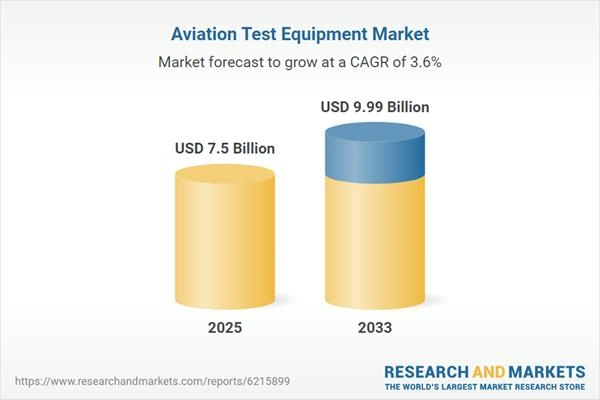
Growth in Air Traffic and MRO Drives Demand for Advanced Aviation Test Equipment The global aviation test equipment market is set for substantial growth, with its value expected to rise from US$7.5 billion in 2025 to nearly US$10 billion by 2033. This expansion, reflecting a compound annual growth rate (CAGR) of 3.64%, is driven by increasing air traffic, fleet modernization, and the growing complexity of aircraft systems, according to a recent report by ResearchAndMarkets.com. Drivers of Market Expansion The rising volume of air travel worldwide has prompted airlines and maintenance organizations to prioritize fleet reliability and safety, thereby boosting demand for sophisticated aviation test equipment. These tools, which include avionics testers, structural test rigs, and engine test stands, are critical for the testing, troubleshooting, and maintenance of aircraft systems. The surge in maintenance, repair, and overhaul (MRO) activities is a key factor underpinning this demand. In particular, the Asia-Pacific region is witnessing notable growth; the in-service business aviation fleet there is projected to increase from 1,600 aircraft in 2026 to over 1,700 by 2035. Correspondingly, the Asia-Pacific engine MRO market, including China, is forecast to surpass $30 billion by 2035, representing approximately one-third of the global engine maintenance market during the 2026-2035 period. Technological advancements are also reshaping the landscape of aviation test equipment. Modern aircraft, equipped with advanced avionics, fly-by-wire systems, and integrated electronics, require highly sophisticated testing platforms. Automation and data analytics are increasingly incorporated into these systems, enhancing operational efficiency by reducing downtime and improving diagnostic accuracy in MRO processes. Initiatives led by organizations such as NASA aim to further modernize MRO operations by integrating emerging aviation technologies, including those related to advanced air mobility. Regulatory and Industry Challenges Stringent regulatory standards imposed by aviation authorities worldwide continue to drive investment in advanced test equipment. As both commercial airlines and military forces expand and upgrade their fleets, the demand for reliable and technologically advanced testing tools grows—not only for new aircraft but also for the maintenance and retrofitting of aging fleets. Despite the promising outlook, the industry faces several challenges. Sustaining innovation and securing the necessary investment to develop cutting-edge technologies remain critical. Additionally, workforce training is essential to equip technicians with the skills required to operate increasingly complex systems. Competition among manufacturers is intensifying, with companies striving to distinguish themselves through innovation, enhanced product portfolios, and strategic collaborations. Market trends indicate that investment in advanced aviation test equipment will continue to rise, driven by the sector’s ongoing growth and modernization. These developments underscore the indispensable role of sophisticated testing solutions in maintaining the safety, efficiency, and reliability of global air operations.
SMBC Aero Engine Lease Names Stephen O’Dwyer Chief Commercial Officer

SMBC Aero Engine Lease Names Stephen O’Dwyer Chief Commercial Officer

SMBC Aero Engine Lease Appoints Stephen O’Dwyer as Chief Commercial Officer SMBC Aero Engine Lease B.V. (SAEL) has announced the appointment of Stephen O’Dwyer as its new Chief Commercial Officer, effective March 2026. O’Dwyer joins the company with extensive experience in aircraft and engine leasing, bringing a strong track record in commercial strategy and relationship management with airlines and original equipment manufacturers (OEMs). Professional Background and Expertise Prior to this role, O’Dwyer served as Senior Vice President of Airline Marketing for the EMEA region at SMBC Aviation Capital, where he was responsible for leading commercial activities and strategic engagement with airlines across Europe, the Middle East, and Africa. His career also includes significant commercial leadership positions at Goshawk and SKY Leasing, where he played a key role in expanding portfolios and strengthening customer relationships in various markets. Earlier in his career, O’Dwyer developed robust financial and analytical skills through his work with ASL Aviation Group and KPMG. Industry Context and Strategic Implications O’Dwyer’s appointment comes at a critical juncture for SAEL and the broader engine leasing sector. The industry is currently navigating potential challenges, including the risk of an oversupply of spare engines as technical and supply chain disruptions begin to ease. This shift could exert downward pressure on lease rates and asset values, compelling investors to reconsider their strategies, potentially favoring longer-term leasing approaches over short-term arrangements. In response, competitors may adjust their bulk-spare engine orders and investment plans to mitigate the risks associated with oversupply. Furthermore, the anticipated acquisition of Air Lease Corp. by SMBC Aviation Capital is expected to heighten competition within the widebody leasing market. This development may prompt major industry players, such as AerCap, to reevaluate their market strategies, thereby influencing the competitive dynamics of the sector. O’Dwyer’s comprehensive commercial and financial expertise is regarded as a vital asset for SAEL as it navigates these evolving market conditions. His leadership is anticipated to support the company’s ongoing growth and strategic positioning amid the changing landscape of the engine leasing industry.
line