
حوّل رؤى الذكاء الاصطناعي إلى أفعال منسّقة

الرائج الآن
Categories
Embraer Integrates AI-Based Counter-Drone System into A-29 Super Tucano
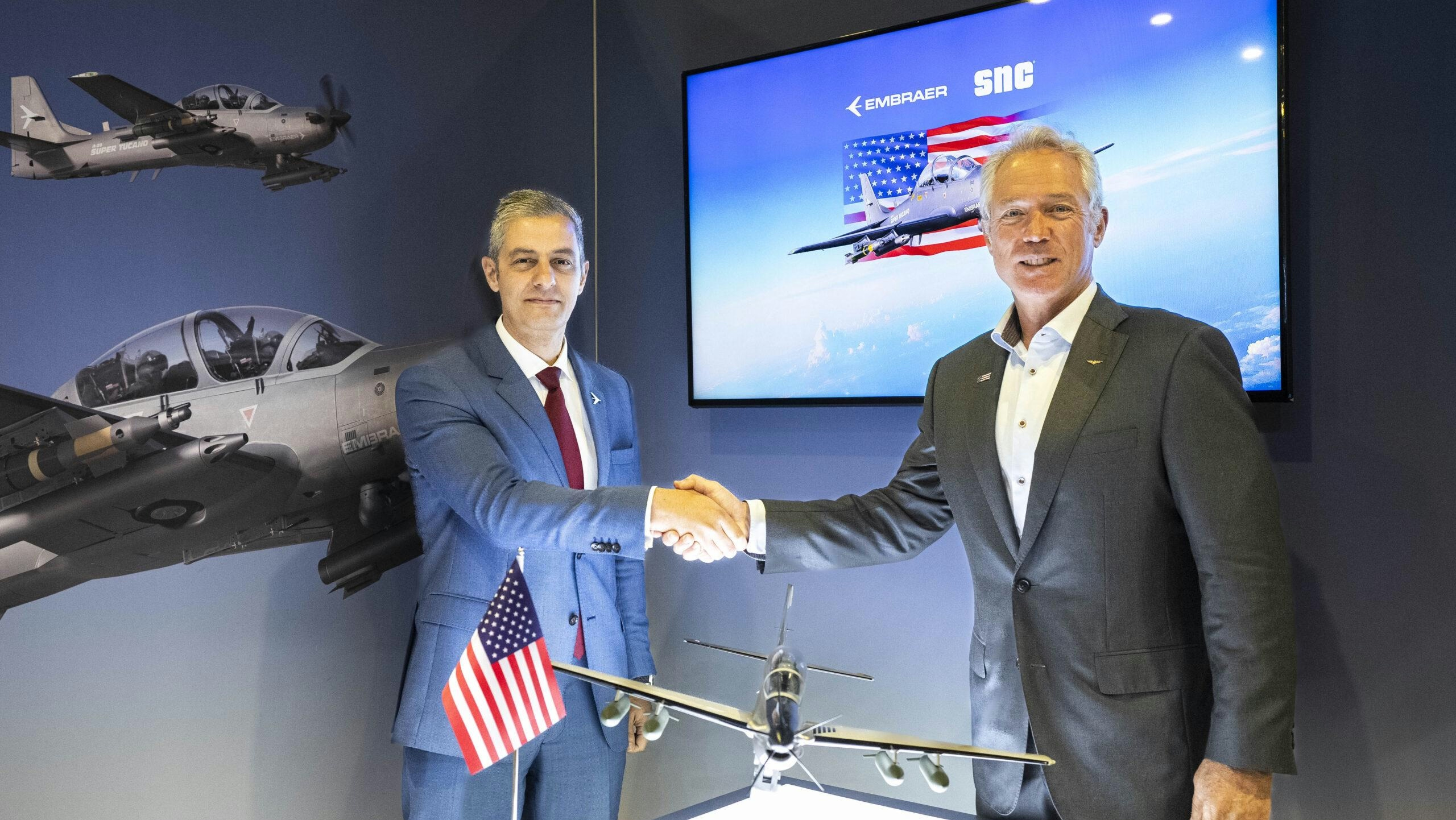
Embraer Integrates AI-Based Counter-Drone System into A-29 Super Tucano
Embraer, in collaboration with Valkyrie Aero, has announced a significant enhancement to the A-29 Super Tucano’s operational capabilities through the integration of an artificial intelligence-enabled counter-drone system. Unveiled on March 4, 2026, this upgrade centers on Valkyrie Aero’s “Gunslinger” AI suite, designed to accelerate the detection and engagement process in manned counter-unmanned aerial system (C-UAS) missions. The Gunslinger system will be incorporated into the A-29’s existing sensor and weapons architecture, enabling a more rapid and effective “find, fix, finish” cycle against increasingly prevalent unmanned threats.
Addressing the Challenge of Low-Cost Drones
The proliferation of small, inexpensive drones on modern battlefields has exposed significant limitations in traditional countermeasures. Conventional responses, such as deploying frontline fighter jets, often incur high operational costs and inefficient use of expensive interceptors. Fast jets face difficulties engaging slow-moving drones safely with guns, while the use of costly air-to-air missiles against low-value drones—such as Iran’s Shahed series—proves economically unsustainable. This growing mismatch has underscored the need for more practical and cost-effective solutions.
Embraer positions the A-29 Super Tucano, a turboprop light attack and advanced trainer aircraft, as a viable alternative. Its tandem cockpit configuration, endurance, and agility allow it to match the speed profile of attack drones, providing a stable firing platform for guns, guided rockets, and other precision effectors. Marcio Monteiro, Vice President for Market Intelligence at Embraer Defense and Security, emphasized the aircraft’s proven combat record, with over 60,000 combat flight hours, as a testament to its suitability for manned C-UAS operations.
Technological Integration and Market Response
Chris Turner, Senior Vice President at Valkyrie Aero, explained that the Gunslinger capability was developed in direct response to urgent operational needs identified by frontline users. However, integrating advanced AI systems into the A-29 presents several challenges. These include ensuring the AI’s effectiveness against a diverse range of drone threats, preserving the aircraft’s agility and speed, and managing the costs associated with such technological enhancements.
Despite these hurdles, the market response has been encouraging. Defense agencies and customers worldwide have shown increased interest in advanced counter-drone solutions, prompting Embraer to actively reposition the A-29 for C-UAS missions since late 2025. The company advocates the A-29 as a purpose-built alternative to the improvised use of crop-dusting and trainer aircraft for drone defense, a tactic notably employed in Ukraine. Unlike these ad hoc platforms, the A-29 offers integrated sensors, targeting systems, and precision weapons, while maintaining a favorable balance of speed and cost.
Industry Trends and Future Prospects
The integration of AI-enhanced counter-drone capabilities is part of a broader industry trend, with competitors such as Lockheed Martin and BAE Systems also advancing similar technologies for their platforms. This shift reflects the growing recognition of artificial intelligence as a critical component in modern aerial defense strategies.
Embraer continues to build momentum for the A-29, with recent deliveries including the first two aircraft delivered to Uruguay in February 2026. While the company has not yet announced a definitive timeline for the operational deployment of the AI-assisted mission system, the integration represents a significant step in adapting legacy platforms to address evolving aerial threats effectively.

Etihad Airways Suspends Airbus A380 Flights on Key Route

Aditya Birla Group Seeks Approval for Aircraft Leasing in GIFT City

Qatar Airways Highlights Innovation and Connectivity at Arabian Travel Market 2026

Hong Kong's Five-Year Plan Includes Andrew Fan's Aircraft Parts Processing Hub Proposal

ACIA Aero Leasing Delivers ATR72-600 to Air Nostrum

RTX Appoints Jill Albertelli as Head of Pratt & Whitney

TAT Technologies Joins Beyond Aero Hydrogen Aircraft Program

AURAK Study Highlights Barriers to Air Taxi Adoption in Emerging Economies

Xiamen Air Selects Altitude for 787 Maintenance at Heathrow

Etihad and Swissport Extend Global Partnership
