
حوّل رؤى الذكاء الاصطناعي إلى أفعال منسّقة

الرائج الآن
Categories
Engine Selection Could Determine Outcome of Boeing 777-8F and Airbus A350F Competition
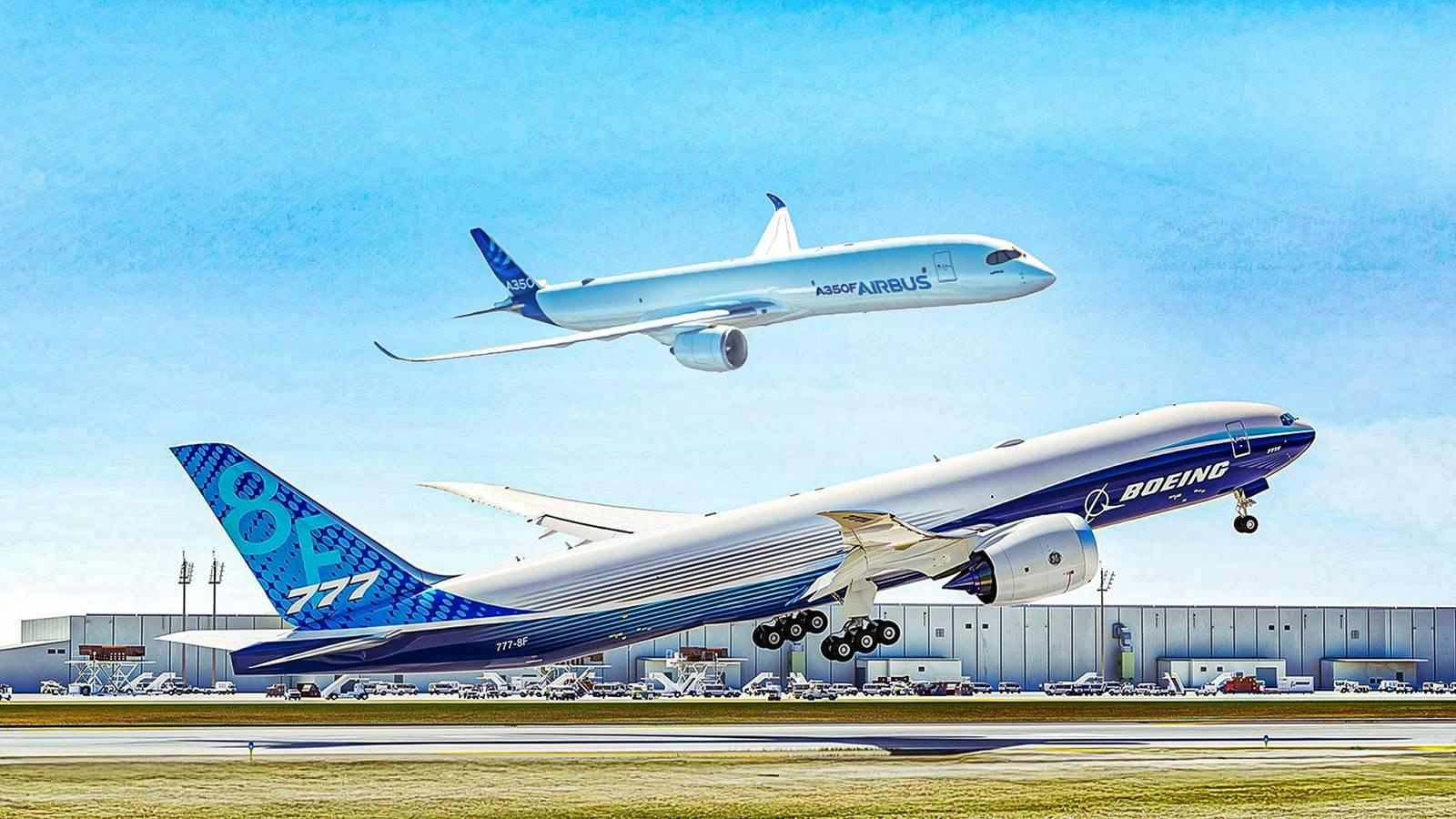
Engine Selection Could Determine Outcome of Boeing 777-8F and Airbus A350F Competition
The future landscape of long-haul air cargo is poised to be shaped by two advanced freighter models: the Airbus A350F and the Boeing 777-8F. Both aircraft promise significant improvements in payload capacity, fuel efficiency, and operational range. However, a decisive factor influencing airline procurement decisions lies in the exclusive engine choices each manufacturer has made. With only one engine option available per aircraft, operators must carefully consider not only the airframe capabilities but also the long-term performance, reliability, and support associated with these powerplants.
Exclusive Engine Choices and Their Implications
The Boeing 777-8F will be exclusively powered by General Electric’s GE9X engine, while the Airbus A350F will rely solely on the Rolls-Royce Trent XWB-97. This exclusivity compels airlines to make substantial long-term commitments to the respective engine technologies, evaluating critical factors such as Time-On-Wing, durability under various operating conditions, and the comprehensiveness of maintenance and support packages offered by the manufacturers.
Airbus benefits from the Trent XWB-97’s established commercial service record, as it currently powers the widely operated A350-1000 passenger aircraft. This operational history provides airlines with a measure of confidence regarding the engine’s performance and reliability. Nevertheless, the Trent XWB-97 has encountered scrutiny in certain environments, particularly hot and arid climates, where reports indicate potential accelerated wear and tear.
Conversely, the GE9X engine, while not yet in commercial operation due to ongoing certification delays associated with the 777X program, has undergone extensive ground and flight testing. Boeing’s recent announcement of increased range capabilities for the 777-8 and 777-9 models enhances the appeal of the 777-8F variant. This development has been met with positive market response, exemplified by China Southern Airlines’ commitment to acquire five 777-8Fs, signaling robust interest in Boeing’s new freighter. However, Boeing’s continued efforts to resolve technical challenges within the 777X program may result in further delays, potentially affecting the aircraft’s competitive standing.
Technical and Market Considerations
From a technical perspective, the GE9X offers higher thrust and greater payload capacity, attributes that may attract operators prioritizing maximum cargo volume. The 777-8F also presents advantages in fleet integration for existing Boeing customers, given its lineage as a successor to the popular 777-F. Meanwhile, the Trent XWB-97 is lauded for its operational efficiency, as demonstrated in service on the A350-1000.
| Specification | Rolls-Royce Trent XWB-97 | General Electric GE9X |
|---|---|---|
| Thrust | 97,000 lbf | 110,000 lbf |
| Bypass Ratio | 9.3:1 | 10:1 |
| Fan Diameter | 118 inches (3 meters) | 134 inches (3.4 meters) |
Ultimately, the decision between the Airbus A350F and Boeing 777-8F will depend not only on the aircraft’s inherent performance but also on the long-term reliability, efficiency, and manufacturer support associated with their respective engines. As both companies continue to refine their offerings and airlines weigh their options, the outcome of this competition may hinge as much on the engines beneath the wings as on the aircraft themselves.

Hong Kong's Five-Year Plan Includes Andrew Fan's Aircraft Parts Processing Hub Proposal

ACIA Aero Leasing Delivers ATR72-600 to Air Nostrum

RTX Appoints Jill Albertelli as Head of Pratt & Whitney

TAT Technologies Joins Beyond Aero Hydrogen Aircraft Program

AURAK Study Highlights Barriers to Air Taxi Adoption in Emerging Economies

Xiamen Air Selects Altitude for 787 Maintenance at Heathrow

Etihad and Swissport Extend Global Partnership

Sepehran Airlines B737 Returns to Mashhad After Tyre and Engine Issues

Etihad Deploys Widebody Fleet to Meet Strong Demand

Korean Air Finalizes $36.2 Billion Deal with Boeing
