
حوّل رؤى الذكاء الاصطناعي إلى أفعال منسّقة

الرائج الآن
Categories
Ethiopian Airlines Orders New Narrowbody Jets to Modernize Fleet and Expand Network
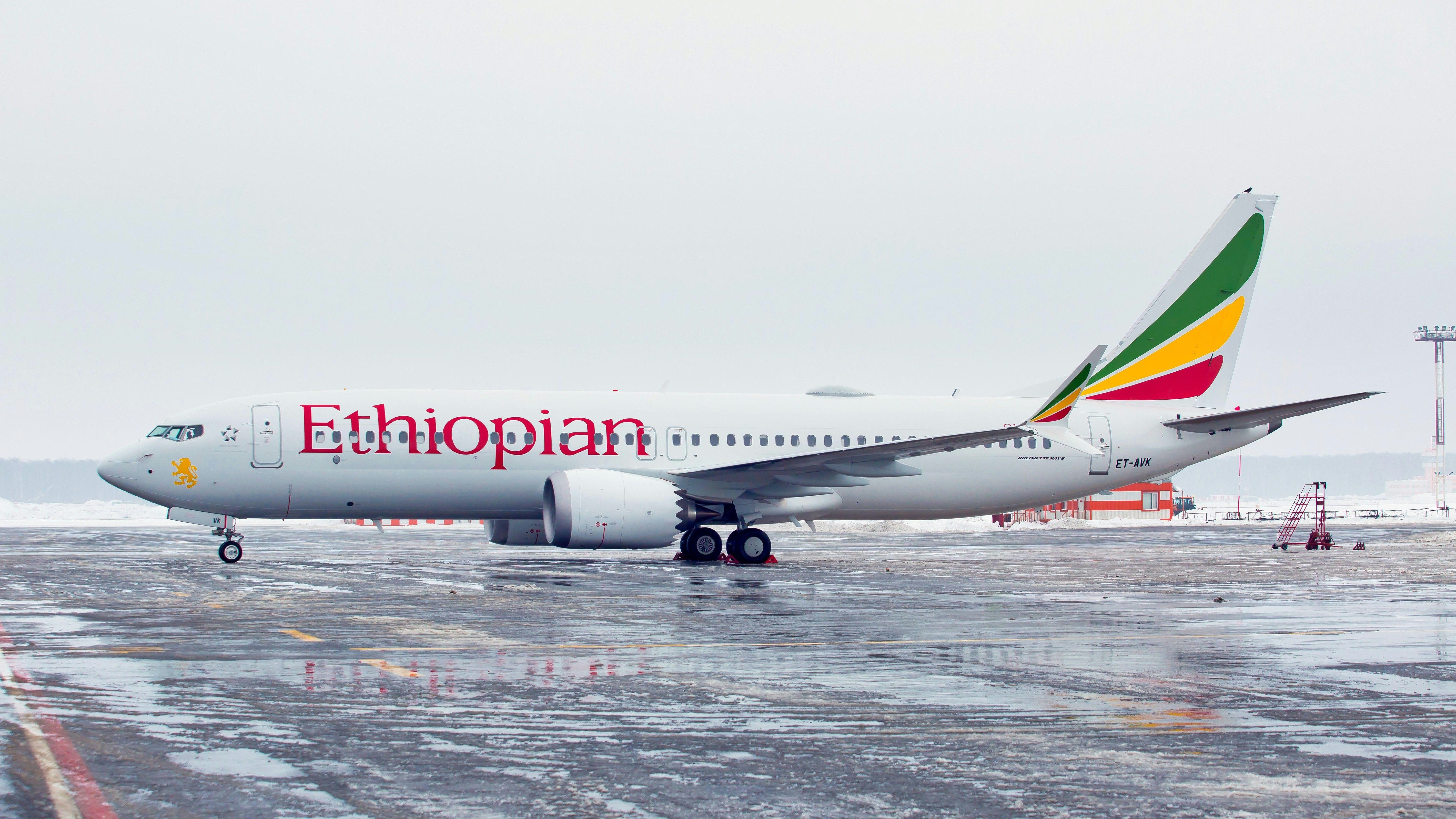
Ethiopian Airlines Advances Fleet Modernization with New Narrowbody Jet Order
Ethiopian Airlines is preparing to order at least 20 new narrowbody aircraft as part of a comprehensive effort to modernize its fleet, enhance operational efficiency, and expand its domestic and regional network. This strategic move comes amid rising travel demand across Africa, where improved connectivity is increasingly critical for airlines striving to maintain a competitive advantage.
Evaluating Aircraft Options Amid Certification and Supply Challenges
The airline’s CEO recently indicated that the final number of jets to be acquired will depend on the selected aircraft model. Ethiopian Airlines is currently assessing several contenders, with the Boeing 737 MAX 7 emerging as a frontrunner due to its larger seating capacity relative to alternatives such as the Airbus A220 and Embraer E-2. However, the pending certification of the 737 MAX 7 remains a significant factor that could influence the ultimate decision.
This fleet renewal initiative aligns with Ethiopian Airlines’ broader strategy to strengthen regional connectivity and address the continent’s growing air travel demands. The airline has witnessed substantial growth in passenger traffic on both domestic and international routes but has simultaneously grappled with operational challenges stemming from delays in aircraft deliveries and a global shortage of aircraft engines.
At present, Ethiopian Airlines has three Boeing 787 widebody jets grounded due to engine shortages from Rolls-Royce, alongside five turboprop aircraft sidelined because of insufficient engines supplied by Pratt & Whitney. These disruptions, largely attributable to global supply chain constraints, have hindered the airline’s capacity to fully meet passenger demand.
Navigating Capacity Constraints and Industry-Wide Production Issues
To mitigate these capacity shortfalls, Ethiopian Airlines is actively negotiating with aircraft leasing companies to temporarily augment its fleet. Leasing additional jets is expected to provide short-term relief while the airline awaits new deliveries and the resolution of ongoing engine supply challenges.
Nonetheless, the airline’s modernization plans may encounter further obstacles. Industry-wide production constraints, such as those recently experienced by Boeing, have resulted in delivery delays and increased manufacturing costs. These factors could affect both the timeline and cost-effectiveness of Ethiopian Airlines’ fleet expansion.
The decision to invest in new, more efficient narrowbody jets reflects a broader trend within the African aviation sector, where carriers are increasingly adopting smaller aircraft to better serve regional and domestic markets. This shift is also reshaping competitive dynamics beyond Africa. Rival airlines, including Turkish Airlines, are expected to respond by expanding their own fleets and enhancing premium services. Such competitive responses may involve strategic route adjustments and further fleet upgrades aimed at preserving market share.
Ethiopian Airlines’ fleet renewal underscores its commitment to maintaining a leadership position in Africa’s rapidly evolving aviation landscape, even as it contends with industry-wide challenges and intensifying competition.

Etihad Airways Suspends Airbus A380 Flights on Key Route

Aditya Birla Group Seeks Approval for Aircraft Leasing in GIFT City

Qatar Airways Highlights Innovation and Connectivity at Arabian Travel Market 2026

Hong Kong's Five-Year Plan Includes Andrew Fan's Aircraft Parts Processing Hub Proposal

ACIA Aero Leasing Delivers ATR72-600 to Air Nostrum

RTX Appoints Jill Albertelli as Head of Pratt & Whitney

TAT Technologies Joins Beyond Aero Hydrogen Aircraft Program

AURAK Study Highlights Barriers to Air Taxi Adoption in Emerging Economies

Xiamen Air Selects Altitude for 787 Maintenance at Heathrow

Etihad and Swissport Extend Global Partnership
