
حوّل رؤى الذكاء الاصطناعي إلى أفعال منسّقة

الرائج الآن
Categories
Evaluating a New Digital Assistant for Pilots
Evaluating a New Digital Assistant for Pilots
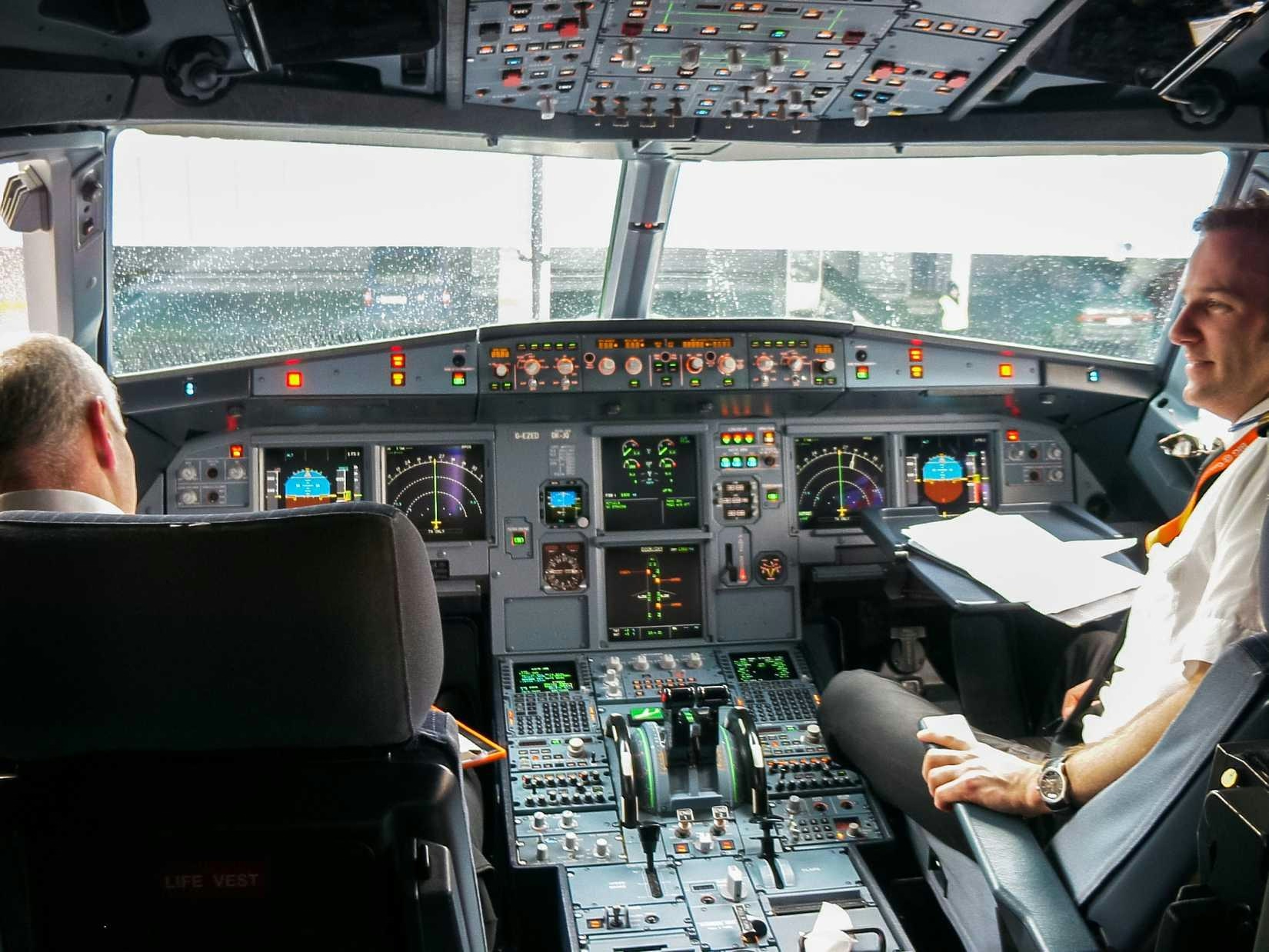
The German Aerospace Centre (DLR) has recently concluded a comprehensive study evaluating the effectiveness of an AI-driven digital assistant designed to support pilots within the cockpit environment. This research, conducted under the auspices of the EU-funded JARVIS project, addresses critical challenges associated with the aviation sector’s ongoing transition toward increased automation. The primary focus of the study was to enhance safety and operational efficiency during complex flight scenarios.
Between 29 September and 30 October 2025, 21 commercial pilots participated in simulator-based trials of the Airborne Digital Assistant (AIR-DA), a system developed collaboratively by Collins Aerospace and Boeing. AIR-DA represents one of three digital assistants created as part of the JARVIS initiative, with the other two tailored for air traffic controllers and airport operators respectively.
Human Factors and Pilot Interaction
The study concentrated on key human factors related to the integration of AIR-DA into cockpit operations. Researchers aimed to understand the extent of information pilots require about the AI system to foster trust, the nature of support provided by AIR-DA during various flight phases, and its influence on situational awareness and workload management.
Pilots engaged in three distinct simulated flight scenarios, each executed twice—once with AIR-DA assistance and once without. During taxiing and take-off, AIR-DA facilitated communication management with air traffic control. In the cruise phase, the assistant enhanced situational awareness and supported decision-making processes. For arrival and landing, AIR-DA contributed to preparation and coordination tasks.
Throughout these simulations, eye-tracking technology was employed to monitor pilots’ attention distribution, while strategic decisions were recorded for analysis. Post-simulation feedback was gathered to assess pilot trust in the system and any perceived changes in workload.
Industry Implications and Future Prospects
The insights gained from this study are anticipated to guide the integration of digital assistants like AIR-DA into cockpit operations, particularly in contexts involving reduced crew configurations or single-pilot flights. Nonetheless, widespread adoption faces significant hurdles, including regulatory compliance, ensuring compatibility with existing avionics systems, and the development of comprehensive pilot training programs.
The competitive landscape for AI-driven cockpit assistants is intensifying, with major technology companies such as Amazon and Google investing heavily in artificial intelligence. These investments are likely to accelerate innovation and influence market dynamics, potentially prompting established firms to enhance their own AI offerings in response to new entrants like AIR-DA.
Recent industry data highlights a surge in AI investment by leading tech firms, underscoring a rapidly evolving environment for aviation technology. As the JARVIS project team continues to analyze human performance and acceptance data, their findings will be instrumental in shaping the future role of digital assistants in commercial aviation.

Etihad Airways Suspends Airbus A380 Flights on Key Route

Aditya Birla Group Seeks Approval for Aircraft Leasing in GIFT City

Qatar Airways Highlights Innovation and Connectivity at Arabian Travel Market 2026

Hong Kong's Five-Year Plan Includes Andrew Fan's Aircraft Parts Processing Hub Proposal

ACIA Aero Leasing Delivers ATR72-600 to Air Nostrum

RTX Appoints Jill Albertelli as Head of Pratt & Whitney

TAT Technologies Joins Beyond Aero Hydrogen Aircraft Program

AURAK Study Highlights Barriers to Air Taxi Adoption in Emerging Economies

Xiamen Air Selects Altitude for 787 Maintenance at Heathrow

Etihad and Swissport Extend Global Partnership
