image

AeroGenie - مساعد الطيار الذكي الخاص بك.

اسأل أي شيء. حلل كل شيء. تصرف فورًا.

الرائج الآن

Categories

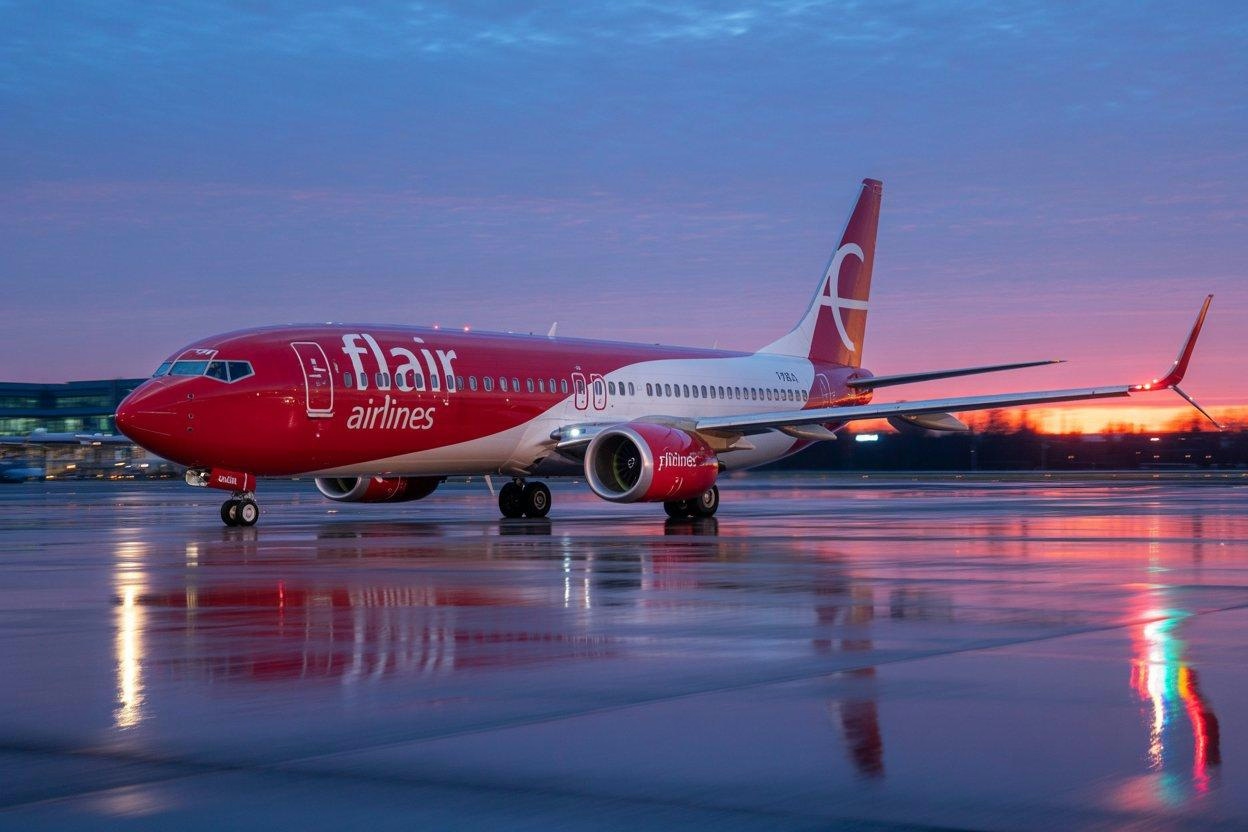
Flair Airlines Partners with Netcore Cloud to Advance AI in Aviation Customer Service
October 27, 2025By ePlane AI
Flair Airlines Partners with Netcore Cloud to Advance AI in Aviation Customer Service
0
0
Flair Airlines
Netcore Cloud
AI Customer Service

Flair Airlines Partners with Netcore Cloud to Advance AI in Aviation Customer Service

New York, October 27, 2025 – Flair Airlines, Canada’s foremost independent ultra-low-cost carrier, has entered into a strategic partnership with Netcore Cloud, a global leader in agentic marketing, to enhance its customer engagement through an AI-powered digital experience platform. This collaboration represents a pivotal advancement in Flair’s ongoing commitment to innovation and the delivery of seamless, personalized travel experiences.

Enhancing the Customer Journey with AI

Flair Airlines sought a partner with extensive aviation expertise to elevate the customer journey and develop a scalable, future-ready AI roadmap. Netcore Cloud was chosen for its alignment with Flair’s business objectives and its proven success in driving digital transformation for global airlines. The partnership is designed to deliver meaningful customer experiences at scale by leveraging Netcore’s advanced technology.

Central to Netcore’s solution are AI-driven personalization capabilities that provide relevant and contextual engagement across all digital touchpoints. The platform also enables omnichannel automation, ensuring seamless communication throughout the traveler’s journey—from booking to post-flight interactions. Additionally, advanced analytics and insights equip Flair’s marketing teams with data-driven intelligence to optimize customer interactions and enhance campaign performance.

Kalpit Jain, Group CEO of Netcore Cloud, emphasized the broader impact of the partnership, stating, “Flair embarked on a transformation from being a no-frills carrier to becoming a meaningful part of every customer’s travel experience. Our role extended beyond technology—we helped embed a culture of AI-driven personalization that fuels ancillary revenue growth and strengthens long-term customer loyalty.”

Challenges and Industry Context

While this partnership is expected to reinforce Flair’s position as a leader in affordable, customer-centric air travel, it also presents challenges typical of digital transformation initiatives in aviation. Integrating new AI technologies with existing systems, ensuring robust data privacy and security, and managing rising customer expectations for enhanced service remain critical considerations.

This development aligns with a broader industry trend, as airlines increasingly pursue cross-sector collaborations to scale loyalty benefits and deliver consistent, high-quality customer experiences. The move is likely to intensify competition, prompting other carriers to accelerate their own AI initiatives or establish similar partnerships to maintain market relevance.

About Flair Airlines

Headquartered in Edmonton, Alberta, Flair Airlines operates a growing fleet of Boeing 737 aircraft, serving over 25 destinations across Canada, the United States, Mexico, the Dominican Republic, and Jamaica. The airline is dedicated to making air travel affordable, accessible, and enjoyable.

About Netcore Cloud

Netcore Cloud is a leading agentic marketing platform offering a comprehensive Customer Engagement Suite designed to create personalized, omnichannel experiences. Trusted by more than 6,500 brands worldwide—including Walmart, Unilever, Tommy Hilfiger, Domino’s, McDonald’s, Pizza Hut, and Crocs—Netcore leverages artificial intelligence to analyze customer data and enable targeted, meaningful digital interactions.

For further information, visit netcorecloud.com.

More news
Can Emirates and United Airlines Help Boeing Outsell Airbus in 2025?

Can Emirates and United Airlines Help Boeing Outsell Airbus in 2025?

Can Emirates and United Airlines Help Boeing Outsell Airbus in 2025? As the aviation industry approaches a critical juncture, the longstanding rivalry between Boeing and Airbus is intensifying. For the first time in six years, Boeing appears poised to potentially outsell Airbus in net aircraft orders, a development largely driven by substantial agreements with prominent carriers such as Emirates and United Airlines. Major Orders Bolster Boeing’s Position Emirates, widely recognized for its premium service and extensive global network, has reaffirmed its commitment to Boeing through a landmark $41.4 billion order for 65 Boeing 777-9 aircraft. United Airlines, one of the largest carriers in the United States, has also placed significant orders for Boeing’s 787 Dreamliner, further strengthening Boeing’s momentum. These high-profile deals are central to Boeing’s strategy to reclaim leadership in aircraft sales, particularly within the lucrative long-haul segment. A Dynamic and Competitive Market Despite Boeing’s recent surge, the competitive landscape remains fluid and highly contested. Airbus continues to lead in aircraft deliveries and maintains a substantial order backlog, underscoring its enduring market strength. Challenges have also emerged that could complicate Boeing’s path to dominance. Notably, Flydubai, a key Middle Eastern carrier, recently announced a $24 billion shift from Boeing to Airbus, highlighting that airline loyalty is not assured and that Airbus remains a formidable competitor. Emirates itself is adopting a balanced approach, supplementing its Boeing fleet with ongoing investments in Airbus aircraft, including eight A350-900s. Furthermore, persistent delays in the Boeing 777X program have raised concerns among customers and industry analysts, potentially affecting Boeing’s ability to fulfill its ambitious order book within the expected timelines. Implications for Passengers and the Industry For travelers, these developments may translate into tangible benefits. The introduction of next-generation aircraft such as the Boeing 787 Dreamliner and 777X, alongside the Airbus A350, promises advancements in fuel efficiency, cabin comfort, and onboard amenities. As airlines modernize their fleets, passengers can anticipate quieter cabins, improved air quality, and enhanced in-flight entertainment experiences. Concurrently, the intense competition between Boeing and Airbus could influence ticket pricing and route availability as carriers strive to optimize the value of their new investments. Whether Boeing can ultimately outsell Airbus in 2025 will depend not only on the volume of orders secured from major airlines like Emirates and United but also on its capacity to deliver aircraft on schedule and adapt to evolving market conditions. With competitor strategies and market responses still unfolding, the contest between these aviation giants is set to shape the future trajectory of global air travel.
Willis Lease Finance Prices $392.9 Million in Fixed-Rate Notes

Willis Lease Finance Prices $392.9 Million in Fixed-Rate Notes

Willis Lease Finance Prices $392.9 Million in Fixed-Rate Notes Willis Lease Finance Corporation (NASDAQ: WLFC), a prominent lessor of commercial aircraft engines and provider of global aviation services, has announced that its wholly owned subsidiary, Willis Engine Structured Trust IX (WEST), has priced $392.9 million in fixed-rate notes. The offering comprises $337.4 million in Series A Fixed Rate Notes and $55.5 million in Series B Fixed Rate Notes. Details of the Offering and Security The notes will be secured by WEST’s interests in a portfolio consisting of 47 aircraft engines and two airframes, which WEST will acquire from WLFC or its subsidiaries pursuant to an asset purchase agreement. The transaction is scheduled to close on December 23, 2025. The Series A Notes carry a fixed coupon rate of 5.159%, while the Series B Notes have a coupon of 5.696%. Both series have an expected maturity of approximately six years, with a weighted average life of 4.1 years and a final maturity extending to 25 years. The Series A and B Notes will be issued at 99.99937% and 99.99686% of par value, respectively. These notes are being offered exclusively to qualified institutional buyers under Rule 144A of the Securities Act of 1933 and to non-U.S. persons in accordance with Regulation S. They have not been registered under the Securities Act or any other securities laws and may not be offered or sold in the United States without proper registration or an applicable exemption. Market Context and Company Profile This issuance occurs amid close scrutiny of market reactions and investor sentiment. The transaction may influence investor confidence and potentially affect WLFC’s credit rating, depending on market perceptions of the company’s increased leverage and growth prospects. Competitors in the aircraft leasing sector might respond with similar financing initiatives or adjust their strategies to preserve market share. Broader economic conditions and industry trends are also likely to impact WLFC’s stock performance and the overall reception of the notes. Willis Lease Finance Corporation specializes in leasing large and regional spare commercial aircraft engines, auxiliary power units, and aircraft to airlines, engine manufacturers, and maintenance providers worldwide. Its leasing operations are integrated with engine and aircraft trading, lease pools, and asset management services through Willis Asset Management Limited, as well as end-of-life solutions for engines and aviation materials via Willis Aeronautical Services, Inc. This announcement is made in accordance with Rule 135c under the Securities Act and does not constitute an offer to sell or a solicitation of an offer to buy the notes in any jurisdiction where such an offer or sale would be unlawful.
M1 Wins $115 Million Contract for Air Force T-38 Maintenance

M1 Wins $115 Million Contract for Air Force T-38 Maintenance

M1 Awarded $115 Million Contract for U.S. Air Force T-38 Maintenance DENTON, Texas — M1 Support Services has secured a $115.4 million contract from the U.S. Air Force to provide operations, maintenance, and sustainment for the T-38 Aircraft Maintenance Program (AMP). The agreement, which extends through January 31, 2030, entrusts M1 with the responsibility of supporting 62 T-38A/AT-38B/T-38C Talon aircraft stationed at multiple Air Force bases, including Beale in California, Holloman in New Mexico, Langley in Virginia, and Whiteman in Missouri. The contract also encompasses support for the U.S. Army Air Operations Directorate at White Sands Missile Range and NASA facilities in El Paso, Texas. Enhancing Operational Readiness and Flexibility George Krivo, Chairman and CEO of M1 Support Services, expressed gratitude for the continued partnership with the Air Force. He highlighted the integration of several key innovations aimed at increasing aircraft availability and operational flexibility during this next phase of the T-38 program. Krivo emphasized M1’s unwavering commitment to safety and quality, underscoring the company’s dedication to delivering exceptional performance that meets the Air Force’s rigorous standards. The T-38 AMP plays a critical role in providing adversary air support for the F-22 community, as well as companion training capabilities for B-2 and U-2 pilots. Under the terms of the new contract, M1 will oversee comprehensive aircraft inspections, intermediate repairs, approved modifications, off-site repairs, and transient maintenance services, ensuring the sustained readiness of these vital training assets. Industry Context and Competitive Landscape M1’s contract award arrives amid intensified competition within the military aviation maintenance sector. Industry leaders such as Boeing recently secured a substantial $2.47 billion contract for additional KC-46A tanker aircraft, highlighting the scale and competitiveness of defense contracting. Boeing’s ongoing challenges with the KC-46A program have brought increased scrutiny to contractor performance across the industry, placing a spotlight on M1’s ability to execute the T-38 maintenance contract effectively. As competitors seek to leverage their broader portfolios to pursue similar maintenance contracts, M1 faces mounting pressure to maintain its market position. The company distinguishes itself as the only large-scale provider focused exclusively on aviation services, emphasizing a mission-first approach dedicated to supporting advanced military aircraft for the Department of Defense, allied forces, and partner nations. For further details, visit www.M1services.com.
All Four Engines Failed at 37,000 Feet, and the Captain Remained Calm

All Four Engines Failed at 37,000 Feet, and the Captain Remained Calm

All Four Engines Failed at 37,000 Feet, and the Captain Remained Calm At 37,000 feet above the Indian Ocean, passengers aboard British Airways Flight 9 were abruptly plunged into an unsettling silence. The familiar roar of the Boeing 747’s four engines ceased without warning. There was no turbulence—only an eerie stillness, accompanied by a faint smell of smoke and dimming cabin lights. Anxiety quickly spread through the cabin as passengers grasped the gravity of the situation. In the cockpit, Captain Eric Moody and his crew confronted an extraordinary emergency: all four engines had failed simultaneously. The Incident and the Captain’s Response The 1982 flight, en route from Kuala Lumpur to Perth aboard the Boeing 747 named City of Edinburgh, had unknowingly entered a cloud of volcanic ash emanating from Indonesia’s Mount Galunggung, which had erupted earlier that day. Volcanic ash, invisible to radar and easily mistaken for ordinary cloud, poses a severe hazard to jet engines. Within minutes, the abrasive ash caused all four engines to flame out, transforming the 350-ton aircraft into the heaviest glider in the sky. Captain Moody’s response to the crisis became emblematic of calm leadership under pressure. Over the public address system, he delivered a measured announcement: “Ladies and gentlemen, this is your captain speaking. We have a small problem. All four engines have stopped. We are doing our utmost to get them going again. I trust you are not in too much distress.” His understated tone helped to steady the passengers, some of whom initially believed the message to be a joke, while others gripped their seats in disbelief. Moody’s composure was precisely what the moment required. Navigating a Crisis and Its Aftermath With all engines offline, the 747 began a rapid descent at nearly 2,000 feet per minute. The flight crew calculated they had approximately 23 minutes before reaching the ocean below. Within this narrow timeframe, they faced the daunting tasks of restarting the disabled engines, navigating out of the volcanic ash cloud, managing the aircraft’s structural limits, and reaching a safe altitude with breathable air. Against the odds, after losing nearly 20,000 feet, the crew successfully restarted the engines and executed a safe landing, averting what could have been a catastrophic disaster. The incident not only became a seminal case study in crisis management but also prompted broader discussions about aviation safety. In its aftermath, scrutiny intensified regarding pilot fitness, particularly as the industry grapples with an aging pilot population, with some captains continuing to fly into their eighties. Concerns emerged about the capacity of older pilots to respond effectively to emergencies, while pilot associations struggled to recover from the operational disruptions caused by the Covid-19 pandemic. Market reactions reflected increased anxiety among passengers and industry stakeholders about the safety of aging aircraft and the imperative for rigorous pilot training. Competitors sought to reassure the public by emphasizing their own safety protocols and training standards, aiming to distinguish themselves amid a climate of heightened caution. The calm and professional leadership demonstrated on Flight 9 remains a benchmark for handling emergencies, even as the aviation sector continues to confront evolving challenges and expectations.
AI Trainer Aircraft Arrive at SVPI in Ahmedabad

AI Trainer Aircraft Arrive at SVPI in Ahmedabad

AI Trainer Aircraft Arrive at SVPI in Ahmedabad, Marking a Milestone for Air India’s Expansion Two advanced Diamond twin-engine trainer aircraft arrived at Sardar Vallabhbhai Patel International (SVPI) airport in Ahmedabad on Wednesday, representing a significant development in Air India’s fleet and pilot training expansion. These aircraft are intended for Air India’s forthcoming flying training organization (FTO) in Amravati and are currently undergoing customs clearance in Gujarat. The clearance process is being managed by AI Fleet Services IFSC Ltd (AIFS), Air India’s leasing subsidiary registered in GIFT City, Gandhinagar. GIFT City has quickly become a central hub for the airline’s financing and leasing operations, underscoring its growing importance in India’s aviation sector. The aircraft completed a multi-stop journey from the Diamond factory in Wiener Neustadt, Austria, with layovers in Mykonos, Dubrovnik, Heraklion, Hurghada, Al-Qassim, and Dubai before the final leg from Muscat to Ahmedabad. Sources indicate that AIFS has secured financing for all 34 FTO trainer aircraft and has executed 48 aircraft transactions valued at $1.3 billion. With Air India scheduled to receive 570 new aircraft over the next four to five years, the majority of financing and leasing activities are expected to be channeled through GIFT City. This positions the financial hub as a potential competitor to established global aviation finance centers such as Ireland and Singapore. Sanjay Kaul, Managing Director and Group CEO of GIFT City, emphasized the strategic role of the hub, stating, “Over the next few years, GIFT City will help reshape India’s aviation leasing landscape by reducing capital outflow, deepening domestic expertise, and building a stable and transparent regulatory framework.” Expanding Training Infrastructure and Emerging Industry Dynamics The DGCA-licensed flying training organization in Amravati, spread over 10 acres, is projected to become operational by the first quarter of fiscal year 2026. The facility aims to train 180 pilots annually, utilizing a fleet comprising 31 single-engine and three twin-engine aircraft, all leased through GIFT City. The two newly arrived twin-engine aircraft are expected to be transported to Amravati by Friday. The introduction of these sophisticated AI trainer aircraft also presents new challenges and shifts within the aviation training sector. Indian airports and training centers may require significant infrastructure upgrades to accommodate the advanced technologies embedded in these aircraft. The market has witnessed growing interest from defense contractors and training institutions keen to explore AI-driven training solutions. Meanwhile, competitors are responding with their own innovations; notably, the Sino-Emirati turboprop trainer is being promoted as a potential replacement for existing fleets, highlighting a competitive race to develop next-generation training platforms. The deployment of AI-powered trainer aircraft has also ignited broader discussions regarding the sustainability of AI applications in aviation. Some industry experts caution that concerns over a potential AI bubble could impact future military AI development and funding priorities, potentially influencing the direction of advanced aviation training programs. As Air India and its partners advance these initiatives, the integration of AI technologies alongside the strategic utilization of GIFT City for aviation finance is poised to play a crucial role in defining India’s emerging position within the global aviation landscape.
Why Aviation Oil Differs from Automotive Oil

Why Aviation Oil Differs from Automotive Oil

Why Aviation Oil Differs from Automotive Oil For many years, pilots and mechanics have questioned why aviation piston engine oils provide less anti-rust and anti-wear protection compared to automotive or heavy-duty engine oils. The explanation lies in the distinct operational demands and stringent regulatory framework governing the aviation industry. Regulatory Standards and Material Compatibility All oils used in certified piston aircraft engines must adhere to the Mil-L-22851 specification, now updated as SAE 1899. This standard guarantees compatibility with every spark-ignition aviation piston engine ever manufactured, emphasizing safety and reliability above all else. Unlike automotive oils, aviation oils are strictly prohibited from containing certain additives, particularly those that produce ash. Automotive and heavy-duty engine oils commonly incorporate ash-forming additives such as zinc dithiophosphate (ZDTP) to enhance anti-wear protection. ZDTP functions by chemically reacting with metal surfaces to form a protective layer, which is especially effective under high shear conditions found between components like cams and lifters. This sacrificial lubrication significantly increases the oil’s load-carrying capacity. However, these additives pose serious risks in aviation engines, many of which contain components made from softer metals such as copper and silver. Copper alloys are frequently used in exhaust valve guides, while silver is often found in master rod bearings of radial engines. ZDTP can tarnish copper, leading to reduced clearances and valve sticking, and it can corrode silver, resulting in bearing failures. Given the critical importance of safety in aviation, such risks are unacceptable. Historical Attempts and Lessons Learned In the 1990s, Phillips Petroleum attempted to improve wear protection in its X/C 20W50 aviation oil by introducing ZDTP, resulting in the X/CII formulation. Because this additive did not comply with the zero-ash requirement, the oil was marketed under a supplemental type certificate (STC). The product was eventually withdrawn after it caused valve sticking and silver bearing failures, underscoring the dangers of applying automotive-style additives in aircraft engines. Detergents and Dispersants in Aviation Oils Another notable difference lies in the use of detergents. While some aviation oils are labeled as “detergent oils,” they are technically ashless dispersant (AD) oils. True detergent oils, common in automotive applications, can loosen and suspend carbon and dirt particles, which may lead to engine fouling in aircraft engines. Therefore, aviation oils avoid such formulations to maintain engine cleanliness and reliability. Industry Challenges and Market Dynamics Aviation engines operate under higher temperatures and pressures than their automotive counterparts, necessitating specialized oil formulations. The aviation sector is also subject to more rigorous regulatory standards and safety requirements, which translate into stringent testing and approval processes for lubricants. These factors contribute to the demand for specialized aviation oils, often resulting in higher costs and intensified competition among manufacturers. In response, oil companies invest heavily in proprietary formulations designed not only to meet or exceed aviation standards but also to improve cost-efficiency and environmental sustainability. Conclusion Although aviation oils may appear to offer less anti-wear and anti-rust protection than automotive oils, these differences are fundamentally driven by the unique materials, operating conditions, and uncompromising safety standards of the aviation industry. Consequently, significant changes to aviation oil formulations remain unlikely, ensuring continued reliability and safety in flight operations.
Rowsfire Releases Airbus A320 Panels for Microsoft Flight Simulator

Rowsfire Releases Airbus A320 Panels for Microsoft Flight Simulator

Rowsfire Launches Authentic Airbus A320 Cockpit Panels for Microsoft Flight Simulator Rowsfire, a hardware manufacturer specializing in flight simulation equipment, has announced the release of a new series of full-scale Airbus A320 cockpit panels designed for Microsoft Flight Simulator 2020 and 2024. These panels cater to home-cockpit builders seeking highly realistic tactile controls, offering an immersive experience that closely mirrors the actual A320 flight deck. The launch coincides with a challenging period for Airbus, which is currently addressing significant quality control issues, including a recall of approximately 6,000 A320 aircraft due to defective metal panels. This situation has also led to a downward revision of Airbus’s 2025 delivery targets and a notable decline in its share value, underscoring the importance of reliability in both real-world aviation and simulation hardware. Detailed Replication of Key Cockpit Modules Rowsfire’s new product line comprises four primary pedestal modules: the A111, A112, A113, and A109. Each module is a precise reproduction of components found in the Airbus A320 cockpit, designed to provide users with an authentic operational experience. The initial release saw strong demand, with the first batches of the A111, A112, and A113 panels selling out within 48 hours, prompting the company to increase production to accommodate additional pre-orders. At the core of the collection is the A111 panel, which replicates the Radio Management Panel (RMP) and Audio Control Panel (ACP) located beneath the MCDU on both the captain and first officer sides. This module allows users to tune COM, NAV, ADF, and ILS frequencies, adjust audio channels, select transmitters, and manage voice communications with realistic tactile feedback, closely emulating the functionality of the real aircraft. The A112 panel, positioned on the left side of the pedestal, integrates controls for cockpit and flood lighting, audio routing dials, and weather radar adjustments such as mode, gain, and tilt. Its counterpart, the A113 panel on the right side, focuses on operational and monitoring systems, including ATC transponder controls, squawk code entry, DFDR event triggers, AIDS maintenance switches, and additional lighting options. Together, these modules enable users to manage environmental and avionics subsystems with the same level of detail and precision found in the actual A320 cockpit. Completing the set is the A109 Switching Panel, located at the top of the center pedestal. This module replicates the Airbus source-selection system, allowing pilots to switch between alternate attitude, heading, and air-data sources, as well as transfer ECAM/ND displays between sides in the event of instrument failure. This redundancy feature is particularly valuable for advanced simulation and training scenarios, especially those involving abnormal or emergency conditions. Integration and Market Context All Rowsfire modules are engineered for seamless integration with Microsoft Flight Simulator through the company’s proprietary software layer. They are also designed to fit existing cockpit shells without requiring modifications, facilitating straightforward installation for enthusiasts. As Airbus contends with scrutiny over its manufacturing standards, Rowsfire’s commitment to precision and quality in simulation hardware offers flight simulation enthusiasts a dependable and immersive way to experience the Airbus A320 cockpit from home. Additional information regarding pre-order pricing and availability is accessible on Rowsfire’s official website.
Dexa Gains Momentum in the Birthplace of Aviation

Dexa Gains Momentum in the Birthplace of Aviation

Dexa Gains Momentum in the Birthplace of Aviation Pioneering Autonomous Drone Deliveries in Dayton Dayton-based Dexa has achieved a significant breakthrough by securing a rare Federal Aviation Administration (FAA) waiver for autonomous, beyond-line-of-sight (BVLOS) drone flights. This milestone not only advances the company’s ambitions but also reinforces Dayton’s legacy as the "Birthplace of Aviation." Under the leadership of CEO Beth Flippo, Dexa is harnessing artificial intelligence to revolutionize local delivery services, enabling businesses to transport goods within 15 minutes and deposit packages at precise locations—even in the absence of traditional addresses. From meals delivered directly to doorsteps to sunscreen airdropped onto beach blankets, Dexa is quietly transforming futuristic concepts into practical realities in Ohio. Beth Flippo’s journey began in her parents’ defense contracting firm in New Jersey, where she developed a wireless mesh network that allows drones to communicate in real time without relying on a central hub. Originally designed for military applications, this technology caught the attention of delivery companies, prompting Flippo to identify a unique commercial opportunity. In 2020, amid the uncertainties of the pandemic, she relocated her family to Dayton after securing a partnership with Kroger, positioning Dexa—formerly known as Drone Express—as a frontrunner in the emerging field of commercial drone deliveries. Navigating Regulatory Hurdles and Industry Growth The strategic move quickly yielded results, attracting media attention and a surge in demand from diverse sectors, including prepared food and medical supplies. Flippo acknowledges the challenges posed by aviation regulations, emphasizing the necessity of compliance despite growing market interest. Over the subsequent five years, Dexa evolved into a certified airline, attaining the highest levels of FAA certification for unmanned aircraft systems. The recent BVLOS waiver places Dexa in an exclusive cohort alongside industry giants such as Amazon, Walmart, and Zipline, a remarkable feat for a company with fewer than 30 employees. Flippo views Dexa’s small size as a competitive advantage, asserting, “The little guys are the hungry ones; we’re the ones that want it. We’re the ones who have suffered for it. It’s just like in life. Who would you bet on?” Dexa’s collaboration with Microsoft has further enhanced its technological capabilities. By integrating AI, the company has developed sophisticated mapping tools that identify safe and efficient airspace routes. The drones can analyze landscapes in real time, distinguishing between rooftops, porches, and swimming pools to determine optimal drop-off points, achieving an accuracy rate of 86 percent. Challenges and the Future of Sustainable Aviation Despite Dexa’s rapid progress, the broader drone and aviation industries face significant challenges, particularly regarding sustainability. The growing emphasis on sustainable aviation fuel (SAF) is reshaping market dynamics, with legislative efforts underway to restore SAF credits that reflect both regulatory support and the economic complexities of adoption. As demand for SAF intensifies—a trend underscored by experts at Bombardier—Dexa and its competitors may encounter new pressures. Some industry players are likely to accelerate their SAF initiatives, while others may continue relying on traditional fuels, depending on their strategic priorities and market positions. As Dexa continues to innovate from Dayton, its trajectory will depend not only on technological and regulatory achievements but also on its ability to adapt within an evolving landscape of sustainable aviation. In the historic birthplace of flight, the race to define the future of drone delivery is gaining unprecedented momentum.
Sabena Technics Completes Cabin Reconfiguration on Air Caraïbes A350-1000

Sabena Technics Completes Cabin Reconfiguration on Air Caraïbes A350-1000

Sabena Technics Completes Cabin Reconfiguration on Air Caraïbes A350-1000 French maintenance, repair, and overhaul (MRO) provider Sabena Technics has successfully completed a significant cabin reconfiguration on one of Air Caraïbes’ Airbus A350-1000 aircraft, a member of the Dubreuil Group. Conducted over an eight-week period at the Bordeaux-Mérignac facility, the project transformed the aircraft from its original three-class, 429-seat layout—including a “Madras” business cabin—into a high-density, two-class configuration accommodating 480 seats. The revised cabin features 40 seats in the “Caraïbes” premium economy class and 440 in economy, mirroring the seating arrangement employed by Air Caraïbes’ sister airline, French bee. Technical and Operational Aspects of the Retrofit The reconfiguration involved extensive modifications, including the replacement and adjustment of cabin furnishings, installation of additional seats, and updates to the in-flight entertainment software. This work was strategically coordinated with a scheduled major maintenance check, thereby minimizing aircraft downtime. The aircraft in question, MSN 65 with registration F-HMIL, was originally delivered in late 2019 and returned to service in mid-November following the retrofit. This cabin transformation responds directly to strong seasonal demand on routes connecting Paris with the French West Indies. The increased seating capacity also provides operational flexibility, allowing the aircraft to be deployed on French bee’s routes to Réunion Island in the Indian Ocean. Notably, Air Caraïbes received its fourth A350-1000 nearly a year ago, similarly configured with 480 seats and no business class, reflecting a broader industry trend toward maximizing capacity on key leisure routes. Industry Implications and Market Context The successful completion of this project highlights both the technical challenges and evolving market dynamics within the widebody aircraft sector. Sabena Technics faced the complex task of ensuring the retrofit complied with stringent aviation safety standards while integrating advanced cabin technologies. Such modifications are increasingly important as airlines strive to optimize fleet utilization and adapt to shifting passenger demands. Market interest in the Airbus A350-1000 has grown, positioning the aircraft as a formidable competitor to Boeing’s 777X. Airbus CEO Guillaume Faury has emphasized rising demand for larger-capacity aircraft, underscoring the strategic importance of models like the A350-1000. Meanwhile, competition in the global market is intensifying, with China’s Comac actively promoting its C919 airliner as an alternative to Western aircraft. However, Airbus has recently faced quality concerns, including a software recall and issues related to A320 metal panels, which have raised questions about manufacturing standards and could affect investor confidence. These challenges may influence market perceptions and the competitive landscape, even as Airbus continues to secure high-profile projects such as the Air Caraïbes retrofit. The cabin reconfiguration by Sabena Technics not only enhances Air Caraïbes’ operational capabilities but also exemplifies broader shifts in the commercial aviation industry, where capacity, efficiency, and adaptability remain paramount.
KLM Cityhopper Adds Seats to Embraer E195-E2 Fleet

KLM Cityhopper Adds Seats to Embraer E195-E2 Fleet

KLM Cityhopper Expands Capacity on Embraer E195-E2 Fleet KLM has embarked on a cabin modification program for its regional subsidiary, KLM Cityhopper, aimed at increasing passenger capacity across its fleet of 25 Embraer E195-E2 aircraft. Each plane will be retrofitted to include four additional Economy Class seats, raising the total seating from 132 to 136. The first aircraft featuring the updated layout returned to service on December 6, with plans to convert 22 more by June 2026. The three E195-E2s currently stored in Twente will also undergo the upgrade upon reactivation. The airline intends to complete one conversion every five working days. Cabin Redesign and Passenger Experience The increase in seating is achieved by reducing the galley size and optimizing catering provisions, which also results in a lighter onboard meal service. Despite the added seats, KLM assures that passenger comfort and the quality of onboard catering will remain unaffected. The first seven rows, which offer extra legroom, will continue to be marketed as Business Class and Economy Comfort, preserving the differentiated service experience. KLM Cityhopper’s cabin crew contributed significantly to the redesign process to ensure the new configuration remains practical and efficient for operational use. However, integrating the modified E195-E2s into the existing fleet presents challenges, including the need to update crew training and manage logistical adjustments. These operational considerations come amid a competitive regional market where rival carriers operate similar aircraft and may respond with their own fleet expansions or alternative growth strategies. Industry Context and Future Outlook Recent developments have alleviated some operational concerns. Embraer has resolved earlier issues with the PW1900G engines, reducing the risk of aircraft groundings and enhancing fleet reliability. Meanwhile, other airlines such as Avelo Airlines are preparing to introduce E195-E2s into their operations, potentially altering market dynamics and intensifying competition among regional carriers. KLM Cityhopper received the final aircraft from its E195-E2 order at the end of September, marking a key milestone as it advances with the cabin upgrade program. This initiative underscores KLM’s commitment to improving efficiency and capacity while maintaining high service standards in a rapidly evolving regional aviation environment.
Ask AeroGenie










