صورة

أيروجيني — مساعدك الذكي للطيران.

اسأل عن أي شيء. قم بتحليل كل شيء. تصرف فورًا.

الرائج الآن

Categories

Flynas Secures $134 Million Loan to Finance Airbus Deliveries
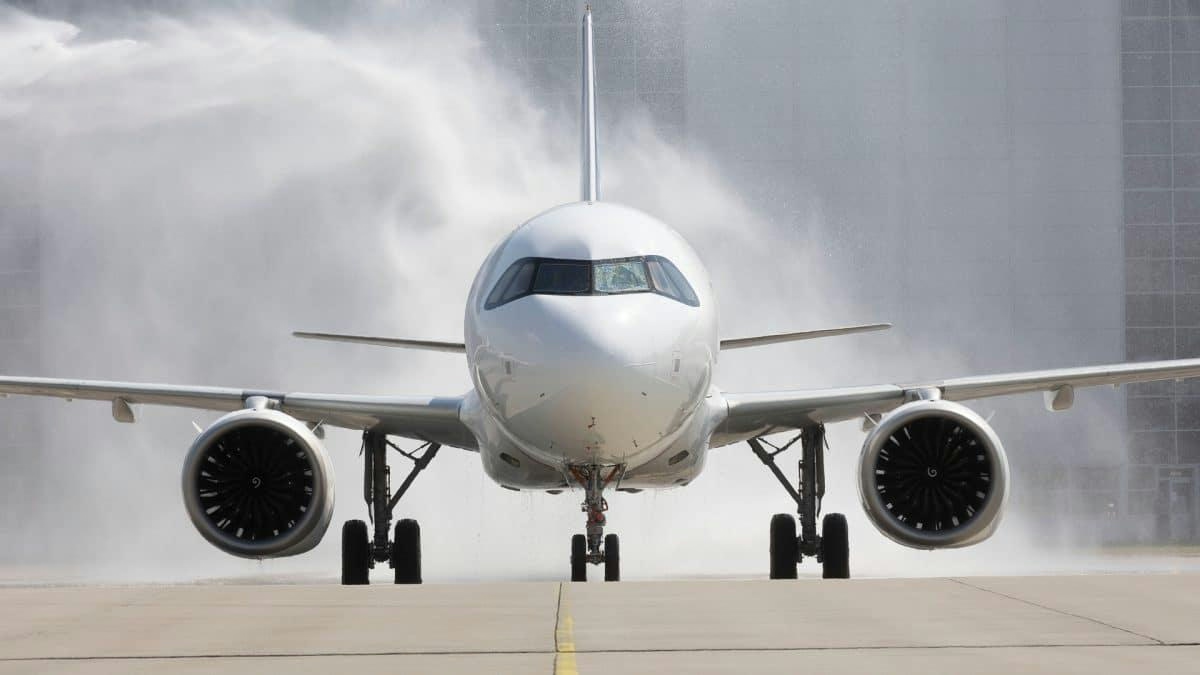
September 2, 2025By ePlane AI
Flynas Secures $134 Million Loan to Finance Airbus Deliveries
0
0
Flynas
Airbus A320neo
Aircraft Financing

Flynas Secures $134 Million Loan to Finance Airbus Deliveries

Saudi Arabian budget carrier Flynas has obtained a SAR504 million ($134 million) sharia-compliant loan from Saudi Awwal Bank to support the financing of its forthcoming Airbus aircraft deliveries. The loan facility, disclosed in a statement to the Saudi stock exchange on Tuesday, is intended to facilitate the acquisition of Airbus A320neo jets. This forms part of Flynas’s firm order for 195 narrow-body aircraft, which includes 159 A320neo and 36 A321neo models, underpinning the airline’s strategic expansion plans.

Loan Structure and Strategic Context

The 12-year financing arrangement is secured by a comprehensive package of guarantees, encompassing promissory notes, aircraft mortgages, insurance and reinsurance assignments, as well as warranties covering airframes and engines. Saudi Awwal Bank, also listed on the Saudi stock exchange, provided the facility amid Flynas’s ongoing efforts to grow its operational fleet and broaden its route network.

Flynas’s substantial investment in Airbus aircraft occurs against a backdrop of shifting dynamics within the global aviation industry. Recent data indicates that Airbus is set to surpass Boeing in narrow-body aircraft deliveries, thereby increasing its market share in this vital segment. This evolving competitive landscape may influence Flynas’s procurement costs and delivery timelines, as manufacturers adjust pricing and strategies to either maintain or reclaim market dominance. Such developments are likely to invite closer scrutiny of Flynas’s financial position and strategic decisions, particularly as Boeing and other rivals respond with competitive offers.

Operational Growth and Financial Performance

Operationally, Flynas expanded its fleet to 71 aircraft during the first half of 2025, including the delivery of three A320neo jets in the second quarter. The airline currently serves 146 routes to 74 destinations across 34 countries, reflecting its ambitious growth trajectory.

From a financial perspective, Flynas reported a significant reversal from a net profit of nearly SAR239 million in the second quarter of 2024 to a loss of SAR862.5 million this year. This downturn is primarily attributed to non-recurring IPO-related expenses exceeding SAR1 billion. Despite this, the company’s stock closed 2 percent lower at SAR76.20 on Monday but remains up 77 percent since its June listing. Major shareholders include National Aviation Services Co, holding a 28.9 percent stake, and Kingdom Holding Co, which owns 27.4 percent.

As Flynas advances with its fleet expansion amid a rapidly evolving aircraft market, its capacity to manage financial pressures and leverage favorable delivery terms will be closely monitored by investors and industry analysts.

More news
China's 10-passenger electric aircraft, the Matrix, hints at how big flying taxis can be

China's 10-passenger electric aircraft, the Matrix, hints at how big flying taxis can be

China’s 10-Passenger Electric Aircraft, the Matrix, Signals Ambitious Future for Flying Taxis A Glimpse into Urban Air Mobility In a hangar near Shanghai, the future of urban air transportation is beginning to take form with the development of the Matrix, a large electric vertical takeoff and landing (eVTOL) aircraft created by the Chinese company AutoFlight. Recently completing a demonstration flight in Kunshan, the Matrix showcases both the potential and the complexities involved in realizing large-scale flying taxis. Weighing five tons and featuring a wingspan of 20 meters (66 feet), the Matrix stands as the largest electric aircraft constructed in China to date. The prototype measures 17.1 meters (56 feet) in length and 3.3 meters (11 feet) in height, with the capacity to carry up to 10 passengers. It can sustain flight for approximately one hour on a single battery charge. Founded in 2017, AutoFlight envisions the Matrix as a future flying taxi, although industry experts emphasize that widespread commercial use remains several years away. During a recent demonstration for The Associated Press, the Matrix was moved from its hangar to a helipad at AutoFlight’s low-altitude test facility. Following thorough pre-flight checks, the aircraft’s propellers activated, lifting the eVTOL into the air for two circuits around the heliport. The noise generated was noticeable but quieter than that of a conventional helicopter, and the aircraft completed a smooth landing after roughly ten minutes. Challenges on the Path to Commercialization Despite the successful test flight, significant obstacles remain before flying taxis like the Matrix can become a common mode of transport. Regulatory approval stands as a primary challenge. When questioned about a timeline for commercial operations, Steven Yang, AutoFlight’s senior vice president, acknowledged the difficulty in providing a definitive answer. The company’s smaller, two-ton passenger eVTOL is still undergoing certification, and Yang expressed hope that the Matrix would receive a type certificate from regulators by 2027. Even with certification, additional approvals would be necessary before the aircraft could carry passengers. AutoFlight is part of a growing field of Chinese companies developing eVTOL technology. EHANG, based in Guangdong province, has already secured certification to offer commercial passenger services, although operations have yet to commence. The sector is attracting attention from both established aerospace firms and new entrants, fueling accelerated development, strategic partnerships, and increased investment as competitors strive for leadership in this emerging market. Beyond regulatory hurdles, technological limitations and infrastructure requirements pose further challenges. Facilities capable of supporting regular eVTOL operations remain scarce, and questions persist regarding energy efficiency and cost-effectiveness. While the Matrix and similar aircraft are promoted for their environmental advantages and potential to alleviate urban congestion, market acceptance will depend on the ability to deliver these benefits at scale. Currently, the most tangible impact of China’s burgeoning “low-altitude economy” is the deployment of drones for services such as food delivery in cities like Shenzhen. The Matrix’s recent test flight marks a step forward in the development of large, passenger-carrying electric aircraft, yet the realization of everyday flying taxis will demand overcoming substantial technical, regulatory, and market challenges.
American Airlines Expands Premium Offerings on Widebody Fleet

American Airlines Expands Premium Offerings on Widebody Fleet

American Airlines Expands Premium Offerings on Widebody Fleet Strategic Shift Toward Premium Travel American Airlines is intensifying its focus on premium travel by investing substantially in new cabin products across its widebody and long-range narrowbody aircraft. This initiative reflects a broader industry trend where U.S. carriers compete vigorously to attract high-yield passengers through enhanced business class suites, upgraded lounges, and expanded premium economy cabins on long-haul routes. American’s transformation involves reshaping its fleet composition to prioritize premium seating over maximum capacity, a move that underscores the growing profitability of premium travelers. The airline’s premium pivot aligns with a wider market shift, as premium cabins continue to generate a disproportionate share of revenue on transatlantic and transpacific routes. Although corporate travel has not yet fully recovered to pre-pandemic levels, demand from premium leisure travelers has surged, prompting airlines to reconfigure aircraft to emphasize business and premium economy seating. American Airlines has publicly committed to increasing its premium seating by more than 45% across its long-haul fleet by the middle of the decade, signaling a long-term strategic repositioning rather than a temporary adjustment. Competitive Landscape and Industry Context American’s expansion in premium offerings occurs amid intensified competition from other carriers. JetBlue, for instance, has curtailed its transatlantic growth due to fleet constraints and heightened rivalry, underscoring the necessity for American to differentiate its premium products to sustain a competitive advantage. Similarly, Turkish Airlines’ disciplined approach to growth and profitability highlights the importance of balancing expansion with operational efficiency. Air Canada’s focus on the flexibility of new aircraft such as the A350-1000 further illustrates the need for American to consider both range and operational benefits as it refines its premium strategy. Fleet Modernization and Product Enhancements The airline’s premium transformation extends beyond new aircraft deliveries to include retrofitting existing Boeing 777 and 787 jets with updated interiors. American is introducing premium-heavy configurations on recently delivered Boeing 787-9 Dreamliners, which now feature 51 Flagship Suite seats—significantly increasing premium capacity compared to earlier models. The upcoming introduction of the Airbus A321XLR will mark a notable development by bringing lie-flat Flagship Suite seating to a narrowbody platform capable of long-haul operations. Collectively, these initiatives demonstrate American’s commitment to premium comfort as a central pillar of its competitive strategy, moving beyond reliance on network scale or flight frequency. At the core of this strategy is the new Flagship Suite business class product, which represents American’s first major advancement in business class hard product design in over a decade. The suites are designed to enhance privacy and personalization, featuring sliding doors, expanded storage, wireless charging, and a chaise lounge seating position that allows for multiple reclining configurations. Complementing these features are enhanced finishes, modern lighting, and upgraded inflight entertainment systems, all contributing to an elevated onboard experience. As American Airlines continues to invest in premium products and fleet modernization, its ability to balance differentiation, operational efficiency, and flexibility will be critical to maintaining its position in the increasingly competitive premium long-haul market.
GE Aerospace Stock Approaches 52-Week High

GE Aerospace Stock Approaches 52-Week High

GE Aerospace Stock Nears 52-Week High on Strong Growth and AI Innovation Shares of GE Aerospace closed at $339.81 on Wednesday, approaching their 52-week high of $348.48 by just 2.5%. The company has demonstrated remarkable performance, significantly outpacing both the broader market and its industry peers. Over the past year, GE Aerospace’s stock has surged 73.3%, compared to the S&P 500’s 21.6% gain, and has outperformed competitors such as RTX Corp, which rose 62.8%, and L3Harris Technologies, up 72.5%. Robust Financial Results and Dividend Increase Investor confidence has been bolstered by GE Aerospace’s strong financial results. In the fourth quarter, the company reported earnings per share (EPS) of $1.57, surpassing the consensus estimate of $1.43. Revenue reached $11.90 billion, exceeding analyst expectations and representing a 17.6% increase year-over-year. Looking ahead, GE has provided guidance for full-year 2026 EPS in the range of $7.10 to $7.40, slightly below the Zacks consensus estimate of $7.44, which implies an annual growth rate of 16.8%. Reflecting its positive outlook, GE Aerospace raised its quarterly dividend by 30.6% to $0.47 per share, payable on April 27. The stock is currently trading above both its 50-day and 200-day moving averages, indicating sustained technical strength. Drivers of Growth: Defense, Commercial Engines, and Artificial Intelligence The company’s momentum is supported by robust demand across both commercial and defense sectors. At the 2025 Dubai Airshow, GE Aerospace secured over 500 engine orders, including significant agreements with flydubai, Riyadh Air, and a landmark deal with Qatar Airways for more than 400 GE9X and GEnx engines—the largest widebody engine contract in the company’s history. Additionally, United Airlines selected GE to supply 300 GEnx engines for its new Boeing 787 Dreamliners. On the defense side, GE Aerospace secured a $5 billion contract with the U.S. Air Force for F110 engines and support services, alongside an indefinite delivery/indefinite quantity (IDIQ) contract with the U.S. Army. The company plans to invest over $1 billion in maintenance, repair, and overhaul (MRO) facilities worldwide over the next five years, including the establishment of a dedicated LEAP engine test cell. A key factor distinguishing GE Aerospace is its strategic integration of artificial intelligence. Its Flight Deck lean-management platform utilizes AI to optimize operations, positioning the company at the forefront of AI-driven transformation within the aerospace industry. This technological innovation has enhanced investor confidence and prompted competitors such as Lockheed Martin to increase their own investments in AI and technology to maintain competitive positioning. Valuation Concerns and Market Outlook Despite its strong operational and financial performance, GE Aerospace’s valuation remains a point of contention among analysts. The stock trades at a forward price-to-earnings (P/E) ratio of 44.43, significantly above the industry average of 33.65. By comparison, RTX trades at 30.12 and L3Harris at 30.49. This premium valuation has resulted in mixed analyst sentiment. BNP Paribas Exane recently downgraded the stock to “underperform” with a price target of $290, while UBS maintains a “buy” rating with a target of $374. The consensus rating stands at “Moderate Buy” with an average price target of $331.12. Potential challenges include market saturation in defense contracts and intensifying competition from other aerospace giants. Nevertheless, GE Aerospace’s commitment to innovation and its strong financial trajectory continue to support positive market sentiment, keeping the stock near its all-time highs as it approaches 2026.
Human Factors: When Effort Falls Short

Human Factors: When Effort Falls Short

Human Factors: When Effort Falls Short Engine Failure and Emergency Response The National Transportation Safety Board’s (NTSB) final report on the March 2024 aviation accident begins with a stark account: approximately 30 minutes into the flight, the airplane’s engine abruptly emitted a loud noise before ceasing to produce power. This sudden failure was accompanied by oil spraying across the windscreen, severely impairing the pilot’s visibility. With the nearest airport beyond reach and the Altamaha River in Georgia swollen to flood stage below, the pilot swiftly established the best glide speed, issued a Mayday call, and maneuvered to avoid the river. The terrain ahead offered little reprieve, consisting of dense pine forests and hilly ground, conditions far from ideal for an emergency landing. The aircraft involved, a 2015 Cirrus SR22 Xi Edition, was equipped with a full-frame parachute system. The pilot prudently waited until the last safe moment, ensuring clearance from the river and surrounding swamp, before deploying the parachute. The descent carried the pilot, his wife, and their dog into the forest canopy. The aircraft struck the trees, flipped nose down, and came to rest entangled among young pines, with its spinner nearly touching the ground. Remarkably, all occupants escaped without injury, though the aircraft sustained substantial damage, as later confirmed by NTSB investigators. Mechanical Breakdown and Investigation Findings The investigation quickly identified the cause of the engine failure. Upon removing the engine cowl, investigators discovered a catastrophic breach in the engine crankcase near cylinders Nos. 3 and 4. A large portion of the engine’s upper section was missing, including much of the base of the No. 4 cylinder. The connecting rod for the No. 4 piston was absent, with only fragments recovered from the crankcase and oil sump. Metal debris was found throughout the oil filter, and the oil pump exhibited internal scratches caused by circulating metal fragments. The remaining five connecting rods were also compromised, showing signs of bushing displacement, chipping, and in some cases, breakage. This incident highlights a critical reality in aviation and other high-stakes industries: despite rigorous preparation and advanced technology, human factors and unforeseen mechanical failures can still precipitate critical breakdowns. The complex interplay between human decision-making and mechanical reliability remains a constant challenge. Broader Implications: Human Factors in Technology and Markets A parallel can be drawn between this aviation incident and the current volatility in financial markets, where human factors intersect with rapid technological change. Recent fluctuations in stock prices, particularly among technology companies, have been driven by investor reactions to advancements in artificial intelligence. Concerns over AI tools potentially displacing established software have led to sharp declines in share values. In response, competitors face the imperative to adapt—either by investing heavily in AI to maintain competitiveness or by emphasizing human-centric strategies to differentiate themselves. Market reactions have been swift and severe, with analysts cautioning that volatility may persist amid unpredictable economic conditions and geopolitical tensions. Companies must carefully balance risks and opportunities, sometimes pivoting strategically to leverage human expertise or to mitigate uncertainties introduced by technological disruption. Whether in the cockpit or the boardroom, the enduring lesson is clear: effort and preparation are indispensable but not always sufficient. Human factors—including decision-making under pressure and adaptability in the face of unforeseen challenges—continue to shape outcomes, for better or worse.
Cathie Wood Increases Investment in Air-Taxi Stocks

Cathie Wood Increases Investment in Air-Taxi Stocks

Cathie Wood Increases Investment in Air-Taxi Stocks Strategic Expansion in the eVTOL Sector Cathie Wood, founder of ARK Invest, has significantly increased her investment in the electric air-taxi industry, committing approximately $16.5 million to shares in Archer Aviation and Joby Aviation. This strategic move aligns with the advancing development of commercial electric vertical take-off and landing (eVTOL) air-taxi services, which both companies aim to launch potentially by 2026. Over the course of Tuesday and Wednesday, Wood acquired 1,367,862 shares of Archer Aviation valued at around $9.21 million. The majority of these purchases—947,943 shares worth $6.37 million—occurred on Tuesday following an 11% decline in Archer’s stock price after its quarterly earnings report. In parallel, ARK Invest purchased 739,987 shares of Joby Aviation totaling approximately $7.26 million across two sessions, including 539,131 shares valued at $5.26 million on Tuesday alone. Joby recently reported a fourth-quarter loss of $0.14 per share for 2025, marking an improvement from a $0.23 loss in the previous year. Market Response and Sector Outlook Wood’s increased stake has reignited investor interest in the eVTOL sector, with market activity reflecting growing confidence in the long-term potential of urban air mobility. Despite Joby’s stock declining roughly 25% year to date, analysts interpret Wood’s consecutive acquisitions as a strong endorsement of the sector’s transformative prospects for urban transportation later this decade. Nevertheless, the path to commercial viability for eVTOL companies remains complex. Regulatory approval continues to pose a significant challenge, as authorities work to establish comprehensive safety and operational standards for air-taxi services. Technological innovation is equally critical, with companies striving to enhance battery efficiency, flight range, and overall reliability. The competitive environment is intensifying, as Wood’s high-profile investments may prompt rival firms to accelerate their development and commercialization efforts to secure market leadership. As Archer, Joby, and other competitors advance toward commercial launches, the sector’s success will depend on navigating regulatory and technical obstacles while leveraging increasing investor and public interest. Wood’s recent investments highlight both the promise and the intricate challenges facing the emerging eVTOL market.
Airlines Face Fundamental Technology Challenges, Not Just AI Issues

Airlines Face Fundamental Technology Challenges, Not Just AI Issues

Airlines Face Fundamental Technology Challenges Beyond AI Airlines are incurring billions of dollars in losses annually, not primarily due to fuel costs or labor expenses, but because of outdated technology that fails to keep pace with the increasing complexity of modern aviation. As global operations generate vast volumes of data and demand real-time coordination among partners and customers, legacy IT systems have become a critical bottleneck, impeding efficiency and operational effectiveness. The Legacy Technology Burden Industry surveys reveal that 80% of airlines now identify legacy technology as a significant operational barrier, a notable rise from 65% in 2019. These aging systems undermine not only efficiency but also reliability, resilience, and customer trust—factors that are crucial in an industry characterized by razor-thin profit margins. Despite total revenues expected to exceed $1 trillion by 2026, global airlines are projected to operate with net margins below 4%. Willie Walsh, Director General of the International Air Transport Association (IATA), highlights the stark reality that airlines will earn an average profit of just $7.90 per passenger, a figure that pales in comparison to the profit Apple generates from selling an iPhone cover. The challenge extends beyond technology alone. The distinction between being genuinely AI-ready and merely AI-curious is becoming increasingly critical for airlines aiming for strategic growth or seeking to mitigate systemic risks. While research suggests that artificial intelligence could enable the aviation sector to realize up to $42 billion in savings by 2035 through smarter automation, dynamic planning, and predictive operations, these benefits remain largely theoretical unless airlines first modernize their core systems. Operational Impacts and AI Integration Challenges The consequences of these technological shortcomings are evident across the industry. JetBlue’s transatlantic expansion, for example, has been hindered not only by competitive pressures and airport slot constraints but also by fleet limitations and the need to differentiate its product offering. These operational challenges are exacerbated by the inability to fully leverage data and AI, as most airlines lack the infrastructure necessary to harness real-time insights from the massive data streams generated by modern aircraft. An Airbus A350 can produce terabytes of operational data per flight day, yet much of this information remains untapped due to siloed systems and manual processes. Although AI is delivering value in isolated instances—such as predictive maintenance reducing unscheduled repairs, fuel optimization generating measurable savings, and dynamic pricing engines unlocking incremental revenue—these successes rarely scale. Analytics and AI tools often cannot fully integrate with legacy operational systems, limiting their broader impact. Some airlines employing machine learning have reported operational cost reductions of up to 20% and maintenance downtime decreases of up to 30%, but these gains remain exceptions rather than the norm. Market Volatility and Organizational Barriers The broader technology disruption is also influencing market dynamics. The rise of AI has introduced volatility in software stocks, as investors grapple with the potential for AI to disrupt traditional software services. This has resulted in cycles of panic-driven selling and euphoric rallies, reflecting uncertainty about AI’s long-term impact on sectors including aviation. Ultimately, the primary barrier for airlines is organizational rather than purely technological. Treating AI as a mere add-on to outdated systems is insufficient. To unlock the full potential of digital transformation and maintain competitiveness in a rapidly evolving industry, airlines must confront and resolve their fundamental technology challenges directly.
Crankshaft Fatigue Causes Emergency Landing

Crankshaft Fatigue Causes Emergency Landing

Crankshaft Fatigue Forces Emergency Landing Near Bellevue A Cirrus SR22T aircraft was compelled to execute an emergency landing near Bellevue, Washington, following a total engine failure caused by crankshaft fatigue, according to a preliminary report from the National Transportation Safety Board (NTSB). Incident Overview The event took place shortly after the aircraft departed from Runway 34 at Renton Municipal Airport (KRNT). The flight instructor and the pilot under instruction reported that the plane had stabilized at approximately 2,500 feet mean sea level when the engine’s revolutions per minute (RPM) surged erratically. This was immediately followed by a loud bang and a complete loss of engine power. Unable to restart the engine, the crew deployed the Cirrus Airframe Parachute System (CAPS), enabling a controlled descent into a wooded wetland area near a residential neighborhood. The aircraft came to rest upright, about four miles northeast of the airport, in a nose-low position. Both pilots survived without injury, and there were no immediate reports of damage or casualties on the ground. Investigation and Findings Initial site examination revealed damage to the airplane’s nose landing gear fairing, with both wings and flaps removed during recovery operations. The engine, a Continental Motors TSIO-550-K1B, remained attached to the fuselage, with all cylinders and accessories intact. Investigators confirmed control continuity from the cockpit to the fuel servo and found no external mechanical damage to the engine crankcase. Subsequent detailed analysis conducted at Continental Motors facilities and the NTSB Materials Laboratory uncovered significant internal damage. The crankshaft was fractured near the No. 2 main bearing and No. 3 connecting rod journal. Further examination revealed fatigue cracks had developed at multiple points along the crankshaft, culminating in its failure. Maintenance records showed the engine had undergone an overhaul in November 2019 and was installed in April 2020, accumulating approximately 680 flight hours since the overhaul. No recent maintenance had been performed on the crankshaft prior to the incident. The NTSB identified the probable cause as a total loss of engine power resulting from a fatigue fracture of the crankshaft. Broader Implications Beyond the technical aspects, the emergency landing highlights operational challenges within the aviation industry. The incident likely caused immediate disruptions, including flight rerouting, passenger accommodations, and temporary airport closures. Financial repercussions for the operator may encompass costs related to fuel, landing fees, and passenger compensation. Moreover, the event has the potential to influence consumer confidence, as travelers may raise concerns regarding aircraft maintenance and safety protocols. Competitors within the aviation sector are expected to observe the situation closely, potentially adjusting pricing strategies or market positioning should the incident indicate broader maintenance issues. The airline’s response, particularly its transparency and management of customer concerns, will be pivotal in preserving passenger trust and loyalty. **NTSB Identification:** 193887
Embraer Integrates AI-Based Counter-Drone System into A-29 Super Tucano

Embraer Integrates AI-Based Counter-Drone System into A-29 Super Tucano

Embraer Integrates AI-Based Counter-Drone System into A-29 Super Tucano Embraer, in collaboration with Valkyrie Aero, has announced a significant enhancement to the A-29 Super Tucano’s operational capabilities through the integration of an artificial intelligence-enabled counter-drone system. Unveiled on March 4, 2026, this upgrade centers on Valkyrie Aero’s “Gunslinger” AI suite, designed to accelerate the detection and engagement process in manned counter-unmanned aerial system (C-UAS) missions. The Gunslinger system will be incorporated into the A-29’s existing sensor and weapons architecture, enabling a more rapid and effective “find, fix, finish” cycle against increasingly prevalent unmanned threats. Addressing the Challenge of Low-Cost Drones The proliferation of small, inexpensive drones on modern battlefields has exposed significant limitations in traditional countermeasures. Conventional responses, such as deploying frontline fighter jets, often incur high operational costs and inefficient use of expensive interceptors. Fast jets face difficulties engaging slow-moving drones safely with guns, while the use of costly air-to-air missiles against low-value drones—such as Iran’s Shahed series—proves economically unsustainable. This growing mismatch has underscored the need for more practical and cost-effective solutions. Embraer positions the A-29 Super Tucano, a turboprop light attack and advanced trainer aircraft, as a viable alternative. Its tandem cockpit configuration, endurance, and agility allow it to match the speed profile of attack drones, providing a stable firing platform for guns, guided rockets, and other precision effectors. Marcio Monteiro, Vice President for Market Intelligence at Embraer Defense and Security, emphasized the aircraft’s proven combat record, with over 60,000 combat flight hours, as a testament to its suitability for manned C-UAS operations. Technological Integration and Market Response Chris Turner, Senior Vice President at Valkyrie Aero, explained that the Gunslinger capability was developed in direct response to urgent operational needs identified by frontline users. However, integrating advanced AI systems into the A-29 presents several challenges. These include ensuring the AI’s effectiveness against a diverse range of drone threats, preserving the aircraft’s agility and speed, and managing the costs associated with such technological enhancements. Despite these hurdles, the market response has been encouraging. Defense agencies and customers worldwide have shown increased interest in advanced counter-drone solutions, prompting Embraer to actively reposition the A-29 for C-UAS missions since late 2025. The company advocates the A-29 as a purpose-built alternative to the improvised use of crop-dusting and trainer aircraft for drone defense, a tactic notably employed in Ukraine. Unlike these ad hoc platforms, the A-29 offers integrated sensors, targeting systems, and precision weapons, while maintaining a favorable balance of speed and cost. Industry Trends and Future Prospects The integration of AI-enhanced counter-drone capabilities is part of a broader industry trend, with competitors such as Lockheed Martin and BAE Systems also advancing similar technologies for their platforms. This shift reflects the growing recognition of artificial intelligence as a critical component in modern aerial defense strategies. Embraer continues to build momentum for the A-29, with recent deliveries including the first two aircraft delivered to Uruguay in February 2026. While the company has not yet announced a definitive timeline for the operational deployment of the AI-assisted mission system, the integration represents a significant step in adapting legacy platforms to address evolving aerial threats effectively.
Standardaero and Avilease Sign Agreement for LEAP and CFM56-7B MRO Services

Standardaero and Avilease Sign Agreement for LEAP and CFM56-7B MRO Services

StandardAero and Avilease Forge Partnership for LEAP and CFM56-7B MRO Services StandardAero, Inc., a prominent independent provider of aerospace engine aftermarket services, has formalized an agreement with Avilease to deliver maintenance, repair, and overhaul (MRO) services for LEAP and CFM56-7B engines. This collaboration is designed to support a broad spectrum of fixed and rotary wing aircraft operating within commercial, military, and business aviation sectors. Scope of Services and Operational Segments StandardAero offers an extensive range of aftermarket solutions encompassing engine maintenance, repair and overhaul, component repair, on-wing and field service support, asset management, and engineering services. The company’s operations are divided into two primary segments. The Engine Services segment provides comprehensive engine and airframe MRO and related services to customers across commercial, military, helicopter, and business aviation markets. Meanwhile, the Component Repair Services segment focuses on engine part repair, accessory repair, and new part manufacturing, serving diverse industries including marine, land, and oil and gas. Market Context and Emerging Challenges This agreement emerges amid evolving market dynamics that present both opportunities and challenges. As technical and supply chain constraints impacting engine availability begin to ease, the industry faces the prospect of an oversupply of spare engines. Such a surplus could exert downward pressure on lease rates and asset values, potentially affecting the financial performance of both StandardAero and Avilease. Competition within the MRO sector is intensifying, with companies like Bombardier expanding their own service offerings, thereby increasing competitive pressures and potentially redistributing market share. Furthermore, technological advancements in engine component manufacturing, exemplified by Mecachrome’s initiatives to improve the production process for LEAP turbine blades, are poised to influence operational efficiencies and reshape the competitive landscape. Strategic Implications of the Partnership Despite these challenges, the alliance between StandardAero and Avilease highlights a shared commitment to delivering value-added aftermarket solutions and adapting to the rapidly evolving aerospace environment. The partnership is anticipated to reinforce their positions within the global engine MRO market, while ongoing industry developments will continue to inform their strategic direction and future opportunities.
ETF Airways to Receive First ATR Aircraft

ETF Airways to Receive First ATR Aircraft

ETF Airways to Receive First ATR Aircraft ETF Airways is poised to receive its inaugural ATR72-600 aircraft, marking a pivotal advancement in the airline’s fleet expansion efforts. The turboprop, currently stationed in Vietnam, is scheduled to arrive in Zagreb within the coming days. This acquisition is facilitated through a six-year lease agreement with Singapore-based leasing firm Avation and represents ETF Airways’ initial venture into operating turboprop aircraft. Strategic Expansion into Turboprop Operations According to Stjepan Bedić, CEO of ETF Airways, the airline is experiencing robust demand for ACMI leases involving turboprop aircraft. He emphasized that this segment offers a strategic niche amid intense competition for leasing Airbus A320 and Boeing 737 jets. Bedić further outlined the airline’s long-term vision, which includes the addition of a second ATR72-600 by 2027, signaling a sustained commitment to this aircraft category. The integration of the ATR72-600 into ETF Airways’ existing fleet presents both opportunities and operational challenges. The airline must undertake meticulous planning to ensure regulatory compliance and manage operational costs effectively. This process will involve comprehensive training programs for flight crews and maintenance personnel, alongside adjustments to operational protocols to accommodate the distinct characteristics of turboprop aircraft. Implications for Regional Market Competition Industry analysts suggest that ETF Airways’ entry into the turboprop market could heighten competition on regional routes. Should other carriers follow suit by expanding their fleets with ATR aircraft, the regional aviation landscape may experience shifts in fleet strategies and pricing models as competitors strive to protect their market shares. ETF Airways’ move reflects a broader industry trend toward increased demand for efficient, short-haul aircraft amid fierce competition for narrow-body jets. The airline’s planned expansion within the turboprop segment underscores its strategic intent to strengthen its position in this evolving market niche.
line










