صورة

حوّل رؤى الذكاء الاصطناعي إلى أفعال منسّقة

انضم إلى قائمة الانتظار لـ AeroGenie اليوم!

الرائج الآن

Categories

Fuel Consumption of the Airbus A350-1000 During Takeoff
April 24, 2026By ePlane AI
Fuel Consumption of the Airbus A350-1000 During Takeoff
0
0
Airbus A350-1000
Fuel Consumption
Takeoff Performance

Fuel Consumption of the Airbus A350-1000 During Takeoff

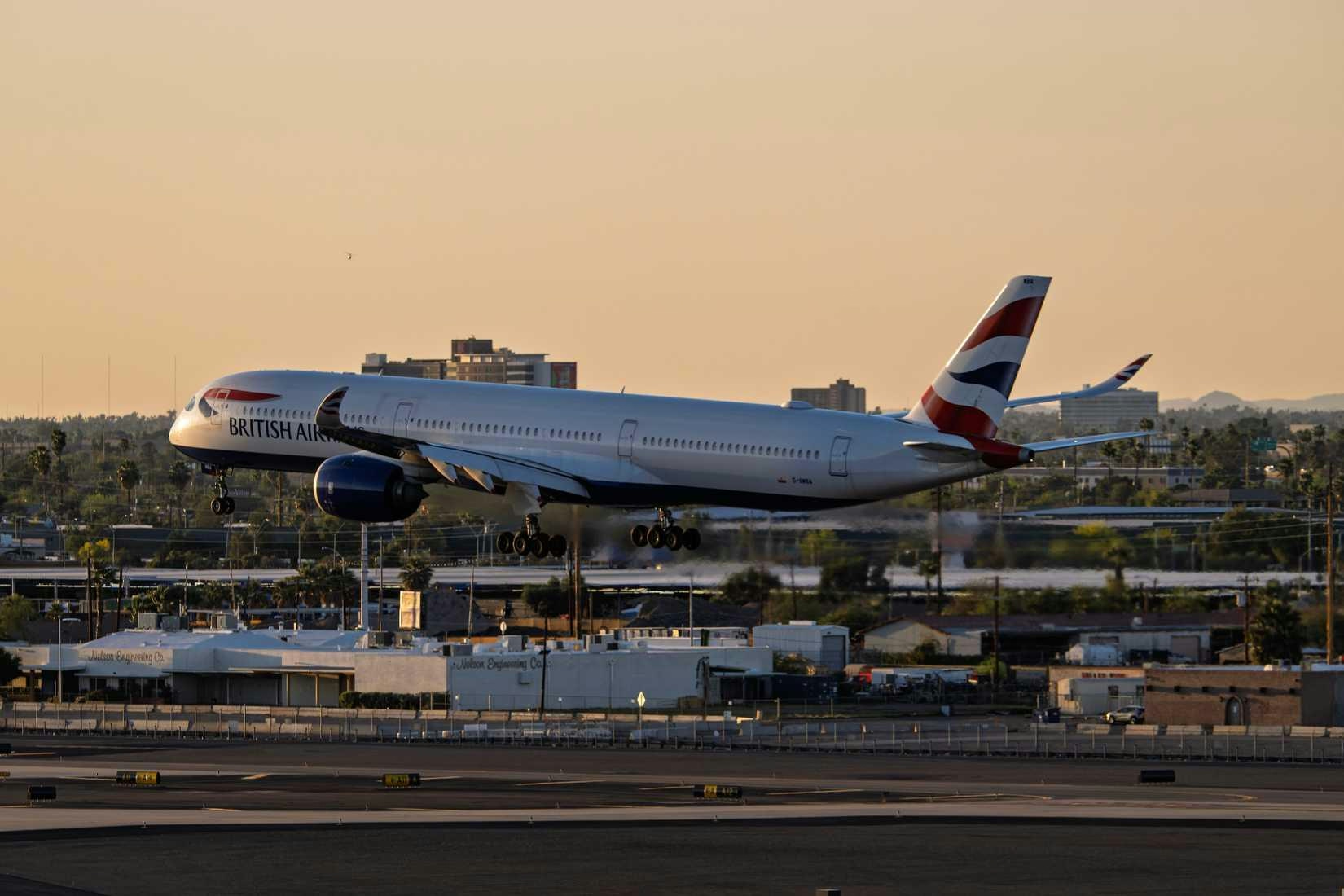
The Airbus A350-1000, the largest aircraft currently produced by Airbus, is distinguished by its impressive size and advanced efficiency. Equipped with two Rolls-Royce XWB-97 turbofan engines, each generating 97,000 pounds of thrust, this twin-engine jet can lift over 300 tons into the air. However, this remarkable capability comes with a significant fuel consumption cost during takeoff, a concern that has gained heightened importance amid the ongoing global fuel crisis of 2026.

Takeoff Fuel Burn and Economic Impact

During takeoff and the initial climb phase, the A350-1000 consumes between 2.5 and 3 tons of jet fuel within the first few minutes, an amount comparable to approximately ten minutes of cruising flight. This equates to a fuel burn rate exceeding 1,000 kilograms per minute. Under typical market conditions, the cost of this fuel consumption ranges from $500 to $1,000 per minute. However, with jet fuel prices having doubled over the past eight weeks due to the crisis, these costs have surged beyond $2,000 per minute, exerting considerable pressure on airline operating budgets.

Despite the substantial fuel burn required to achieve takeoff, the A350-1000 is engineered for optimal efficiency at cruising altitudes. Once stabilized in cruise, its fuel consumption decreases dramatically to around 100 kilograms per minute, roughly one-tenth of the takeoff rate. This efficiency is largely attributable to the aircraft’s advanced carbon-fiber composite structure and the latest generation Rolls-Royce Trent XWB engines, which collectively render the A350-1000 approximately 25% more fuel-efficient than earlier widebody aircraft.

Strategic Advantages Amid the Fuel Crisis

The current fuel crisis has compelled airlines to reassess their fleets and operational strategies. Carriers such as KLM are incorporating the A350-1000 into their fleet renewal programs, aiming to phase out older, less efficient models like the Boeing 777-200ER. The A350-1000’s reduced fuel consumption—estimated to be 25% lower than that of its competitors—provides a critical advantage as airlines grapple with soaring fuel costs and potential supply constraints. To mitigate these rising expenses, many airlines have been forced to increase ticket prices by at least 20%, a challenging adjustment given the unique logistical and policy limitations imposed by the 2026 crisis.

The A350-1000’s capacity to deliver high thrust during takeoff, even from demanding “hot and high” airports, is balanced by its exceptional long-range fuel efficiency. This balance enables airlines to maintain operational flexibility while optimizing fuel consumption on ultra-long-haul routes. In a competitive market that includes the Boeing 777 and 787 Dreamliner, the A350-1000’s combination of payload capacity and fuel economy positions it as a preferred choice for airlines navigating the complexities of today’s volatile fuel environment.

While the A350-1000’s fuel consumption during takeoff remains substantial, its overall efficiency and cutting-edge technology make it an indispensable asset for airlines striving to control costs and sustain service amid unprecedented fuel price volatility.

More news
Boeing 777X Achieves Key FAA Certification, Advancing U.S. Aerospace

Boeing 777X Achieves Key FAA Certification, Advancing U.S. Aerospace

Boeing 777X Advances with Key FAA Certification The U.S. aerospace industry has reached a pivotal milestone as Boeing’s 777X program secured a critical regulatory approval, moving the aircraft closer to commercial deployment. The Federal Aviation Administration (FAA) has authorized Boeing to commence Type Inspection Authorization (TIA) Phase 4B testing, a decisive stage in the certification process that brings the aircraft under direct federal evaluation. This development, announced by Boeing executives at a major international aviation event in Brazil, has revitalized optimism among global airlines. The 777X, particularly the 777-9 model, is now nearer to entering service with prominent carriers, including those in Qatar and other regions seeking to upgrade their long-haul fleets with more advanced and efficient aircraft. Significance of TIA Phase 4B Approval The approval for Phase 4B testing marks a transition from Boeing’s internal assessments to comprehensive FAA oversight. During this phase, FAA flight test pilots and engineers conduct detailed examinations of the aircraft’s safety systems, operational procedures, and responses to abnormal scenarios. It represents the most technically demanding segment of flight testing remaining for the 777-9, covering critical areas such as advanced avionics, stability and control, and human factors engineering. Stephanie Pope, CEO of Boeing Commercial Airplanes, emphasized the importance of this achievement, noting the company’s goal to complete flight testing within the year and deliver the first 777-9 aircraft in 2027. However, FAA Administrator Bryan Bedford cautioned that full certification might not be finalized until 2027, indicating potential delays in the program’s timeline. Rigorous Certification Process and Industry Implications The FAA’s certification framework for the 777X involves five distinct phases of Type Inspection Authorization. Having completed the less extensive Phase 4A, Boeing now faces the more comprehensive and stringent Phase 4B. This stage is recognized as one of the most rigorous technical evaluations an aircraft must pass before receiving clearance to carry passengers. It ensures that any design or systemic issues are identified and resolved under direct regulatory supervision, upholding the stringent safety and engineering standards of U.S. commercial aviation. As global regulatory standards continue to tighten, Boeing’s progress through these demanding compliance phases signals renewed momentum for the manufacturer. While the broader market response and competitor strategies remain to be seen, this advancement reinforces the prominence of U.S. aerospace engineering on the international stage and promises improvements in efficiency and capacity for long-haul air travel. With the 777X program advancing through its final and most challenging certification stages, the aviation industry remains attentive as Boeing prepares to deliver its next-generation widebody aircraft to airlines worldwide.
Families of AI 171 Crash Victims Confront Fear and Anxiety

Families of AI 171 Crash Victims Confront Fear and Anxiety

Families of AI 171 Crash Victims Confront Fear and Anxiety Nearly a year after the devastating crash of AI 171 in Ahmedabad, which claimed 260 lives, the families of the victims remain engulfed in profound grief, fear, and anxiety. For many, the trauma has extended far beyond the immediate tragedy, becoming an enduring part of their daily existence. This ongoing distress is further intensified by the uncertainty surrounding the final investigative report, which has yet to be released. Personal Stories of Loss and Lingering Trauma Rafik Arab, a resident of Diu, lost his 25-year-old son Faizan in the crash. Faizan, who was studying Islamic theology in the United Kingdom, was returning to London after visiting his family. Rafik recalls the haunting final message from his son: "Papa, I have boarded the flight and I am going." Since that day, the family has been unable to fly, and even the sound of an airplane overhead triggers painful memories of the lives lost in an instant. Faizan’s mother and two younger brothers continue to struggle with his absence, their lives irrevocably altered. Similarly, Mukti Vansadiya from Surat lost her parents, Divya and Arjunsinh, who were on their first international trip to visit their elder daughter in London. Mukti described her parents as her "only light." The family had chosen the Ahmedabad flight specifically so her parents could travel among Gujarati-speaking passengers, hoping to ease their journey. Her last memory of them at the airport—touching their feet for blessings—remains vivid. Hours later, a phone call shattered her world. The aftermath of the tragedy plunged Mukti into depression and anxiety. She left her job at a travel agency and underwent months of counseling before finding work as a social worker. Despite this, the trauma persists. She explained that any mention of airplanes revives her anxiety, accompanied by a dull ache in her chest. Mukti has resolved never to fly again and avoids all media coverage related to the crash. Broader Implications and Industry Response The emotional toll on the victims’ families is reflected in wider repercussions across financial markets and the technology sector. Following the crash, Korean stocks experienced a sharp decline as investors sold off technology shares, raising concerns about the stability of the ongoing bull market. Industry competitors have also responded with caution. Companies such as Palantir have expressed skepticism regarding the reliability of major AI models, fearing that incidents like the AI 171 crash could cast doubt on their products and prompt questions about safety and regulatory oversight. Within the tech industry, there is an ongoing struggle to balance innovation with safety. Anthropic’s decision to limit the release of its advanced AI model, Mythos, underscores efforts to mitigate potential risks while continuing technological advancement. As the families of AI 171 victims continue to confront their grief and anxiety, they do so amid a climate of industry reflection and market uncertainty. The awaited investigation report remains a critical point of focus, offering the possibility of personal closure and raising broader questions about safety, responsibility, and the future trajectory of technology.
AI Enters Aviation Crash Investigations, Prompting Response from NTSB

AI Enters Aviation Crash Investigations, Prompting Response from NTSB

AI and Aviation Crash Investigations: The NTSB’s Response to Synthetic Audio The National Transportation Safety Board (NTSB) has confirmed that cockpit voice recordings related to the 2025 UPS Flight 2976 crash, which have been circulating online, were artificially reconstructed using advanced AI technology. These audio clips were not created from scratch but were reverse-engineered from a spectrogram image inadvertently published by the NTSB as part of its investigation materials. The agency has issued a public warning, urging both the media and the public to disregard these recordings, which falsely purport to capture the final moments of the flight crew. Federal regulations strictly prohibit the release of cockpit voice recorder audio, and the NTSB customarily publishes only written transcripts after a thorough review process. In this instance, the accidental release of spectrogram images alongside publicly available transcripts enabled the synthesis of audio that mimics the original recordings. This incident highlights the increasing challenges of protecting sensitive data in an era where AI tools can reconstruct sound from visual representations. NTSB’s Immediate Actions and Ongoing Investigation Following the emergence of the AI-generated audio, the NTSB temporarily suspended public access to its entire investigation docket system. This measure affects thousands of cases and restricts access to 42 ongoing investigations, including the UPS Flight 2976 crash. The agency is currently reviewing its internal protocols and considering additional safeguards to prevent similar breaches in the future. To date, officials have not identified the individuals responsible for creating or distributing the synthetic recordings. The clips rapidly gained traction on social media in the days after the November 4, 2025 crash, accumulating millions of views before aviation experts and fact-checkers exposed inconsistencies. The NTSB emphasized that these recordings are not official and do not represent any verified evidence from the investigation. The UPS Flight 2976 Crash and Investigation Status The fabricated audio pertains to the crash of UPS Flight 2976, a McDonnell Douglas MD-11F cargo aircraft that crashed shortly after takeoff from Louisville Muhammad Ali International Airport. The tragedy resulted in the deaths of all three crew members aboard the aircraft, as well as 11 individuals on the ground. A twelfth ground fatality occurred weeks later due to injuries sustained in the accident. The NTSB has deployed a specialized team to collect flight data, examine the wreckage, and interview relevant personnel. A preliminary report is expected within the agency’s standard 30-day timeframe for major accident investigations. Until the official findings are released, the NTSB has urged the public to approach any unofficial audio, video, or documents with skepticism. The agency warned that fabricated content can distort public understanding and impose additional emotional burdens on the families and colleagues of those affected. Emerging Challenges in Accident Investigation This incident exposes a new and complex challenge for accident investigators: the ability of AI tools to reconstruct audio from spectrogram images—visual representations of sound frequencies—enables the creation of synthetic recordings from materials previously deemed safe for public release. In aviation, where pilot voices are often accessible through training materials and public interviews, the risk of realistic-sounding fabrications is particularly acute. Aviation safety experts caution that synthetic recordings can have far-reaching consequences beyond reputational harm. They can influence litigation, shape early media narratives, and complicate the investigative process by introducing misinformation that investigators must actively counter while conducting technical analyses. Although the NTSB has previously contended with manipulated photographs and rumors, the emergence of fabricated cockpit audio represents a novel and significant challenge. The agency reiterated that authentic cockpit voice recorder material remains strictly protected under federal law. It is currently reviewing its procedures to safeguard the integrity of future investigations in light of these technological developments.
World’s First Flying Taxi May Launch Public Service This Year, Potentially Replacing Helicopters

World’s First Flying Taxi May Launch Public Service This Year, Potentially Replacing Helicopters

World’s First Flying Taxi Poised for Public Service Launch This Year Helicopters may soon face significant competition as Joby Aviation, a California-based company, prepares to introduce the world’s first flying taxi service. After years of development and extensive testing, the company anticipates that its electric vertical takeoff and landing (eVTOL) aircraft could begin carrying paying passengers before the end of the year. These innovative vehicles are designed specifically for short urban journeys, offering quieter, fully electric flights with the ability to take off and land vertically—similar to helicopters but with distinct advantages for city travel. Advancements in Urban Air Mobility For decades, the concept of flying taxis was largely confined to science fiction. Joby Aviation now asserts that this vision is on the verge of becoming reality. Their all-electric aircraft, equipped with six rotors, can accommodate a pilot and four passengers, reaching speeds of up to 200 miles per hour. Unlike traditional helicopters, Joby’s design significantly reduces noise pollution and produces no direct emissions during flight, making it particularly well-suited for densely populated urban environments. The company has completed thousands of test flights and recently showcased its aircraft in New York City, including demonstration routes between Manhattan and JFK Airport. Joby is targeting the launch of its first commercial passenger operations in Dubai later this year, while simultaneously preparing for limited operations in the United States through a government-supported air taxi initiative. Potential Impact and Industry Challenges Electric air taxis promise to deliver the convenience of helicopters while mitigating many of their drawbacks. Their quieter operation, zero-emission flights, and ability to circumvent urban traffic congestion could revolutionize transportation within major cities. Joby has also formed a partnership with Uber to integrate air taxi bookings into the ride-hailing app, facilitating seamless transitions between ground and air travel. Furthermore, Joby’s acquisition of parts of Blade Air Mobility’s passenger business provides access to established helicopter routes and clientele, aiding the transition to electric aircraft. Despite these promising developments, the industry faces considerable challenges. Rigorous certification processes and regulatory hurdles remain significant obstacles, contributing to delays and legal disputes among leading companies such as Joby, Archer, and Vertical. These ongoing court battles and shifting certification timelines have dampened investor enthusiasm and may slow the widespread adoption of air taxis. Although the eVTOL Integration Pilot Program, initiated under the Trump administration, aims to accelerate development, persistent legal conflicts threaten to impede progress. Nevertheless, momentum continues to build. Should regulatory approvals be secured and legal disputes resolved, 2026 could mark a pivotal year in which flying taxis transition from futuristic concepts to everyday urban transportation, potentially reshaping city skies and challenging the longstanding dominance of helicopters.
Are Engine Manufacturers Responding to Rio's Call?

Are Engine Manufacturers Responding to Rio's Call?

Are Engine Manufacturers Responding to Rio's Call? Industry Pressure Mounts Amid Engine Shortages At the recent International Air Transport Association (IATA) Annual General Meeting in Rio de Janeiro, senior executives from the world’s foremost engine manufacturers faced intense scrutiny from airline leaders frustrated by ongoing engine shortages and reliability concerns. The airline industry’s patience is clearly wearing thin as persistent supply constraints continue to disrupt operations globally. The challenges confronting engine manufacturers stem from their inability to keep pace with surging demand. United Airlines CEO Scott Kirby highlighted that the scarcity of available engines will remain a significant bottleneck for at least the next five years. This shortage has already grounded hundreds of Airbus A320neo aircraft worldwide, as airlines endure prolonged delays for engine inspections and repairs. Much of the disruption has been traced to a manufacturing defect in Pratt & Whitney’s geared turbofan (GTF) engines, which has forced airlines to sideline affected aircraft for extended periods. Recurring Reliability Issues and Industry Response The criticism directed at Pratt & Whitney was echoed in concerns about other major manufacturers. Rolls-Royce, for instance, has grappled with durability problems affecting its Trent 1000 engine on the Boeing 787 since 2016. Similar issues have since emerged with the Trent 7000 powering the Airbus A330neo, as well as with the XWB-84 and -97 engines used on the A350. These recurring technical setbacks have raised serious doubts among airlines regarding the reliability and longevity of engines promised by manufacturers. Airlines contend that they have not only paid premium prices for engines that have failed to meet performance expectations but have also borne the operational and financial burdens of grounded fleets. The market response has been sharply critical, with calls for more resilient and responsive engine supply chains. Industry leaders are urging manufacturers to increase production capacity and accelerate innovation to prevent future shortages and rebuild trust. As the aviation sector looks ahead, the message from Rio is unequivocal: engine manufacturers must take decisive action to resolve quality and supply challenges. Whether original equipment manufacturers (OEMs) will respond with the urgency demanded by airlines remains uncertain, but the pressure for meaningful change has never been more pronounced.
Helios Horizon Tests Solid-State Batteries for Electric Propulsion

Helios Horizon Tests Solid-State Batteries for Electric Propulsion

Helios Horizon Advances Electric Propulsion with Solid-State Battery Flight Tests Helios Horizon, a US-based electric aviation development initiative, has achieved a pioneering milestone by completing what it describes as the first human-piloted flight powered by solid-state batteries. The test flights, conducted on June 5 from Zephyrhills Airport in Florida, utilized a modified Pipistrel Taurus Electro motor-glider. This achievement marks a significant step forward as Helios prepares for a series of high-altitude evaluations reaching up to 40,000 feet later this year. Advantages and Technological Breakthroughs Solid-state batteries replace the liquid electrolyte found in conventional lithium-ion cells with a solid alternative, offering several critical advantages. These include higher energy density, enhanced safety, and faster charging times. Helios reports that these batteries can more than double the range of electric vehicles and recharge to 80% capacity in under 15 minutes, potentially revolutionizing the commercial viability of electric aviation. Miguel Iturmendi, Helios founder and test pilot, emphasized the importance of this development: “For the first time, we have a battery technology that yields the range and charging times necessary to make commercial electric aviation viable, while providing the safety the flying public will demand.” Iturmendi brings extensive experience from projects such as Perlan and Solar Impulse, underscoring the significance of this advancement. Previously, Helios’s demonstration flights relied on custom lithium-ion battery systems with an energy density of 260 Wh/kg. The introduction of solid-state batteries has increased this figure to 410 Wh/kg, representing a substantial leap in electric aircraft performance. Despite higher costs and limited current availability, these batteries also offer improved longevity due to their resilience to temperature extremes and reduced cell degradation. Challenges and Industry Implications Despite the promising performance, the adoption of solid-state battery technology faces considerable regulatory and manufacturing challenges. Aviation authorities continue to classify these batteries similarly to hazardous liquid lithium-ion types, complicating certification processes and integration into commercial fleets. Additionally, manufacturing complexities and expense remain significant barriers. Helios, however, maintains that ongoing technological improvements are addressing these issues. The June 5 flights, each lasting only a few minutes, followed extensive ground testing where the aircraft operated at full power until battery depletion. These initial sorties primarily focused on assessing the impact of the new batteries on the aircraft’s weight and balance. The market response to the potential of safer, more energy-dense batteries has been positive, with the promise of doubling electric vehicle range and dramatically reducing charging times. This progress is prompting established automotive and aviation companies to accelerate their own solid-state battery programs. Notable industry players such as Mercedes-Benz, Hyundai, Kia, and Stellantis have partnered with battery innovators like Factorial Energy to keep pace with advancements demonstrated by Helios Horizon. Globally, interest in solid-state technology continues to grow. NASA’s SABERS program and several aviation firms are actively researching the technology, while Chinese air taxi developer EHang has previously flown a prototype powered by solid-state batteries. Although challenges remain, Helios Horizon’s successful test flights highlight the transformative potential of solid-state batteries in the future of electric aviation.
Airline CEOs Blame Engine Manufacturers for Aircraft Delivery Delays

Airline CEOs Blame Engine Manufacturers for Aircraft Delivery Delays

Airline CEOs Criticize Engine Manufacturers Over Aircraft Delivery Delays At the recent International Air Transport Association (IATA) annual summit in Rio de Janeiro, airline executives voiced strong criticism of jet engine manufacturers, attributing persistent engine problems and escalating maintenance costs to widespread aircraft groundings and delivery delays that may extend for years. The concerns highlight a significant bottleneck within the aviation industry, affecting global fleets and complicating airline operations. Engine Issues Disrupting Global Fleets Executives from leading airlines emphasized that engine reliability remains a critical challenge despite some recent progress. Jerome Cadier, CEO of LATAM Brasil, underscored the severity of the issue by revealing that 12 of the carrier’s single-aisle aircraft are currently grounded due to engine complications. This problem is not isolated; hundreds of Airbus A320neo jets worldwide have been sidelined, primarily because of prolonged wait times for engine inspections and repairs. A manufacturing defect at RTX’s Pratt & Whitney has notably hindered the production of its fuel-efficient geared turbofan (GTF) engines, further exacerbating supply constraints. Airlines have also reported difficulties with engines produced by Rolls-Royce and GE Aerospace, impacting both Boeing and Airbus aircraft. The reliance on single engine types in aircraft design has intensified the problem, leaving carriers vulnerable to shortages and delays. Industry Leaders Highlight Supply Chain Vulnerabilities Scott Kirby, CEO of United Airlines, criticized Boeing and Airbus for their dependence on single engine suppliers, describing it as a major constraint for the next five years. While acknowledging progress by GE Aerospace and ongoing efforts by Pratt & Whitney to address their challenges, Kirby singled out Rolls-Royce as a particular concern. United’s recent cancellation of an order for 45 Airbus A350s, stemming from a contract dispute with Rolls-Royce, underscores the gravity of the situation. The ripple effects of these delays are evident in major airline projects. Qantas, for instance, has postponed its ambitious Project Sunrise nonstop flights between Australia and New York or London, citing delays in the delivery of specially modified Airbus A350-1000 aircraft. The first of these jets is now expected in April 2027, pushed back from the original late 2026 target. Airbus has also issued warnings about further delivery delays for its A350 and A320neo families in the coming years. Manufacturers Respond Amid Rising Costs Engine manufacturers have responded by emphasizing their investments to expand repair and production capacities. RTX stated it is working to enhance the durability of its GTF engines, while GE Aerospace announced efforts to increase resources to meet demand. Rolls-Royce, however, has yet to provide a public comment on the matter. Meanwhile, rising maintenance and ownership costs are compounding the challenges faced by airlines. Alexis von Hoensbroech, CEO of WestJet, highlighted that modern engines are incurring higher-than-expected maintenance expenses, which are offsetting anticipated fuel savings. He noted a significant increase in unscheduled maintenance, leading to ownership costs that far exceed initial projections. Reflecting the growing frustration within the industry, outgoing IATA director general Willie Walsh accused engine manufacturers of “gouging” airlines and profiting at their expense. Despite some incremental improvements, airline executives anticipate that these constraints will continue to affect the sector for several years to come.
Hydrogen Aviation Startup ZeroAvia Withdraws from Seattle Amid Reduced Ambitions

Hydrogen Aviation Startup ZeroAvia Withdraws from Seattle Amid Reduced Ambitions

Hydrogen Aviation Startup ZeroAvia Withdraws from Seattle Amid Reduced Ambitions A Promising Start and Subsequent Retrenchment ZeroAvia, once heralded as a pioneering force in clean aviation, has significantly scaled back its operations and withdrawn from the Seattle area, underscoring the mounting challenges faced by green aviation startups. Founded in California in 2017, the company quickly garnered attention and substantial investment, including support from Bill Gates’ Breakthrough Energy Ventures and Amazon’s Climate Pledge Fund. ZeroAvia expanded its footprint to Washington state, establishing a 136,000-square-foot research and development facility in Everett, strategically located near Boeing’s operations. The company also forged a partnership with Alaska Airlines to retrofit a retired Q400 turboprop with its hydrogen-electric powertrain, a project that was celebrated in 2023 by then-Governor Jay Inslee as a significant milestone for sustainable aviation in the region. However, three years on, ZeroAvia’s presence in Washington has diminished to a minimal sales team. The ambitious hydrogen retrofit of the Alaska Airlines aircraft never came to fruition, and the future of the Paine Field facility remains uncertain. Product development efforts have shifted overseas to the United Kingdom, and the company has completely exited California. These developments reflect a marked retreat from the company’s earlier expansive vision. Leadership Changes and Sector-Wide Challenges The company’s strategic pullback coincides with considerable internal upheaval. Founder and CEO Val Miftakhov recently resigned to pursue other opportunities, following a period characterized by staff reductions and financial constraints. At least three other senior executives have also departed, signaling a significant leadership transition. These internal challenges mirror broader difficulties within the green aviation sector, where startups contend with high risks, protracted development timelines, and uncertain financial returns. The recent bankruptcy of Maeve Aerospace further highlights the precarious funding environment confronting companies striving to achieve net-zero aviation. Despite these setbacks, ZeroAvia insists that its fundamental mission remains intact. Chief Strategic Officer James McMicking emphasized that the company continues to prioritize hydrogen-electric powertrains aimed at decarbonization and cost reduction, though it must now adjust its pace and focus in response to evolving market conditions. The Complex Path to Aviation Decarbonization Aviation remains one of the most difficult industries to decarbonize due to the high energy density and widespread availability of traditional jet fuel, which pose significant barriers to the adoption of alternatives such as hydrogen, batteries, and sustainable aviation fuels. ZeroAvia’s original plan for its Everett facility involved developing a comprehensive suite of hydrogen fuel cells, power electronics, compressors, and advanced electric motors, offering both complete engines and individual components to customers. Nevertheless, hydrogen adoption in the United States has lagged behind expectations. While the Biden administration initially fostered momentum for the sector, support diminished following the change in administration last year, complicating ZeroAvia’s efforts further. Snohomish County Executive Dave Somers expressed sympathy for the company’s difficulties, acknowledging the broader challenges faced by businesses operating in the emerging clean aviation industry. ZeroAvia’s retrenchment highlights the formidable technological, financial, and policy obstacles confronting startups in the race to decarbonize aviation, as the industry continues to grapple with the complexities of transitioning to sustainable alternatives.
Why Nigeria Must Turn Airports Into Engines of Growth

Why Nigeria Must Turn Airports Into Engines of Growth

Why Nigeria Must Turn Airports Into Engines of Growth Across Nigeria, the rapid emergence of new airports has become a prominent feature of the nation’s infrastructure landscape. Governors proudly commission these facilities, and supporters celebrate them as symbols of progress and modernization. Conversely, critics often dismiss them as expensive vanity projects lacking clear economic justification. However, both perspectives overlook a fundamental truth: an airport by itself does not constitute a development strategy or an economic achievement. A runway is not an economy. The critical issue is not whether a state can construct an airport, but whether it can cultivate a thriving economy around it. Expansion of Airport Infrastructure and Public Skepticism Over the past decade, Nigeria has experienced an unprecedented expansion in airport infrastructure. New airports have been inaugurated in states such as Anambra, Bayelsa, Ebonyi, and Nasarawa, while existing airports have undergone significant upgrades. For many state governments, aviation infrastructure symbolizes modernity and serves as a gateway to attracting investment. Yet, each announcement of a new airport is met with familiar skepticism. Many Nigerians question the necessity, sustainability, and opportunity cost of these projects, wondering if the resources might be better allocated elsewhere. These concerns are legitimate and warrant serious reflection. This skepticism is partly rooted in a broader lack of public trust. Nigerians have witnessed numerous grand projects launched with great fanfare that ultimately failed to deliver on their promises. This history fosters doubt about official assurances of economic transformation. Furthermore, proponents of airport projects often emphasize the physical infrastructure—runways, terminals, control towers—without articulating how these investments will generate employment, stimulate commerce, attract investment, support exports, enhance tourism, or benefit local communities. The discourse tends to focus narrowly on infrastructure rather than on holistic development. Airports as Catalysts for Economic Integration and Growth The future success of Nigeria’s airport projects hinges on a crucial distinction: airports matter not because they exist, but because of what they enable. The proliferation of new airports reflects a broader ambition among states to integrate more fully with national and international markets. For instance, the Chinua Achebe International Airport in Anambra State handled over 140 flights and nearly 4,000 passengers in its first month of operation, demonstrating the potential for connectivity to drive economic activity. Similar aspirations underpin projects in Bayelsa, Ebonyi, and Nasarawa. The rationale is clear: connectivity is essential. Improved access benefits businesses, investors, tourists, students, and professionals alike. However, constructing an airport should not be viewed as the culmination of a development plan but rather as its starting point. Globally, the most successful airports function not merely as transport hubs but as dynamic economic ecosystems that foster commerce, innovation, and employment. Challenges and Opportunities in Nigeria’s Aviation Sector Transforming Nigeria’s airports into engines of growth faces significant challenges. Recent jet fuel shortages have disrupted airline operations, exposing vulnerabilities within the aviation sector. These disruptions have elicited mixed reactions from investors: some express concern about the sector’s stability, while others perceive opportunities arising from proposed reforms and new initiatives. One such initiative is the Nigeria Aircraft Leasing Company, which aims to reduce operational costs for domestic carriers and promote greater competition, potentially strengthening the sector’s resilience. Simultaneously, Nigeria’s broader economic strategy, highlighted at forums such as the Nigeria Energy Forum 2026, emphasizes industrial growth and diversification. Leveraging local industries and enhancing infrastructure—including airports—are central components of this vision. Ultimately, airports possess the potential to serve as powerful catalysts for economic growth, but only if they are integrated into a comprehensive strategy that addresses operational challenges, rebuilds public trust, and links infrastructure development to tangible economic opportunities. The runway should mark the beginning, not the end, of Nigeria’s pursuit of sustainable development.
NASA’s X-59 Completes First Supersonic Flight Targeting Mach 1.4

NASA’s X-59 Completes First Supersonic Flight Targeting Mach 1.4

NASA’s X-59 Completes First Supersonic Flight, Aiming for Mach 1.4 NASA’s experimental X-59 QUESST supersonic jet has successfully broken the sound barrier for the first time, marking a pivotal advancement in the agency’s pursuit of quiet supersonic travel over land. On June 5, the aircraft, developed by Lockheed Martin’s Skunk Works, reached Mach 1.1 at an altitude of 43,400 feet during an 81-minute test flight from Edwards Air Force Base in California. This milestone follows the X-59’s maiden flight in October 2023 and represents the 16th test sortie as the program moves into a steady phase of evaluation. NASA now plans to accelerate the aircraft to Mach 1.4 in forthcoming flights, according to NASA administrator Jared Isaacman. Quiet Supersonic Technology and Design Innovations The X-59 is central to NASA’s Quiet Supersonic Technology (QUESST) initiative, which aims to demonstrate that supersonic flight can be achieved without the disruptive sonic booms that have historically limited overland supersonic travel. Traditional supersonic jets, such as the Concorde, generated sonic booms reaching 105 perceived decibels (dB), causing significant disturbance to communities beneath their flight paths and leading to a U.S. ban on civilian supersonic flight over land. To address this, the X-59 features a long, slender fuselage and specialized design elements, including an “aft deck” beneath the engine nozzle that directs shockwaves upward. These innovations are intended to reduce the sonic signature to approximately 75 perceived dB, described by NASA as a “quiet thump.” During the recent flight, a NASA F-15 fighter jet accompanied the X-59, but the louder sonic booms from the F-15 obscured the quieter noise produced by the experimental aircraft, underscoring the challenges involved in accurately measuring the X-59’s acoustic profile. Next Steps and Potential Impact on Aviation NASA plans to conduct a “mission conditions” test in the coming days, accelerating the X-59 to Mach 1.4 at 55,000 feet. This will precede a series of “community” flights over populated areas, during which ground-level noise will be measured and residents surveyed about their perceptions of the aircraft’s sound. These tests are critical, as public acceptance remains a significant hurdle; communities familiar with the disruptive sonic booms of past supersonic flights may require extensive outreach and demonstration of the X-59’s quieter performance. The success of the X-59 program could have profound implications for the future of commercial aviation. Should the aircraft consistently achieve supersonic speeds without generating disruptive noise, regulators may reconsider the longstanding ban on overland supersonic travel. This could stimulate competition among aerospace companies to develop their own quiet supersonic technologies, potentially ushering in a new era of faster, quieter air travel. “X-59 is getting ready for its quiet supersonic debut,” Isaacman remarked, highlighting NASA’s ambition to redefine the possibilities of high-speed flight.
line









