صورة

أيروجيني — مساعدك الذكي للطيران.

اسأل عن أي شيء. قم بتحليل كل شيء. تصرف فورًا.

الرائج الآن

Categories

GA-ASI Acquires Assets of Achates Power, Inc.
September 3, 2025By ePlane AI
GA-ASI Acquires Assets of Achates Power, Inc.
0
0
General Atomics Aeronautical
Achates Power
Unmanned Aircraft Propulsion

GA-ASI Acquires Achates Power Assets, Enhancing Propulsion Technology

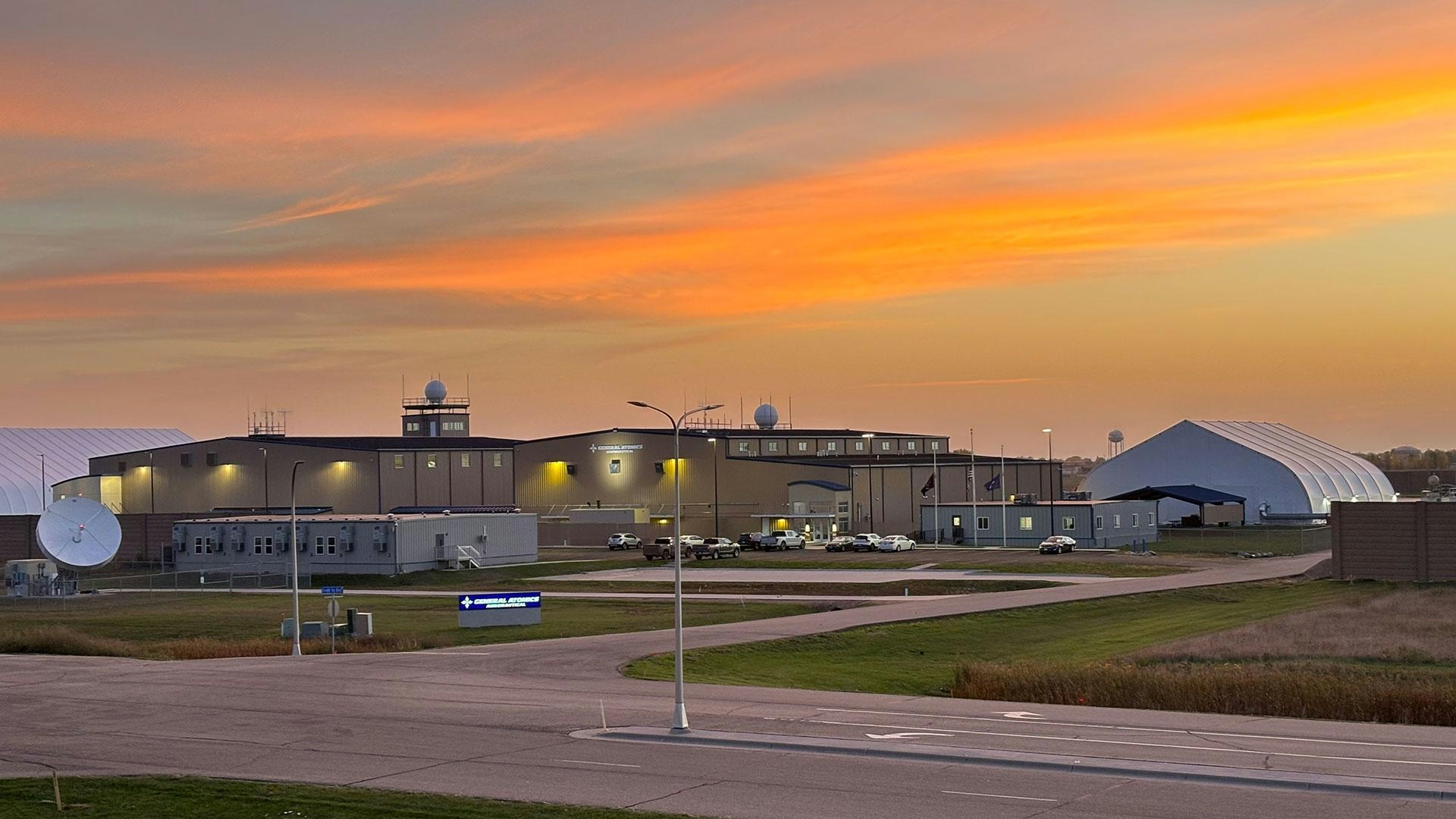
General Atomics Aeronautical Systems, Inc. (GA-ASI), a prominent leader in unmanned aircraft systems and aerospace technologies, has announced the acquisition of key assets from Achates Power, Inc., a San Diego-based developer specializing in advanced engine technology. This acquisition includes a valuable portfolio of patents and intellectual property, significantly reinforcing GA-ASI’s capabilities in high-performance propulsion systems tailored for unmanned aircraft.

Strategic Integration of Advanced Engine Technology

David Alexander, president of GA-ASI, expressed enthusiasm about incorporating Achates Power’s opposed-piston engine technology into the company’s portfolio. He highlighted that the advancements in emission reduction, fuel efficiency, and power density developed by Achates Power align closely with GA-ASI’s mission to provide innovative airborne platform solutions. Achates Power is widely recognized for its low-emission, fuel-efficient engines that deliver high power density, attributes that are increasingly critical in applications subject to stringent emissions regulations.

Dave Crompton, CEO of Achates Power, emphasized the value of their engine designs in meeting demanding efficiency and power requirements. He conveyed confidence that the technology would continue to flourish under GA-ASI’s stewardship, a company noted for its technical excellence and broad expertise in aerospace systems.

Industry Implications and Market Response

The acquisition highlights GA-ASI’s commitment to advancing propulsion technologies, though it also presents integration challenges. Successfully adapting Achates Power’s advanced engine technology to GA-ASI’s existing systems will require meticulous alignment with rigorous defense standards and operational demands. Industry analysts suggest that effective integration could enhance GA-ASI’s competitiveness in securing future defense contracts.

The market has reacted with heightened investor interest and speculation regarding the broader impact on the defense sector. Competitors such as Lockheed Martin may intensify their own engine technology development efforts and pursue additional contracts to maintain their market positions. Concurrently, Anduril’s progress on its Collaborative Combat Aircraft (CCA) project underscores a dynamic and competitive environment as industry players respond to GA-ASI’s latest technological advancements.

As GA-ASI advances the integration of Achates Power’s technology, the company aims to leverage these new capabilities to deliver propulsion solutions that are more efficient, powerful, and environmentally responsible for its unmanned aircraft systems.

More news
Marshall Aerospace’s 115-Year Evolution from Cars to C-130s

Marshall Aerospace’s 115-Year Evolution from Cars to C-130s

Marshall Aerospace’s 115-Year Evolution from Cars to C-130s Marshall Aerospace, headquartered at Cambridge City Airport (CBG) in the United Kingdom, has established itself as a global leader in aircraft maintenance, repair, and overhaul (MRO). Recognised as a Lockheed Martin-designated centre of excellence for the C-130 Hercules, the company’s expertise with this iconic transport aircraft is the culmination of over a century of innovation and strategic adaptation. From Motor Cars to Aviation Pioneers The origins of Marshall Aerospace date back to 1909, when David Marshall founded the Brunswick Motor Car Company in Cambridge, inspired by advancements in French motoring. Initially concentrating on motor mechanics and chauffeur-driven services, the business rapidly expanded, moving to larger premises as it diversified into car sales. This expansion marked the inception of what would become the Marshall Group. A defining moment occurred in 1912 when a Beta II airship made an emergency landing near the Marshall garage. The company’s mechanics repaired the engines, marking Marshall’s first engagement with aviation—a sector that would soon come to define its legacy. By 1919, David Marshall had acquired his first aircraft, an ex-Royal Flying Corps Handley Page 0/400 bomber, purchased for a mere £5. The family’s commitment to aviation deepened over the years, with David’s son Arthur obtaining his pilot’s licence in 1928 and later becoming a master instructor. In 1929, the Marshalls purchased a 45-acre site on the outskirts of Cambridge, establishing the city’s first dedicated airfield. By 1937, Marshall Aerospace had firmly established its base at Cambridge Airport, laying the groundwork for decades of growth and technical achievement. Navigating a Changing Aerospace Landscape Marshall’s transformation from car mechanics to aerospace specialists has been shaped by both opportunity and challenge. The company’s history spans two World Wars, the emergence of commercial aviation, the Concorde era, and the space race. Over the decades, Marshall has worked on a diverse range of aircraft, from early biplanes to the Boeing 747. Today, Marshall Aerospace operates within a dynamic market environment. The aerospace sector continues to recover from recent supply chain disruptions and workforce shortages, compelling companies to adapt swiftly. Competitors are responding with strategic shifts in production and pricing, reflecting broader industry trends similar to those seen in other sectors, such as the cocoa market’s influence on firms like Mondelez. Demand for used aircraft, particularly the C-130H, is increasing, as demonstrated by Singapore’s recent acquisition to replace ageing models. This trend highlights the critical importance of MRO expertise and the enduring value of legacy platforms. Meanwhile, the aerospace aftermarket is experiencing a rebound, with new business opportunities emerging, especially in the rapidly expanding Asia-Pacific region. Marshall must navigate this competitive landscape by leveraging its heritage and technical expertise to maintain its position as a global MRO leader. A Legacy of Innovation Marshall Aerospace’s 115-year journey embodies a distinctive blend of tradition and adaptability. From its origins in automotive engineering to its current status as a centre of excellence for the C-130, the company continues to influence—and be influenced by—the evolving world of aviation.
Advancing Sustainable Aviation Goals for 2050

Advancing Sustainable Aviation Goals for 2050

Advancing Sustainable Aviation Goals for 2050 The United Kingdom is intensifying its commitment to decarbonising the aviation sector, with a clear objective of achieving net-zero emissions by 2050 under its comprehensive Jet Zero Strategy. This ambitious framework aims to eliminate carbon emissions from domestic flights and airports by 2040, while targeting net-zero aviation emissions nationwide by 2050. The strategy places significant emphasis on the development and deployment of sustainable aviation fuels (SAF), technological innovation, and the enhancement of aviation infrastructure. Aviation remains a cornerstone of the UK economy, supporting over one million jobs and contributing billions of pounds annually. Nevertheless, the sector faces increasing scrutiny due to its environmental impact, having accounted for approximately 2.5% of global carbon dioxide emissions prior to the COVID-19 pandemic. As travel demand rebounds, the urgency to implement effective decarbonisation measures has intensified. Jet Zero Strategy: Priorities and Industry Response Introduced in 2022, the Jet Zero Strategy identifies six key priority areas: improving airspace and aviation system efficiency, scaling up sustainable aviation fuels, supporting the development of zero-emission aircraft, fostering carbon markets alongside greenhouse gas removal technologies, enhancing consumer information to promote sustainable choices, and deepening understanding of aviation’s non-CO2 climate impacts, including contrails and nitrogen oxides. While the strategy has garnered support from industry stakeholders, environmental organisations have expressed concerns regarding its reliance on emerging technologies that are not yet commercially viable. Critics argue for more immediate and tangible emissions reductions rather than a heavy dependence on future technological breakthroughs. Investment and Market Dynamics in Green Aviation To accelerate progress towards these goals, the UK government has committed £43 million to advance green aviation technologies. This funding is expected to stimulate economic growth and generate high-skilled employment opportunities. The investment focuses on zero-emission aircraft, low-carbon fuels, and research aimed at mitigating climate-warming water vapour trails—an often overlooked but significant contributor to aviation’s overall climate impact. The sustainable aviation market is responding to these pressures with robust growth projections. Global investments in this sector are anticipated to increase from $7.75 billion in 2023 to $22.81 billion by 2032. Collaborative efforts are also intensifying; for instance, Delta Air Lines and Shell have partnered to expand the use of sustainable aviation fuels, while Heathrow Airport aims to achieve a 5.6% SAF blend by 2026, supported by £80 million in funding. Sustainable Aviation Fuels: Potential and Challenges At the heart of the UK’s decarbonisation agenda is the expanded adoption of sustainable aviation fuels, which can reduce lifecycle carbon emissions by up to 70% compared to conventional kerosene. SAF is produced from renewable or recycled feedstocks such as used cooking oil and household waste, positioning it as a critical component in reducing aviation’s carbon footprint. The forthcoming Sustainable Aviation Fuel Bill, expected later this year, seeks to stabilise the SAF market by guaranteeing fixed prices for UK producers, thereby underpinning the nation’s climate objectives. Additional support includes £63 million allocated for new SAF production facilities and a £2.3 billion investment through the Aerospace Technology Institute over the next decade to drive innovation and create skilled jobs. From January 2025, a SAF mandate will require progressively higher blends of sustainable fuels in UK aviation fuel supplies. Despite these advances, significant challenges persist. The absence of commercial-scale infrastructure for advanced synthetic green fuels, such as eSAF, remains a critical barrier. The European Union’s requirement for eSAF to constitute 1.2% of aviation fuel by 2030 underscores the urgency for rapid scale-up and deployment. As the UK and the global aviation industry pursue these ambitious sustainability targets, the journey to net-zero emissions by 2050 will depend heavily on sustained investment, technological innovation, and the effective implementation of supportive policies.
Sabre Introduces New AI-Driven Platform

Sabre Introduces New AI-Driven Platform

Sabre Launches Unified AI-Driven Platform Amid Industry Transformation Sabre, a leading travel technology company, has unveiled Sabre Mosaic, a unified, AI-first platform aimed at accelerating innovation and modernizing the travel industry’s technological infrastructure. Described as a high-performance, cloud-based system, Mosaic consolidates previously fragmented capabilities to deliver enhanced speed, resilience, and scalability for Sabre’s customers. Modernizing Technology with AI and Cloud Integration The launch of Mosaic represents a comprehensive overhaul of Sabre’s technology stack, including a full migration to the cloud and a rebuilt core system architecture. Powered by Google Gemini and leveraging Sabre’s Travel Data Cloud—which contains over 50 petabytes of compliant, contextualized data—Mosaic taps into one of the largest data repositories globally. Sabre emphasizes that this vast data scale is essential for effective AI deployment and is difficult for competitors to replicate. Designed to be open and flexible, the platform allows customers to integrate best-of-breed solutions and modernize at their own pace without being locked into proprietary systems. Mosaic supports retailing, servicing, and operations, with AI systems capable of learning, reasoning, and acting across these domains. This approach builds on Sabre’s earlier innovations, including the launch of agentic-ready APIs and its proprietary Model Context Protocol (MCP) server, which provide the orchestration, context, and governance necessary for autonomous workflows in live enterprise environments. Challenges and Competitive Landscape Sabre’s introduction of Mosaic comes at a critical juncture. The company faces investor skepticism regarding its ability to reinvent its brand and reduce longstanding debt. While Sabre reports that disciplined debt management and operational rigor have enabled modernization without legacy constraints, market observers remain cautious about the company’s financial trajectory and its capacity to fulfill ambitious AI-driven promises amid broader volatility in AI-related sectors. The competitive environment is also evolving rapidly. As AI lowers traditional barriers to entry, both established players and new entrants are reassessing their strategies. Sabre’s push for a unified, open platform may compel competitors to accelerate their innovation efforts, potentially reshaping the travel technology market. Adoption remains a significant hurdle. For Sabre’s new platform and brand identity to succeed, widespread uptake among startups, developers, and established enterprise partners will be crucial. Sabre positions Mosaic as the foundation for the next wave of travel innovation, offering shared tools, enterprise-grade governance, and the flexibility to support new retail models, cross-channel consistency, and more automated servicing. Garry Wiseman, Sabre’s President of Product and Engineering, stated, “We redesigned Sabre’s technical foundations to deliver durable differentiation in AI and to give partners a system they can rely on as their needs scale. By unifying our architecture, strengthening our data layer, and embedding governance through our IQ Assurance Layer, we’ve created an environment where innovation can happen faster, and with confidence, as the industry moves into the Next Age of Travel.” As Sabre positions itself at the forefront of AI-driven travel technology, its ability to manage financial pressures, drive adoption, and outpace competitors will be decisive in determining whether Mosaic becomes the industry standard or encounters the persistent challenges that have long characterized the sector.
Photo of the Day: Special Delivery

Photo of the Day: Special Delivery

Photo of the Day: Special Delivery Andrea Pietrowsky captured a poignant moment as LifeLine Pilots volunteer Ed and his daughter delivered Chelsea, a future service dog, to Canine Companions volunteer Mary. This photograph, featured in General Aviation News’ “Photo of the Day” series, exemplifies the commitment of volunteers collaborating to support service dog programs. Showcasing the Aviation Community Through Visual Storytelling The “Photo of the Day” initiative is designed to highlight distinctive and compelling moments from the aviation world, encouraging readers to contribute their own images for consideration. Selected photographs are published online and may also be featured in the print edition’s new Page 4 photo segment, as well as the annual “A Year in Pictures” compilation each December. Maintaining a steady flow of high-quality and original visual content poses ongoing challenges for the editorial team. Balancing the need to engage a diverse audience while managing the logistics of sourcing and publishing submissions requires meticulous coordination. Nevertheless, the initiative has successfully fostered greater reader engagement, with audiences valuing the fresh, visually driven narratives presented daily. The Growing Demand for Visual Content in Media The rising popularity of daily photo features reflects a broader media trend, as audiences increasingly seek innovative and visually rich content. This shift is further illustrated by the recent surge in AI-generated headshots, reported by CBS News, highlighting the expanding appetite for creative imagery. Consequently, similar platforms may introduce their own daily photo projects to capture audience interest, intensifying competition within this space. Photographers interested in submitting their work for the “Photo of the Day” can do so via the online submission form. All entries are automatically considered for both the print edition and the year-end feature. The full archive of past selections offers a compelling glimpse into how the aviation community is celebrated through powerful imagery, one photograph at a time.
GOL CEO Confirms Possible Arrival of A330neo Widebody Aircraft

GOL CEO Confirms Possible Arrival of A330neo Widebody Aircraft

GOL CEO Confirms Potential Introduction of Airbus A330neo Widebody Aircraft GOL Linhas Aéreas CEO Celso Ferrer has confirmed that the Brazilian carrier is exploring the possibility of incorporating Airbus A330-900neo widebody aircraft into its traditionally single-fleet operation. Speaking at the Routes Americas 2026 conference in Rio de Janeiro on March 3, Ferrer highlighted that the airline’s recent emergence from Chapter 11 restructuring and its integration into the Abra Group have created new opportunities for fleet diversification and strategic growth. Strategic Shift and Fleet Diversification Historically, GOL has operated an all-Boeing 737 narrowbody fleet, currently comprising over 140 aircraft. Ferrer explained that the Abra Group’s multi-airline structure, which manages approximately 300 aircraft across various markets, provides GOL with the flexibility to reassess the risks and benefits of introducing new aircraft types, including widebodies. This shift aligns with GOL’s recent efforts to secure slots at U.S. and European airports, destinations that typically require widebody aircraft for long-haul operations. Supporting this potential transition, Brazil’s civil aviation authority, ANAC, has reserved registration numbers for seven Airbus A330-900neos at GOL’s request. The A330-900neo is already operated in Brazil by Azul, although those aircraft are scheduled to be returned to lessor Avolon by August. The Abra Group’s orderbook further includes Airbus A350-900s and A330neos, alongside 138 A320neo-family aircraft and 96 Boeing 737 MAX jets expected to be delivered through the end of the decade. Introducing the A330neo would mark a significant structural transformation for GOL, enabling the airline to launch nonstop long-haul services from Brazil rather than relying on connections through Avianca’s Bogotá hub. Ferrer emphasized that the airline’s strengthened capital structure and the relative stability of the Brazilian market following restructuring provide a more conducive environment for such expansion. Competitive and Industry Challenges GOL’s potential move into the widebody segment occurs amid intense competition within Brazil’s aviation market. LATAM Airlines Brazil currently commands approximately 38% of domestic seat capacity, with GOL holding 33% and Azul 29%. Both LATAM and Azul already operate widebody aircraft, and GOL’s entry into this segment could trigger competitive responses, including more aggressive pricing strategies or further fleet expansion by its rivals. Broader industry challenges may also influence GOL’s fleet planning. Recent remarks from AerCap’s CEO have underscored reliability concerns across the aviation sector, suggesting that airlines may need to expand their fleets to offset increased aircraft downtime. This evolving dynamic could affect GOL’s investment decisions and operational strategies as it evaluates the introduction of new aircraft types. Having exited Chapter 11 nine months ago, with the Abra Group now holding an 80% controlling stake, GOL is positioned to pursue new market opportunities and diversify its fleet. Ferrer acknowledged, however, that any expansion must be carefully calibrated to align with market demand and capacity trends within Brazil’s evolving aviation landscape.
American Airlines donates APU to AIM Chicago for student training

American Airlines donates APU to AIM Chicago for student training

American Airlines Donates APU to AIM Chicago to Enhance Student Training American Airlines has donated an auxiliary power unit (APU) to the Aviation Institute of Maintenance (AIM) in Chicago, offering students critical hands-on experience with authentic aircraft equipment. The APU, which powered American’s McDonnell Douglas MD-80 fleet for 29 years and supported over 74,000 take-offs and landings, will serve as a vital training tool for AIM’s more than 400 students. Many of these students aspire to become aviation maintenance technicians and will benefit from working on the same systems they are likely to encounter in their professional careers. Mark Miner, American Airlines’ vice president of technical services, highlighted the significance of the donation, stating, “This APU served American and our customers well over the years and we know it will serve students just as well for many more years to come.” He emphasized the airline’s role as Chicago’s leading global carrier and expressed pride in supporting local students on their path to becoming aviation maintenance professionals. Strengthening Industry Partnerships and Workforce Development The APU donation builds on an ongoing partnership between American Airlines and AIM Chicago, which began in 2022. Previously, the airline contributed a Pratt & Whitney JT8D engine and has supported AIM students at annual Aerospace Maintenance Council Competitions. Several American Airlines frontline employees are currently enrolled at AIM Chicago, pursuing their FAA Airframe and Powerplant licenses, further illustrating the airline’s commitment to workforce development. Jason Pfaff, chief executive of Cotulla, AIM’s parent company, underscored the value of such collaborations. He noted that training on industry-standard equipment enhances student confidence, deepens learning, and bridges the gap between education and employment. Pfaff expressed gratitude for American Airlines’ continued investment in both the students and the future of Chicago’s aviation workforce. Challenges Amidst Competitive and Internal Pressures American Airlines’ investment in local workforce development occurs against a backdrop of intensified competition and internal challenges. United Airlines, a key competitor, has been expanding aggressively at Chicago O’Hare International Airport. United’s CEO recently reported earnings of approximately $500 million in Chicago for 2025, while American Airlines posted a comparable loss, with projections indicating losses could reach $1 billion this year. This competitive pressure is straining American’s market position and financial performance in the region. Internally, American Airlines faces turbulence, including a recent no-confidence vote by its flight attendants against CEO Robert Isom. Such developments may impact operational stability and employee morale, potentially influencing perceptions of the airline’s community initiatives, including the APU donation. Despite these challenges, American Airlines continues to invest in Chicago’s aviation workforce. The airline recently hired over 100 aviation maintenance technicians for its ORD Line Maintenance organization, contributing to more than 10,000 jobs in the Chicagoland area. Its ongoing support for AIM Chicago reflects a sustained commitment to cultivating the next generation of aviation professionals amid a competitive and evolving industry landscape.
Steer Appointed Base Maintenance Manager at Caerdav

Steer Appointed Base Maintenance Manager at Caerdav

Steer Appointed Base Maintenance Manager at Caerdav Independent UK maintenance, repair, and overhaul (MRO) provider Caerdav has appointed Alan Steer as its new base maintenance manager. Steer will oversee the company’s four maintenance lines, with a mandate to enhance operational efficiency and maintain high service standards. Bringing over 40 years of experience in the aviation sector, Steer’s background includes two decades at Thomas Cook Aircraft Engineering and a recent base management role at BCT Aviation Maintenance at East Midlands Airport. Navigating Industry Challenges Steer’s appointment arrives amid significant challenges facing the aviation maintenance industry, including ongoing supply chain disruptions and broader sector instability. These pressures are compounded by trends such as increased CEO turnover in related industries like automotive, which underscore the need for resilient and adaptive leadership within maintenance operations. In this context, Steer’s role will be critical in ensuring Caerdav continues to deliver consistent, high-quality maintenance services while responding to evolving operational demands. Upon joining Caerdav, Steer expressed strong confidence in the company’s vision and culture. He remarked on the positive attitude and shared commitment he observed among staff, emphasizing the importance of building on this foundation to advance the company’s objectives. Steer also praised the existing programmes and procedures, noting their effectiveness in supporting hangar floor operations and customer service—attributes he described as uncommon in many MROs. Leadership and Future Direction In his new capacity, Steer is tasked with quickly adapting to Caerdav’s operational environment and sustaining the company’s rigorous standards. He intends to leverage his extensive expertise to refine current systems, drive further efficiencies, and elevate overall performance. “I want to use my experience and expertise to develop these systems, to drive further efficiencies and to push the company on to the next level,” Steer stated. Industry analysts will be closely monitoring how Steer’s leadership impacts Caerdav’s reputation and operational results. His approach may prompt competitors to reevaluate their maintenance strategies in order to remain competitive amid ongoing industry pressures. Steer’s career began as an apprentice at Dan Air Manchester, where he earned his full A and C Licences by the age of 21. His appointment underscores Caerdav’s commitment to experienced leadership as it navigates a complex and rapidly evolving maintenance landscape.
How Airline Technology Is Changing U.S. Domestic Travel in 2026

How Airline Technology Is Changing U.S. Domestic Travel in 2026

How Airline Technology Is Changing U.S. Domestic Travel in 2026 A significant transformation is quietly reshaping the landscape of domestic air travel in the United States. In 2026, technological advancements have moved well beyond the era of digital boarding passes and self-service kiosks. Artificial intelligence, biometric identity verification, and next-generation connectivity are now integral to nearly every phase of the passenger journey, fundamentally redefining the travel experience from curbside check-in to final arrival. Biometric Security Becomes Standard Practice One of the most prominent developments is the widespread implementation of TSA PreCheck Touchless ID. Since January, the Transportation Security Administration has expanded its biometric facial recognition program to an additional 50 airports, bringing the total number of participating locations to 65 nationwide. This system rapidly matches travelers’ faces to government photo records, eliminating the need for physical identification at security checkpoints. Major airlines such as Alaska, American, Delta, Southwest, and United have integrated this technology at key hubs including Houston, Washington Dulles, Boston, Miami, and Orlando. For TSA PreCheck members, this advancement translates into a faster, more seamless security process that requires no physical documents. Connectivity and AI Transform the Travel Experience The expectations surrounding in-flight connectivity have evolved considerably. Free high-speed Wi-Fi, once considered a premium amenity, has become a standard offering. Airlines like United and British Airways are deploying Starlink satellite Wi-Fi across their fleets, while American and Southwest provide complimentary internet access to frequent flyer members. This shift reflects both growing passenger demand and the recognition that uninterrupted connectivity is a critical differentiator, particularly for business travelers who rely on consistent internet access at cruising altitude. Behind the scenes, artificial intelligence is playing a pivotal role in enhancing airline operations. AI and machine learning technologies are now central to optimizing routes, improving fuel efficiency, and delivering personalized passenger services. Predictive maintenance systems enable airlines to identify mechanical issues before they cause delays, thereby improving safety and reliability. Additionally, AI-driven scheduling and crew management tools allow carriers to respond more flexibly to disruptions, minimizing inconvenience for travelers. Enhanced Cabins and Personalized Travel Technological innovation extends into the cabin environment as well. Leading U.S. airlines are introducing upgraded premium seating and redesigned interiors on domestic flights to meet the evolving preferences of younger travelers, particularly Gen Z and millennials. These demographics are driving demand for more personalized and cost-effective travel experiences. In response, airlines are incorporating digital touchpoints and tailoring services to individual passenger preferences, creating more customized journeys. Industry Challenges Amid Technological Progress Despite these advancements, the airline industry continues to confront significant challenges. Economic uncertainty has tempered growth prospects, while recent regulatory changes have introduced additional complexities that test the sector’s adaptability. The anticipated arrival of civil supersonic travel remains uncertain, hindered by ongoing technological and regulatory obstacles. In response, competitors are accelerating their digital transformation efforts and increasingly leveraging generative AI to enhance both operational efficiency and customer experience. As airlines integrate these innovations, the U.S. domestic travel sector in 2026 is characterized by unprecedented convenience alongside the necessity for resilience in a rapidly evolving environment.
New Il-96 Wide-Body Aircraft Built in Russia; Customer Remains Undisclosed

New Il-96 Wide-Body Aircraft Built in Russia; Customer Remains Undisclosed

New Il-96 Wide-Body Aircraft Completed in Russia Amid Uncertainty Over Customer The United Aircraft Corporation (UAC) has announced the completion of a new Il-96 series wide-body aircraft, currently undergoing final painting at the VASO branch of the "Il" aircraft factory in Voronezh. While UAC has withheld details regarding the specific modification and the identity of the customer, industry analysts speculate that the aircraft is likely an Il-96-300 model destined for the "Russia" Special Flight Detachment, the primary operator of this variant. Production Context and Facility Developments Production of the Il-96-300 has been notably limited in recent years, with only five units manufactured over the past decade and no deliveries from the Voronezh facility in the last two years, according to the Technosphere Russia publication. Local reports indicate that VASO intends to expand its test runway, a development that may signal plans to increase production capacity for the Il-96 series. This potential expansion comes at a critical juncture as Russian aviation seeks to bolster its domestic manufacturing capabilities amid growing geopolitical challenges. Market Challenges and Strategic Implications The introduction of a new Il-96 aircraft occurs against a backdrop of heightened geopolitical tensions that have complicated Russia’s position in the global aviation market. Western sanctions have restricted access to foreign aircraft and components, prompting Russian manufacturers to pursue domestically produced alternatives. This strategy may appeal to countries seeking non-Western aircraft options, particularly in Asia, where demand for wide-body jets remains robust. Nevertheless, the Il-96 faces significant competition from established wide-body aircraft such as the Boeing 777X and Embraer KC-390, both of which are expected to intensify their marketing and production efforts to maintain or expand their market share. While the Il-96’s advanced technology and potential cost advantages could attract some buyers, experts remain cautious about its ability to compete effectively on a global scale. Expert Perspectives and Future Outlook Despite the rollout of the new aircraft, aviation experts emphasize that the limited scale of Il-96 production is unlikely to address Russia’s broader challenges in the long-haul aviation sector. Andrey Patrakov, head of the RunAvia flight safety service, highlighted the growing shortage of long-haul aircraft in Russia and expressed skepticism that incremental production of the Il-96 series will provide a comprehensive solution. The undisclosed identity of the latest Il-96’s customer adds an element of uncertainty to the program’s trajectory. Nonetheless, the completion of this aircraft underscores ongoing efforts by Russian manufacturers to adapt to a shifting global landscape and to position the Il-96 as a viable alternative within the international wide-body market.
Japan Airlines Launches JAL Innovation Fund II to Support Technology Ventures

Japan Airlines Launches JAL Innovation Fund II to Support Technology Ventures

Japan Airlines Launches JAL Innovation Fund II to Support Technology Ventures Strategic Expansion of Corporate Venture Capital Japan Airlines (JAL) has announced the launch of its second corporate venture capital initiative, the JAL Innovation Fund II, underscoring the airline’s commitment to technological advancement and innovation. This new fund builds upon the foundation established by JAL’s initial 2019 venture capital program, making it the first airline in Asia to operate a fully in-house corporate venture capital (CVC) fund. The fund is managed by Japan Airlines Ventures, Inc. (JALV), a subsidiary incorporated in Delaware and headquartered in Silicon Valley. Transitioning from a joint-venture model to a unified in-house structure, JALV seeks to enhance strategic agility by integrating investment activities with business collaboration. This approach positions JALV as the airline’s “exploration engine,” designed to connect JAL’s corporate assets with disruptive startups across the globe. The fund’s investment scope extends beyond traditional aviation sectors such as mileage programs and sustainability, targeting emerging technologies and untapped markets that have the potential to transform the future of air travel. Navigating Intensifying Industry Competition The launch of JAL Innovation Fund II comes amid intensifying competition within Japan’s airline industry. Major competitors, including All Nippon Airways (ANA), are similarly increasing their investments in technology ventures, heightening the race to secure leadership in innovation and sustainability. Market reactions to JAL’s new fund have been mixed; while some investors regard the initiative as a forward-looking strategy that could drive long-term growth, others express caution regarding its immediate effects on profitability. In response, competitors are expected to escalate their own investments in technology and sustainability initiatives to maintain a competitive edge in a rapidly evolving market. The broader economic environment also influences this dynamic, with challenges such as Nissan’s forecasted net loss and shifts within the automotive sector prompting airlines to focus more intently on innovation and cost management. Through the JAL Innovation Fund II, Japan Airlines aims to position itself at the forefront of societal and technological change. By strategically allocating resources to high-growth sectors and disruptive business models, the airline seeks to sustain its leadership in global innovation and redefine the future of aviation for customers worldwide.
line










