صورة

حوّل رؤى الذكاء الاصطناعي إلى أفعال منسّقة

انضم إلى قائمة الانتظار لـ AeroGenie اليوم!

الرائج الآن

Categories

GE Honda Aero Considers Launch of New Turbofan Engine
October 15, 2025By ePlane AI
GE Honda Aero Considers Launch of New Turbofan Engine
0
0
GE Honda Aero
Turbofan Engine Development
Business Aviation Market

GE Honda Aero Considers Launch of New Turbofan Engine Amid Market Uncertainties

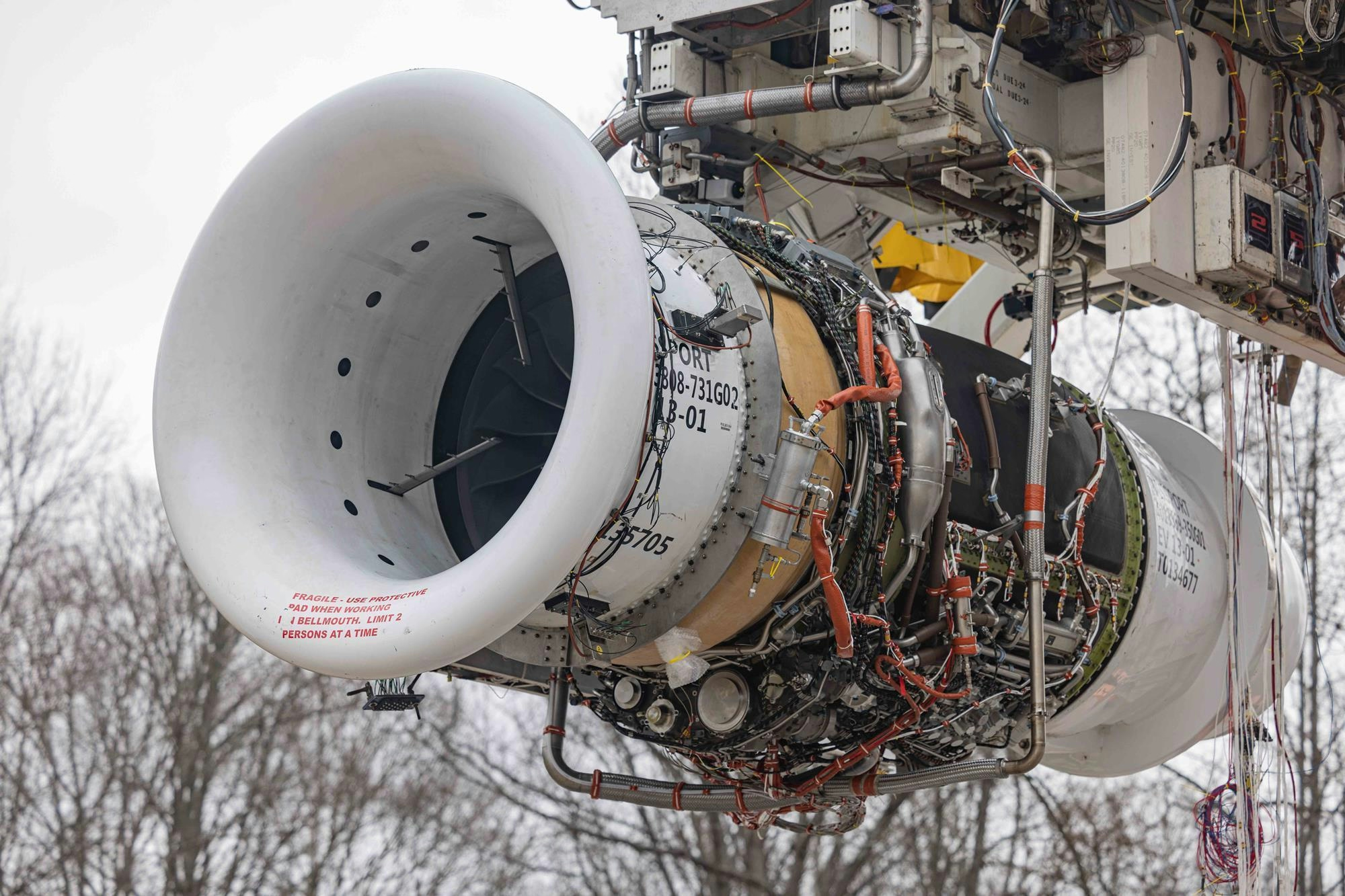
GE Honda Aero Engines is currently evaluating the business aviation market as it contemplates the potential introduction of a new turbofan engine. At present, the company’s sole product is the HF-120 powerplant, which powers the Honda Aircraft HA-420 HondaJet, a very light jet (VLJ). Mel Solomon, president of GE Honda Aero, emphasized that the company remains in the preliminary stages of assessing market opportunities and has not yet committed to launching a new engine program.

Market Assessment and Strategic Considerations

Solomon explained that the company is exploring options that include engines larger than the HF-120, which delivers approximately 2,000 pounds (8.9 kN) of thrust. However, no definitive market “sweet spot” has emerged. “We are looking at the light jet and even bigger than [the] light jet,” Solomon stated. He anticipates that the market could become more favorable within the next five to seven years, with increased activity in that segment. Nonetheless, he noted that the lower end of the market, particularly the VLJ sector, currently shows limited signs of significant growth.

The prospect of launching a new turbofan engine presents several challenges. The business aviation engine market is highly competitive, with established players such as Williams International holding dominant positions in key segments. Any new engine would need to meet rigorous performance and cost benchmarks to gain market acceptance. While some existing customers and business jet manufacturers may express interest, others may remain cautious, favoring proven alternatives. Additionally, competitors are expected to respond by enhancing their own product lines or accelerating development of new engines.

Current Operations and Future Directions

GE Honda Aero, a joint venture established decades ago to support the HA-420 program, has produced approximately 500 HF-120 engines, which are assembled at Honda’s facility in Burlington, North Carolina. Honda Aircraft continues to manufacture the HA-420 in nearby Greensboro but has shifted its focus toward the development of the larger HA-480 Echelon. This new light jet, which borders on the midsize category, is targeting certification in 2028.

Due to the Echelon’s accelerated timeline, GE Honda Aero was unable to develop a new engine in time, prompting Honda Aircraft to select the off-the-shelf Williams International FJ44 engines for the new jet. Solomon indicated that the company’s immediate priority remains supporting the existing HF-120 fleet. “I don’t foresee the HondaJet stopping production anytime soon. As long as the demand is there for the aircraft, we will be making engines [and], hopefully, another engine product as well,” he said, underscoring the company’s intention to leverage its established expertise.

Emerging Opportunities in Hybrid-Electric Propulsion

Looking forward, GE Honda Aero is also exploring opportunities in supplying turbines for turbogenerators used in hybrid-electric aircraft, a sector attracting increasing industry interest. Although Solomon did not disclose specific projects, companies such as Maeve Aerospace and Heart Aerospace are actively developing hybrid-electric passenger aircraft, presenting both new prospects and competitive challenges for the joint venture.

As GE Honda Aero deliberates its next strategic moves, it must carefully navigate a saturated market landscape, shifting customer demands, and competitive pressures, all while maintaining robust support for its existing engine portfolio.

More news
Boeing Surpasses Airbus in August Deliveries, Ending a Streak Since 2019

Boeing Surpasses Airbus in August Deliveries, Ending a Streak Since 2019

Boeing Surpasses Airbus in August Deliveries, Ending a Streak Since 2019 For the first time since 2019, Boeing has delivered more commercial aircraft in a single month than its European rival Airbus, marking a notable development in the ongoing competition between the two aerospace leaders. In August, Boeing handed over 63 aircraft, narrowly exceeding Airbus’s 58 deliveries. Although the margin is slim, this shift is significant given Boeing’s recent struggles with production delays, regulatory challenges, and the repercussions of two fatal 737 MAX crashes. Recovery Amid Production Constraints Boeing’s improved delivery figures in August come as the company continues to navigate a complex recovery process. Earlier this year, a door plug incident involving Alaska Airlines prompted the Federal Aviation Administration (FAA) to impose a production cap of 38 737 MAX jets per month. Despite this limitation, Boeing has managed to increase its output partly by reducing the backlog of previously manufactured 737 MAX and 787 aircraft that had accumulated during prior disruptions. Conversely, Airbus faces its own set of challenges, primarily stemming from persistent engine supply constraints. Suppliers CFM International and Pratt & Whitney have struggled to meet demand, particularly affecting the production of the A320neo family. Airbus has publicly acknowledged that these engine delivery delays remain the principal bottleneck, forcing the company to revise downward its full-year delivery forecasts. Industry Context and Market Implications Since 2019, Airbus has consistently outperformed Boeing in both monthly and annual aircraft deliveries, expanding its lead during the 737 MAX grounding and the global pandemic. While Boeing’s August performance represents a reversal of this trend, industry analysts urge caution in interpreting a single month’s data. Delivery numbers often fluctuate due to factors such as customer scheduling preferences, financing arrangements, and strategic end-of-quarter pushes. Historically, Airbus tends to concentrate deliveries toward the end of each quarter, whereas Boeing’s delivery cadence has been less consistent amid its ongoing recovery efforts. Boeing’s recent progress reflects a strategic emphasis on quality over quantity. Company leadership has indicated that any further increases in production rates will depend on demonstrable improvements in manufacturing discipline and quality control. The FAA’s production cap on the 737 MAX remains in place, limiting Boeing’s ability to accelerate deliveries despite robust global demand. Continuing Challenges and Competitive Landscape Despite these gains, Boeing continues to face scrutiny over engineering, manufacturing, and quality assurance issues, as highlighted by the Foundation for Aviation Safety. Market reactions remain mixed; some investors welcome Boeing’s financial recovery, while others remain cautious due to lingering safety and regulatory concerns. Airbus may leverage its reputation for reliability to attract customers who remain wary of Boeing’s recent difficulties. The FAA’s recent approval of the Boeing 737 MAX type certificate could bolster Boeing’s market position, yet ongoing engine-related maintenance costs for airlines continue to temper industry sentiment. Additionally, the rise of China’s COMAC as a potential competitor to the Boeing-Airbus duopoly introduces new dynamics to the global aviation market, suggesting that the competitive landscape may undergo further significant changes in the near future.
Coast Guard Plane Carrying Senator Mullin Makes Emergency Landing After Engine Failure

Coast Guard Plane Carrying Senator Mullin Makes Emergency Landing After Engine Failure

Coast Guard Aircraft Carrying Senator Mullin Makes Emergency Landing Following Engine Failure A U.S. Coast Guard plane transporting Senator Markwayne Mullin of Oklahoma and Department of Homeland Security Secretary Kristi Noem was compelled to execute an emergency landing on Wednesday after experiencing an engine failure during a border surveillance mission. This information was confirmed by statements from Mullin’s office and federal officials. Incident Details and Response The incident occurred midflight aboard a Coast Guard C-37A, a twin-engine military variant of the Gulfstream V jet, while conducting an operational mission along the southern border. The pilot reported a loss of power in the right engine and promptly declared an emergency. Demonstrating exceptional skill, the pilot safely guided the aircraft to Ronald Reagan Washington National Airport. Fourteen individuals were on board at the time, and no injuries were reported. Senator Mullin, a Republican representing Oklahoma, shared his experience on social media shortly after the landing. He commended the Coast Guard pilots, stating, “The United States Coast Guard pilots made the single-engine landing feel routine. No panic, just straight professionalism.” Mullin noted that the pilots informed him it was their first single-engine landing, praising their expertise and composure. He also took the opportunity to acknowledge the dedication of federal personnel stationed at the border, emphasizing their vital role in national security. The C-37A aircraft is engineered to maintain flight on a single engine in the event of mechanical failure, a critical feature that contributed to the safe resolution of the emergency. Throughout the incident, Coast Guard pilots adhered strictly to established emergency protocols. Reactions and Ongoing Investigations The emergency landing elicited a variety of responses. While some social media users expressed frustration and sarcasm, many others lauded the pilots for their professionalism and ability to manage a challenging situation effectively. Neither Senator Mullin’s office nor the Department of Homeland Security has disclosed specific details regarding the cause of the engine failure. Both agencies have confirmed that the Coast Guard and DHS are conducting a comprehensive investigation into the mechanical malfunction. Secretary Noem, who assumed leadership of the Department of Homeland Security earlier this year, has made frequent visits to the southern border a priority. These visits aim to highlight enforcement operations and enhance coordination among federal agencies in the region. The flight during which the emergency occurred was part of these ongoing efforts. Senator Mullin, who serves on several committees related to national security and infrastructure, has been actively involved in congressional oversight trips to the border. His presence alongside Secretary Noem underscores the continued collaboration between Congress and the executive branch on immigration and border enforcement matters. The Coast Guard, operating under the Department of Homeland Security, is expected to release further information following its review of the incident. Officials have emphasized that all passengers and crew remain safe, attributing the positive outcome to the pilots’ training and the aircraft’s design.
Embraer E-Jets Surpass 2,000 Deliveries, Joining Top Three Commercial Jet Families

Embraer E-Jets Surpass 2,000 Deliveries, Joining Top Three Commercial Jet Families

Embraer E-Jets Surpass 2,000 Deliveries, Joining Top Three Commercial Jet Families Embraer has achieved a significant milestone with the delivery of its 2,000th E-Jet, an E195-E2 handed over to Brazilian carrier Azul on September 2 at the company’s São José dos Campos facility. This accomplishment, coming more than 22 years after the E-Jet family entered commercial service, places Embraer’s E-Jets among the top three commercial jet families in aviation history, alongside the Boeing 737 and Airbus A320. Evolution and Global Reach of the E-Jet Family Since their introduction in 2004, E-Jets have accumulated approximately 48 million flight hours and transported over 2.85 billion passengers. The aircraft have been operated by more than 90 airlines across 60 countries, demonstrating the global reach and versatility of the E-Jet program. The family initially comprised the E170, E175, E190, and E195 models. Today, the second generation features the E190-E2 and the larger E195-E2. Production of the original E170, E190, and E195 models has ceased, with final delivery totals of 191, 568, and 172 units respectively. The E175 remains the most popular variant, with over 830 delivered, largely due to its widespread adoption by US regional airlines. The second-generation models continue to gain momentum. As of June, Embraer had delivered 38 E190-E2s and 175 E195-E2s, with recent fleet records indicating these numbers have since increased to approximately 40 and over 180, respectively. The E195-E2, in particular, has established a strong lead over its smaller sibling. The planned E175-E2 has yet to enter commercial service and is not included in the current delivery total. Market Position and Competitive Landscape While Embraer’s milestone of 2,000 E-Jet deliveries marks a major achievement, the company faces intense competition in the single-aisle market. Airbus, for instance, commands a significantly larger market share with over 11,000 A320 family aircraft in operation worldwide. This competitive environment is expected to intensify as Embraer’s milestone highlights the growing demand for efficient and versatile regional jets. Beyond commercial aviation, Embraer also competes with manufacturers such as Bombardier and Textron in the executive aviation sector, and with Lockheed Martin in tactical airlift. Embraer’s competitive advantage lies in its commitment to technological innovation. The E-Jet family’s advanced fly-by-wire system has improved operational efficiency and passenger comfort, maintaining the aircraft’s appeal to airlines seeking modern, fuel-efficient solutions. The precise breakdown of the 2,000 E-Jets by variant will become clearer with the release of Embraer’s third-quarter delivery figures. Current data, however, underscores the varied commercial success of each model, with the E175 alone accounting for more than 40 percent of all deliveries. Launched in 1999, the E-Jet program saw the first E170 flight in 2002 and entered commercial service in 2004. The program reached 1,000 deliveries in September 2013 and has now doubled that figure a decade later, solidifying its position among the world’s leading commercial jet families.
American Airlines Extends Boeing 777-300ER Service with Major Cabin Upgrade

American Airlines Extends Boeing 777-300ER Service with Major Cabin Upgrade

American Airlines Extends Boeing 777-300ER Service with Major Cabin Upgrade American Airlines has initiated a comprehensive cabin refurbishment program for its Boeing 777-300ER fleet, aiming to extend the operational lifespan of its largest aircraft well into the late 2030s. The first retrofitted aircraft, tail number N718AN—one of the oldest 777-300ERs in the airline’s inventory—returned to service in August following several months of extensive refurbishment. Its inaugural flight with the upgraded interior is scheduled for September 2, operating between New York JFK and Buenos Aires. A Strategic Investment in Fleet Modernization With an average age of 12.4 years, American’s fleet of 20 Boeing 777-300ERs remains relatively young compared to its older 777-200ERs, offering substantial remaining service potential. Rather than pursuing immediate replacement, the airline has opted to invest in a significant cabin overhaul to enhance passenger experience and operational efficiency. This approach reflects a strategic decision to maximize the value of existing assets while aligning with evolving market demands. The refurbishment introduces a notable shift in the aircraft’s cabin configuration. Seating capacity increases from 304 to 366, achieved by eliminating the eight-seat Flagship First cabin and expanding the business class to 70 Flagship Suite seats, each equipped with a privacy door. Premium Economy seating grows from 28 to 44 seats, and Main Cabin Extra now offers 30 seats with additional legroom. Despite the overall increase of 62 seats, the redesign prioritizes a higher proportion of premium seating, which is expected to enhance revenue potential. Enhancing the Premium Experience and Operational Efficiency American Airlines positions the upgraded 777-300ER as offering more Business and Premium Economy seats than any other U.S. carrier’s aircraft. The introduction of the Flagship Suite, already featured on the airline’s Boeing 787-9s and forthcoming Airbus A321XLRs, brings the 777-300ER’s onboard product in line with the carrier’s latest premium offerings. This upgrade targets key long-haul routes including London, Tokyo, São Paulo, Buenos Aires, and Sydney, where demand for enhanced premium cabins remains strong. The increased seating density also delivers operational advantages. American estimates that the new layout will improve fuel efficiency per seat by nearly 8%, primarily by spreading fuel consumption across a larger number of passengers. This efficiency gain supports the airline’s broader goals of sustainability and cost management. Challenges and Market Implications The retrofit program entails significant financial investment and logistical complexity, as modifying the entire 777-300ER fleet presents operational challenges. The removal of the international first-class cabin—Flagship First will no longer be available on the 777-300ER from November 19—may provoke dissatisfaction among passengers accustomed to the highest level of service. As American phases out Flagship First on its premium transcontinental network by March 2027, the Flagship Suite business class will become the airline’s premier onboard product, reflecting a wider industry trend toward enhanced business-class experiences over traditional first-class offerings. Market reactions are expected to be mixed. While some travelers may welcome the expanded and upgraded business class, others could express disappointment over the elimination of first class. Competitors may respond by adopting similar premium seating configurations or by emphasizing alternative service enhancements to maintain their competitive positions. By modernizing its 777-300ER fleet with a larger, more luxurious premium cabin, American Airlines is positioning itself to meet evolving passenger preferences and improve operational efficiency, thereby reinforcing its presence in the long-haul market for years to come.
India’s High Commissioner Visits Larnaca’s UAMCO to Discuss Aerospace and MRO Collaboration

India’s High Commissioner Visits Larnaca’s UAMCO to Discuss Aerospace and MRO Collaboration

India’s High Commissioner Visits Larnaca’s UAMCO to Discuss Aerospace and MRO Collaboration The High Commissioner of India to Cyprus, Manish, accompanied by First Secretary Subhash Jangala, visited the United Aerospace Maintenance Company (UAMCO) in Larnaca on Tuesday, marking a significant step towards strengthening ties between the aerospace and aviation sectors of India and Cyprus. The visit reflects a growing interest in fostering collaboration, particularly in the maintenance, repair, and overhaul (MRO) segment of the aviation industry. Discussions on Future Collaboration During the visit, the Indian delegation engaged in discussions with UAMCO CEO John Savvides, focusing on potential avenues for cooperation in aerospace and MRO services. UAMCO emphasized that the talks were forward-looking, exploring opportunities for joint ventures and the role that companies like UAMCO can play in enhancing commercial relations between the two nations. The dialogue comes amid India’s strategic efforts to bolster its aerospace and MRO capabilities, supported by recent policy reforms such as the reduction of the Goods and Services Tax (GST) on MRO services and significant acquisitions like that of Adani Defence. These initiatives underscore India’s ambition to establish itself as a global hub for aviation maintenance and repair, attracting increased investor interest in its expanding aerospace sector. Challenges and Opportunities in Bilateral Cooperation While the prospects for collaboration are promising, both Indian and Cypriot firms face challenges that must be addressed to realize the full potential of this partnership. Regulatory differences, alignment of technical standards, and logistical complexities associated with international operations remain key issues requiring careful navigation. The evolving relationship may also encourage Cypriot companies to enhance their own MRO capabilities to remain competitive and capitalize on emerging opportunities in the international aerospace market. UAMCO highlighted the significant growth in bilateral ties between Cyprus and India in recent years, noting that visits such as this one serve to reinforce the potential for deeper cooperation. The Indian delegation toured UAMCO’s advanced facilities located in the Aradippou area of Larnaca, gaining insight into the company’s daily operations and engaging directly with its staff. UAMCO expressed appreciation for the delegation’s interest and active engagement during the visit. Founded in 2023 by industry veteran John Savvides, UAMCO operates a cutting-edge aviation maintenance, repair, and overhaul facility, positioning itself as a key player within the regional aerospace sector. The visit by the Indian High Commissioner underscores the shared commitment of both countries to expand commercial and technical collaboration in aerospace, while also highlighting the complexities and opportunities inherent in international partnerships within this rapidly evolving industry.
South Korea Develops Sixth-Generation Stealth Fighter

South Korea Develops Sixth-Generation Stealth Fighter

South Korea Advances Sixth-Generation Stealth Fighter Program South Korea has embarked on an ambitious initiative to develop a sixth-generation stealth fighter, marking a significant escalation in its aerospace and defense capabilities. Building on the recent introduction of the KF-21 Boramae, the country aims to position itself alongside global leaders such as the United States, Europe, and China in the development of next-generation combat aircraft anticipated for deployment in the 2040s. Concept Study and Technological Vision On August 21, the Defense Acquisition Program Administration (DAPA) of South Korea issued a tender for a 14-month concept study, with industry proposals due by October 1, 2026. The study, funded with a budget of approximately KRW 900 million, seeks to define a fighter jet featuring a tailless, highly stealthy airframe capable of broadband radar invisibility across L, S, and X bands. The envisioned aircraft will incorporate two adaptive-cycle engines designed for supercruise, a single-seat cockpit, and internal weapons bays. A key element of the design is the integration of artificial intelligence and manned-unmanned teaming, enabling the fighter to operate as the central node within a swarm of drones. This program builds directly upon the technological foundation established by the KF-21 Boramae. Rather than abandoning its first indigenous fighter, South Korea plans to evolve the KF-21 into a fully stealth-capable fifth-generation platform, leveraging the experience gained to inform the development of a clean-sheet sixth-generation design. The Agency for Defense Development has already revealed an in-house sixth-generation concept at a recent aerospace conference in Daejeon, underscoring the government’s commitment to this advanced project. Global Context and Challenges The specifications outlined by DAPA align with global trends emphasizing enhanced stealth and networked warfare capabilities. Proposed configurations include tailless designs with innovative control surfaces, reflecting approaches seen in the American Next Generation Air Dominance (NGAD) program and Europe’s Future Combat Air System (FCAS) and Global Combat Air Programme (GCAP). The requirement for broadband stealth aims to counter a broader spectrum of radar threats than current stealth fighters can address, while adaptive-cycle engines promise improved efficiency and performance. Despite these ambitions, South Korea faces considerable challenges in closing the technological gap with established Western programs, particularly in areas such as artificial intelligence and advanced defense systems. Experts like KJ Hwang of BOFA Global Research emphasize that overcoming these hurdles will be essential for Seoul to compete on equal footing. The initiative is also expected to intensify competition with established defense technology providers, potentially prompting accelerated development efforts by rivals, especially the United States, to maintain their technological advantage. Broader Defense Ambitions South Korea’s pursuit of a sixth-generation fighter is part of a broader strategy to enhance its military capabilities. Parallel projects include the development of a long-range air-to-air missile by Hyundai Rotem, Korea Aerospace Industries (KAI), and Hanwha Group. These efforts reflect a regional emphasis on advancing military technology and signal South Korea’s determination to emerge as a significant player in next-generation defense systems. As the concept study progresses, South Korea’s sixth-generation stealth fighter program represents a bold declaration of intent that could influence the future balance of air power in East Asia and beyond.
Lufthansa Technik and Emirates Renew A380 Maintenance Agreement

Lufthansa Technik and Emirates Renew A380 Maintenance Agreement

Lufthansa Technik and Emirates Renew A380 Maintenance Agreement Extension of a Strategic Partnership Lufthansa Technik and Emirates have extended their longstanding base maintenance agreement for the Airbus A380, securing their collaboration until 2030. Under this renewed multi-year contract, Lufthansa Technik Philippines—serving as the company’s Asian hub for widebody aircraft maintenance—will continue to conduct heavy maintenance checks on Emirates’ A380 fleet. The maintenance programme is currently active at Lufthansa Technik’s Manila facility, which operates two dedicated lines exclusively for Emirates. Furthermore, Emirates is set to become the launch customer for Lufthansa Technik’s forthcoming facility at Clark International Airport upon its opening. This agreement represents one of the most significant contracts by value in the history of Lufthansa Technik Philippines and underscores the enduring partnership between the two aviation giants. Emirates, the world’s largest operator of the Airbus A380, has entrusted Lufthansa Technik with the maintenance of its flagship double-deck aircraft since 2023. To date, Lufthansa Technik Philippines has completed over 30 A380 maintenance checks for the airline. Kai Roepke, Vice-President Corporate Sales Europe, Middle East and Africa at Lufthansa Technik, emphasized the importance of the collaboration, stating, “This agreement reflects the success of our partnership and the high quality consistently delivered by our teams. As the world’s leading provider of MRO services, we are proud to support the operation of the world’s largest passenger aircraft and to further strengthen our collaboration with Emirates. We look forward to continuing to offer reliable, high-quality maintenance support for the airline’s impressive A380 fleet in the years ahead.” Industry Challenges and Market Implications The renewal of this agreement arrives amid significant challenges facing the maintenance, repair, and overhaul (MRO) sector. Lufthansa Technik, alongside other MRO providers, is grappling with margin pressures and unpredictability in aircraft and engine shop visits. Rising maintenance costs and persistent parts shortages have compelled some airlines, including Qantas, to expedite the retirement of their A380 fleets, casting uncertainty over the long-term viability of the aircraft type. Market responses to the Emirates deal are expected to be varied. Competitors may shift their focus toward other aircraft models or invest in emerging technologies to sustain their competitive advantage. Meanwhile, the Lufthansa Group is maintaining strategic flexibility, exploring options such as potential equity partnerships in Lufthansa Technik and monitoring market developments, including the prospective acquisition of EasyJet, for further growth opportunities. Despite these headwinds, the renewed partnership with Emirates highlights Lufthansa Technik’s dedication to supporting the world’s largest passenger aircraft and reinforces its position as a leading MRO provider in an evolving aviation environment.
How AI Is Changing Airfare Pricing

How AI Is Changing Airfare Pricing

How AI Is Changing Airfare Pricing The integration of artificial intelligence into airfare pricing is transforming the travel industry, prompting both intrigue and concern among travelers and sector experts. As airlines increasingly adopt AI technologies, questions about transparency, fairness, and regulatory oversight have come to the forefront. AI Adoption and Industry Response Last summer, Delta Air Lines revealed that it was employing AI to determine approximately 3% of its domestic airfares, with ambitions to increase this figure to 20% by the end of 2025. This disclosure ignited immediate criticism, with detractors accusing the airline of exploiting AI to justify price hikes and engage in what some described as corporate greed. In response, lawmakers introduced legislation aimed at banning “surveillance pricing,” reflecting broader unease about the use of AI in fare setting. Since then, the public debate has subsided somewhat, as Delta and other carriers have adopted a more discreet approach to their AI initiatives. Nonetheless, the technology remains a significant and expanding factor in airfare pricing strategies across the industry. The Role of AI and Personal Data in Fare Setting Contrary to popular belief, airlines are not currently using personal data such as search histories or previous purchases to tailor individual ticket prices. The widespread notion that clearing cookies, browsing incognito, or employing VPNs can secure better fares is unfounded. Instead, airfare pricing continues to be governed by a complex, long-established system involving multiple fare classes per flight, each with distinct price points. Airlines rely on a combination of human analysts and increasingly sophisticated algorithms to adjust these fares dynamically, aiming to optimize revenue and maximize seat occupancy. Price fluctuations of $50 or more are common, but these changes stem from this intricate pricing mechanism rather than targeted surveillance of individual consumers. Delta has characterized AI as a “super analyst” that automates and accelerates fare adjustments, a process that previously demanded thousands of hours of manual labor. Other key players in the industry, including technology providers such as Sabre and Amadeus, are also investing heavily in AI-driven pricing tools. However, the financial outcomes of these investments remain largely undisclosed, leaving the full impact of AI on airline profitability somewhat opaque. Industry Challenges: Volatility, Regulation, and Recovery The growing reliance on AI in airfare pricing introduces new complexities for the airline industry. Regulatory scrutiny is intensifying, with AI emerging as a focal point for oversight and potential intervention. This heightened attention could precipitate a market correction as airlines and investors reassess the long-term revenue implications of AI-based pricing models. Simultaneously, market dynamics are evolving. Airlines are shifting away from aggressive pricing strategies aimed at capturing market share, instead prioritizing cost recovery amid recent surges in fuel prices. This strategic pivot has contributed to increased volatility in airfare, a development that has raised concerns among business travelers and corporate travel managers who seek predictability in travel expenses. The industry remains in the midst of a two-year recovery phase, striving to stabilize costs and adapt to new pricing frameworks. While AI offers the promise of enhanced efficiency and responsiveness, it also brings challenges related to unpredictability and regulatory risk, complicating the path forward. Outlook for Travelers For the foreseeable future, travelers should anticipate continued unpredictability in airfare pricing, driven by a combination of traditional algorithms and emerging AI technologies. Although AI is not yet employed to personalize fares based on individual consumer data, its expanding role is reshaping the mechanisms by which prices are determined and the amounts passengers ultimately pay. As airlines, regulators, and technology providers navigate this evolving landscape, the future of airfare pricing is poised to remain dynamic and uncertain.
AkzoNobel Opens New Aerospace Coatings Facility in Thailand

AkzoNobel Opens New Aerospace Coatings Facility in Thailand

AkzoNobel Opens New Aerospace Coatings Facility in Thailand AkzoNobel Aerospace Coatings has officially inaugurated a new color blending and distribution facility in Chonburi, Thailand, marking a strategic expansion to better serve commercial aviation operators, maintenance, repair and overhaul (MRO) providers, original equipment manufacturers (OEMs), and industry partners throughout the Asia-Pacific region. The opening ceremony, held on August 25, 2026, provided attendees with an in-depth tour of the production floor, quality control laboratory, and distribution operations, alongside opportunities to engage with AkzoNobel’s local and regional teams. Strategic Location and Operational Capabilities Situated approximately 90 minutes from Bangkok International Airport and east of Pattaya, the Chonburi facility is purpose-built to blend aerospace topcoats locally while offering streamlined access to primers, thinners, and curing solutions. This local presence is expected to significantly reduce lead times and improve product availability, thereby enhancing both technical and commercial support for customers in the region’s rapidly expanding aviation sector. The facility’s proximity to key transport hubs underscores AkzoNobel’s commitment to operational efficiency and responsiveness. Marius Vasiliu, Regional Sales Director for AkzoNobel Aerospace Coatings Asia Pacific, highlighted the importance of the new site, stating, “The opening of our Chonburi facility is an important milestone as we look to support commercial aviation operators, MROs, OEMs, and industry partners across the region. Customers can expect fast access to the products they need, backed by technical expertise and increased responsiveness for locally blended and stocked coatings solutions at the highest quality.” He further noted that the facility would enhance distribution capabilities, reducing lead times for local blending of topcoats alongside easier access to complementary products. Industry Context and Market Implications The launch of the Chonburi facility comes amid a dynamic period for the aerospace industry, which faces both significant opportunities and challenges. Demand is rising for durable, low-maintenance surface coatings, partly driven by innovations such as self-healing technologies. Manufacturers are under increasing pressure to deliver advanced protective solutions that meet evolving performance and sustainability standards. AkzoNobel’s investment in local blending and distribution is designed to address these needs, although the company must also contend with potential supply chain disruptions—a challenge that has affected other industry players, including Honeywell Aerospace. Market reactions to AkzoNobel’s expansion are likely to include intensified competition, as other coatings manufacturers seek to defend or expand their market share within the Asia-Pacific region. The aerospace sector’s growing emphasis on sustainable and high-performance coatings is expected to stimulate further investment in cutting-edge technologies. Competitors may accelerate their innovation efforts, particularly in areas such as environmentally friendly and self-healing coatings, to maintain relevance in this evolving landscape. By establishing a robust local presence in Thailand, AkzoNobel is positioning itself to better support the region’s aviation industry while responding proactively to shifting market demands and competitive pressures. The Chonburi facility is poised to play a pivotal role in facilitating the sector’s growth and advancing the adoption of next-generation aerospace coatings.
Tata Elxsi Partners with Sarla Aviation to Develop Shunya Air Taxi Platform

Tata Elxsi Partners with Sarla Aviation to Develop Shunya Air Taxi Platform

Tata Elxsi and Sarla Aviation Collaborate on Shunya Air Taxi Platform Tata Elxsi has entered into a strategic partnership with Sarla Aviation to jointly develop the Shunya air taxi platform, marking a pivotal advancement in India’s urban air mobility sector. This collaboration aims to deliver an innovative electric vertical take-off and landing (eVTOL) solution, positioning both companies at the forefront of emerging transportation technologies designed for the future. Advancing Urban Air Mobility in India The Shunya platform is conceived as a sustainable, efficient, and safe air taxi service intended to meet the increasing demand for urban mobility in densely populated cities. By combining Tata Elxsi’s expertise in design and technology integration with Sarla Aviation’s operational experience in aviation, the partnership seeks to expedite the development and deployment of eVTOL aircraft within the Indian market. This initiative reflects a broader commitment to addressing urban congestion through cutting-edge aerial transportation solutions. Despite the promising outlook, the project faces significant technical and regulatory hurdles. Ensuring the safety and reliability of the Shunya air taxi will necessitate comprehensive testing and adherence to evolving aviation standards. The development process will also require substantial innovation in areas such as autonomous flight systems, battery performance, and air traffic management to create a robust and scalable platform. Market Context and Industry Implications The announcement has been met with positive market reactions, stimulating investor interest in urban air mobility ventures. The partnership is anticipated to bolster the market valuations of both Tata Elxsi and Sarla Aviation, reflecting growing confidence in the transformative potential of eVTOL technologies for urban transportation. This development occurs amid intensifying competition in the global air taxi market. International firms like Archer Aviation and Joby Aviation have made notable progress, with Archer acquiring Boeing’s automated air taxi program and Joby reporting strong financial results. These advancements underscore the sector’s rapid growth and may prompt competitors to accelerate their own development efforts or pursue strategic alliances to maintain market relevance. Industry experts emphasize that the success of the Shunya platform will hinge not only on technological breakthroughs but also on effective collaboration with regulatory authorities and urban planners. The integration of air taxis into existing transportation infrastructures will be critical to achieving widespread adoption as cities worldwide explore new mobility paradigms. The Tata Elxsi-Sarla Aviation partnership thus represents a significant milestone for India’s engagement in the evolving urban air mobility landscape. As the project advances, stakeholders will closely monitor how the Shunya platform addresses the complex technical, regulatory, and market challenges inherent in bringing air taxis from concept to reality.
line









