صورة

حوّل رؤى الذكاء الاصطناعي إلى أفعال منسّقة

انضم إلى قائمة الانتظار لـ AeroGenie اليوم!

الرائج الآن

Categories

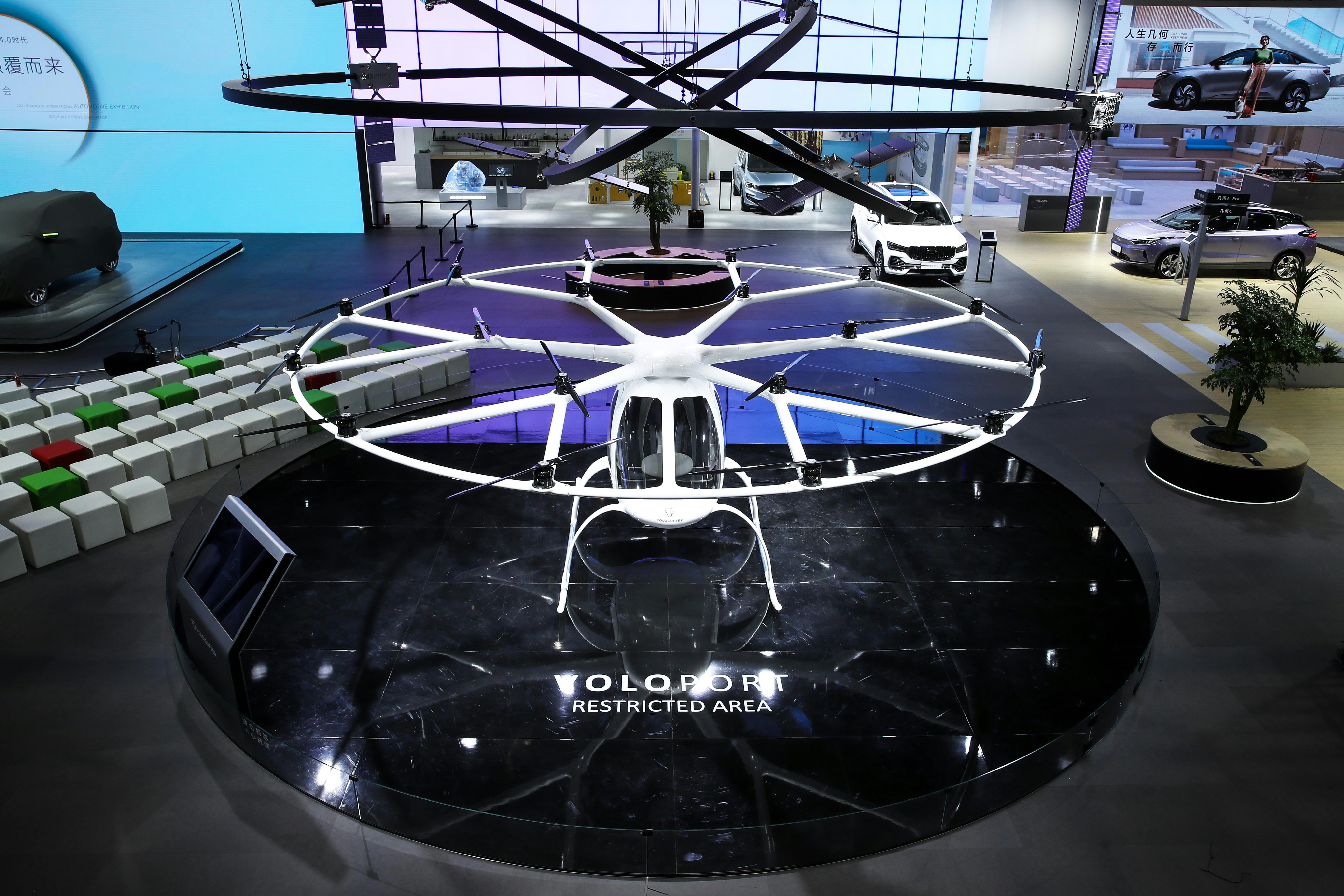
Geely Subsidiary Aerofugia Begins Prototype Production of Aerial Taxi
September 30, 2025By ePlane AI
Geely Subsidiary Aerofugia Begins Prototype Production of Aerial Taxi
0
0
Aerofugia
eVTOL Aircraft
Urban Air Mobility

Geely Subsidiary Aerofugia Advances Prototype Production of Aerial Taxi

Aerofugia, a subsidiary of Chinese automotive giant Geely, has initiated prototype production of its six-seater electric vertical takeoff and landing (eVTOL) aircraft, the AE200-100. This development follows successful initial test flights conducted in 2023 and the recent acquisition of the CCAR-135 certification from the Civil Aviation Administration of China (CAAC) for operations in the southwest region, granted in May 2025. The certification authorizes Aerofugia to conduct irregular passenger transport and sightseeing flights with aircraft accommodating between one and nine passengers.

The AE200-100: Design and Capabilities

The AE200-100 represents Aerofugia’s first independently developed eVTOL model. Powered entirely by batteries, the aircraft is designed for vertical takeoff and landing, requiring only a compact landing area comparable to that of a helicopter. Unlike some competitors, such as EHang, which focus on autonomous flight, the AE200-100 is piloted onboard. It boasts a cruising speed of 248 kilometers per hour and a range of 200 kilometers, positioning it for applications in urban air mobility, low-altitude tourism, and emergency rescue missions. Aerofugia asserts that the operating costs of the AE200-100 will be substantially lower than those of traditional helicopters.

The commencement of prototype production marks a significant step toward completing the aircraft’s airworthiness certification and pre-production phases, bringing the AE200-100 closer to mass manufacturing. Aerofugia has already secured over 1,000 commercial orders from a range of clients, including Sichuan Airlines, Hualong Airlines, the Shenzhen City Transportation Low-Altitude Operational Centre, and Thailand’s SIT. The company reports that its production capacity for the first year is fully booked.

Challenges and Industry Context

Despite these promising developments, Aerofugia faces considerable challenges as it transitions from prototype to commercial viability. Regulatory frameworks for urban air mobility remain under development globally, posing ongoing hurdles. Additionally, scaling production while ensuring safety and reliability presents significant technical difficulties. The aerial taxi market itself is still in its infancy, with industry analysts expressing caution due to past overestimations of market demand, cost overruns, and operational challenges encountered by other eVTOL developers.

Competition within the sector is intensifying, with established companies such as Joby Aviation, Lilium, and EHang advancing their own eVTOL projects. These competitors may respond to Aerofugia’s progress by accelerating research and development efforts, forging new strategic partnerships, or refocusing on market segments with more immediate commercial potential.

Aerofugia’s Strategic Evolution

Founded by Geely in 2020, Aerofugia initially partnered in 2021 with German air taxi developer Volocopter, in which Geely had held a stake since 2019. The collaboration aimed to introduce urban air mobility solutions to China within three to five years, with an initial deployment target of 150 air taxis. However, following Volocopter’s bankruptcy at the end of 2024, the partnership appears to have dissolved. Speculation about a potential Geely acquisition of Volocopter did not materialize, and the German company was ultimately acquired by Diamond Aircraft, an Austrian subsidiary of China’s Wanfeng Auto Holding Group, in March 2025.

As Aerofugia advances toward mass production, its capacity to overcome regulatory, technical, and market challenges will be pivotal in determining the commercial success of the AE200-100 within the rapidly evolving aerial mobility industry.

More news
Bluebox Enhances ROI for Connected Jets

Bluebox Enhances ROI for Connected Jets

Bluebox Enhances ROI for Connected Jets As the adoption of next-generation inflight connectivity (IFC) accelerates, the role of airline-branded digital portals remains a critical consideration for carriers. These portals, which deliver DRM-approved movies, television shows, onboard retail, and other content directly to passengers’ devices, continue to offer significant value despite the transformative impact of high-bandwidth IFC on the inflight experience. Industry experts caution that relying solely on an open connectivity pipe to manage the entire passenger journey exposes airlines to considerable risks. Maintaining Control Over the Passenger Experience Kevin Clark, CEO of Bluebox Aviation Systems, emphasizes the strategic choice airlines face regarding passenger experience management. Bluebox, recognized for its Bluebox Wow portable wireless inflight entertainment (W-IFE) solution, advocates for airlines to retain control rather than relinquish it. Clark notes that giving up this control undermines the substantial investments airlines have made in personalizing every touchpoint of the passenger journey. To support this, Bluebox provides airlines with tools to engage passengers consistently across both connected and disconnected aircraft. In offline environments, the Blueview digital services platform operates on servers embedded within Bluebox Wow units. These portable devices can be deployed by crew members and powered independently, eliminating the need for permanent installation and offering operational flexibility. For airlines operating Airbus fleets, Bluebox’s offerings integrate with Airbus’s embedded wireless IFE solution through the Open Software Platform (OSP). This platform allows airlines to select from approved digital partners, including Bluebox, to supply software and content such as Blueview. Available as both a linefit and retrofit option, OSP provides adaptability for diverse fleet configurations. Innovation and Challenges in a Connected Aviation Landscape Reflecting broader industry trends toward decoupling hardware and software, Bluebox plans to launch Blueview Cloud in 2025. This cloud-hosted version of the Blueview software suite will stream branded portals and associated services to the cabin via inflight connectivity, leveraging emerging Low Earth Orbit (LEO) and multi-orbit satellite networks. By utilizing existing connectivity infrastructure, Blueview Cloud ensures Bluebox’s continued relevance as the aviation sector becomes increasingly connected. Nonetheless, enhancing return on investment (ROI) for connected jets presents several challenges. Integrating advanced technologies into existing fleets involves complex retrofits, ongoing maintenance expenses, and strict adherence to aviation regulations. Additionally, supply chain stability and global connectivity concerns pose logistical difficulties in sourcing and deploying these enhancements. Market dynamics further complicate the landscape, with some traditional industry players expressing skepticism toward new technologies, while competitors intensify their innovation efforts. Despite these hurdles, Bluebox’s approach offers tangible benefits to airlines. By maintaining control over the digital cabin environment, carriers can strengthen their brand presence, integrate loyalty programs, and generate ancillary revenue streams. These include order-to-seat retail, duty-free sales, destination bookings, premium content, advertising, sponsorships, digital wallet integration, and live payment capabilities—all seamlessly connected to crew point-of-sale systems. Bluebox’s evolving suite of solutions is designed to empower airlines to maximize passenger engagement and ROI while navigating the complexities of a rapidly evolving inflight connectivity ecosystem.

Tracep L410 Missing Near Kitshanga/Walikale After Engine Failure on July 24, 2026

Tracep L410 Missing Near Kitshanga/Walikale Following Engine Failure A Tracep Aviation Let L-410 aircraft, registered 7Q-GMR, disappeared after experiencing an engine failure during a scheduled flight from Beni to Kasongo in the Democratic Republic of Congo on July 24, 2026. The incident has initiated an extensive search and rescue operation and raised significant concerns regarding the airline’s operational reliability and regulatory oversight. Incident Details and Search Efforts According to the Bureau Permanent d’Enquêtes d’Accidents et Incidents d’Aviation (BPEA) of the DRC, the aircraft vanished from radar approximately ten minutes after departing Beni at 12:11 local time (11:11 UTC). The flight crew communicated with another aircraft, reporting the loss of one of their M601 engines and their intention to divert to Walikale, located about 150 nautical miles south of Beni. This transmission was the last known contact from the flight. Shortly after contact was lost, an Emergency Locator Transmitter (ELT) signal was detected near the Kitshanga region, approximately 100 nautical miles south of Beni. Despite immediate deployment of search and rescue teams, the aircraft has yet to be located, and there have been no reports of a safe landing at Walikale or any other nearby airfield. Implications for Tracep Aviation and the Regional Aviation Sector The disappearance of the Tracep L410 occurs at a critical juncture for the airline. The incident is expected to prompt thorough regulatory investigations into the cause of the engine failure and the adequacy of the airline’s emergency response procedures. Aviation safety authorities are anticipated to intensify scrutiny of Tracep’s operations, which may result in delays to the resumption of normal flight schedules. Market analysts warn that investor confidence in Tracep could be undermined, potentially leading to volatility in the company’s stock price amid growing concerns over operational dependability and future scheduling. This uncertainty may also create opportunities for competing airlines to attract Tracep’s customer base during any operational disruptions, potentially altering market dynamics within the region’s aviation industry. As search efforts continue, authorities and aviation experts remain focused on both the immediate rescue mission and the broader consequences for Tracep Aviation and the regional airline sector. Further updates will be provided as new information emerges.
Airbus Projects Premium Travelers Will Shape US Domestic Aviation Through 2045

Airbus Projects Premium Travelers Will Shape US Domestic Aviation Through 2045

Airbus Forecasts Premium Travel as a Defining Force in US Domestic Aviation Through 2045 At its 2026 Global Market Forecast briefing in London, Airbus outlined a transformative vision for the US domestic aviation market, emphasizing the growing influence of premium travel. While commercial aviation has traditionally prioritized increasing passenger volumes and reducing operational costs, Airbus executives argue that the next significant evolution will be driven by the expansion of premium cabins, larger aircraft, and more sophisticated cabin configurations. This shift is expected to shape the industry landscape through 2045, despite modest population growth in North America. The Rise of Premium Travel and Its Impact on Airline Strategies Premium travel has emerged as one of the fastest-growing and most lucrative segments within the aviation sector. Although premium seats currently represent only about 3% of total travelers, they contribute approximately 15% of airline revenues, according to McKinsey. This disproportionate revenue generation is prompting airlines to invest heavily in differentiated products, moving beyond the traditional focus on maximizing economy seat occupancy. Joost van der Heijden, Airbus Head of Marketing for Commercial Aircraft, highlighted the evolution in cabin segmentation over the past decade. Airlines have increasingly introduced multiple premium tiers within both narrowbody and widebody fleets, with some aircraft such as the A321 now offering up to four distinct classes. This nuanced approach reflects changing passenger expectations and travel behaviors, as carriers seek to cater to a broader spectrum of premium travelers. Expanding Premiumization Beyond Long-Haul Markets The trend toward premiumization is no longer confined to long-haul, widebody aircraft. The introduction of single-aisle jets like the Airbus A321XLR, which can fly up to 4,700 nautical miles, enables airlines to operate longer domestic and transcontinental routes with enhanced cabin layouts. This capability has facilitated the expansion of premium offerings into markets traditionally dominated by economy travel, with leisure travelers increasingly opting for premium products that were once primarily reserved for business passengers. Airbus projects that nearly half of new aircraft demand through 2045 will be driven by the replacement of aging fleets. Airlines are prioritizing fleet renewal to incorporate more advanced and flexible cabin configurations that support premium services. This focus is contributing to a widening divide between premium and economy classes, resulting in higher ticket prices and a growing emphasis on modernizing air traffic control systems to accommodate increased demand. Industry Response and Future Outlook Major US carriers, including Delta, American Airlines, and United Airlines, have responded swiftly to these market dynamics by investing heavily in premium services. This investment is intensifying competition and deepening the differentiation between fare classes. As airlines vie to attract high-yield travelers, the industry is poised to witness further innovation in cabin design and service differentiation. Airbus ultimately projects that premium travelers will be the central force shaping US domestic aviation over the next two decades. Their influence will drive fleet decisions, market strategies, and the overall passenger experience well into 2045, marking a significant shift in the priorities and operations of the domestic aviation sector.
Week in brief: 10 key developments shaping Kazakhstan this week

Week in brief: 10 key developments shaping Kazakhstan this week

Week in Brief: Ten Key Developments Shaping Kazakhstan This Week Political Landscape: Qurultay Elections and Campaign Launch Campaigning for the upcoming Qurultay (Parliament) elections officially commenced on July 23 at 6:01 p.m. and will continue until midnight on August 22. Seven political parties have registered to participate in the elections, marking a significant moment in Kazakhstan’s political calendar as the nation prepares for the 2026 parliamentary vote. Aviation Ambitions and Innovation In an exclusive interview with Qazinform News Agency, Ibrahim Canliel, Chief Executive Officer of Air Astana, outlined the airline’s ambitious plans to elevate Kazakhstan’s status on the global aviation map. Canliel emphasized the company’s commitment to establishing the country as a major international aviation hub and strengthening its role as a key transit center within Eurasia. Meanwhile, Kazakhstan is also advancing in the field of urban air mobility. Developers of the nation’s forthcoming air taxi service revealed insights into the qualifications and training required to become an “air taxi pilot” operating eVTOL (electric vertical takeoff and landing) aircraft, signaling a forward-looking approach to transportation innovation. Archaeological Discoveries Illuminate Kazakhstan’s Medieval Past Significant archaeological findings have emerged from two regions in Kazakhstan, shedding light on the country’s rich medieval history. In the Pavlodar region, archaeologists uncovered a rare, well-preserved mobile wooden dwelling dating back to the Kimak-Kipchak era. This discovery, led by Timur Smagulov and his team, also included artifacts that provide new perspectives on the lives of medieval nomads. The site is believed to correspond to Imakia, the political center of the Kimak Khaganate as depicted in 10th-century Arab maps. Concurrently, excavations at the Akzhar settlement in the Zhambyl region revealed 11th to 12th-century mud-brick structures alongside ceramics, iron and glass objects, stone tools, and animal bones, offering further insight into the region’s historical settlements. Sports and Cultural Highlights Kazakhstan is preparing to host the Games of the Future 2026 in Astana, a 12-day international event that will feature over 800 athletes from more than 50 countries. The competition will blend traditional sports with digital gaming disciplines, reflecting the evolving nature of global athletic contests. In tennis, Alexander Bublik, currently ranked world No. 11 and the top seed, advanced to the semifinals of the ATP 250 tournament in Austria. Bublik defeated Slovakia’s Alex Molcan in straight sets, 6-3, 6-2, in a match lasting just over an hour. His performance included 12 aces and four successful break points, underscoring his competitive form. Cultural Heritage and Investment Climate A 17th-century manuscript titled *Hujjat al-Zakirin li-Radd al-Munkirin* (The Proof for Those Who Perform Dhikr in Refutation of the Deniers) was recently discovered during a scientific expedition in Moscow. Originating from Bukhara, this manuscript is a valuable source on the teachings of the Yassawi school, an important spiritual tradition in Central Asia. On the economic front, Kazakhstan has demonstrated notable progress in investment market stability. According to the Safest Countries for Investors 2026 ranking released in May, Kazakhstan improved its position significantly, moving from 70th place in October 2025 to 53rd out of 150 countries, leading the Central Asian region in this regard. Sporting Achievements on the World Stage At the ISSF World Championship, Kazakhstan secured two silver medals in the junior 10m moving target event. Daniil Yakovenko advanced to the final but was ultimately bested by Finland’s William Erik Wilkman, while South Korea’s Kim Jae-min took bronze, completing the podium. This achievement highlights Kazakhstan’s growing presence in international shooting sports.
SJC Unveils New Retail Concept Integrating Technology and Automation

SJC Unveils New Retail Concept Integrating Technology and Automation

SJC Launches Innovative Retail Concept Blending Technology and Automation San José Mineta International Airport (SJC) has unveiled PLAZA DE SAN JOSE in Terminal A, a pioneering retail destination designed to enhance the passenger experience through the integration of advanced technology, travel essentials, and refreshments. Operated by Paradies Lagardère, this new concept combines iStore Express—a premium electronics and travel technology hub—with a convenience market offering snacks, beverages, and locally inspired gifts. Enhancing Convenience with Automation A notable feature of PLAZA DE SAN JOSE is the introduction of an automated, self-serve Smoodi machine, which prepares fresh fruit smoothies in under 60 seconds. Utilizing pre-portioned, flash-frozen cups made from 100% real fruit and natural ingredients, the Smoodi system provides travelers with a quick and nutritious option before their flights. This innovation exemplifies the airport’s commitment to offering greater convenience and healthier choices for passengers on the move. Mookie Patel, Director of Aviation at SJC, emphasized the airport’s dedication to improving the traveler experience. He stated, “Our goal is to continually improve the traveler experience by offering more choice, greater convenience, and amenities that reflect today’s passengers. PLAZA DE SAN JOSE featuring iStore Express is another example of how we’re enhancing the airport through thoughtful partnerships and innovative concessions that make traveling through SJC even more enjoyable.” Expanding Retail Offerings Amid Technological Challenges The launch of PLAZA DE SAN JOSE forms part of SJC’s broader strategy to expand its concessions program, following recent additions such as Mi Casa Cantina, Asian Box, and Bad Egg Breakfast Bar. These efforts aim to provide travelers with a diverse range of dining and shopping options, catering to evolving passenger preferences. However, the integration of advanced technologies such as automation and AI-driven retail solutions presents both opportunities and challenges. Implementing features like agentic AI, ultra-fast delivery, and workforce augmentation demands significant investment and specialized expertise. While many travelers may appreciate the convenience and novelty these innovations offer, some remain cautious about their reliability and potential costs. Market responses to SJC’s new retail concept are expected to be varied, potentially prompting competitors to accelerate their adoption of similar technologies or develop distinctive offerings to maintain a competitive edge. Furthermore, the increasing use of AI and automation in retail environments raises important regulatory and liability considerations that SJC and its partners will need to address as these technologies become more widespread. Gregg Paradies, CEO of Paradies Lagardère, expressed pride in the expanded partnership with SJC, noting, “Whether passengers are looking for premium technology, local products, healthy refreshments, or travel essentials, PLAZA DE SAN JOSE featuring iStore Express delivers a seamless shopping experience designed specifically for today’s traveler.” As San José Mineta International Airport continues to innovate, its approach underscores both the promise and complexity inherent in integrating cutting-edge technology into the travel retail landscape.
JetBlue Becomes First U.S. Airline to Operate Transatlantic Flights Using Single-Aisle Jets

JetBlue Becomes First U.S. Airline to Operate Transatlantic Flights Using Single-Aisle Jets

JetBlue Pioneers Transatlantic Service with Single-Aisle Jets In 2021, JetBlue Airways redefined transatlantic air travel by becoming the first U.S. airline to operate long-haul flights across the Atlantic using single-aisle aircraft. Departing from the longstanding industry practice of deploying widebody jets such as the Boeing 777 or Airbus A330 on these routes, JetBlue instead centered its expansion on the Airbus A321LR. This next-generation narrowbody aircraft offers sufficient range to connect the U.S. East Coast with Western Europe, while maintaining lower operating costs and fewer seats compared to traditional widebody planes. This strategic choice not only distinguished JetBlue from other major American carriers but also altered the economic framework of its international operations. A Strategic Shift in Transatlantic Aviation Historically, transatlantic flights have been dominated by widebody aircraft, which provide the necessary range and passenger capacity to sustain profitability on long-haul routes. Major network carriers have relied on funneling large numbers of passengers through hub airports to justify the high expenses associated with operating these large jets. JetBlue, which has never operated widebody aircraft, capitalized on advancements in aircraft technology to challenge this model. The Airbus A321LR’s extended range enabled JetBlue to serve premium business markets across the Atlantic without incurring the financial risks tied to acquiring or leasing widebody fleets. JetBlue’s approach also leveraged its existing operational expertise with the Airbus A320 family. The airline’s pilots, maintenance teams, and systems were already familiar with the A320 platform, allowing for a seamless transition to the A321LR with minimal retraining. This commonality reduced costs and simplified scheduling complexities. By expanding internationally with aircraft that aligned closely with its domestic fleet, JetBlue avoided the need to establish a separate long-haul division, streamlining its growth strategy. Overcoming Challenges Amidst Intensifying Competition JetBlue’s innovative strategy is not without challenges. Securing regulatory approval for new transatlantic routes, maintaining operational efficiency on longer flights, and contending with established carriers present ongoing obstacles. Competitors may respond by adjusting their own transatlantic services or forging strategic alliances to bolster their market positions. Industry analysts are closely monitoring JetBlue’s ability to sustain profitability and customer satisfaction as it scales its single-aisle transatlantic operations. Recent developments have further influenced JetBlue’s competitive stance. The airline’s acquisition of Spirit Airlines’ slots at New York’s LaGuardia Airport, coupled with its planned relocation to the Marine Air Terminal, is expected to enhance its presence in a critical market. Additionally, JetBlue’s initiatives to improve in-flight connectivity—through partnerships with SpaceX for satellite internet and Amazon for onboard entertainment—aim to differentiate its transatlantic offering and attract premium travelers. The Airbus A321LR: Expanding the Reach of Narrowbody Jets The Airbus A321LR, an extension of the A321neo family, delivers improved fuel efficiency and a range of approximately 4,000 nautical miles. This capability brings numerous North America–Europe city pairs within reach of a single-aisle aircraft, transforming routes that traditionally required widebody jets into commercially viable opportunities for JetBlue. As JetBlue continues to broaden its transatlantic network, including plans to introduce the even longer-range A321XLR, its pioneering use of narrowbody aircraft is reshaping the approach of U.S. carriers to long-haul travel. This innovation challenges entrenched industry norms and compels competitors to reconsider their own strategies in the evolving transatlantic market.
Turbotech turbine gains ground in light aircraft

Turbotech turbine gains ground in light aircraft

Turbotech Turbine Expands Presence in Light Aircraft Market A compact turbine engine developed in France by Turbotech is gaining traction among manufacturers of light aircraft, marking a significant transition from experimental use to production adoption. The engine is now powering a growing roster of models, including the new Elixir Turbine trainer, the CubCrafters Carbon Cub ULT, the Wasatch Aero SD3T, the JMB VL3 Turbine, the Gogetair G750TP, and a forthcoming Bristell turbine variant. This shift underscores Turbotech’s progress in establishing its regenerative turboprop as a viable powerplant for commercial light aircraft. Elixir Aircraft and Turbotech Partnership At EAA AirVenture 2026, Elixir Aircraft formalized its collaboration with Turbotech by signing a memorandum of understanding on July 22 to advance the industrial development of the Elixir Turbine. This agreement follows a year of rigorous flight testing, which began with the engine’s initial start in February 2025 and culminated in the aircraft’s maiden flight four months later. The two companies will now focus on integration efforts and certification processes with the European Union Aviation Safety Agency (EASA) and the Federal Aviation Administration (FAA), targeting entry into service by 2030. Elixir is positioning the turbine-powered aircraft primarily for professional flight training institutions. The turbine variant aims to offer simplified single-lever operation, extended overhaul intervals, and compatibility with multiple types of aviation fuel, including sustainable aviation fuels. While detailed performance specifications and pricing have yet to be disclosed, the aircraft is expected to meet the demanding needs of flight schools seeking reliable and efficient turbine trainers. CubCrafters Advances Carbon Cub ULT Turbine Model CubCrafters, based in Yakima, Washington, is progressing on a more accelerated timeline with its Carbon Cub ULT, a turbine-powered evolution of its Carbon Cub UL. Unveiled in early July, the company is already accepting deposits of $75,000, with a base price set at $690,000. Initial deliveries are anticipated in 2027. The Carbon Cub ULT integrates the Turbotech engine with a constant-speed DUC propeller and dual full-authority digital engine controls (FADEC). CubCrafters highlights the system’s push-button starting and single-lever power management, with the FADEC overseeing fuel flow, ignition, engine temperatures, and propeller operation. The aircraft’s estimated empty weight is 880 pounds, with a maximum gross weight of 1,865 pounds and a useful load of 985 pounds. Preliminary performance figures suggest a cruise speed exceeding 130 mph, a range of 682 miles, and endurance of approximately 5.2 hours. The company emphasizes that the Carbon Cub ULT will maintain the original model’s renowned short takeoff and landing capabilities. The aircraft will be available both as a factory-built light-sport aircraft and through CubCrafters’ experimental amateur-built completion program. Notably, CubCrafters describes the Carbon Cub ULT as the first turboprop manufactured in the United States designed to be operated by sport pilots under the FAA’s expanded MOSAIC regulations. Wasatch Aero SD3T Targets Training and Personal Use The Wasatch Aero SD3T represents another turbine-powered entrant aimed at the training and personal aircraft sectors. The Utah-based startup characterizes the SD3T as a turbine variant of its two-seat composite SD3 model. The aircraft is expected to deliver 148 horsepower through a FADEC-controlled Turbotech engine. Currently in development, the Wasatch Aero SD3T’s performance data and production timeline remain subject to change. The company is accepting refundable reservations but has not yet announced a final price. While its website has indicated potential availability as early as 2026, the timeline remains tentative as the program advances.
Jet2 Confirms Leap-1A Engines for Remaining A321neo Fleet

Jet2 Confirms Leap-1A Engines for Remaining A321neo Fleet

Jet2 Confirms Leap-1A Engines for Remaining A321neo Fleet UK-based leisure airline Jet2 has announced that it will equip the remainder of its Airbus A321neo fleet with CFM International’s Leap-1A engines, reinforcing its commitment to this powerplant for all current and future deliveries. The airline has selected the Leap-1A for an additional 54 aircraft, ensuring that all 146 A321neos on order, along with several leased airframes, will be powered exclusively by CFM engines. Finalizing Engine Selection Amid Market Pressures This announcement, made during the Farnborough Airshow, follows earlier agreements covering 98 firm aircraft. With this latest decision, Jet2 has finalized engine selection for its entire A321neo order book. The airline anticipates operating 31 owned and leased A321neos in the upcoming summer season, as part of its nearly 140-strong fleet. Jet2’s chief executive, Steve Heapy, underscored the airline’s dedication to CFM, stating, “With all our new aircraft now confirmed with Leap engines, we are fully committed to CFM to provide the best customer experience.” The decision comes at a time of heightened demand for CFM International’s Leap engines, which has intensified competition among airlines and lessors for delivery slots. Large-scale orders from companies such as BOC Aviation and IndiGo have further complicated market dynamics, placing additional strain on CFM’s supply chain. Consequently, airlines are closely monitoring engine availability and delivery schedules, with some competitors exploring alternative engine options or negotiating improved terms with CFM. Strategic Alignment with Market Trends Industry analysts observe that Jet2’s commitment to the Leap-1A aligns with broader market trends emphasizing engine durability and cost efficiency. CFM has been actively addressing durability challenges to maintain its competitive position in operating costs, factors that likely influenced Jet2’s decision. The airline’s focus on reliability and efficiency reflects a strategic response to evolving customer expectations and the shifting landscape of aircraft engine procurement. Jet2 operates leisure services from 14 UK bases, including two in Scotland and one in Northern Ireland, and continues to expand its fleet to meet growing demand. As competition in the next-generation aircraft engine market remains intense, Jet2’s firm commitment to the Leap-1A positions the carrier to manage ongoing supply chain challenges while striving to maintain consistent service quality.
InsideFlyer - Today's briefing on miles, points, and premium travel

InsideFlyer - Today's briefing on miles, points, and premium travel

Airbus Forecasts Surge in Global Demand for Passenger Jets Through 2045 Airbus has projected a substantial increase in demand for new passenger aircraft over the next two decades, estimating that airlines will require 42,060 new jets between 2026 and 2045. This demand is driven by a combination of fleet renewal and expansion, with nearly half of the new deliveries expected to replace aging aircraft, while the remainder will accommodate growth in air travel. Growth Drivers and Market Segmentation The forecast is underpinned by the rising global middle class and the expansion of city pairs worldwide, which are anticipated to fuel sustained growth in passenger traffic. Airbus anticipates an average annual traffic growth rate of 3.9%, supported by the emergence of 1.7 billion new middle-class travelers and ongoing global GDP expansion. The domestic Chinese market is expected to lead this growth with a compound annual growth rate (CAGR) of 4.7%, followed closely by India at 9.3%. Single-aisle aircraft will dominate the demand, accounting for approximately 80% of new deliveries. Larger variants such as the A321neo are expected to be particularly popular among airlines. Widebody aircraft will also see significant demand, with Airbus forecasting 8,140 deliveries over the period. By 2045, it is projected that 93% of the current widebody fleet will have been replaced. Order Backlogs and Future Market Potential Despite a strong current order backlog, which covers 41% of narrowbody and 32% of widebody demand, Airbus indicates that a substantial volume of future orders remains to be placed. This suggests ongoing opportunities for manufacturers and suppliers as airlines continue to modernize and expand their fleets in response to evolving market dynamics.
Kazakhstan targets first air taxi service in Central Asia

Kazakhstan targets first air taxi service in Central Asia

Kazakhstan to Launch Central Asia’s First Air Taxi Service Kazakhstan is poised to become the first country in Central Asia to integrate electric vertical takeoff and landing (eVTOL) air taxis into its transportation network. The country recently unveiled the Prosperity eVTOL aircraft, developed by Chinese manufacturer AutoFlight, during a demonstration flight held at the Kazanat Hippodrome in Astana. This event was organised by Kazakhstan’s Alatau Advanced Air Group (AAAG) in collaboration with AutoFlight. The Prosperity eVTOL is designed to carry one pilot and five passengers, reaching speeds of up to 200 kilometres (124 miles) per hour and covering approximately 200 kilometres on a single charge. The air taxi service is slated to launch in Alatau, a new city being developed under Kazakhstan’s digital city initiative. Pioneering Air Taxi Technology in Central Asia Daniyar Uteulin, Director of Investor Relations at AAAG, highlighted that air taxi technology remains in its nascent stages globally, with adoption limited to a handful of countries. He referenced similar projects underway in the United States, China, South Korea, the United Arab Emirates, and several European nations, emphasising Kazakhstan’s ambition to become a regional leader in this emerging sector. “Kazakhstan is among the first 10 countries in the world developing and implementing this technology. In Central Asia, we will be the first,” Uteulin stated. The project is expected to play a crucial role in Alatau’s smart transport system and is anticipated to attract international investment to the new city. The introduction of eVTOL air taxis is seen as a significant step toward modernising urban mobility in the region. Commercial Operations and Future Expansion Initial operations will focus on commercial air taxi services, with the expectation that costs will decline as the fleet grows, additional vertiports are constructed, and flight frequency increases. Uteulin noted that the long-term objective is to reduce fares to levels comparable with premium ground taxi services. The project will utilise existing pilots trained in helicopter and fixed-wing aircraft operations, with manufacturers providing the necessary initial training for eVTOL-specific skills. The first commercial flights are anticipated to commence in late 2028 or early 2029, initially connecting Alatau with Almaty and popular tourist destinations within the Almaty region. Plans are in place to expand the service nationwide in the subsequent years.
line









