
حوّل رؤى الذكاء الاصطناعي إلى أفعال منسّقة

الرائج الآن
Categories
Geopolitical Tensions and Supply Chain Disruptions Affecting Aviation Management in 2026
Geopolitical Tensions and Supply Chain Disruptions Affecting Aviation Management in 2026
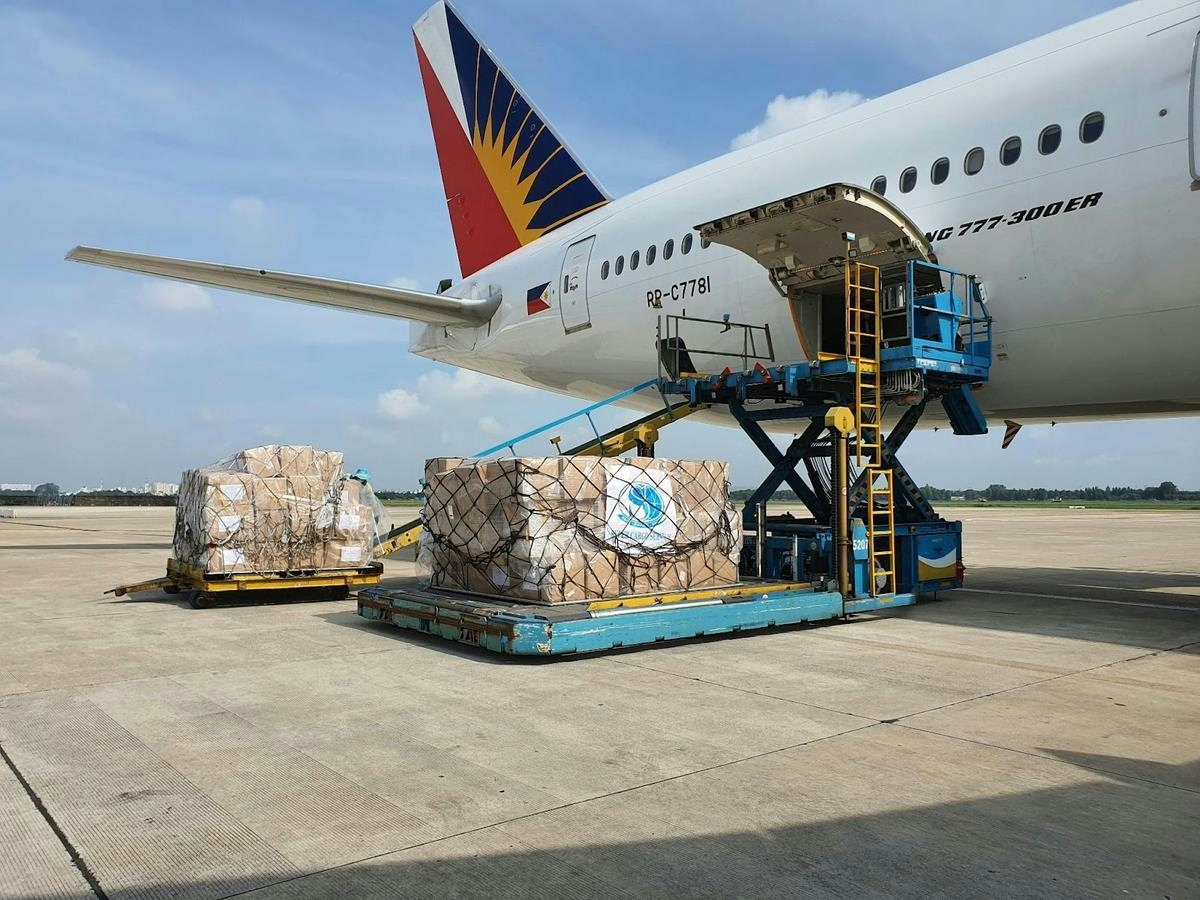
The aviation industry is confronting significant challenges as it navigates persistent supply chain disruptions alongside escalating geopolitical tensions heading into 2026. Recovery within the sector’s supply chain remains sluggish, with global aircraft backlogs surpassing 17,000 units. This backlog has hindered fleet renewal initiatives, compelling airlines to continue operating older, less fuel-efficient aircraft for extended periods.
Engine manufacturers are facing multi-year maintenance queues, which have contributed to rising costs for leasing and spare engines. Critical parts shortages persist across key components such as avionics, aircraft interiors, landing gear, and composite structures. These constraints have led to increased operational expenses and have forced airlines to implement new strategies aimed at mitigating risk in an increasingly volatile environment.
Rising Operational Costs and Strategic Responses
Industry projections for 2025 and 2026 estimate an additional $11 billion in operating costs. This increase is driven by several factors, including higher fuel consumption due to the prolonged use of aging aircraft, escalating maintenance expenses characterized by longer repair durations and increased material costs, and engine leasing premiums that have surged by 20 to 30 percent since 2019. Furthermore, inventory stockpiling has become a normalized risk management practice, adding to the financial burden.
In this context, airlines face the complex task of balancing capital discipline with the urgent need to secure essential parts, engines, and maintenance capacity amid intensifying competition and uncertainty. The operational landscape demands a shift from reactive risk management toward building long-term resilience.
Building Resilience Amid Volatility
The 2026 State of Logistics report highlights that volatility has become a permanent feature of the aviation supply chain, necessitating continuous adaptation by logisticians and management teams. Companies are increasingly encouraged to proactively identify and manage supply chain dependencies to anticipate and mitigate the effects of ongoing disruptions and geopolitical instability.
In response, industry players are adopting a range of strategic measures, including increased investment in workforce development, diversification of business operations, and fostering closer collaboration with key stakeholders. These initiatives are designed to reduce vulnerability to supply chain fluctuations and ensure operational continuity.
As geopolitical tensions persist and supply chain challenges remain unresolved, the aviation sector’s capacity to adapt and enhance resilience will be pivotal in sustaining performance and meeting future demand.

Etihad and Swissport Extend Global Partnership

Sepehran Airlines B737 Returns to Mashhad After Tyre and Engine Issues

Etihad Deploys Widebody Fleet to Meet Strong Demand

Korean Air Finalizes $36.2 Billion Deal with Boeing

Australia’s RFDS Queensland Section Orders Six King Air 260Cs

Korean Air Finalizes Order for 103 Boeing Jets and Engines

Embraer E195-E2 Features Distinctive Engine Placement Among Regional Jets

What Passengers Can Expect on Boeing’s New 777X Jet

How Ethiopian Airlines Became Africa’s Leading Carrier Amid Gulf Competition

Joby Aviation Extends Autonomous Flight Capabilities with Cross-Country Tour
