صورة

حوّل رؤى الذكاء الاصطناعي إلى أفعال منسّقة

انضم إلى قائمة الانتظار لـ AeroGenie اليوم!

الرائج الآن

Categories

Global Fleet Renewal Programs to Shape Aircraft Generators Market Through 2035
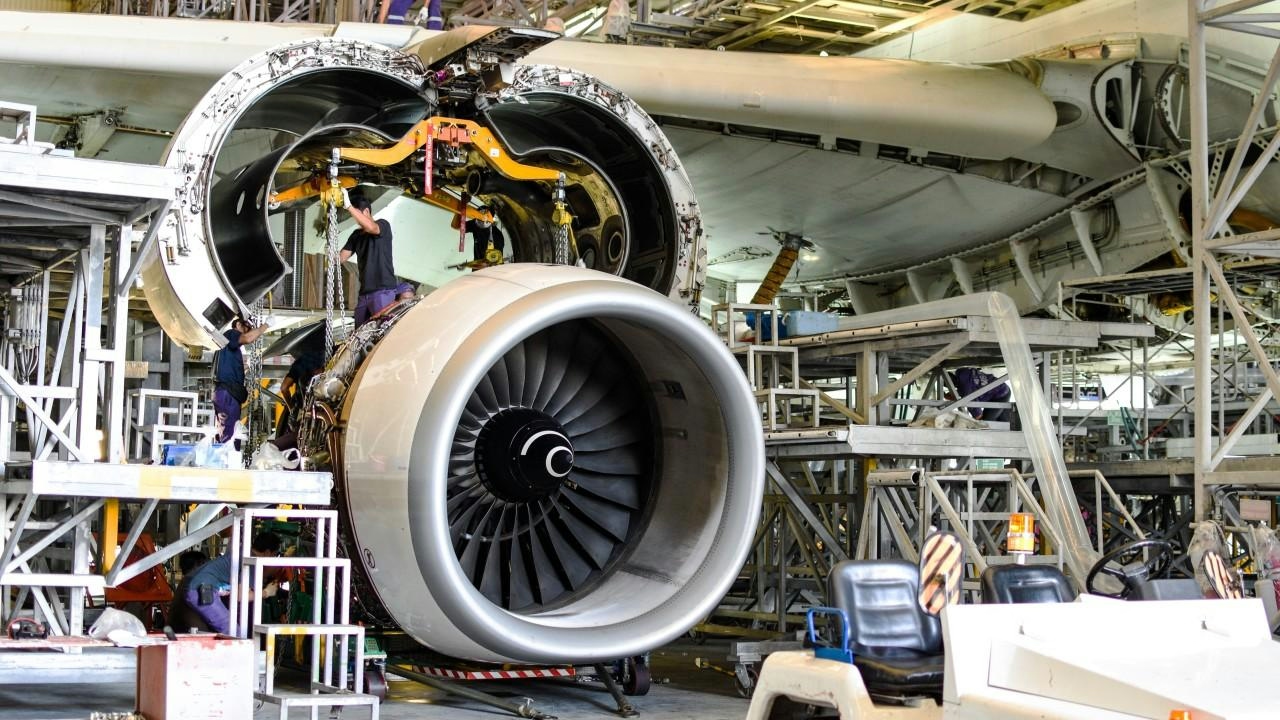
April 11, 2026By ePlane AI
Global Fleet Renewal Programs to Shape Aircraft Generators Market Through 2035
0
0
Fleet Renewal Programs
Aircraft Generators
Aviation Electrification

Global Fleet Renewal Programs to Shape Aircraft Generators Market Through 2035

The global aircraft generators market is set for sustained growth through 2035, propelled by a combination of fleet renewal cycles, increasing aircraft utilization, and the accelerating electrification of onboard systems. According to the latest IndexBox report, the aviation industry’s recovery and expansion—particularly in the Asia-Pacific and Middle East regions—are broadening demand fundamentals. Procurement practices are becoming more disciplined, while supply chains are diversifying on a regional basis, reflecting a more resilient and adaptive market environment.

Market Dynamics and Technological Evolution

The growth trajectory of the aircraft generators market is closely linked to the aviation sector’s post-pandemic recovery and its long-term capacity expansion plans. The market is distinctly segmented into the original equipment (OE) sector, which is highly regulated and technology-intensive, and the aftermarket segment, which is driven by the maintenance, repair, and overhaul (MRO) needs of an aging global fleet. The OE segment is primarily associated with new aircraft production, while the aftermarket benefits from ongoing service requirements.

Technological advancements are reshaping product specifications, with the adoption of More Electric Aircraft (MEA) architectures and variable frequency generators gaining traction. Despite these innovations, the transition remains evolutionary rather than revolutionary. Established technologies such as Integrated Drive Generators (IDGs) and brushless AC generators are expected to maintain a significant share of the market throughout the forecast period, underscoring the gradual nature of technological integration in this sector.

Regional and Sectoral Trends

While North America and Europe will continue to serve as centers of innovation and MRO activity, regional demand is increasingly shifting toward the Asia-Pacific region. This shift reflects rapid fleet expansion and modernization efforts in these markets. Commercial aviation is anticipated to lead in market volume, driven by large-scale fleet renewal programs and the delivery of narrowbody aircraft. Military aviation will provide a stable source of demand, supported by budget-backed modernization initiatives. Additionally, the business aviation and helicopter segments, particularly those serving emergency medical and VIP transport roles, are contributing to overall market growth.

Demand Drivers and Market Constraints

The aircraft generators market is influenced by several key demand drivers. Global commercial aircraft fleet renewal and expansion programs, including models such as the A320neo, 737 MAX, and 777X, are central to market growth. Increasing aircraft utilization rates are boosting demand for MRO services and spare parts. The adoption of MEA architectures is raising onboard power requirements, while military modernization and next-generation aircraft procurement further stimulate demand. Regulatory mandates emphasizing reliability and redundancy in electrical systems also play a critical role in shaping market dynamics.

However, the market faces notable constraints. High costs and logistical complexities associated with retrofitting and replacing aircraft generators present significant challenges. Certification processes for new designs and aftermarket parts are lengthy and expensive, adding to market entry barriers. Volatility in raw material prices, particularly for copper and rare-earth magnets, alongside supply security concerns, impact production stability. Extended global supply chain vulnerabilities affect component availability and lead times. Furthermore, substantial research and development, as well as capital investment, are required to advance next-generation, high-power-density generator technologies.

Industry Response and Competitive Landscape

In response to these challenges, industry participants are intensifying efforts in innovation, advanced technology integration, and strategic partnerships. The imperative to meet modern operational and environmental standards is driving manufacturers and suppliers to enhance product offerings and improve supply chain coordination. Recent developments, such as Cathay Pacific’s major fleet upgrade initiatives and Vertical Aerospace’s significant funding for electric vertical takeoff and landing (eVTOL) aircraft, highlight the sector’s dynamic adaptation to evolving market demands.

Despite high barriers to entry—including stringent FAA and EASA safety certifications and established relationships among airframe OEMs, engine manufacturers, and specialized generator producers—the aftermarket segment remains a significant revenue driver. Mandated overhaul cycles and a large installed base of mature aircraft platforms ensure steady demand for aftermarket services and components.

Outlook

The baseline forecast for 2026 to 2035 anticipates steady compound annual growth in the aircraft generators market, supported by global fleet renewal, ongoing technological evolution, and expanding air travel. Although the pace of change is expected to be gradual, the market’s robust structure and adaptive strategies position it for continued expansion amid the broader transformation of the aviation industry.

Comments

  • S

    SUSAN JOEL

    Herpes is a serious and recurring disease which can't be cured through drugs or injections by the American doctors but the best way to deal with herpes is by taking natural herbal medicine for it, and is only few American doctors that know about this herbal medicine, from Dr Uma.. I have read about Dr Uma the great herbalist doctor from African who can cure Herpes with his herbal medicine. for the people suffering from the following diseases Hiv, Herpes, Cancer, Herpatitis B, Diabetes, Hpv, Infections ETC should contact him for his herbal medicine because i am a living testimony and i was cured of HERPES. Although, i sent him what he requested and he sent me his medicine which i took for three weeks and when i went for test i was tested Herpes Negative. you can reach him through his email address:Dr.umaherbalcenter@gmail.com or Whatsapp +2347035619585 Thanks Dr Uma.

  • R

    Rac Saw

    21 days healing process with Dr. Ojamo and i have been cured totally from aids. I never believed i could get my health back after suffering and taking western medicines for 14 years I finally get to use Dr. Ojamo healing herbs to get my health back to normal visit his website:; https://drojamoherbalhome.wixsite.com/welcometodrojamoherb Also email doctor ojamo and disuse about getting this detox to treat yourself from whatever you might be suffering from. Herpes cure, diabetes remedy and full body detoxification.  Email;  dr.ojamoherbalhome@gmail.com 

  • M

    magriet dennis

    Get rid of all kinds of Herpes and virus infections, Diabetes, Hepatitis A B C, Menopause and HIV with Natural Roots and Herbs, i was once infected with HERPES and after using Dr UMA Herbal Medicine for couple of weeks i couldn't trace it anymore, i even went for checkup and my test came out Negative. Get your cure today from this wonderful herbalist, Dr. UMA. You can also reach doctor UMA on WhatsApp +2347035619585 or Email dr.umaherbalcenter@gmail.com.

  • S

    SUSAN JOEL

    Herpes is a serious and recurring disease which can't be cured through drugs or injections by the American doctors but the best way to deal with herpes is by taking natural herbal medicine for it, and is only few American doctors that know about this herbal medicine, from Dr Uma.. I have read about Dr Uma the great herbalist doctor from African who can cure Herpes with his herbal medicine. for the people suffering from the following diseases Hiv, Herpes, Cancer, Herpatitis B, Diabetes, Hpv, Infections ETC should contact him for his herbal medicine because i am a living testimony and i was cured of HERPES. Although, i sent him what he requested and he sent me his medicine which i took for three weeks and when i went for test i was tested Herpes Negative. you can reach him through his email address:Dr.umaherbalcenter@gmail.com or Whatsapp +2347035619585 Thanks Dr Uma.

  • M

    magriet dennis

    Get rid of all kinds of Herpes and virus infections, Diabetes, Hepatitis A B C, Menopause and HIV with Natural Roots and Herbs, i was once infected with HERPES and after using Dr UMA Herbal Medicine for couple of weeks i couldn't trace it anymore, i even went for checkup and my test came out Negative. Get your cure today from this wonderful herbalist, Dr. UMA. You can also reach doctor UMA on WhatsApp +2347035619585 or Email dr.umaherbalcenter@gmail.com.

  • A

    Anita lawson

    its obvious some patients with herpes are being enslaved to the antiviral and other supplementary ith the virus since 2015 until I was introduced by a blogger who also narrated her story online on how she was cured of Genital Herpes after using Dr Sikies Herbal Medicine. This is a year and 2 weeks since I was delivered from genital Herpes. All thanks to God for using this Great herbalist to heal me. I have promised to keep telling good things about Dr Sikies. Please feel free to share Your problems with him and don’t forget to tell him I did refer you to Him. Thanks. Write him on mail Drsikies@gmail.com or WhatsApp his phone number via +2348163430143  He deals with Alzheimer virus, Cancer, HIV, Herpes, Genital, warts, ALS, BV, UTI, Virginal infection, Genital, Wart, HPV, Hepatitis B, Good luck, HSV, Pregnancy, Ex back.  make order now from his website : https://drsikiesherbalcuremedicine.weebly.com/  you can reach me via mail: anitalawson515@gmail.com

  • S

    Serita Judd

    Greetings on Easter. It brings me great joy to share this extraordinary story of how Dr. Utu, an esteemed traditional African herbalist, successfully and permanently cured me of my herpes virus using his herpes herbal cleansers. For more than a year, I had been plagued by a herpes infection. I had tried various treatment methods to eradicate this debilitating disease, but none proved effective. Initially, I doubted that any ailment could be considered incurable in this world, so I turned my faith to God through prayer. A few months ago, during my online searches, I came across numerous recommendations for Dr. Utu's Herbal Cure and his use of the herpes herbal cleanser to treat herpes virus infections. These testimonials suggested that Dr. Utu could assist with any health issue, offering immediate help. I reached out to Dr. Utu via email, detailing my situation and illness. He confidentially informed me that he would prepare the herpes herbal cleanser for me and assured me of his guidance throughout the four week treatment period. He also requested my address for shipping purposes. Dr. Utu sent me the herbal cure by DHL Express Courier and following the prescribed regimen, I noticed positive changes in my body within a few days. I contacted Dr. Utu again, and he encouraged me to continue the treatment. After completing the four weeks, I contacted him once more, and he suggested I undergo a retest. I arranged for another blood test with my lab doctor. The test results were astonishing; my lab doctor confirmed that I was now herpes free, and my blood tests showed excellent health. I am utterly amazed! Today, I am free from herpes, and I urge everyone to be aware that a cure exists. For those still facing this challenge, I encourage you to contact Dr. Utu at drutuherbalcure@gmail.com

More news
Japan Approves Air Taxi Routes with Osaka Vertiport and Tokyo Pilot Program

Japan Approves Air Taxi Routes with Osaka Vertiport and Tokyo Pilot Program

Japan Advances Air Taxi Operations with Osaka Vertiport and Tokyo Pilot Program Japan has made a pivotal advancement in the commercial deployment of electric vertical take-off and landing (eVTOL) aircraft by formally accepting Archer Aviation’s type certification application for its Midnight eVTOL model on August 21, 2026. This development establishes Japan as the world’s most commercially prepared market for eVTOL operations, boasting a regulatory framework that now encompasses five major international manufacturers. Expanding eVTOL Certification Landscape The announcement, issued by Japan’s Civil Aviation Bureau (JCAB) under the Ministry of Land, Infrastructure, Transport and Tourism (MLIT), places Archer’s Midnight M001 as the fifth program in the country’s eVTOL certification queue. The current lineup includes Japan’s own SkyDrive SD-05, accepted in October 2021; the United States’ Joby S4, accepted in October 2022; Germany’s Volocopter VC2-1, accepted in February 2023; the United Kingdom’s Vertical Aerospace VX4, accepted in March 2023; and now Archer’s Midnight M001 from the United States. This diverse assembly of manufacturers distinguishes Japan from other nations, none of which currently have five distinct eVTOL programs under active type certification review. While China’s Civil Aviation Administration (CAAC) has issued the world’s first eVTOL type certificate to EHang’s pilotless EH216-S, its regulatory pipeline lacks the international diversity seen in Japan. Similarly, the United States Federal Aviation Administration (FAA) and the European Union Aviation Safety Agency (EASA) are reviewing eVTOL programs, but Japan’s combination of multiple manufacturers and robust commercial infrastructure—including signed vertiport leases, city government agreements, and operator joint ventures—sets it apart. Notably, these advancements have been achieved prior to the commencement of any revenue-generating passenger flights worldwide. Regulatory Progress and Industry Challenges Japan’s approval of designated air taxi routes, featuring a vertiport in Osaka and a pilot program in Tokyo, underscores the country’s growing momentum in the advanced air mobility sector. Despite this progress, the rollout faces considerable challenges. Regulatory complexities, technological integration, and public acceptance remain significant hurdles. The industry is concurrently developing a comprehensive digital traffic management system to ensure the safe and efficient operation of air taxis within urban airspace. Market response to Japan’s regulatory strides has been largely positive, attracting heightened interest from investors and stakeholders. Competitors such as Wisk Aero and other eVTOL developers are expected to accelerate their aircraft and infrastructure initiatives to establish a presence in the rapidly evolving Japanese market. It is important to emphasize that JCAB’s acceptance of Archer’s application marks the commencement rather than the conclusion of the certification process. The granting of a type certificate requires exhaustive evaluation of safety protocols, environmental standards, and extensive flight testing. Archer’s Midnight will undergo review under the Implementation Procedures for Airworthiness (IPA) established by the US-Japan Bilateral Aviation Safety Agreement. This arrangement permits JCAB to validate aircraft already assessed by the FAA, potentially expediting certification compared to independent national processes. The FAA and JCAB formalized their collaboration on advanced air mobility in October 2022, enabling parallel reviews of eVTOL programs. Nonetheless, the timeline for commercial air taxi operations in Osaka and Tokyo remains closely linked to the progress of FAA certification in the United States. As Japan continues to develop its regulatory and operational framework, the nation is positioned to become a global leader in urban air mobility, contingent upon successfully addressing the remaining regulatory, technological, and societal challenges.
Fly Alliance Sells Parts Business to Former CEO

Fly Alliance Sells Parts Business to Former CEO

Fly Alliance Divests Parts Business to Former CEO Amid Strategic Refocus Fly Alliance, headquartered in Wilmington New Castle, has completed the sale of its entire aircraft parts inventory and warehouse operations to Altitude Parts, a company led by former Fly Alliance CEO Kevin Wargo. This transaction signals a deliberate strategic shift for Fly Alliance as it concentrates on its core aviation services, including charter flights, jet cards, fractional ownership, and maintenance. Details of the Transaction and Operational Transition Christopher Tasca, CEO of Fly Alliance, explained that the company is prioritizing its flying-related services, distinguishing them from the parts business, which operates under a different model. The sale, initiated in August following discussions between Tasca and Wargo, includes Fly Alliance’s Orlando facility, which holds assets valued at over USD 150 million. These assets comprise 156 disassembled aircraft and more than 42,000 individual parts. Manny Perez, formerly head of Fly Alliance’s parts division, will assume the role of president at Altitude Parts. The acquiring company is owned by Cove Capital Investments, co-founded by Wargo and Samantha Nunez in September. Kevin Wargo reported that the parts business generated USD 60 million in sales in 2025. He also noted plans to disassemble six additional aircraft in August, including a Falcon 50, three Gulfstream IV-SPs, a Hawker 400XP, and a Hawker 4000. In July, Fly Alliance informed the Federal Aviation Administration that 20 aircraft had been dismantled and scrapped, encompassing models such as Learjet 45s, Citation Excels, Falcon 50s, Falcon 2000s, and various Hawker jets, all of which required deregistration. Industry Context and Market Implications The divestiture occurs amid increasing regulatory scrutiny and evolving market dynamics within the aerospace sector. Industry analysts suggest that the sale of Fly Alliance’s parts business to its former CEO may attract regulatory attention and provoke competitive responses. Rivals could attempt to capture market share or invest in similar parts operations, potentially intensifying competition. The broader aerospace market has already demonstrated sensitivity to such developments; for instance, Honeywell Aerospace experienced a significant stock price decline following its first standalone quarterly report, reflecting investor caution amid sectoral changes. Cove Capital Investments, the owner of Altitude Parts, also holds interests in Sky Travel, a charter and aircraft management company currently operating a Hawker 400XP under its Part 135 certificate, with a total fleet of 12 aircraft under management. Wargo indicated that six Hawker 400XPs will be available for charter by the end of 2026. While Sky Travel’s charter fleet is slated for expansion, Wargo emphasized that Cove Capital’s primary focus remains on aircraft parts and refurbishment projects, including paint, interior work, maintenance, and resale. He further indicated that additional strategic acquisitions are planned as part of the company’s broader growth strategy. As Fly Alliance shifts away from the parts business, this move is poised to alter competitive dynamics within the aerospace industry. The interplay of regulatory oversight and market reactions will likely shape the sector’s trajectory in the months ahead.
Google Acquired 100 Million Spirit Airlines Emails to Train AI for $10 Million

Google Acquired 100 Million Spirit Airlines Emails to Train AI for $10 Million

Google Acquires Spirit Airlines’ Corporate Data for AI Training in $10 Million Bankruptcy Auction Google has secured a vast trove of digital assets from the bankrupt Spirit Airlines, including approximately 100 million internal emails and 500 million Microsoft Teams items, in a $10 million deal. The acquisition, finalized through a competitive bankruptcy auction, marks a significant development in the valuation and utilization of corporate data within the rapidly evolving artificial intelligence landscape. Scope and Purpose of the Acquisition The assets obtained by Google extend well beyond a conventional email archive. The purchase encompasses around 100 million emails from roughly 80,000 Spirit Airlines accounts, alongside approximately 500 million Microsoft Teams chats and related communications. Additionally, Google acquired nearly 17 million files stored on OneDrive and SharePoint, as well as payroll and crew scheduling records, customer service call recordings, internal software code, financial audits, and fraud reports. Importantly, the transaction explicitly excludes passenger personally identifiable information (PII) and loyalty program data. A spokesperson for Google characterized the acquisition as the procurement of "part of an enterprise dataset" intended to enhance the company’s AI models and product offerings. By integrating this extensive dataset, Google aims to refine its large language models with authentic corporate workflows, industry-specific terminology, and complex organizational communications. This data is expected to improve the functionality of AI-driven tools within enterprise environments such as Gmail, Google Docs, and Workspace. Privacy Concerns and Data Scrubbing Measures Prior to transfer, the dataset will undergo rigorous deidentification by a third party to remove any personally identifiable information, according to court documents and statements from Google. The company has emphasized that it will not receive any personal data directly, underscoring the commitment to privacy safeguards. Despite these assurances, privacy advocates and labor organizations have expressed significant concerns. They warn that even anonymized data—comprising decades of human resources records, payroll information, and internal communications—poses risks of reidentification when processed by sophisticated AI systems. The flight attendants’ union has formally objected to the sale, highlighting the potential for sensitive information to be reconstructed, a risk underscored by previous incidents involving supposedly anonymized datasets. Market and Regulatory Implications Google’s $10 million bid establishes a new public benchmark for the value of large-scale enterprise data in the AI sector. The auction attracted interest from other AI-focused companies, including the hiring startup Mercor and Micro1, reflecting a burgeoning market for acquiring data from bankrupt firms to bolster machine learning capabilities. A critical factor in the court’s evaluation was the method of data deidentification—whether conducted by Google or an independent third party. The transaction has ignited broader discussions regarding data privacy, regulatory oversight, and the rights of employees whose communications and records are repurposed for AI training. Industry competitors and privacy advocates are expected to scrutinize the deal closely, and it may face additional regulatory review. Final approval rests with Judge Sean H. Lane of the Southern District of New York, who must determine the adequacy of protections for individuals whose information is included, even in anonymized form. As AI companies increasingly compete to acquire expansive datasets, the Spirit Airlines sale highlights both the opportunities and unresolved challenges inherent in leveraging real-world corporate data to advance artificial intelligence technologies.
Mammoth Freighters Delivers 777-200LRMF to Jetran

Mammoth Freighters Delivers 777-200LRMF to Jetran

Mammoth Freighters Delivers First 777-200LRMF to Jetran Amid Rising Demand Mammoth Freighters has marked a significant milestone with the delivery of its first converted 777-200LRMF freighter to aircraft lessor Jetran. This delivery comes at a time of increasing global demand for widebody cargo conversions and represents the initial aircraft in a larger order exceeding two dozen units. Of these, 13 are scheduled to enter revenue service within the DHL global network, underscoring the strategic importance of this partnership. A Milestone in Widebody Cargo Conversion The aircraft made its public debut at the 2026 Farnborough International Airshow before being handed over to Jetran. Additional deliveries from Jetran’s order book, which includes aircraft destined for DHL and Qatar Airways, are expected in the coming weeks. This rapid delivery schedule highlights the accelerating pace of Mammoth’s conversion program and its commitment to meeting market demand. Bill Tarpley, CEO of Mammoth Freighters, described the delivery as a “defining moment” for the company. He emphasized the momentum behind the 777 programme, noting the transition from public debut to imminent revenue service with DHL as a testament to the aircraft’s capabilities. Tarpley expressed pride in delivering this milestone freighter and appreciation for Jetran’s trust in Mammoth’s platform. Jordan Jaffe, CEO of Jetran, highlighted the broader significance of the delivery, stating that it represents more than just fleet expansion. He praised the engineering and production quality of the 777-200LRMF programme as it enters active service with DHL. Jaffe also acknowledged the close collaboration with DHL and commended Mammoth Freighters for their technical excellence and dedication in bringing the aircraft to market. Advanced Design and Market Challenges The Mammoth 777-200LRMF is based on the Boeing 777-200LR platform and features advanced cargo conversion technology, including the widest cargo door currently in commercial operation. This design offers a long-range, high-capacity payload solution tailored to the needs of modern global logistics networks. As Mammoth Freighters scales up deliveries, the company faces several challenges. These include ensuring compliance with stringent regulatory and operational standards, managing the logistical complexities of large-scale aircraft conversions, and maintaining competitive pricing in a crowded cargo aircraft market. Industry analysts suggest that the successful entry of the 777-200LRMF could stimulate increased interest from other leasing customers in similar conversion programs. At the same time, competitors may accelerate their own development of long-range freighter modifications to preserve market share. Despite these challenges, the delivery to Jetran underscores Mammoth Freighters’ expanding influence in the cargo conversion sector. It signals a notable shift in the global air freight landscape as operators increasingly seek efficient, high-capacity solutions to meet evolving logistics demands.
Star Navigation Systems Partners with Aero Intelligence and Toronto Metropolitan University

Star Navigation Systems Partners with Aero Intelligence and Toronto Metropolitan University

Star Navigation Systems Forms Strategic Alliance with Aero Intelligence and Toronto Metropolitan University **Brampton, Ontario – August 24, 2026** – Star Navigation Systems Group Ltd. (“Star”) has entered into a strategic partnership with Aero Intelligence Corp. (“Aero”) to bolster Aero’s collaborative research and technology initiatives with Toronto Metropolitan University (TMU), a prominent Canadian institution renowned for its focus on urban innovation and applied research. This agreement will see Aero integrate Star’s proprietary STAR-A.D.S.® and STAR-ISMS® technology platforms as foundational elements in the development of next-generation aviation solutions. Advancing Innovation in Aviation and Beyond The partnership is designed to accelerate research and commercialization efforts centered on cutting-edge technologies with applications that extend beyond aviation into sectors such as transportation, energy, and industrial monitoring. Dr. Vik Singh, Associate Professor and Co-Director of the Institute for Sustainable Practices in Research and Enterprise at TMU’s Ted Rogers School of Management, emphasized the collaboration’s commitment to sustainable aviation innovation. He noted that the initiative will explore how sustainability, technology transfer, artificial intelligence, and established industry expertise can collectively enhance performance and foster innovation across the aviation industry. Aaron Dalal, CEO of Aero Intelligence, highlighted the complementary strengths of the alliance, stating that by combining TMU’s applied research capabilities, Aero’s commercialization experience, and Star’s established technology platforms, the partnership is well-positioned to develop and deploy advanced solutions with substantial market potential. Roles and Market Implications Aero Intelligence will spearhead the research, technology development, product innovation, and commercialization activities, supported by a wider network of collaborators. Star Navigation Systems will contribute its core technology platforms and share in the economic benefits arising from the innovations generated through this collaboration. The solutions emerging from the Aero-TMU partnership will be marketed under the “Powered by Star” brand, underscoring Star’s integral role in the initiative. Randy Koroll, CEO of Star Navigation Systems, expressed enthusiasm about the collaboration, stating that the partnership enables scalable innovation of the STAR-ISMS® platform while maintaining ownership of Star’s core technology assets. Despite the promising outlook, the partnership faces potential challenges. Increased competition may arise as rivals intensify research and development efforts, forge new alliances, or adjust their market strategies. Regulatory compliance and the integration of advanced navigation technologies could present obstacles, particularly given the ethical and societal considerations that may attract regulatory scrutiny. Market responses are expected to be mixed, with some investors cautiously optimistic about the long-term prospects, while others may question the immediate impact on market dynamics. Star Navigation Systems, Aero Intelligence, and Toronto Metropolitan University intend to provide further updates as they reach significant milestones in their collaborative efforts. For additional information on the partnership and ongoing developments, visit TMU’s event page and Aero Intelligence’s website.
Archer's Air Taxi Bet Is Heading for the 2028 Olympics

Archer's Air Taxi Bet Is Heading for the 2028 Olympics

Archer’s Air Taxi Ambitions Take Flight Ahead of the 2028 Olympics Archer Aviation Inc. is intensifying efforts to establish its air taxi network in Los Angeles in preparation for the 2028 Olympic and Paralympic Games. Central to its strategy is the development of a vertiport at L.A. LIVE, a prominent downtown location that could serve as a key hub during one of the world’s most widely viewed sporting events. By leveraging this global platform, Archer aims to demonstrate the capabilities of its electric vertical takeoff and landing (eVTOL) aircraft to millions of visitors and a vast international audience. Strategic Opportunity and Industry Challenges The 2028 Olympics present a unique transportation challenge, but also an exceptional opportunity for Archer to showcase its technology on a global stage. The visibility afforded by the event could significantly boost public acceptance and investor confidence in advanced air mobility solutions. However, the company faces considerable obstacles before its air taxis can become a routine part of urban transportation. These include meeting production targets for its aircraft, obtaining necessary regulatory approvals, and constructing the supporting infrastructure. The planned vertiport at L.A. LIVE exemplifies these challenges, requiring Archer to navigate complex regulatory frameworks and coordinate closely with city officials. The company’s partnership with AEG, the owner of L.A. LIVE, alongside its involvement in the White House’s eVTOL Integration Pilot Program—where it has already completed city-to-city flights in California—demonstrates a proactive approach to overcoming these barriers. Competitive Landscape and Market Implications Archer is operating in an increasingly competitive environment, with rivals such as Joby Aviation advancing their own vertiport and air taxi networks in Los Angeles and other major metropolitan areas. This competition is likely to drive further innovation but also intensifies the pressure on Archer to meet its ambitious timeline ahead of the Olympic Games. Investor interest in the advanced air mobility sector has grown noticeably as the 2028 Games approach. Each expansion of Archer’s planned network serves as a tangible step toward validating eVTOLs as a viable urban transportation solution, particularly during large-scale events that demand efficient and flexible mobility options. Los Angeles offers Archer a high-profile stage to prove its business model. Successfully transporting passengers during the Olympics would represent a significant milestone not only for Archer but for the entire eVTOL industry. With global attention focused on the city, Archer is racing to establish a fully operational network by a deadline that could shape the future of urban air mobility.
Aviation Industry Update

Aviation Industry Update

Aviation Industry Update Archer Aviation and AEG Collaborate on Los Angeles’ First Vertiport Archer Aviation has entered into a partnership with AEG to develop Los Angeles’ inaugural vertiport at L.A. LIVE, a landmark initiative for electric vertical takeoff and landing (eVTOL) passenger aircraft in the city. This agreement designates Archer as the exclusive air taxi partner for the expansive four-million-square-foot sports and entertainment district, which encompasses prominent venues such as the Peacock Theater, The Novo, Regal L.A. LIVE cinemas, and the GRAMMY Museum. Situated adjacent to the Los Angeles Convention Center and Crypto.com Arena, the district attracts millions of visitors annually for concerts, sporting events, and live entertainment. The collaboration represents a strategic move amid significant challenges confronting the aviation industry. In the first seven months of 2026, the transportation sector experienced 41,748 job dismissals, marking a 303% increase compared to the previous year. These figures underscore the sector’s ongoing difficulties with escalating operational costs and evolving trade dynamics. In response, companies are increasingly pursuing innovative solutions, including strategic partnerships and infrastructure investments, to sustain competitiveness and adapt to shifting market demands. Strategic Vision Ahead of the 2028 Olympic Games Archer’s alliance with AEG forms part of a broader strategy to establish a comprehensive air taxi network in Los Angeles in anticipation of the 2028 Olympic Games. Archer has been named the Official Air Taxi Provider for both the event and Team USA. Adam Goldstein, Archer’s founder and CEO, highlighted the significance of the project, stating, “Working with AEG on an iconic project like this vertiport at L.A. LIVE gives us the opportunity to continue building the infrastructure needed for Southern California to lead in the next era of all-electric flight.” He further described the initiative as a unique opportunity to introduce a flagship downtown location to the planned Los Angeles air taxi network ahead of the LA28 Games. Nick Baker, president and COO of AEG Global Partnerships, emphasized the project’s potential to enhance the experience of fans and visitors. He described the vertiport as “an ambitious project and exactly the kind of forward-thinking collaboration that blends infrastructure and technology in service of our fans, visitors, and the broader community around major sports and live-entertainment events hosted at L.A. LIVE.” Infrastructure and Operational Details The planned vertiport will facilitate Archer’s Midnight aircraft in providing point-to-point flights, significantly reducing travel times across Los Angeles. Commutes that currently take over an hour by car are expected to be shortened to just 10 to 20 minutes by air. The L.A. LIVE vertiport will complement other planned network locations, including SoFi Stadium, the University of Southern California, and Hollywood Burbank Airport, with Hawthorne Airport serving as Archer’s central operational hub. Initial feasibility studies have been completed, addressing critical factors such as land use, airspace management, power availability, and community impact. The vertiport will incorporate BETA Technologies’ electric aviation chargers, supporting the ACES consortium’s objective of establishing standardized charging infrastructure for urban air mobility. As the aviation sector faces intensified scrutiny from investors and stakeholders amid workforce reductions and rising costs, initiatives like the Archer and AEG vertiport project exemplify a shift toward innovation and strategic collaboration. These efforts reflect the industry’s determination to navigate a rapidly evolving landscape through forward-looking infrastructure development and partnerships.
CCA Increment 2 Introduces New Engines for Next-Generation Drone Fighter

CCA Increment 2 Introduces New Engines for Next-Generation Drone Fighter

CCA Increment 2 Introduces New Engines for Next-Generation Drone Fighter The U.S. Air Force is entering a critical phase in its development of next-generation drone fighters through the Collaborative Combat Aircraft (CCA) Increment 2 program. While Increment 1 platforms, including the General Atomics YFQ-42A and Anduril YFQ-44A, have progressed into production, Increment 2 remains in the concept refinement stage. Currently, nine unnamed vendors are competing to meet a mid-2027 deadline, focusing on the development of entirely new engines tailored to the evolving demands of future drone fleets. Engine Development: A New Frontier Increment 2 distinguishes itself from its predecessor by pursuing novel propulsion solutions rather than relying on existing engine technology. The Air Force has identified the need for two distinct engine classes: a small engine producing between 1,400 and 1,600 pounds of thrust, and a medium engine delivering 5,000 to 6,000 pounds of thrust. These engines may emerge either from clean-sheet designs or through substantial modifications of commercial models. This ambitious undertaking faces significant challenges. The jet engine manufacturing sector is currently contending with production delays, quality control concerns, and the looming threat of critical obsolescence. Such issues could jeopardize the timely delivery and operational reliability of the new engines, thereby affecting the overall Increment 2 timeline. John Sneden, the Air Force’s portfolio acquisition executive for propulsion, emphasized the heightened requirements, stating, “We think that the requirements and the needs are going to be greater for CCA,” highlighting the imperative for propulsion innovation. Competitive Dynamics and Market Engagement The Air Force’s approach to Increment 2 continues its established strategy of broad industry engagement followed by progressive narrowing of contenders. From the current pool of nine vendors, up to six designs will be selected to advance to subsequent development phases. However, the competition remains open, with Col. Timothy Helfrich, portfolio acquisition executive for fighters and advanced aircraft, affirming, “We will open back up to have competition. That is the way that we have continually executed the CCA program.” A sources-sought notice issued on July 24 signals a shift toward greater transparency and ongoing market research, inviting new entrants to participate. This openness is expected to intensify competition, as vendors not initially selected may continue to invest in their platforms—sometimes with Air Force support—or explore alternative manufacturers and engine solutions to maintain their viability in the program. Outlook for Increment 2 As the CCA Increment 2 program progresses, the balance between technical innovation and industrial capacity will be pivotal. The Air Force’s commitment to maintaining competition and engaging a wider market could help mitigate risks associated with engine development and manufacturing. With concept refinement extending through mid-2027 and the competitive field still fluid, the effort to define the next generation of collaborative combat aircraft—and the propulsion systems that will power them—remains a dynamic and evolving challenge.
J-36 Designers Raise Concerns Over Military AI Hallucinations

J-36 Designers Raise Concerns Over Military AI Hallucinations

J-36 Designers Raise Concerns Over Military AI Hallucinations The Risks of AI-Generated Intelligence in Defense When queried about the combat radius of a foreign fighter jet, large language models often provide confident and detailed responses, frequently presented as factual. However, these answers can be entirely fabricated. While such inaccuracies may be inconvenient in academic contexts, they pose significant risks in military applications, particularly in the design of stealth fighters that rely on accurate assessments of enemy radar capabilities. Engineers at the AVIC Chengdu Aircraft Research and Design Institute, the team responsible for China’s J-20 and the forthcoming J-36 stealth fighters, have publicly voiced these concerns. In a paper published on June 20, 2026, in *Information Studies: Theory & Application*—a journal affiliated with state arms manufacturer Norinco—engineer Zhang Xianzhe highlights the propensity of AI models to invent critical specifications. These include aircraft dimensions, payload capacities, speeds, combat radii, and radar parameters such as scan ranges and frequency bands. Strategic Implications of AI Hallucinations The paper underscores the dual nature of large language models in defense intelligence. While these AI systems excel at data mining and weapons performance analysis—tasks that traditionally demanded extensive analyst effort—their tendency to generate plausible yet false information, known as the “hallucination effect,” introduces a unique and dangerous vulnerability. Zhang warns that such errors could lead to severe consequences, including strategic miscalculations in a domain where precision is paramount. For fighter aircraft designers, the initial phase of any project hinges on a thorough understanding of adversary capabilities: the extent of radar coverage, the frequency bands employed, and potential detection gaps. These factors directly influence the design of the airframe, stealth coatings, sensor suites, and operational tactics. An erroneous assumption—such as optimizing stealth features for an incorrect radar frequency—could compromise the aircraft’s survivability, with such flaws potentially only becoming apparent in combat scenarios. Industry Response and Broader Market Concerns The candid nature of this warning is particularly significant given its origin within a leading Chinese military design institute and its publication through a state-backed outlet. This disclosure arrives amid China’s vigorous promotion of military AI technologies, highlighting both the promise and inherent risks of rapid AI integration. Concerns about the reliability of military AI systems are intensifying, as designers grapple with preventing hallucinations that could result in operational failures or regulatory violations. These apprehensions resonate beyond defense circles, influencing broader market sentiment. Despite SK Hynix’s record profits, investor skepticism persists regarding the sustainability of accelerated AI-related expenditures. Internationally, competitors and regulators are taking note. The White House, for example, is collaborating with AI companies to develop confidential safety protocols, reflecting a global movement toward enhanced oversight and compliance in military AI deployment. A Shift Toward Transparency and Caution The AVIC Chengdu team’s forthright publication marks a notable shift in discourse surrounding military AI. As the integration of AI into defense systems accelerates, the risk of strategic errors stemming from AI hallucinations has moved from theoretical possibility to tangible concern. For those engaged in designing the next generation of stealth fighters, ensuring the accuracy and dependability of AI-generated intelligence has become a critical national security imperative.
AkzoNobel stock holds steady as aerospace coatings innovation supports long-term growth

AkzoNobel stock holds steady as aerospace coatings innovation supports long-term growth

AkzoNobel Stock Holds Steady Amid Aerospace Coatings Innovation AkzoNobel N.V. (ISIN NL0013267909) shares remained stable on August 24, 2026, as the company emphasized progress in its aerospace coatings division, highlighting innovation as a key driver of long-term growth and resilience. Recently, AkzoNobel completed operational trials of a new lighter aircraft basecoat technology in collaboration with TAP Air Portugal. This development aims to reduce the coating weight per aircraft without compromising durability or aesthetic quality. Advancing Efficiency and Sustainability in Aerospace Coatings The introduction of this lighter basecoat responds to increasing airline demands for enhanced operational efficiency, fuel savings, and reduced emissions. By lowering the total coating weight, the technology contributes directly to improved fuel consumption and emission profiles—critical factors for airlines striving to meet stringent regulatory and sustainability targets. Given that every kilogram removed from an aircraft’s operating weight translates into measurable fuel savings, especially on long-haul flights, this innovation aligns closely with industry priorities. AkzoNobel’s aerospace coatings are engineered to endure harsh environmental conditions, including ultraviolet exposure, temperature variations, and aerodynamic stresses. The lighter basecoat represents part of a broader industry trend toward incremental weight reductions across aircraft components, supporting both operational performance and environmental objectives. Strategic Focus and Market Position AkzoNobel’s overarching strategy centers on decorative, performance, and specialty coatings across global markets such as construction, automotive, marine, and aerospace. The company prioritizes segments where technical performance, durability, and environmental compliance enable pricing power and foster enduring customer relationships. Innovations like the lighter aerospace basecoat reinforce this approach by offering differentiated solutions that align with evolving sustainability goals. Despite these technological advancements, AkzoNobel continues to face challenges in maintaining profitability across key coatings segments amid fluctuating industrial cycles. Balancing ongoing investments in sustainability with revenue growth remains a strategic priority. Market sentiment, however, has been generally positive, supported by resilient coatings margins and sustained sustainability initiatives. Competitive dynamics within the sector are also shifting. Reports suggest that Axalta Coating Systems is exploring a potential merger with AkzoNobel to bolster its innovation pipeline. Concurrently, companies such as DroneShield are advancing aerospace security technologies, addressing overlapping market demands and introducing indirect competitive pressures. Historically, AkzoNobel has generated multi-billion-euro annual revenues from its core coatings businesses, leveraging scale, brand recognition, and continuous portfolio optimization. The company has sharpened its focus on paints and coatings through strategic acquisitions, divestments, and disciplined cost management, moving away from non-core chemical activities. While past financial results have been influenced by raw material costs, currency fluctuations, and regional demand cycles, current performance increasingly reflects efficiency improvements and product innovation. Within the aerospace segment, AkzoNobel’s coatings portfolio includes basecoats, topcoats, and primers designed to ensure adhesion, corrosion resistance, and color stability. The newly trialed lighter basecoat seeks to maintain these essential properties while reducing weight, presenting an attractive option for airlines aiming to enhance fleet efficiency and comply with evolving regulatory standards. For investors, AkzoNobel’s capacity to convert research and development efforts and technical partnerships into commercially viable, high-performance products remains central to sustaining margins in specialized markets where both performance and pricing are critical.
line









