
حوّل رؤى الذكاء الاصطناعي إلى أفعال منسّقة

الرائج الآن
Categories
Google Develops AI for Travel Booking and Updates Travel Tools
Google Develops AI for Travel Booking and Updates Travel Tools
A New AI-Driven Travel Booking Experience
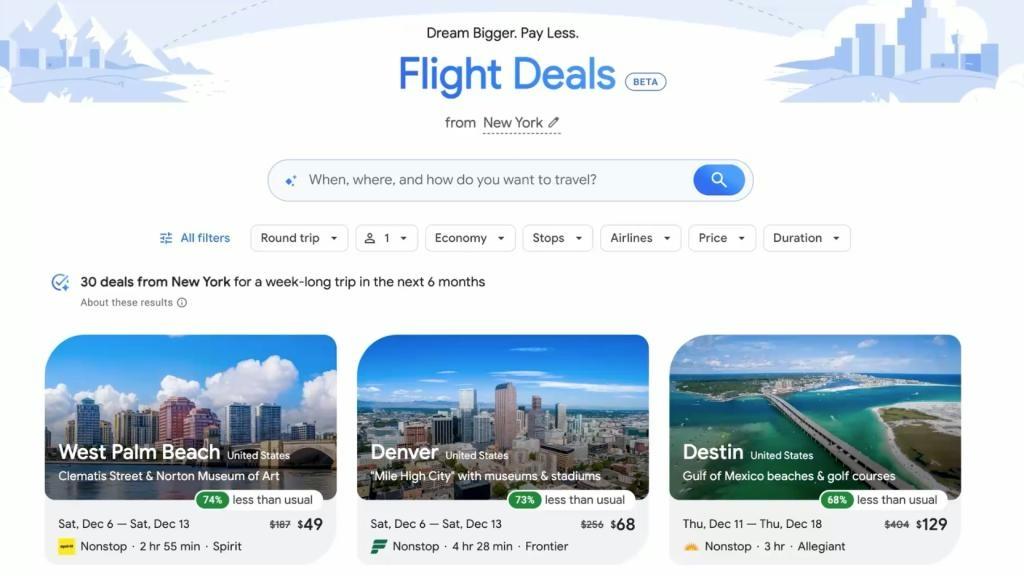
Google has announced the development of an artificial intelligence-powered tool designed to simplify the process of booking flights and hotels. This initiative integrates advanced AI capabilities with Google’s existing search platforms, aiming to transform the company’s AI Mode into a comprehensive travel planning hub. Users will be able to describe their travel preferences and receive tailored comparisons of flights and accommodations, including schedules, prices, room photos, amenities, and reviews. The tool will allow users to refine their options interactively and complete bookings seamlessly through partnered providers.
In a recent company blog post, Google outlined the functionality of the upcoming service, emphasizing ease of use and integration with major industry players. The project involves collaboration with prominent travel companies such as Booking.com, Choice Hotels International, Expedia, IHG Hotels & Resorts, Marriott International, and Wyndham Hotels & Resorts. Despite the ambitious scope, the development remains in its early stages. Julie Farago, vice president of engineering for Travel and Local on the Google Search team, noted, “We're just starting work on this,” underscoring the preliminary nature of the effort.
Industry Implications and Market Reactions
Google’s entry into AI-powered travel booking represents a significant shift in the competitive landscape. The company’s expanding influence has raised concerns among established online travel agencies, as the new AI intermediary could disrupt existing market dynamics and bargaining power. Firms such as Expedia, Booking Holdings, and Trip.com have already experienced declines in their stock prices as investors weigh the potential impact of Google’s innovation.
In response, competitors are expected to accelerate their own AI initiatives to safeguard their market positions. However, consumer trust in fully autonomous AI travel booking remains cautious, prompting Google to emphasize collaboration with existing partners rather than positioning itself as a direct competitor. This measured approach reflects the broader industry’s careful navigation of AI integration amid evolving consumer expectations.
Broader Industry Trends and Future Outlook
The rise of AI in the travel sector is also influencing the startup ecosystem, creating both opportunities and challenges. Industry analysts observe a growing emphasis on sustainable growth strategies and strategic exits as companies adapt to rapid technological change. Google’s ongoing development of its AI travel agent, alongside the responses from competitors and partners, is poised to shape the next phase of innovation in digital travel services.

Etihad Airways Suspends Airbus A380 Flights on Key Route

Aditya Birla Group Seeks Approval for Aircraft Leasing in GIFT City

Qatar Airways Highlights Innovation and Connectivity at Arabian Travel Market 2026

Hong Kong's Five-Year Plan Includes Andrew Fan's Aircraft Parts Processing Hub Proposal

ACIA Aero Leasing Delivers ATR72-600 to Air Nostrum

RTX Appoints Jill Albertelli as Head of Pratt & Whitney

TAT Technologies Joins Beyond Aero Hydrogen Aircraft Program

AURAK Study Highlights Barriers to Air Taxi Adoption in Emerging Economies

Xiamen Air Selects Altitude for 787 Maintenance at Heathrow

Etihad and Swissport Extend Global Partnership
