
حوّل رؤى الذكاء الاصطناعي إلى أفعال منسّقة

الرائج الآن
Categories
Government Regulations Delay Drone Delivery Services
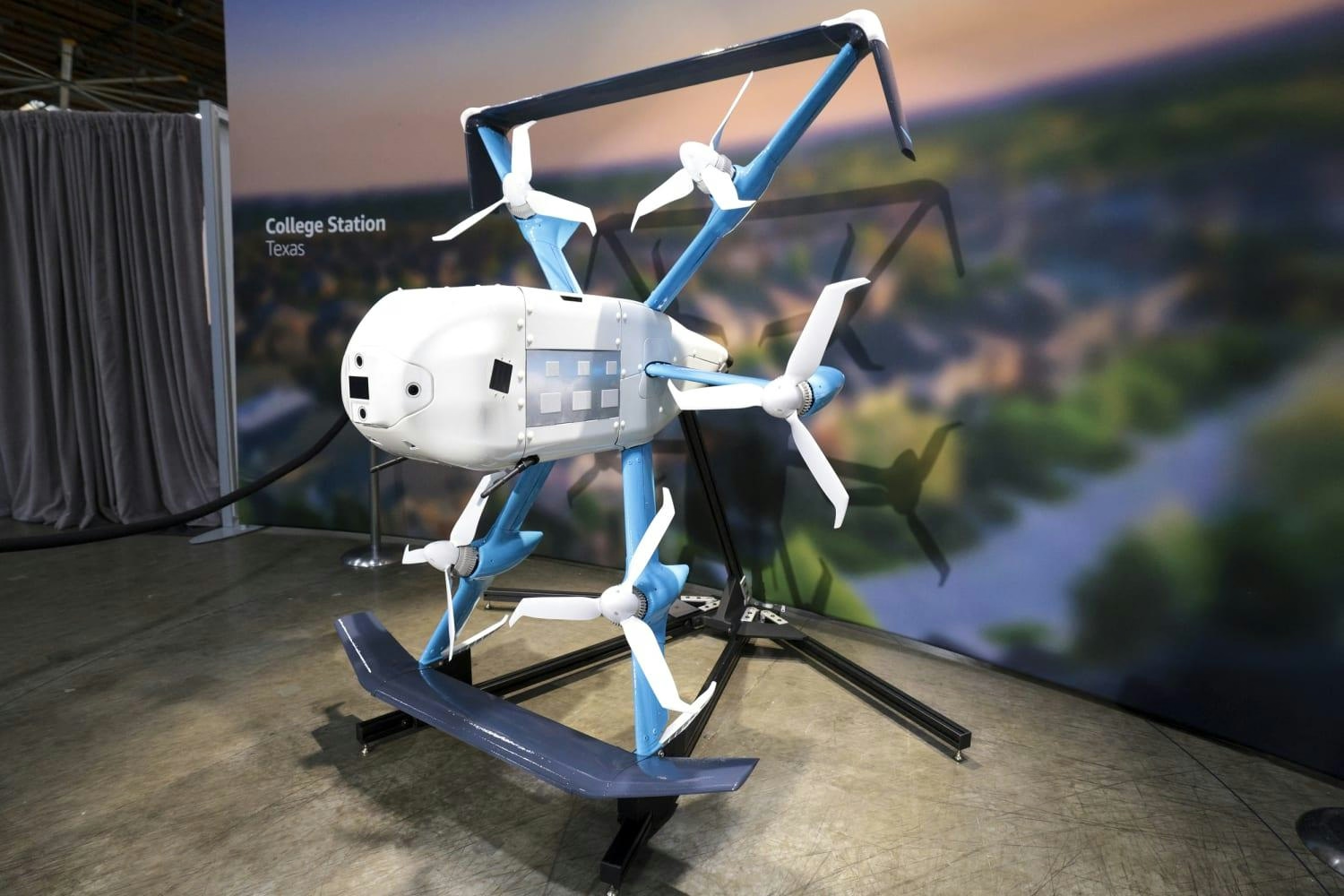
Government Regulations Delay Drone Delivery Services
Regulatory Barriers to Nationwide Expansion
Drone delivery, once heralded as the future of rapid and efficient shipping, has yet to achieve widespread adoption across the United States. While companies such as Wing and Zipline have successfully demonstrated the technology’s potential by delivering meals and small packages within minutes in select locations, the service remains largely inaccessible to the broader American public. The primary impediment to nationwide rollout is stringent government regulation.
The Federal Aviation Administration (FAA) currently prohibits drones from operating beyond the visual line of sight without obtaining special waivers. To conduct long-distance drone flights, companies must secure airline-level certification, a rigorous process involving comprehensive inspections, detailed operational protocols, and approval as an air carrier. This regulatory framework imposes significant challenges, particularly for smaller firms.
Adam Thierer, author of Permissionless Innovation, highlights the difficulty of navigating these requirements, noting that even a company with the resources of Amazon faces considerable hurdles in obtaining the necessary permits. He draws a historical parallel, questioning whether the Wright brothers would have succeeded in their pioneering flights had the FAA existed at the time, implying that such regulation may stifle innovation.
Impact on Industry Growth and Competition
These regulatory constraints have considerably slowed the expansion of drone delivery services. Presently, only eight companies have received FAA approval to operate drone deliveries in the United States. Major industry players like Wing and Walmart, despite announcing plans to broaden their drone delivery networks into additional metropolitan areas, continue to encounter delays due to complex airspace compliance issues and the protracted pace of regulatory approvals. Consequently, the anticipated rapid growth of the drone delivery market faces potential stagnation.
The regulatory environment also intensifies competitive pressures within the industry. Companies are engaged in a race to secure the necessary certifications and integrate drone delivery into their retail operations at scale. Early adopters stand to gain a significant market advantage, while those lagging risk losing ground in this emerging sector.
Public Concerns and Future Prospects
Public response to drone delivery has been mixed, with concerns centering on privacy and noise. Some residents worry that drones equipped with cameras could be used for surveillance. In response, companies like Amazon emphasize that onboard cameras and sensors serve exclusively for navigation and obstacle avoidance, not for monitoring individuals. Noise pollution is another frequent complaint, though efforts are underway by firms such as Wing to develop quieter drone models.
Thierer contextualizes this resistance as part of a broader historical pattern of skepticism toward new technologies. He recalls how trains were once viewed as dangerous and unnatural, and how society eventually adapted to their presence. Similarly, he suggests that as drone technology advances and companies address privacy and noise issues, public acceptance may increase.
For now, however, regulatory restrictions remain the foremost barrier to the widespread adoption of drone delivery services, delaying the realization of a system that could offer faster, more efficient, and potentially quieter alternatives to traditional delivery trucks.

Etihad and Swissport Extend Global Partnership

Sepehran Airlines B737 Returns to Mashhad After Tyre and Engine Issues

Etihad Deploys Widebody Fleet to Meet Strong Demand

Korean Air Finalizes $36.2 Billion Deal with Boeing

Australia’s RFDS Queensland Section Orders Six King Air 260Cs

Korean Air Finalizes Order for 103 Boeing Jets and Engines
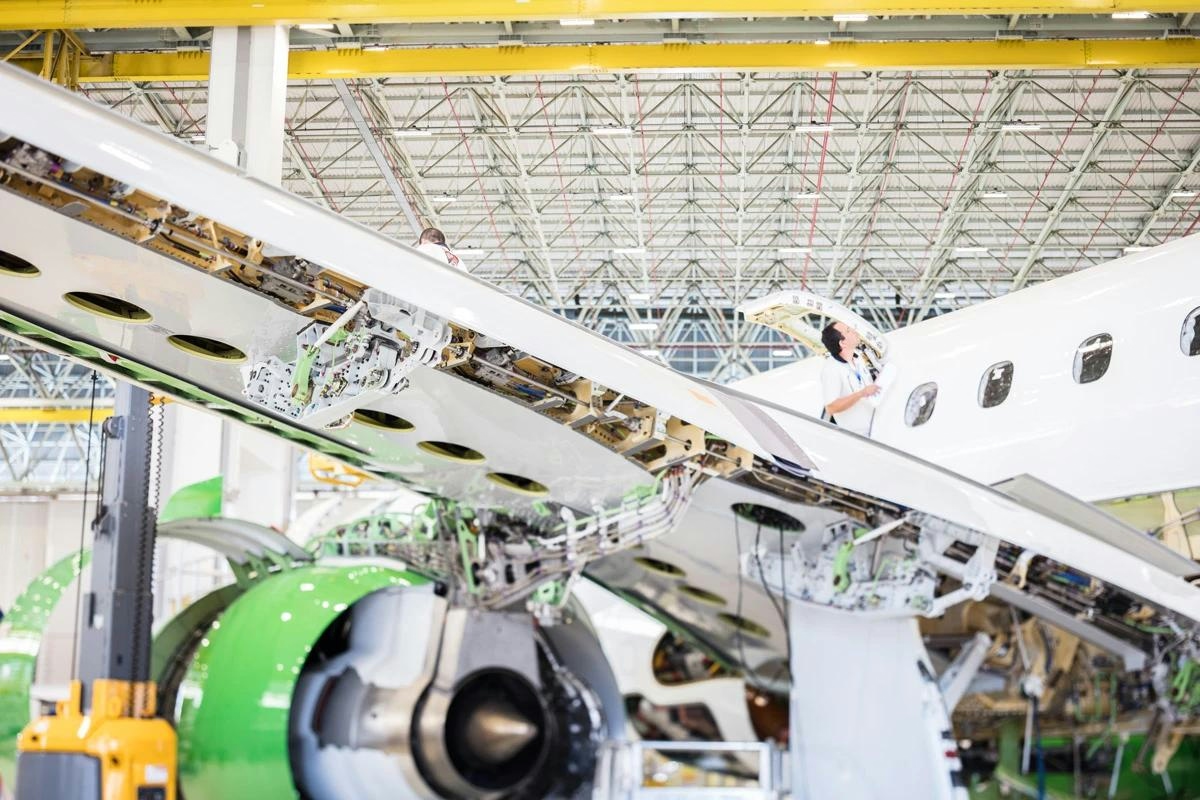
Embraer E195-E2 Features Distinctive Engine Placement Among Regional Jets
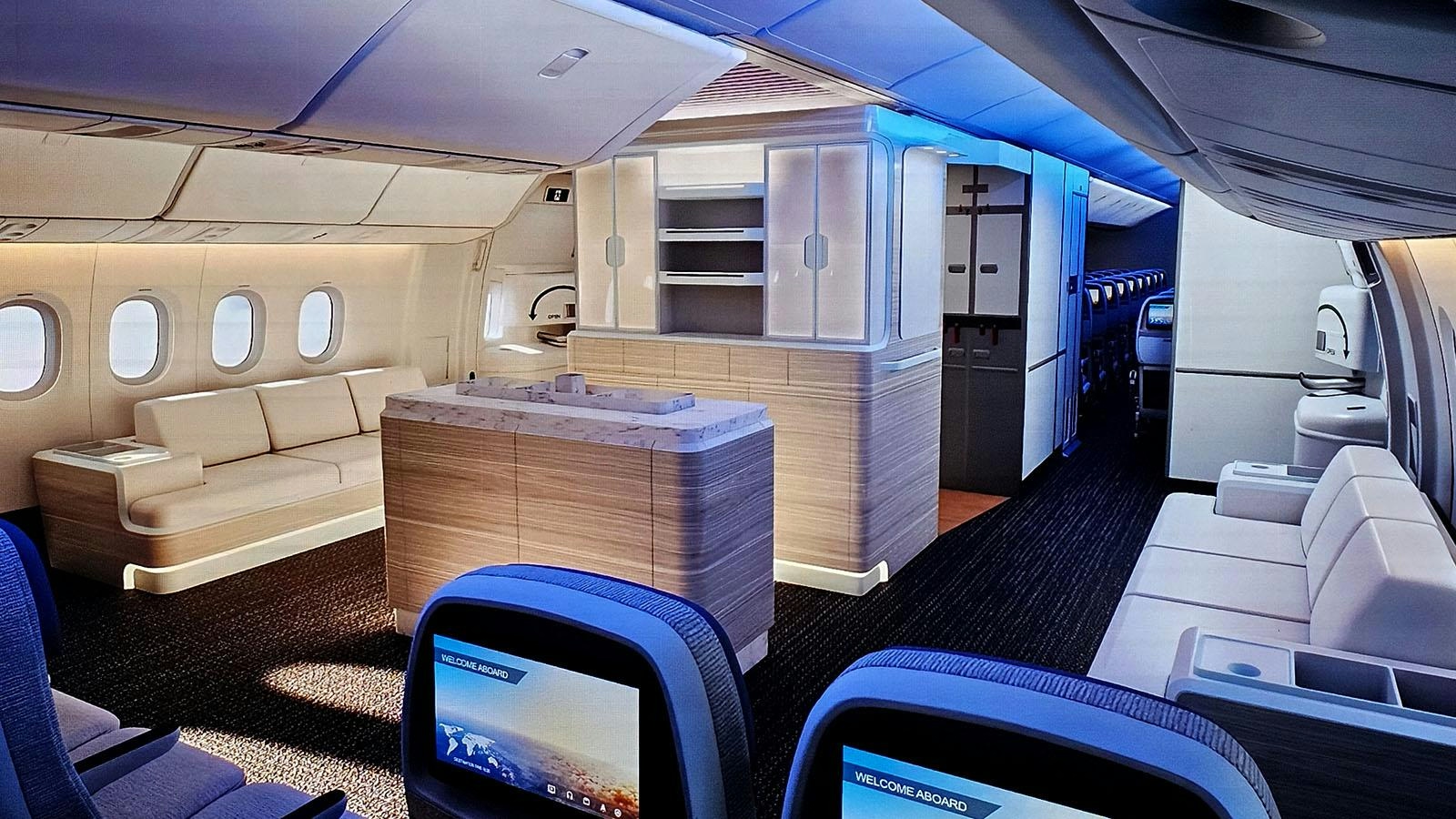
What Passengers Can Expect on Boeing’s New 777X Jet

How Ethiopian Airlines Became Africa’s Leading Carrier Amid Gulf Competition

Joby Aviation Extends Autonomous Flight Capabilities with Cross-Country Tour
