
حوّل رؤى الذكاء الاصطناعي إلى أفعال منسّقة

الرائج الآن
Categories
Growth in Aviation Spurs Demand for Mechanical Components
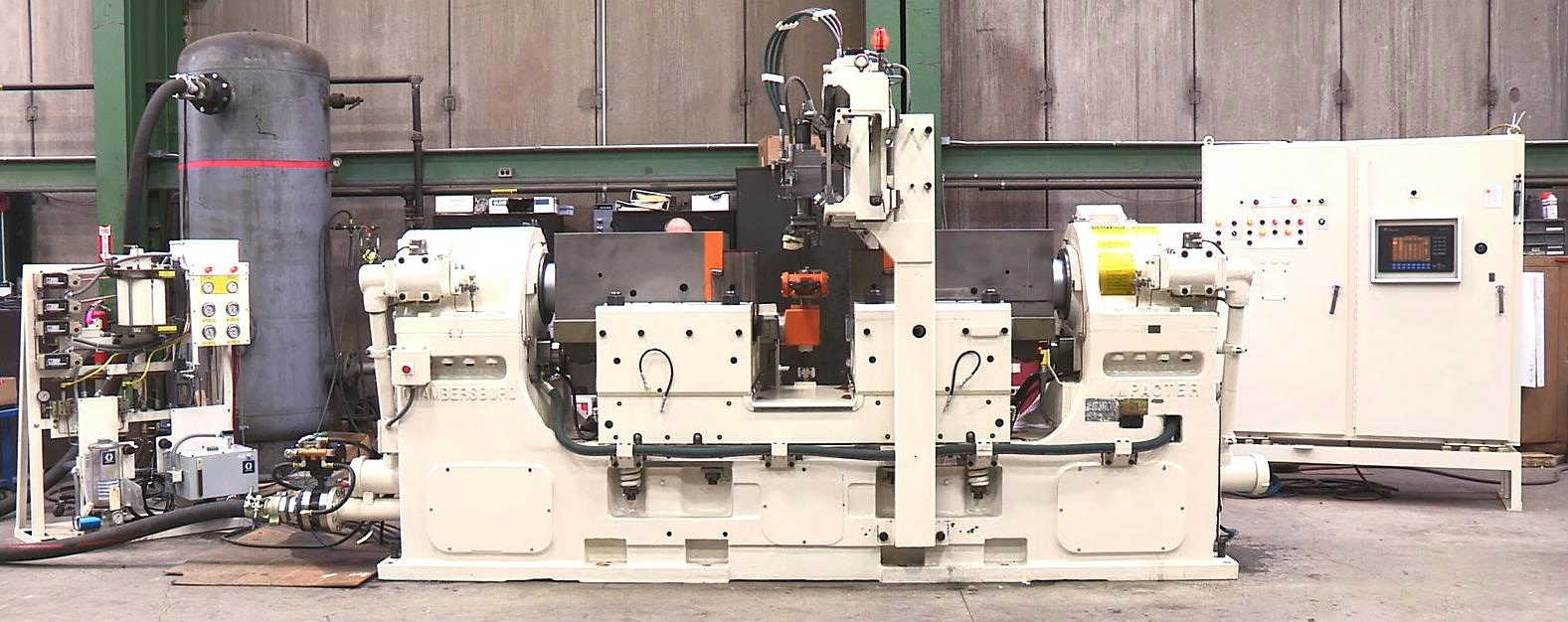
Growth in Aviation Spurs Demand for Mechanical Components
The global commercial aircraft fleet is projected to surpass 50,000 within the next two decades, marking an era of unprecedented expansion in the aviation sector. This growth is driving a significant increase in demand for advanced mechanical components, particularly those meeting the stringent standards of the aerospace industry. At the recent MTA Hanoi 2026 International Exhibition, Informa Markets, a leading organizer of B2B exhibitions, convened a seminar dedicated to advancing Vietnam’s precision machining capabilities to better serve this burgeoning market.
Expanding Fleet and Modernization Drive Demand
William Lim, Brand Director for Manufacturing, Machinery and Equipment in Asia at Informa Markets, opened the seminar by emphasizing the transformative shifts underway in aerospace manufacturing. Historically dominated by a few advanced economies, the industry is now evolving rapidly. Boeing’s Commercial Market Outlook 2026 forecasts the delivery of nearly 44,000 new aircraft over the next 20 years to accommodate rising air travel demand. Complementing this, Airbus’s Global Market Forecast 2026–2045 anticipates that by 2045, almost all commercial aircraft will be next-generation models, a substantial increase from 39% in 2026. This simultaneous expansion and modernization of the global fleet is intensifying the need for sophisticated aerospace components, materials, and precision mechanical parts.
The surge in demand presents considerable challenges for supply chain management. Airlines face increasing pressure to maintain operational continuity during peak travel periods, while tighter aftermarket inventories complicate the sourcing of critical parts. Consequently, there has been a marked rise in demand for life-limited parts, rotable components, and high-pressure turbine materials. Industry stakeholders are responding with a strategic focus on rapid aircraft-on-ground recovery and targeted investments. Honeywell, for instance, is broadening its market footprint, while Boeing projects a $4.9 trillion demand for commercial support services over the next two decades. The mechanical equipment forgings market is also expected to grow at a compound annual rate of 5.2% through 2035, propelled by global industrial production and increased automation.
Asia-Pacific and Vietnam’s Emerging Role
The Asia-Pacific region is becoming a pivotal driver of growth in aerospace manufacturing, prompting a realignment of the global supply chain. Beyond cost considerations, leading aerospace companies are prioritizing partnerships with manufacturers that offer advanced technology, precision machining expertise, a skilled workforce, and rigorous quality management systems. Vietnam is increasingly recognized as a vital link in this evolving supply chain, as evidenced by the expanding presence of major industry players such as Airbus, Safran, Boeing, Hanwha Aerospace, ST Engineering, and several Japanese firms.
William Lim underscored that the opportunities in aerospace manufacturing are reserved for companies capable of delivering uncompromising precision and quality. Success in this sector demands not only cutting-edge technology and machining solutions but also a highly skilled workforce and robust quality assurance frameworks.
Informa Markets is actively supporting this development through initiatives like the "Enhancing Vietnam's Precision Machining Capabilities for the Aerospace Industry" workshop. This platform aims to bridge technology, knowledge, and business communities, enabling Vietnamese manufacturers to access state-of-the-art solutions, enhance their capabilities, and integrate more deeply into the global aerospace supply chain.
Vietnam’s precision engineering sector has already demonstrated significant progress, with companies such as Aerospace Vietnam Co., Ltd. (MHIVA) exemplifying the country’s growing capacity to meet the aerospace industry’s evolving requirements. As the aviation sector continues its expansion, the demand for high-quality mechanical components will remain a defining factor in shaping its future trajectory.

Etihad and Swissport Extend Global Partnership

Sepehran Airlines B737 Returns to Mashhad After Tyre and Engine Issues

Etihad Deploys Widebody Fleet to Meet Strong Demand

Korean Air Finalizes $36.2 Billion Deal with Boeing

Australia’s RFDS Queensland Section Orders Six King Air 260Cs

Korean Air Finalizes Order for 103 Boeing Jets and Engines
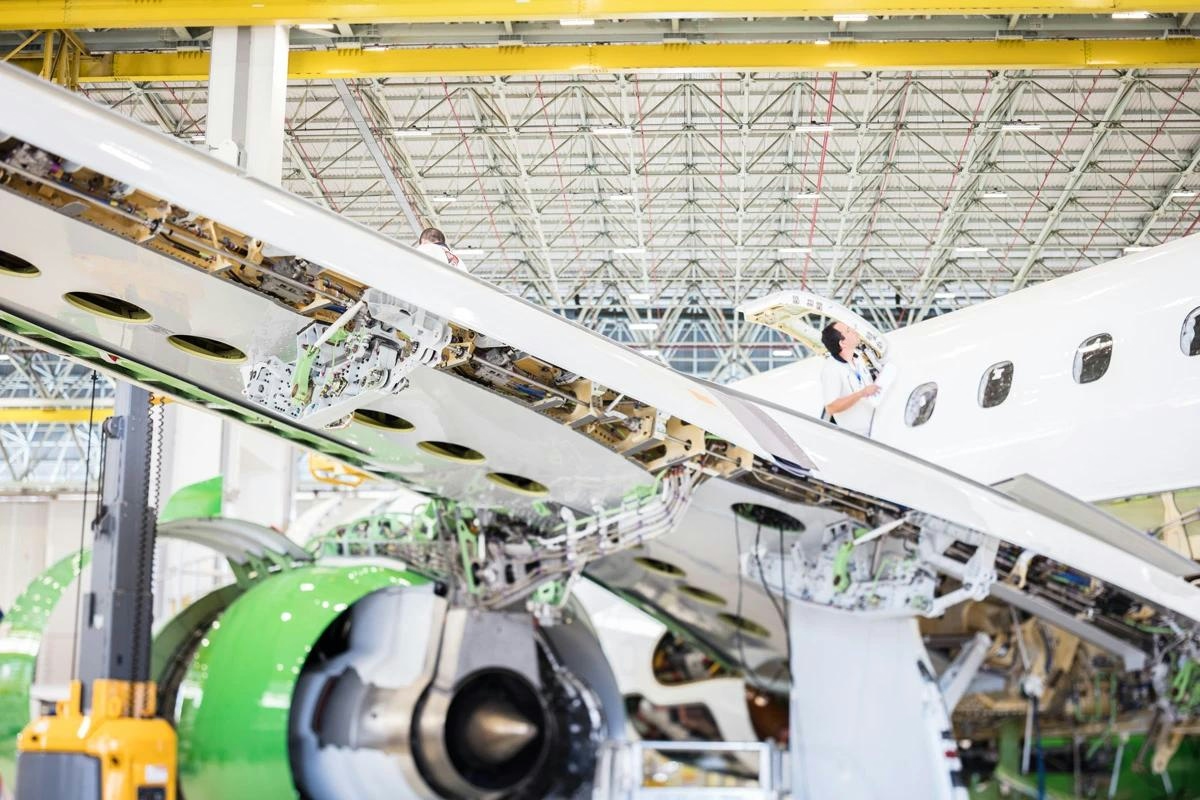
Embraer E195-E2 Features Distinctive Engine Placement Among Regional Jets

What Passengers Can Expect on Boeing’s New 777X Jet

How Ethiopian Airlines Became Africa’s Leading Carrier Amid Gulf Competition

Joby Aviation Extends Autonomous Flight Capabilities with Cross-Country Tour
