
حوّل رؤى الذكاء الاصطناعي إلى أفعال منسّقة

الرائج الآن
Categories
Hong Kong Expands Focus on Secondhand Aircraft Parts Industry
Hong Kong Expands Focus on Secondhand Aircraft Parts Industry
Hong Kong is emerging as a significant player in the global aviation sector by intensifying its investment in the secondhand aircraft parts market. This strategic move aims to enhance the city’s resilience and stability within the aviation supply chain, which has been severely disrupted by ongoing delivery delays and logistical challenges. Historically peripheral in this niche, Hong Kong’s renewed focus signals a deliberate shift toward capturing value in a rapidly expanding and essential segment of the aviation industry.
Growing Demand Amid Supply Chain Challenges
Each year, over 700 aircraft are retired worldwide, yet their economic utility often extends well beyond decommissioning. Critical components such as engines, landing gear, and cabin seats frequently retain substantial operational life. When properly dismantled, recertified, and reintroduced, these parts become vital resources for airlines and maintenance providers. The International Air Transport Association (IATA) reports a backlog exceeding 17,000 undelivered aircraft, a consequence of labor shortages and geopolitical tensions that are expected to persist into the mid-2030s. This backlog has intensified reliance on secondhand parts to maintain fleet operations, driving robust demand in the market.
Industry analysts forecast that the global market for used aircraft components will nearly double, growing from $27.92 billion in 2024 to $56.64 billion by 2035. Hong Kong’s entry into this sector is viewed not only as a pursuit of lucrative commercial opportunities but also as a strategic effort to strengthen global supply chain resilience amid ongoing uncertainties.
Building Expertise Through Partnerships
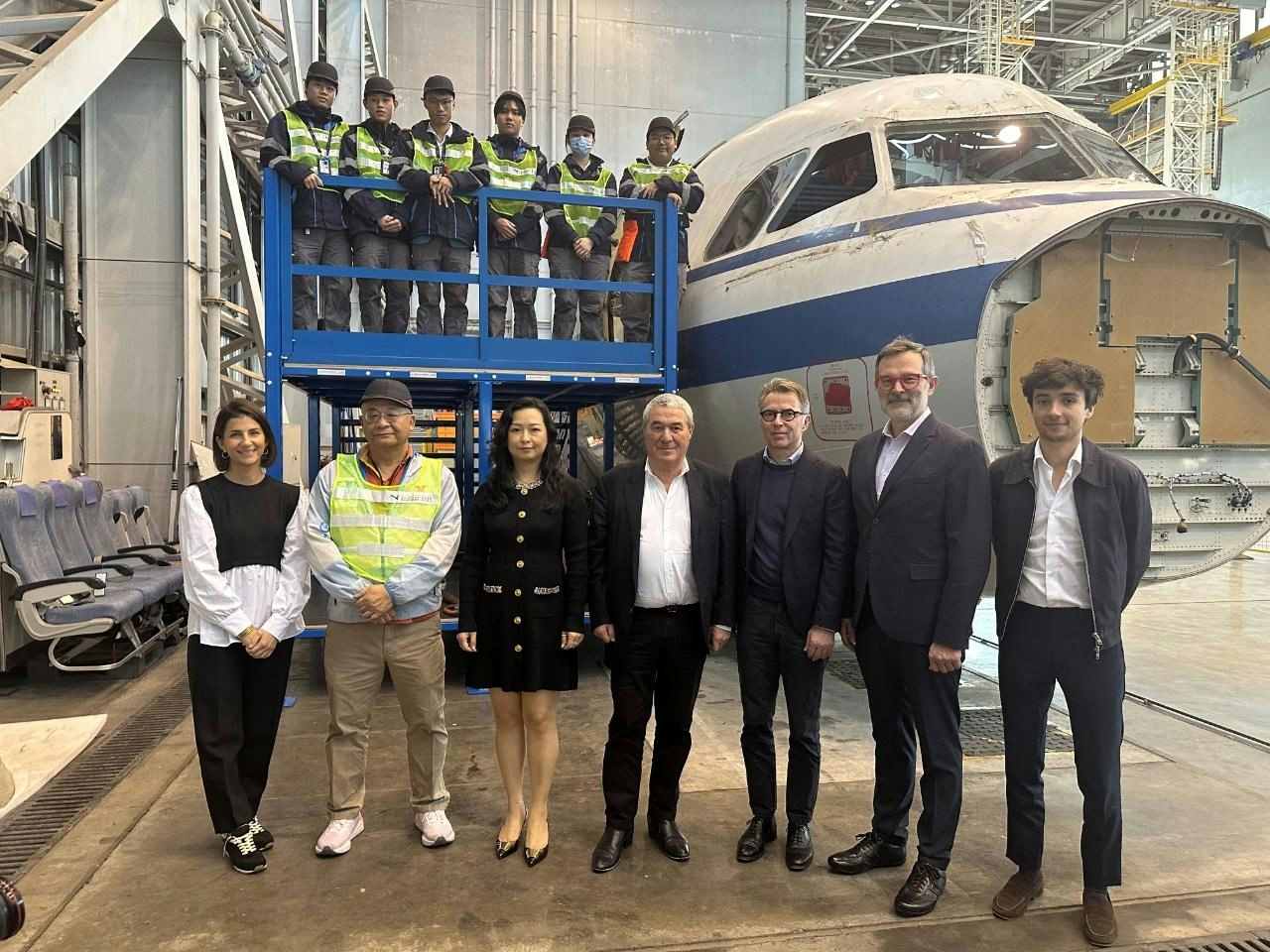
Despite its world-class airport facilities and advanced logistics infrastructure, Hong Kong is relatively new to the specialized field of aircraft part reclamation. Rather than developing capabilities independently, the city is leveraging collaborations with experienced industry players. A notable example is the recent shipment of a training mock-up—a section of a retired Airbus A319 cabin—from Chengdu to Hong Kong by the Elior Group. This facility serves as a practical training site where technicians learn the precise techniques required to dismantle aircraft safely and efficiently, ensuring valuable components can be salvaged and certified for reuse.
Veteran aviation engineer Martin Law Tat-keung, with 35 years of experience in aircraft safety, now leads training programs focused on reverse engineering aircraft disassembly. His expertise exemplifies the knowledge transfer essential to establishing Hong Kong as a credible hub for secondhand aircraft parts.
Navigating Challenges and Competition
Hong Kong’s ambitions in this sector face significant hurdles. The city must contend with complex international trade regulations and ongoing supply chain volatility. Moreover, it confronts intense competition from established global players who are reinforcing their market positions through exclusive sourcing agreements, investments in advanced restoration technologies, and strategic alliances.
Regulatory scrutiny is also intensifying, with authorities demanding strict compliance with safety and environmental standards. Hong Kong’s ability to meet these requirements while fostering innovation and operational efficiency will be critical to its success.
As Hong Kong accelerates its development in the secondhand aircraft parts industry, its future role will depend on adapting to evolving regulatory landscapes and competing effectively in a dynamic global market.

Etihad Airways Suspends Airbus A380 Flights on Key Route

Aditya Birla Group Seeks Approval for Aircraft Leasing in GIFT City

Qatar Airways Highlights Innovation and Connectivity at Arabian Travel Market 2026

Hong Kong's Five-Year Plan Includes Andrew Fan's Aircraft Parts Processing Hub Proposal

ACIA Aero Leasing Delivers ATR72-600 to Air Nostrum

RTX Appoints Jill Albertelli as Head of Pratt & Whitney

TAT Technologies Joins Beyond Aero Hydrogen Aircraft Program

AURAK Study Highlights Barriers to Air Taxi Adoption in Emerging Economies

Xiamen Air Selects Altitude for 787 Maintenance at Heathrow

Etihad and Swissport Extend Global Partnership
