
حوّل رؤى الذكاء الاصطناعي إلى أفعال منسّقة

الرائج الآن
Categories
How Airline Technology Is Changing U.S. Domestic Travel in 2026
How Airline Technology Is Changing U.S. Domestic Travel in 2026
A significant transformation is quietly reshaping the landscape of domestic air travel in the United States. In 2026, technological advancements have moved well beyond the era of digital boarding passes and self-service kiosks. Artificial intelligence, biometric identity verification, and next-generation connectivity are now integral to nearly every phase of the passenger journey, fundamentally redefining the travel experience from curbside check-in to final arrival.
Biometric Security Becomes Standard Practice
One of the most prominent developments is the widespread implementation of TSA PreCheck Touchless ID. Since January, the Transportation Security Administration has expanded its biometric facial recognition program to an additional 50 airports, bringing the total number of participating locations to 65 nationwide. This system rapidly matches travelers’ faces to government photo records, eliminating the need for physical identification at security checkpoints. Major airlines such as Alaska, American, Delta, Southwest, and United have integrated this technology at key hubs including Houston, Washington Dulles, Boston, Miami, and Orlando. For TSA PreCheck members, this advancement translates into a faster, more seamless security process that requires no physical documents.
Connectivity and AI Transform the Travel Experience
The expectations surrounding in-flight connectivity have evolved considerably. Free high-speed Wi-Fi, once considered a premium amenity, has become a standard offering. Airlines like United and British Airways are deploying Starlink satellite Wi-Fi across their fleets, while American and Southwest provide complimentary internet access to frequent flyer members. This shift reflects both growing passenger demand and the recognition that uninterrupted connectivity is a critical differentiator, particularly for business travelers who rely on consistent internet access at cruising altitude.
Behind the scenes, artificial intelligence is playing a pivotal role in enhancing airline operations. AI and machine learning technologies are now central to optimizing routes, improving fuel efficiency, and delivering personalized passenger services. Predictive maintenance systems enable airlines to identify mechanical issues before they cause delays, thereby improving safety and reliability. Additionally, AI-driven scheduling and crew management tools allow carriers to respond more flexibly to disruptions, minimizing inconvenience for travelers.
Enhanced Cabins and Personalized Travel
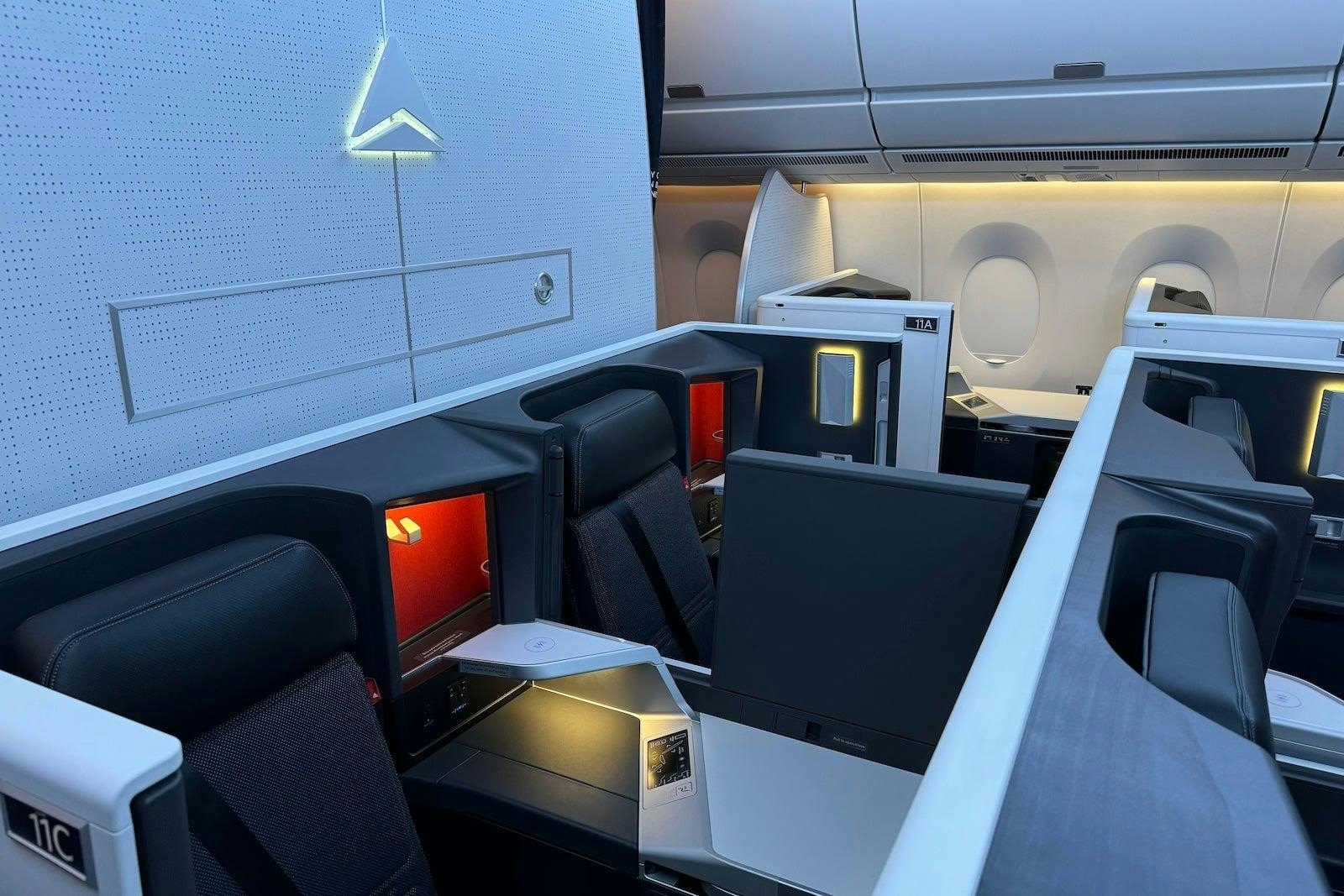
Technological innovation extends into the cabin environment as well. Leading U.S. airlines are introducing upgraded premium seating and redesigned interiors on domestic flights to meet the evolving preferences of younger travelers, particularly Gen Z and millennials. These demographics are driving demand for more personalized and cost-effective travel experiences. In response, airlines are incorporating digital touchpoints and tailoring services to individual passenger preferences, creating more customized journeys.
Industry Challenges Amid Technological Progress
Despite these advancements, the airline industry continues to confront significant challenges. Economic uncertainty has tempered growth prospects, while recent regulatory changes have introduced additional complexities that test the sector’s adaptability. The anticipated arrival of civil supersonic travel remains uncertain, hindered by ongoing technological and regulatory obstacles.
In response, competitors are accelerating their digital transformation efforts and increasingly leveraging generative AI to enhance both operational efficiency and customer experience. As airlines integrate these innovations, the U.S. domestic travel sector in 2026 is characterized by unprecedented convenience alongside the necessity for resilience in a rapidly evolving environment.

Etihad Airways Suspends Airbus A380 Flights on Key Route

Aditya Birla Group Seeks Approval for Aircraft Leasing in GIFT City

Qatar Airways Highlights Innovation and Connectivity at Arabian Travel Market 2026

Hong Kong's Five-Year Plan Includes Andrew Fan's Aircraft Parts Processing Hub Proposal

ACIA Aero Leasing Delivers ATR72-600 to Air Nostrum

RTX Appoints Jill Albertelli as Head of Pratt & Whitney

TAT Technologies Joins Beyond Aero Hydrogen Aircraft Program

AURAK Study Highlights Barriers to Air Taxi Adoption in Emerging Economies

Xiamen Air Selects Altitude for 787 Maintenance at Heathrow

Etihad and Swissport Extend Global Partnership
