صورة

حوّل رؤى الذكاء الاصطناعي إلى أفعال منسّقة

انضم إلى قائمة الانتظار لـ AeroGenie اليوم!

الرائج الآن

Categories

How Boeing 777X Crew Will Rest on Ultra-Long Flights
January 11, 2026By ePlane AI
How Boeing 777X Crew Will Rest on Ultra-Long Flights
0
0
Boeing 777X
Crew Rest Compartments
Ultra-Long-Haul Flights

How Boeing 777X Crew Will Rest on Ultra-Long Flights

The Boeing 777X has been specifically engineered to serve ultra-long-haul routes, where managing crew fatigue is critical for both flight safety and regulatory compliance. Airlines such as Lufthansa, operating via Frankfurt, and Emirates, flying through Dubai, are preparing to deploy the 777X on flights exceeding 14 hours. To support augmented crews and maintain operational readiness on these extended journeys, the aircraft incorporates certified, concealed rest compartments designed to meet stringent regulatory standards.

Modern Crew Rest Facilities and Certification

On long-haul widebody aircraft, dedicated crew rest areas are mandatory and strictly off-limits to passengers. These spaces are reserved exclusively for on-duty crew members to ensure they receive adequate rest and comply with duty time limitations. Rest periods typically range from one to three and a half hours, depending on the flight duration and crew size.

The Federal Aviation Administration (FAA) classifies crew rest facilities into three categories. Class 1 compartments are enclosed spaces equipped with horizontal bunks, suitable for both flight and cabin crew. Class 2 facilities consist of lie-flat business class seats approved for flight crew use only, while Class 3 areas involve reclining economy seats curtained off, generally for cabin crew when dedicated bunks are unavailable. Older aircraft models, such as the Boeing 767, often rely on Class 2 and Class 3 arrangements due to the absence of built-in rest compartments. The 777X, however, eliminates these compromises by providing dedicated, enclosed Class 1 rest areas, enhancing crew comfort and rest quality.

Layout and Amenities of the 777X Crew Rest Areas

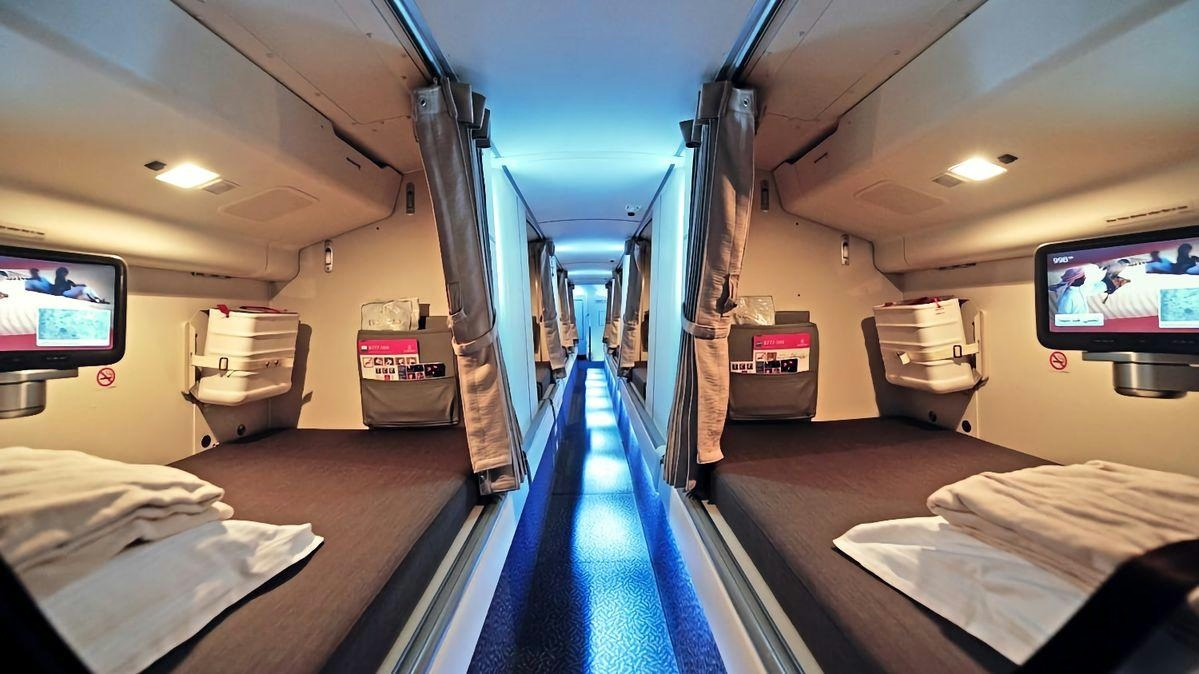
The Boeing 777X features two separate crew rest areas: one designated for pilots and another for cabin crew. The flight crew rest compartment is located near the cockpit to allow quick access during emergencies. It typically includes two bunks and may also feature an additional business-class-style seat. These compartments are equipped with temperature controls, power outlets, reading lights, uniform hooks, and in-flight entertainment screens. Each bunk is fitted with a seatbelt and has direct intercom connections to both the flight deck and cabin crew, ensuring seamless communication.

The cabin crew rest area is generally situated near the tail or within the lower fuselage and contains between four and eight bunks, with some configurations accommodating up to ten. Bunks may be arranged in a one-up, one-down layout or in a narrow, aisle-separated “coffin-style” configuration. Although these spaces are more confined than the pilot rest areas, they provide essential amenities such as blankets, pillows, and sound-dampening curtains to ensure privacy and comfort.

Regulatory Considerations and Market Implications

Regulations typically prohibit the use of crew rest compartments during taxi, takeoff, and landing. However, newer aircraft models like the Boeing 777-9 and 787-8 have received special FAA certification allowing exceptions under certain conditions, reflecting evolving regulatory approaches to crew rest on ultra-long flights.

The 777X’s crew rest solutions are also influenced by broader industry dynamics. The FAA’s ongoing scrutiny of emissions waivers, Boeing’s production pace, and delivery schedules all affect how rapidly airlines can integrate these ultra-long-haul aircraft into their fleets. Competitors are closely monitoring these developments as airlines adjust operational models to accommodate extended flight durations. Market analysts project Boeing’s return to positive free cash flow by 2026, a milestone expected to further stimulate innovation and competitiveness in crew rest design and overall ultra-long-haul operations.

By integrating advanced rest facilities and navigating complex regulatory and market pressures, the Boeing 777X aims to establish new benchmarks for crew welfare and operational efficiency on some of the world’s longest commercial routes.

Comments

  • A

    Alvaro

    "How Boeing 777X Crew Will Rest on Ultra-Long Flights"? The correct answer is: In the bottom of the ocean.

More news
Fw 187 Falke: A Faster but Overlooked Fighter Than the Bf 109

Fw 187 Falke: A Faster but Overlooked Fighter Than the Bf 109

Fw 187 Falke: A Faster but Overlooked Fighter Than the Bf 109 Development and Performance In 1937, Focke-Wulf introduced the Fw 187 Falke, a fighter aircraft that outpaced the Messerschmitt Bf 109, which was then the Luftwaffe’s frontline fighter. Remarkably, the Falke achieved this despite utilizing the same Junkers Jumo 210 engines as the Bf 109. It was approximately 80 km/h faster, had double the operational range, and weighed nearly twice as much, yet still managed to surpass the speed of its single-engine rival. Despite these impressive attributes, only nine Fw 187s were ever built, and the Luftwaffe never adopted the aircraft for active service. Instead, the limited number produced were assigned to defend the very factory where they were manufactured. The Fw 187 remains one of the most debated aircraft in German aviation history, partly due to conflicting documentation and varying performance reports. The aircraft was initially conceived as a private venture by Kurt Tank in 1935, aiming to create a single-seat, long-range fighter distinct from the Luftwaffe’s favored heavy twin-engine "Zerstörer" concept. The first prototype flew in the spring of 1937, although details such as the pilot and exact date remain uncertain. From the third prototype onward, the design was modified to include a lengthened fuselage and a second seat for a radio operator, reflecting changing operational requirements. Performance figures for the Falke vary among sources. Some claim the initial prototype reached speeds of 523 to 525 km/h, roughly 80 km/h faster than the Jumo-powered Bf 109B. However, official Luftwaffe data suggest more conservative speeds of 457 km/h at sea level and 496 km/h at 4,000 meters, reducing the speed advantage to about 35 km/h. Testing at Rechlin recorded the second prototype achieving 501 km/h at 3,000 meters. Regardless of the exact figures, the Falke’s ability to match or exceed the Bf 109’s speed while carrying twice the weight and fuel was a notable aerodynamic achievement. One prototype, equipped with Daimler-Benz engines and an experimental cooling system, reportedly reached 635 km/h in October 1939. This figure, often cited in literature, applied only under specific low-altitude test conditions and did not reflect operational performance. Operational History and Legacy Despite its technical promise, the Fw 187 struggled to secure a role within the Luftwaffe’s strategic framework. It was perceived as an intermediate design, neither as agile as the single-seat Bf 109 nor as heavily armed as the twin-engine Bf 110 destroyer. This ambiguous positioning left the Falke without a clear operational niche. Consequently, it failed to generate significant interest from military planners or the aviation market. The Bf 109 had already established itself as the Luftwaffe’s primary fighter, overshadowing the Falke’s potential and consigning it to relative obscurity. The few Fw 187s produced were relegated to factory defense duties in Bremen throughout the war, never seeing frontline combat. The Fw 187 Falke remains a compelling example of an advanced and capable fighter that, despite its advantages, never found its moment in the Luftwaffe’s evolving air combat doctrine.
SkyDrive to Assess eVTOL Medical Logistics Routes in Mumbai and Delhi with Air India and Suzuki

SkyDrive to Assess eVTOL Medical Logistics Routes in Mumbai and Delhi with Air India and Suzuki

SkyDrive, Air India, and Suzuki Collaborate on eVTOL Medical Logistics in Mumbai and Delhi Japanese electric vertical takeoff and landing (eVTOL) developer SkyDrive Inc. has entered the route-evaluation phase of a joint feasibility study focused on medical air logistics in India. This initiative, undertaken in partnership with Air India and Suzuki Motor Corporation, was formalized through a Memorandum of Understanding signed on July 31, 2026. The project aims to alleviate critical transport challenges in Mumbai and the Delhi National Capital Region (NCR) by utilizing eVTOL aircraft to overcome severe urban congestion. Prioritized Use Cases for Medical Air Transport The study concentrates on three primary use cases: the emergency transport of radioactive isotopes, organ and medical transport, and logistics for aircraft parts. These routes were selected in response to the rapid urbanization of India’s major cities, which has resulted in significant traffic congestion and frequent delays affecting urgent medical and aviation shipments. The first route under evaluation involves the emergency delivery of radioactive isotopes from a manufacturing facility in Mumbai to leading hospitals. These isotopes, vital for cancer diagnostics and treatment, have extremely short half-lives, necessitating immediate delivery post-production. SkyDrive’s eVTOL aircraft are designed to circumvent road traffic, ensuring timely and reliable transport that preserves the efficacy of these sensitive pharmaceuticals. A second route focuses on organ and emergency medical transport within the Delhi NCR. Transplant surgeries and critical care depend heavily on swift inter-hospital transfers, yet Delhi’s chronic traffic congestion can extend ground transport times to between 30 and 90 minutes. SkyDrive projects that its compact eVTOL vehicles could reduce these journeys to 10–15 minutes, potentially improving patient outcomes and saving lives. Addressing Aviation Sector Logistics Beyond medical applications, the study also explores the use of eVTOL aircraft to streamline logistics in the aviation sector. Maintenance operations at major airports are often delayed by traffic gridlock, impeding the timely delivery of essential aircraft parts and resulting in costly Aircraft on Ground (AOG) situations. The proposed eVTOL route aims to connect collection hubs and maintenance bases near Delhi’s Indira Gandhi International Airport, thereby reducing aircraft downtime and enhancing operational efficiency. Challenges and Industry Implications Despite the promising benefits, the project faces several challenges. Ensuring the safety and reliability of eVTOL operations in densely populated urban environments remains paramount. Additionally, the consortium must navigate complex regulatory frameworks and work to secure public acceptance for air-based logistics solutions. Market response has been encouraging, with increasing interest from healthcare providers and logistics companies eager to adopt eVTOL technology for time-sensitive deliveries. The initiative is also stimulating competition within the eVTOL sector, prompting other companies to accelerate their technological development and service offerings. Future operations will require close coordination with Indian government and regulatory authorities. SkyDrive, Air India, and Suzuki intend to continue their research through ongoing stakeholder engagement as they assess the feasibility and potential impact of eVTOL medical logistics in India’s largest metropolitan areas.
Delta Flight Diverted to St. John's Due to Engine Issue

Delta Flight Diverted to St. John's Due to Engine Issue

Delta Flight Diverted to St. John’s Following Engine Malfunction On the evening of August 24, 2026, a Delta Air Lines transatlantic flight was forced to make an unscheduled landing in St. John’s, Newfoundland and Labrador, after a mechanical issue arose with one of the aircraft’s engines. The Airbus A330-300, carrying 267 passengers and 13 crew members, had departed from New York’s John F. Kennedy International Airport en route to Rome when the flight crew opted to divert as a precautionary measure. Response and Passenger Care Delta Air Lines confirmed that standard safety protocols were strictly followed throughout the incident. The airline issued an apology to affected customers for the disruption and provided meal and hotel accommodations while arranging onward travel. Subsequently, the passengers were flown back to New York, where Delta staff have been assisting with rebooking to their final destinations. The airline also indicated that it is considering additional compensation for those impacted by the aborted journey. Regulatory and Industry Implications The diversion is anticipated to attract regulatory scrutiny and may trigger formal safety investigations into the cause of the engine malfunction. Industry experts suggest that such events often lead to heightened examination of an airline’s operational safety measures and can result in insurance claims. In the aftermath, competing carriers may seek to reassure travelers by emphasizing their own safety records, aiming to retain customer confidence amid concerns raised by the incident. Delta reiterated its commitment to passenger safety and expressed regret for the inconvenience caused. The company confirmed it is cooperating fully with relevant authorities as the situation undergoes review.
Challenges Facing African Airlines Amid Expansion Efforts

Challenges Facing African Airlines Amid Expansion Efforts

Challenges Facing African Airlines Amid Expansion Efforts African airlines find themselves trapped in a challenging cycle: the necessity to modernize fleets and expand cross-border operations to achieve economies of scale contrasts sharply with their limited financial resources and constrained market reach. The continent’s aviation history is punctuated by the rise and fall of ambitious carriers—such as the iconic Air Afrique and numerous national and private operators—whose failures highlight enduring structural difficulties within the industry. Structural and Financial Barriers to Growth At the heart of the issue lies a paradox. Competing effectively in the global aviation market requires operating modern, fuel-efficient aircraft at scale. In established markets like North America, Europe, and Southeast Asia, profitability depends on high fleet utilization, dense route networks, and the ability to distribute fixed costs—including maintenance, crew training, and spare parts—across a large operation. African airlines, however, typically operate small fleets of three to six aircraft on fragmented routes. This limited scale inflates their Cost per Available Seat Kilometre (CASK), rendering them highly susceptible to operational disruptions. For instance, grounding a single aircraft for technical reasons can eliminate up to a third of an airline’s schedule, leaving passengers stranded and forcing costly emergency leasing arrangements. Industry experts recommend a minimum fleet size of 15 to 20 standardized aircraft to build operational resilience. Yet, acquiring such fleets remains a formidable challenge. African carriers face significant financing obstacles as international lessors and financiers remain cautious due to sovereign risk, currency volatility, and legal uncertainties—particularly concerning aircraft repossession. Despite the protections offered by the Cape Town Convention, bureaucratic delays in deregistration and recovery processes have undermined lessor confidence. Consequently, African airlines often must pay three to six months of lease rentals upfront, tying up vital working capital. Moreover, they incur monthly dry-lease rates that are 25% to 45% higher than those paid by European or Asian counterparts for identical aircraft models. Operational Challenges and Competitive Pressures These financial constraints are exacerbated by rising operational costs, geopolitical uncertainties, and potential delays in aircraft deliveries. Reliable access to materials and spare parts is essential, yet supply chain disruptions further increase costs and reduce operational efficiency. Meanwhile, the competitive environment is intensifying. Africa is emerging as one of the fastest-growing air travel markets globally, with carriers like Ethiopian Airlines aggressively expanding their fleets and setting benchmarks that may compel other regional operators to follow. However, the concentration of capacity among a few large carriers underscores the uneven competitive landscape and the mounting pressures faced by smaller airlines. In this complex and demanding environment, African airlines must navigate a web of financial, operational, and regulatory challenges merely to survive, let alone prosper. Without substantial investment in fleet modernization and regional integration, the persistent cycle of underperformance and collapse is likely to continue, even as demand for air travel across the continent grows.
Bluetail Surpasses 30 Million Aircraft Records Digitized, Marking Milestone Year for AI-Powered Aviation

Bluetail Surpasses 30 Million Aircraft Records Digitized, Marking Milestone Year for AI-Powered Aviation

Bluetail Surpasses 30 Million Aircraft Records Digitized, Marking Milestone Year for AI-Powered Aviation SCOTTSDALE, AZ, August 25, 2026 — Bluetail, a prominent AI-driven aircraft records management platform, has announced the digitization of over 30 million aircraft records, establishing one of the largest digital datasets in the aviation industry. This achievement marks a significant milestone for the company, coinciding with its sixth anniversary and its second consecutive inclusion on the Inc. 5000 list of America’s fastest-growing private companies. Expanding Digital Footprint Across Diverse Fleets The extensive collection of digitized records encompasses a wide range of customers, from individual Cessna owners to large commercial fleets operating both in the United States and internationally. Bluetail emphasizes that the challenge of managing aircraft records is universal, irrespective of fleet size, and its platform is engineered to meet these demands at any scale. This growing repository of digital data underpins Bluetail’s business aviation learning model, empowering its AI to generate increasingly advanced insights related to maintenance, regulatory compliance, and aircraft lifecycle management. Roberto Guerrieri, CEO and co-founder of Bluetail, highlighted the company’s evolution: “When we started Bluetail, our goal was simple: move aircraft records from paper to digital. Digital, though, was only the first step. Those millions of records have since become real-time intelligence, forming the foundation of our business aviation learning model and the foundation our customers rely on to complete transactions, pass audits, and make maintenance decisions faster and with greater transparency. Every aircraft record we digitize strengthens that learning model, and the more records we digitize, the smarter our AI becomes, continuously extending what maintenance teams can do with our platform.” AI-Driven Innovations and Industry Context Bluetail’s momentum throughout 2026 has been propelled by the launch of several AI-powered products, including Ask Bluetail, Autonomous Logbooks, Lifecycle Timeline, and Compliance Check. These innovations provide maintenance and compliance teams with conversational, direct access to critical information previously locked within decades of scanned documents, streamlining workflows and enhancing operational efficiency. This milestone occurs amid a broader industry shift toward AI adoption and digital analytics in aviation. While challenges such as high implementation costs and data security concerns persist, the sector is witnessing increased investment driven by the pursuit of greater efficiency, safety, and improved passenger experiences. Leading aviation companies, including Lufthansa Technik and Boeing, are advancing AI applications in predictive maintenance and route optimization, underscoring a competitive environment where digital transformation is essential. As Bluetail continues to grow its digital records database, the company remains at the forefront of this technological evolution, delivering solutions that address the operational complexities and evolving requirements of modern aviation.
Northrop Grumman Approves E-2D Block II for Integration

Northrop Grumman Approves E-2D Block II for Integration

Northrop Grumman Advances E-2D Block II Integration Following Critical Design Review Northrop Grumman has reached a significant milestone in the modernization of its E-2D Advanced Hawkeye aircraft by successfully completing a pivotal government-led design review for the Block II upgrade. This approval marks a crucial step forward, enabling the company to proceed with the integration and testing of what is regarded as the most substantial enhancement to the airborne early warning and command and control platform to date. Enhancing Capabilities and Fleet Modernization With the design review concluded, Northrop Grumman is set to begin the integration and testing phase of the Block II upgrades, targeting delivery of the first enhanced E-2D by the end of the decade. The Block II package is designed to significantly improve situational awareness and crew efficiency, ensuring the aircraft remains effective against evolving threats. Central to this upgrade is the adoption of a modular open systems architecture combined with commercial off-the-shelf components, which are expected to reduce costs and facilitate long-term sustainment and modernization of the fleet. The company intends to implement these upgrades both on new aircraft currently in production and through retrofitting existing fleet units. This dual approach aims to expand the scope of fleet-wide modernization. However, the complexity of integrating these advanced systems across both new and legacy platforms presents considerable challenges. Northrop Grumman must ensure seamless integration while maintaining the high standards of reliability and performance that operators demand from the E-2D. Industry Impact and Future Outlook The successful design review has been met with a positive market response, bolstering investor confidence amid expectations for enhanced operational capabilities and efficiency. The upgrade’s emphasis on advanced situational awareness and improved crew support is viewed as a key competitive advantage within the airborne early warning sector. In response, rival firms are likely to accelerate their own development efforts to maintain technological parity in airborne early warning and battle management systems. The Block II upgrade encompasses a comprehensive overhaul of the E-2D’s mission-system software and hardware, extending the platform’s operational relevance well into the future. The E-2D program currently supports over 4,000 jobs across 411 companies in 40 U.S. states, highlighting its significant contribution to the U.S. defense industrial base and domestic manufacturing. As Northrop Grumman advances with integration and testing, the company faces the dual challenge of delivering cutting-edge capabilities while ensuring the continued reliability and sustainability of the E-2D fleet. The success of this effort will play a defining role in shaping the future of airborne early warning and command and control operations.
United Airlines to Launch Nonstop Flights from Denver to Paris

United Airlines to Launch Nonstop Flights from Denver to Paris

United Airlines to Launch Nonstop Flights from Denver to Paris United Airlines has announced the launch of daily nonstop service between Denver International Airport and Paris, commencing on May 27, 2027. This new year-round route will be operated using a Boeing 787-9 Dreamliner and represents a significant expansion at what the airline describes as its fastest-growing hub. The direct connection to the French capital will complement United’s existing Paris flights from Newark/New York, Washington Dulles, Chicago, and San Francisco. Strategic Expansion at Denver Hub Patrick Quayle, United’s senior vice president of global network planning and alliances, confirmed that Paris is the only new international destination currently planned from Denver. He emphasized the airline’s cautious and measured approach to growth, stating, “We’re adding capacity at a nice measured rate where the market can absorb it.” Since 2021, United has invested nearly $1 billion at Denver International Airport, expanding its service to over 200 destinations, including more than 20 international routes. The airline recently completed the first phase of an expansion at its pilot training facility in Denver’s Central Park neighborhood and is preparing for a second phase on a new 113-acre campus near the airport. Navigating Intensifying Competition United’s expansion at Denver occurs amid increasing competition from carriers such as Delta Air Lines and Alaska Airlines, both of which are introducing new long-haul routes to Paris and other European cities. This heightened competition is expected to influence demand for transatlantic flights, which may fluctuate in response to broader economic conditions and evolving travel trends. Industry analysts anticipate that rival airlines will likely respond with price adjustments, targeted marketing efforts, and network modifications to protect their market share. Broader International Network Growth In addition to the Denver-Paris route, United announced plans to introduce 10 new international destinations and three new routes across Europe and Asia. These include nonstop flights to Okinawa, Japan, from San Francisco; Toulouse, France, from Washington Dulles; and eight destinations from Newark Liberty, such as Luxembourg City, Marseille, Ibiza, Valencia, Terceira, Ljubljana, Olbia, and Catania. Other new routes will connect Los Angeles to Osaka and Washington, D.C., to Milan. United also intends to resume service from San Francisco to Tel Aviv, Israel. Supporting these expansions is the introduction of United’s latest international aircraft, the “Born to Explore” Airbus A321XLR. The aircraft’s first international flights are scheduled to begin on December 1, 2026, with service from Washington Dulles to Amsterdam and Dublin. Tickets for these flights will be available starting August 27. Additionally, United plans to reinstate several seasonal international routes for summer 2027, including flights from Newark/New York to Split, Bari, Glasgow, and Santiago de Compostela. As United continues to broaden its global network, the airline faces the challenge of balancing growing passenger demand with the complexities of a competitive and evolving transatlantic market.
Using Operational Data to Improve Aviation Maintenance

Using Operational Data to Improve Aviation Maintenance

Using Operational Data to Improve Aviation Maintenance The aviation industry is undergoing a profound transformation as global air traffic recovers and sustainability demands intensify. Airlines and operators are under increasing pressure to enhance operational resilience and cost efficiency while upholding the highest standards of passenger safety. At the heart of this challenge lies Maintenance, Repair, and Overhaul (MRO), a critical yet complex and costly sector that can represent up to 20% of an airline’s operational expenditure. Despite decades of stringent maintenance standards, regulatory oversight, and engineering advancements that have elevated technical safety and fleet reliability to unprecedented levels, the operational landscape for maintenance organizations is rapidly changing. MRO processes remain predominantly manual, reactive, and fragmented, with disparate IT systems spanning original equipment manufacturers (OEMs), operators, and service providers. Aircraft are frequently repaired only after failures occur, rather than through proactive risk anticipation enabled by integrated intelligence. Emerging Challenges and Market Pressures A confluence of factors is accelerating the imperative for intelligent automation in aviation maintenance. Rising operational costs have intensified scrutiny over every dollar spent, while sustainability mandates demand more efficient use of materials and energy. Aging fleets require more frequent inspections and unscheduled maintenance, compounding operational complexity. The increasing digitalization of aircraft introduces cybersecurity concerns, and the advent of hybrid-electric and hydrogen-powered aircraft adds new technical challenges. Simultaneously, the industry faces workforce shortages, particularly in skilled maintenance roles, alongside supply chain instability that delays parts delivery and undermines dispatch reliability. Limited hangar capacity further necessitates efficient resource utilization. Moreover, the proliferation of sensors and digital data has created an abundance of information, much of which remains underutilized due to fragmented systems and siloed data management. These pressures are prompting airlines and MRO providers to reconsider traditional maintenance paradigms. Market responses reveal a growing adoption of advanced technologies aimed at managing costs and addressing unforeseen issues in emerging aircraft platforms. Competitors increasingly rely on data-driven workflows to enhance efficiency and mitigate supply chain disruptions. From Data to Operational Intelligence The future of aviation maintenance hinges not on the mere accumulation of data but on the transformation of existing maintenance information into actionable operational intelligence. This evolution enables MRO functions to transition from being viewed as a tolerated cost center to becoming a strategic asset that actively supports aircraft uptime, safety, and sustainability objectives. Three Pillars of Intelligent MRO The shift from legacy maintenance systems to intelligent MRO is underpinned by three fundamental components. First, process mining utilizes the analysis of digital event logs to map and optimize maintenance workflows. This approach identifies bottlenecks, redundant procedures, and compliance risks, offering a transparent comparison between actual and intended processes. Such insights empower organizations to redesign workflows for enhanced efficiency. Second, workflow automation leverages integrated data to streamline documentation, compliance, and diagnostic activities. By reducing manual effort and minimizing errors, automation allows technicians to concentrate on higher-value tasks, improving overall productivity. Third, integrated intelligence harnesses operational data across previously fragmented systems to provide real-time visibility into fleet health, inventory status, and technician availability. This comprehensive perspective supports predictive maintenance strategies, reduces unplanned downtime, and strengthens decision-making capabilities. Looking Ahead As airlines generate unprecedented volumes of data, the opportunity lies in harnessing this information to proactively plan, execute, and optimize maintenance activities. By embracing data-driven, automated, and integrated approaches, the aviation industry is positioned to confront rising costs, meet sustainability mandates, and navigate operational complexities—thereby ensuring safer, more reliable, and efficient air travel in the years to come.
United Airlines Anticipates Airbus A321XLR Deliveries for 2027 Europe Expansion

United Airlines Anticipates Airbus A321XLR Deliveries for 2027 Europe Expansion

United Airlines Plans Major European Expansion with Airbus A321XLR Deliveries in 2027 United Airlines is preparing for a significant expansion of its European network in 2027, anchored by the anticipated delivery of Airbus A321XLR aircraft. The Chicago-based carrier intends to deploy the long-range, single-aisle jets on five new transatlantic routes, including destinations such as Luxembourg, Ibiza, and Toulouse. This expansion forms part of United’s largest international growth initiative to date, which will see the airline add service to ten new cities across Europe and Asia. Navigating Production Challenges and Fleet Modernization Patrick Quayle, United’s senior vice president of global network planning and alliances, acknowledged ongoing challenges with the A321XLR program, citing industry-wide production and supply chain constraints that have delayed deliveries for multiple airlines. Despite these setbacks, Quayle expressed confidence that United will receive a sufficient number of aircraft to support its planned schedule. The airline originally ordered the A321XLR in 2019 and aims to commence international service with the aircraft on December 1, 2026, launching flights from Washington Dulles to Amsterdam and Dublin. The A321XLR plays a pivotal role in United’s strategy to phase out its aging Boeing 757 fleet, offering enhanced fuel efficiency and extended range. As the new jets enter service, United is revising its fleet plans to accommodate potential manufacturer delays and to address the high labor costs associated with integrating new aircraft into its operations. Market Impact and Competitive Dynamics The A321XLR’s capability to operate profitable transatlantic routes with fewer seats than traditional widebody aircraft could disrupt the established hub-and-spoke model, intensifying competition on secondary routes in Europe and South America. This development presents a competitive challenge to Boeing, which currently lacks a comparable mid-range aircraft offering. United’s aggressive expansion may also attract regulatory scrutiny and pose logistical challenges as the airline manages fleet integration and secures route approvals. The expansion coincides with robust demand for European travel, which United expects to remain strong well into the autumn months. Quayle noted that flight schedules are no longer being reduced as sharply following the U.S. Labor Day holiday, with viable service extending into October and November. Other carriers, including Air Canada, have reported record revenue projections for September and October, driven by premium travelers seeking to avoid peak summer crowds and extreme heat. United itself reported no decline in European travel demand this summer, underscoring the strength of the market. While Airbus production delays have also affected the entry into service of United’s A321neo Coastliner fleet—intended for premium transcontinental flights—the airline continues to adapt its fleet and network strategies to maintain a competitive edge in the evolving transatlantic market.
ASL Aviation Expands Fleet with Two Boeing 747 Freighters

ASL Aviation Expands Fleet with Two Boeing 747 Freighters

ASL Aviation Expands Fleet with Two Boeing 747 Freighters ASL Aviation Holdings (ASL) has enhanced its long-haul cargo capabilities through the acquisition of two Boeing 747-400ERF freighters, previously operated within the ASL Group under lease agreements. The aircraft, registered as MSN 33516 (OE-IFB) and MSN 33945 (OE-IFD), are currently operated by ASL Airlines Belgium. Ownership of both freighters was officially transferred to ASL Aviation Holdings on August 7, 2026. Strategic Fleet Expansion The integration of these two Boeing 747-400ERFs, well-established components of the Group’s long-haul freighter fleet, represents a strategic effort to support ASL’s expanding global air cargo operations. This acquisition not only increases the company’s portfolio of owned aircraft but also aligns with its broader fleet and asset management strategy. ASL aims to strengthen its international air cargo platform and address the long-term operational requirements of its airline services and customers. The market has responded positively to ASL’s investment, reflecting confidence in the company’s commitment to bolstering its long-haul freighter business. This development occurs amid significant growth in the global freighter aircraft market, driven primarily by surging e-commerce demand and North America’s dominant market position. Operational and Market Challenges Despite the promising outlook, ASL faces challenges in integrating these large aircraft into its existing fleet. Maintaining operational efficiency and managing the elevated maintenance costs associated with the Boeing 747-400ERF will be critical as the company seeks to optimize the value of its expanded fleet. The competitive environment is also intensifying, with other major cargo carriers actively expanding their fleets. For instance, Atlas Air has recently placed an order for 20 Airbus A350Fs, while Cargojet has incorporated three Boeing 767-300Fs into its operations. These moves highlight a broader industry trend toward fleet expansion and strategic partnerships in response to growing demand. ASL Aviation Holdings’ latest acquisition underscores its dedication to growth and adaptability within a dynamic air cargo market, positioning the company to better serve its global customer base and respond effectively to evolving industry demands.
line









