
حوّل رؤى الذكاء الاصطناعي إلى أفعال منسّقة

الرائج الآن
Categories
Impact of AI on Aviation Jobs in Everett
Impact of AI on Aviation Jobs in Everett
Balancing Innovation and Workforce Concerns
The rapid advancement of artificial intelligence (AI) is generating a complex mix of anticipation and apprehension within Everett’s aviation industry. While AI is widely regarded as a catalyst for innovation, it also raises significant concerns about job security among workers. Recent Gallup polling reveals that nearly half of adults aged 18 to 29 (47%) now perceive AI as more harmful than beneficial, marking the largest increase in skepticism among any demographic group.
At the Farnborough Air Show in England, Wendy Poischbeg, CEO of The Greater Everett Chamber of Commerce, highlighted the continued importance of human involvement despite the growing integration of AI technologies. She emphasized that in aerospace, where safety is paramount, “The human element is number one. You cannot mess up once. AI has to be perfect every single time, especially when it comes to aerospace and putting people in the sky.” This perspective underscores the industry’s cautious approach to adopting AI, prioritizing human oversight to ensure reliability and safety.
Technological Adoption and Workforce Adaptation
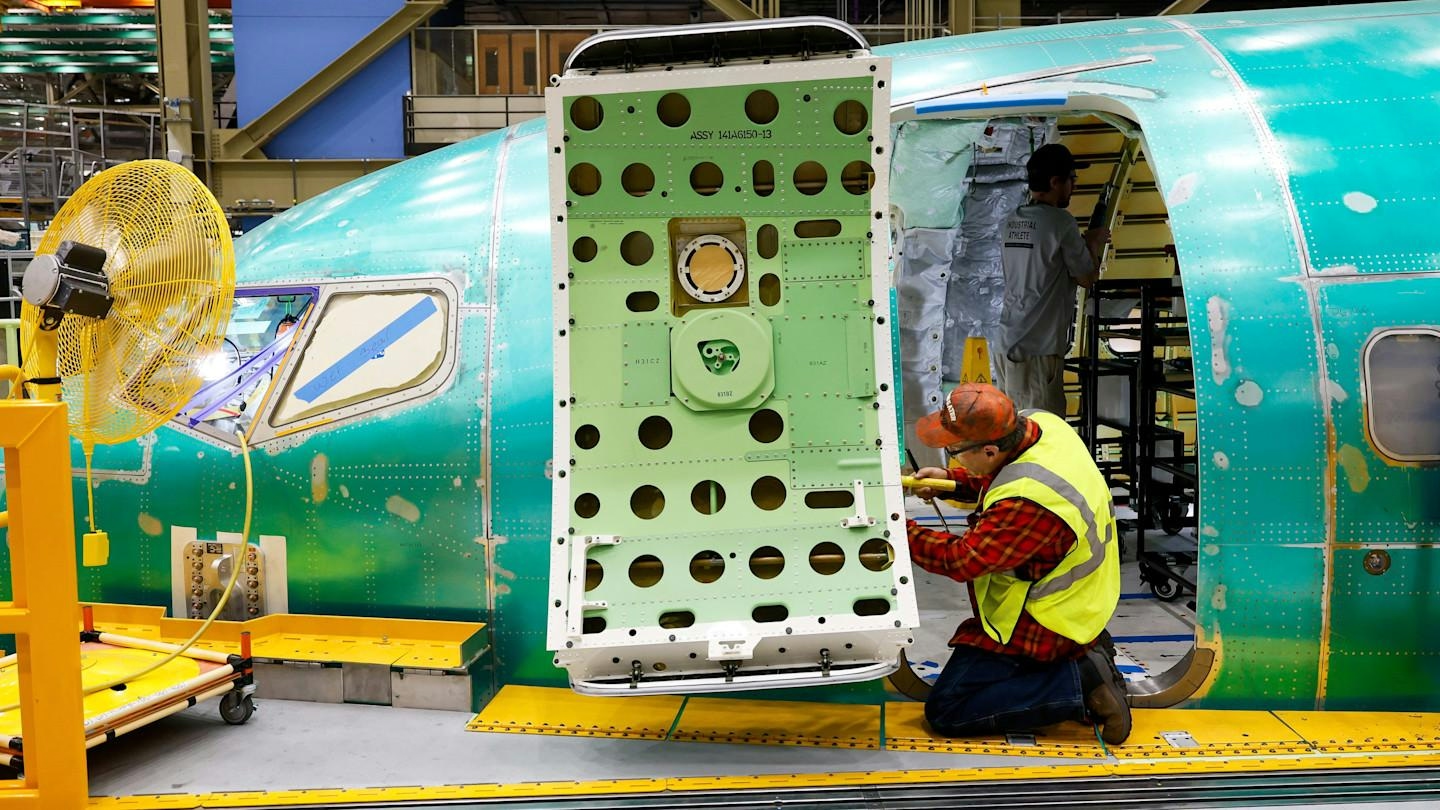
Everett’s aviation sector, led by major employers such as Boeing, is actively incorporating AI-driven innovations to enhance operational efficiency and safety. Boeing has introduced several AI applications, including a slide-in cart for 767 mechanics, photo-based AI tools for part inspections, and projected instructions for assembling the 777X wing. These advancements aim to improve production quality and streamline processes. However, they also necessitate that workers acquire new skills and adapt to evolving roles, fueling concerns about potential job displacement and the imperative for continuous workforce training.
For recent graduates and students, the impact of AI on career prospects is a pressing consideration. Many are carefully evaluating their professional paths in light of AI’s growing influence, while educational institutions are increasingly integrating AI-related skills into their curricula to prepare students for the changing job market. Poischbeg noted that workforce issues were a central topic of discussion with nearly every company she engaged at Farnborough, reflecting Snohomish County’s strong reputation for skilled labor and effective training programs.
“Washington State continues to be attractive because of our talent,” Poischbeg remarked. “I love being able to talk about our training programs and what is working.” She stressed that sustaining Everett’s position as a key aerospace production and supply chain hub depends on both technological innovation and a well-qualified workforce.
Outlook for Employment in the AI Era
Despite the transformative effects of AI, industry forecasts remain optimistic about employment growth in aviation. The sector anticipates a demand for more than 2.4 million new professionals by 2026, indicating that AI is reshaping job roles rather than eliminating them. Companies are responding by investing in workforce development initiatives and leveraging AI to enhance competitiveness without displacing workers outright.
As Everett continues to navigate the evolving technological landscape, maintaining a balance between embracing AI advancements and supporting human expertise will be essential. The city’s skilled labor force and commitment to training programs remain vital assets in attracting and retaining aerospace businesses amid the ongoing integration of artificial intelligence.

Etihad Airways Suspends Airbus A380 Flights on Key Route

Aditya Birla Group Seeks Approval for Aircraft Leasing in GIFT City

Qatar Airways Highlights Innovation and Connectivity at Arabian Travel Market 2026

Hong Kong's Five-Year Plan Includes Andrew Fan's Aircraft Parts Processing Hub Proposal

ACIA Aero Leasing Delivers ATR72-600 to Air Nostrum

RTX Appoints Jill Albertelli as Head of Pratt & Whitney

TAT Technologies Joins Beyond Aero Hydrogen Aircraft Program

AURAK Study Highlights Barriers to Air Taxi Adoption in Emerging Economies

Xiamen Air Selects Altitude for 787 Maintenance at Heathrow

Etihad and Swissport Extend Global Partnership
