
حوّل رؤى الذكاء الاصطناعي إلى أفعال منسّقة

الرائج الآن
Categories
IndiGo Flights Delayed Amid Airbus Software Update
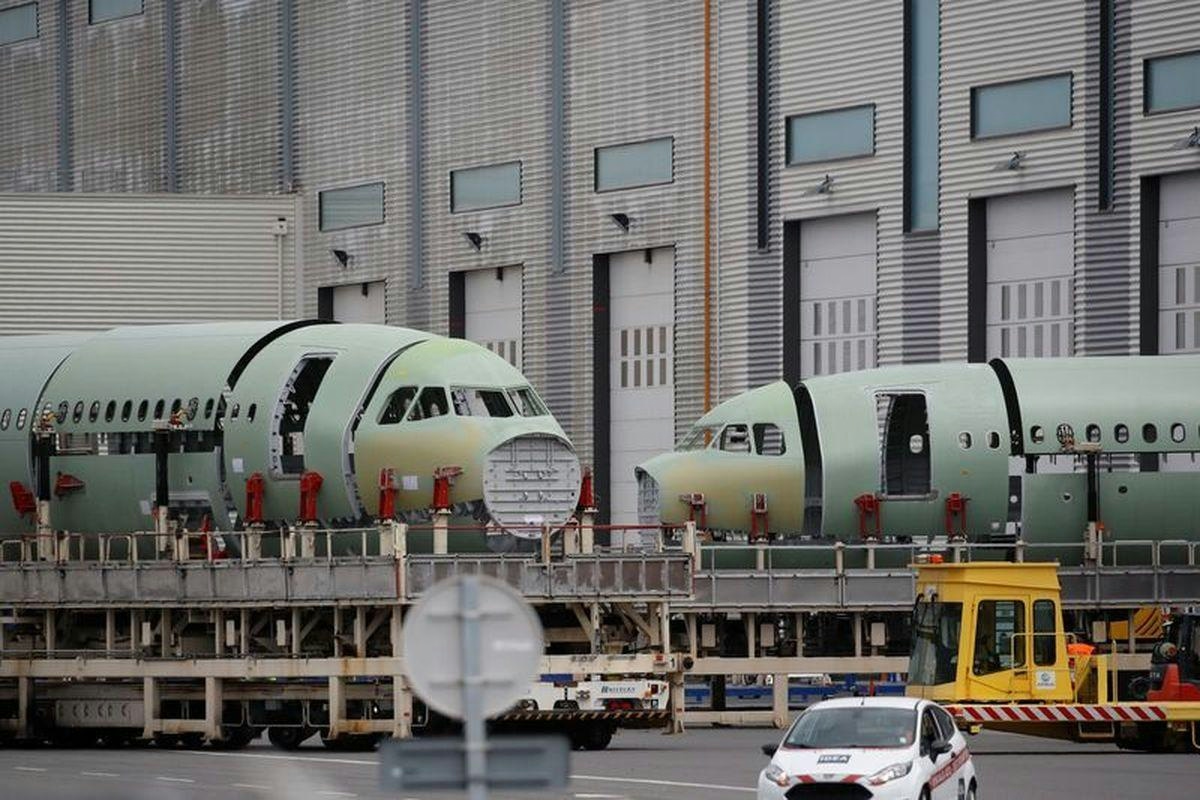
IndiGo Flights Delayed Amid Airbus Software Update
Travelers flying with IndiGo, India’s largest airline, have experienced significant delays this week as the carrier addresses a critical software update affecting its Airbus fleet. Departure boards across the country have been marked by postponed flights, with ground staff working extended hours. These disruptions are not due to typical causes such as weather or labor issues but stem from a mandatory safety directive related to the aircraft’s flight control systems.
The ELAC Software Vulnerability
The source of the delays lies in a required software patch for the Airbus A320 family, which constitutes the core of IndiGo’s fleet of over 300 aircraft. The update focuses on the Elevator Aileron Computer (ELAC) system, an essential component responsible for flight control. Airbus recently discovered that intense solar radiation, such as from solar flares, can in rare instances cause a “bit flip” in the ELAC’s memory. This anomaly has the potential to trigger an unexpected autopilot command, resulting in a sudden pitch-down maneuver.
Although the likelihood of this event is extremely low, the potential consequences are severe enough to prompt immediate action. The Directorate General of Civil Aviation (DGCA) in India, responding to a global safety alert, has mandated that affected aircraft be grounded until the software update is fully implemented. Similarly, the European Union Aviation Safety Agency (EASA) has issued an emergency directive requiring the replacement of ELAC computers on the most vulnerable planes before they can resume operations.
Broader Industry Implications
IndiGo is not isolated in confronting these operational challenges. Airlines worldwide, including American Airlines and Wizz Air, have reported delays as they undertake the necessary software updates and hardware replacements. The process demands that each aircraft be temporarily withdrawn from service, a significant logistical challenge for carriers operating high-frequency schedules. For IndiGo, which relies on a tightly coordinated network, even short-term disruptions have widespread effects.
An IndiGo spokesperson emphasized the airline’s commitment to safety and operational continuity, stating, “We are working closely with Airbus to ensure implementation as per their notification. While we carry out the necessary inspections, we are making every effort to minimize disruptions.” The airline has deployed teams to work continuously, aiming to complete the updates within days to reduce passenger inconvenience.
Prioritizing Safety Over Schedule
This swift and coordinated response reflects a broader evolution in aviation safety culture. Previously, such technical vulnerabilities might have remained unaddressed until a serious incident occurred. Today, even a single event—such as a recent JetBlue flight in the United States that safely landed despite encountering the issue—can prompt a global grounding and recall.
For IndiGo, an airline known for its punctuality, these delays represent a notable setback. However, both the airline and regulatory authorities have underscored that safety remains paramount. Passengers are advised to verify flight statuses before traveling to airports and to anticipate ongoing disruptions as the update process continues.
Despite the inconvenience, the rapid actions taken by airlines and regulators demonstrate a firm commitment to ensuring passenger safety above all else.

Etihad Airways Suspends Airbus A380 Flights on Key Route

Aditya Birla Group Seeks Approval for Aircraft Leasing in GIFT City

Qatar Airways Highlights Innovation and Connectivity at Arabian Travel Market 2026

Hong Kong's Five-Year Plan Includes Andrew Fan's Aircraft Parts Processing Hub Proposal

ACIA Aero Leasing Delivers ATR72-600 to Air Nostrum

RTX Appoints Jill Albertelli as Head of Pratt & Whitney

TAT Technologies Joins Beyond Aero Hydrogen Aircraft Program

AURAK Study Highlights Barriers to Air Taxi Adoption in Emerging Economies

Xiamen Air Selects Altitude for 787 Maintenance at Heathrow

Etihad and Swissport Extend Global Partnership
