صورة

حوّل رؤى الذكاء الاصطناعي إلى أفعال منسّقة

انضم إلى قائمة الانتظار لـ AeroGenie اليوم!

الرائج الآن

Categories

IndiGo Plans to Operate 550 Jets and Increase Ownership by FY2030

June 17, 2026By ePlane AI
IndiGo Plans to Operate 550 Jets and Increase Ownership by FY2030
0
0
IndiGo
Fleet Expansion
Aircraft Ownership

IndiGo Sets Ambitious Fleet Expansion and Ownership Goals by 2030

IndiGo, India’s largest airline, has announced plans to operate a fleet of 550 aircraft by fiscal year 2030, accompanied by a strategic shift towards increased ownership of its jets. The airline aims to raise the proportion of owned aircraft to between 30 and 40 percent of its total fleet, up from the current 20 percent, while continuing to operate the remainder under leasing arrangements. This move reflects IndiGo’s intent to balance operational flexibility with greater asset control amid evolving industry dynamics.

As of fiscal 2026, IndiGo’s fleet composition consisted of 75 percent operating leases, 20 percent owned aircraft, and approximately 5 percent on damp leases. The airline has expressed its intention to reduce reliance on older-generation and damp-leased aircraft, a decision that may influence its long-haul operations and future capacity expansion.

Financial Performance and Operational Challenges

IndiGo’s expansion ambitions come against a backdrop of financial challenges. The airline reported a net loss of Rs 24 billion for FY2026, largely attributed to foreign exchange volatility. Excluding foreign exchange fluctuations and exceptional items, the company stated that profits would have reached Rs 75 billion. To address currency risks, IndiGo is implementing measures such as hedging, internationalization of operations, and maintaining foreign currency deposits. The airline also reported a robust free cash balance of $3.8 billion (Rs 362 billion), providing a financial cushion for its growth plans.

Nevertheless, the airline faces significant headwinds, including elevated fuel prices, airspace disruptions, and a generally difficult operating environment. Industry analysts have expressed reservations about the feasibility of IndiGo’s rapid expansion, given recent losses and operational complexities.

Industry Growth and Competitive Dynamics

IndiGo’s fleet expansion is poised to intensify competition within the Indian aviation sector, prompting rival carriers to enhance their own capacities or adjust strategic priorities to protect market share. The Indian aviation market has witnessed rapid growth, with domestic carriers collectively placing orders for over 1,700 aircraft in recent years. The country’s fleet has expanded at a rate three times the global average over the past decade.

Management remains optimistic, citing India’s projected economic trajectory as a key driver of increased air travel demand. The country is expected to become the world’s largest economy by 2028, surpassing $7 trillion by 2030. IndiGo highlights that travel currently accounts for 23 percent of discretionary spending in India, a figure anticipated to rise further. Additionally, 90 percent of India’s population resides within 100 kilometers of an airport served by the airline, and a quarter of the global workforce entering the market will be from India.

Fleet and Service Expansion Plans

As of March 31, IndiGo operated 441 aircraft, with an outstanding order book of 901 jets—the largest of any airline worldwide. The carrier has been the leading recipient of Airbus deliveries globally for the past two years. IndiGo currently offers over 2,800 business-class seats daily and plans to increase this number to more than 4,300 by March 2027.

Supporting infrastructure developments are underway, with over 150 new airports planned across India, including the recently inaugurated Jewar airport near Delhi. IndiGo’s management emphasized that the airline has become the world’s eighth-largest by departures and tenth-largest by fleet size, achievements realized within just two decades.

Despite the challenging environment and ambitious targets, IndiGo’s leadership remains confident that its substantial order book, strategic shift towards greater ownership, and the robust growth of India’s aviation market will underpin its long-term expansion.

More news
Lufthansa Technik Optimistic About Growth of Philippine MRO Sector

Lufthansa Technik Optimistic About Growth of Philippine MRO Sector

Lufthansa Technik Optimistic About Growth of Philippine MRO Sector Expansion Plans and Strategic Focus Lufthansa Technik Philippines (LTP) has expressed strong confidence in the growth potential of the country’s maintenance, repair, and overhaul (MRO) industry as it advances plans to expand its operations at Clark International Airport while maintaining a long-term presence in Manila. Holger Beck, President and CEO of LTP, emphasized the company’s commitment to contributing to the development of the Philippine MRO sector, describing the country as a neutral and strategic location for their operations. Recently, LTP formalized its expansion through a lease agreement with the Bases Conversion and Development Authority (BCDA) and Luzon International Premiere Airport Development Corp. (LIPAD), which manages Clark International Airport. The agreement covers a 157,000-square-meter site intended to accommodate future engine support and repair facilities. Noel F. Manankil, CEO of LIPAD, highlighted that this investment reflects the confidence of global aviation leaders in Clark’s potential as a growing aviation and logistics hub in Central Luzon. Despite this expansion, Beck clarified that LTP’s operational focus remains concentrated on Manila and Clark, with no immediate plans to establish additional maintenance hubs elsewhere in the Philippines. He noted the complexities involved in setting up new hubs, including logistical considerations and supply chain management, affirming that Manila and Clark currently represent the most viable locations for their activities. The new Clark facility is expected to be operational by early 2028, with construction and setup projected to take between 18 and 24 months. Industry Challenges and Competitive Landscape While optimistic about growth, LTP acknowledges the challenges facing the Philippine MRO sector. Industry analyses, such as those by consulting firm Oliver Wyman, point to persistent labor and material shortages, rising operational costs, and concerns over overall market performance. These factors pose potential risks to both LTP’s expansion plans and the broader competitiveness of the sector. Additionally, regional competitors may respond by expanding their own maintenance capacities or capitalizing on geopolitical tensions and tariff fluctuations, which have been identified as disruptive influences within the industry. Beck emphasized that LTP’s primary competition is regional rather than domestic, underscoring the Philippines’ competitive advantage in attracting skilled and motivated personnel willing to work in the aviation maintenance industry. This regional focus shapes LTP’s strategic positioning as it seeks to leverage the country’s talent pool and infrastructure. Corporate Structure and Regulatory Environment Lufthansa Technik Philippines operates as a joint venture between Germany-based Lufthansa Technik AG and MacroAsia Corporation, a listed aviation services provider under the Lucio Tan Group. The company’s competitive edge is further supported by its recent diversification into defense-related activities and securing regulatory approvals for cabin modifications on the Airbus A320ceo family. In May, MacroAsia announced that Lufthansa Technik had signed a lease contract with New NAIA Infra Corp. (NNIC), the new operator of Ninoy Aquino International Airport (NAIA). Since NNIC assumed operations in September 2024, it has implemented increased airport fees, including higher monthly lease charges, under a revised administrative order linked to its concession agreement. LTP continues to operate within the NAIA complex through a sublease agreement with MacroAsia Properties Development Corporation. As Lufthansa Technik Philippines advances its expansion initiatives, the company remains dedicated to fostering the growth of the Philippine MRO industry while navigating the evolving challenges and competitive dynamics of the regional aviation sector.
Hop-A-Jet Calls on FAA to Broaden Engine Corrosion Regulations

Hop-A-Jet Calls on FAA to Broaden Engine Corrosion Regulations

Hop-A-Jet Calls on FAA to Broaden Engine Corrosion Regulations Fatal Crash Spurs Calls for Stricter Oversight Hop-A-Jet has urged the Federal Aviation Administration (FAA) to enhance inspection requirements for General Electric CF34 engines following a fatal crash involving a Bombardier Challenger 604. The National Transportation Safety Board (NTSB) determined that corrosion within the engines’ variable geometry (VG) systems led to compressor stalls and a near-simultaneous loss of thrust in both engines as the aircraft approached Naples Airport. The flight crew attempted an emergency landing on Interstate 75, but the jet collided with roadside structures and was destroyed by fire. Both pilots perished, while the cabin attendant and two passengers survived. In response to the NTSB’s findings, the FAA earlier this year proposed an airworthiness directive mandating borescope inspections and operational checks for over 1,100 CF34-series engines installed on Bombardier Challenger and regional jets. However, Hop-A-Jet contends that these measures fall short of addressing the full scope of the corrosion risk. In formal comments submitted to the FAA, the company called for direct corrosion inspections, mandatory reporting of inspection results, and heightened scrutiny of engines previously cleared under inspection protocols that may have overlooked corrosion-prone areas. Challenges in Detecting Corrosion and Environmental Concerns Hop-A-Jet highlights the limited capacity of operators to identify corrosion independently, noting that specialized inspections are typically conducted by engine manufacturers or authorized maintenance providers using proprietary methods. A post-accident review of archived borescope images revealed corrosion that had gone undetected by the operator, underscoring the difficulty in identifying such issues without enhanced inspection protocols. The company also advocates for additional safeguards tailored to aircraft operating in coastal environments, where salt exposure accelerates corrosion. Furthermore, Hop-A-Jet calls for clearer FAA guidance on recognizing engine-start anomalies such as hung starts and slow starts—factors that were central to the NTSB’s investigation. Industry Implications and Regulatory Outlook Hop-A-Jet’s recommendations emerge amid growing industry concerns regarding engine reliability and maintenance. Recent data and discussions at industry summits have underscored persistent challenges with engine corrosion and maintenance delays, with airline executives criticizing manufacturers for slow responses. These issues have heightened apprehension among business aviation operators about engine safety, potentially driving demand for more rigorous inspection and maintenance standards. The proposed expansion of regulations may encounter resistance, including potential regulatory pushback from the FAA, which could result in increased scrutiny and delays in finalizing broader rules. Competitors may respond by adopting similar safety measures or lobbying against regulations perceived to increase operational costs. Hop-A-Jet maintains that its proposals are intended to enhance safety across the CF34 fleet and prevent future accidents. The FAA is currently reviewing public comments on the proposed directive before issuing a final rule.
Aviation Safety Solutions Chosen for Starr Safety Partnership

Aviation Safety Solutions Chosen for Starr Safety Partnership

Aviation Safety Solutions Joins Starr Safety Partnership Amid Industry Safety Cost Debate JANESVILLE, Wis., June 17, 2026 — Aviation Safety Solutions, LLC (AvSafety), a prominent provider of aviation Safety Management System (SMS) consulting, auditing, and training services, has been selected to join the Starr Safety Partnership. This collaboration unites leading organizations committed to advancing aviation safety, operational excellence, and risk management for Starr Aviation clients. Expanding Access to Comprehensive Safety Services Through this partnership, Starr Aviation clients will gain access to AvSafety’s extensive range of SMS offerings. These include FAA SMS workshops tailored for safety managers, SMS manual development, safety assistance programs, audits and gap assessments, internal auditor training, and customized SMS training solutions. Since its establishment in 2013, AvSafety has supported a diverse array of aviation entities—including Part 91, Part 135, and Part 121 operators, airports, repair stations, and business aviation companies—in developing scalable safety programs that extend beyond regulatory compliance to enhance operational effectiveness. Amanda Ferraro, CEO of Aviation Safety Solutions, expressed enthusiasm about the collaboration, stating, “Joining the Starr Safety Partnership is an exciting opportunity for our organization. We are passionate about helping organizations create sustainable safety programs that deliver lasting operational value. Supporting Starr clients as they strengthen safety culture and adapt to evolving regulations is an honor.” Industry Challenges Amid Regulatory and Cost Pressures The announcement arrives at a time when the aviation sector is under increased scrutiny regarding safety standards and regulatory compliance. The Federal Aviation Administration (FAA) continues to advance recommendations from the National Transportation Safety Board (NTSB), yet significant challenges remain as regulatory requirements expand. A particularly contentious issue is the estimated $50,000 per aircraft cost associated with implementing certain safety measures, which has sparked debate among industry stakeholders and policymakers in Washington. This divide centers on balancing the financial burden against the anticipated benefits of enhanced safety. This complex environment presents both opportunities and challenges for companies like Aviation Safety Solutions. While many operators welcome the expertise and resources offered through partnerships such as Starr’s, others express concern over the high costs linked to comprehensive safety upgrades. Competitors within the aviation safety sector may respond by adopting similar initiatives or developing alternative, potentially more cost-effective solutions to maintain their competitive edge. Andrew Madison, AVP and Director of Safety & Loss Control for Starr Aviation, highlighted the significance of the partnership: “The Starr Safety Partnership is built around providing our clients access to trusted safety resources and subject matter experts. Aviation Safety Solutions brings extensive experience in SMS implementation, training, auditing, and safety program development, making them a valuable addition to our partnership.” As the industry continues to navigate evolving regulatory landscapes and cost pressures, the Starr Safety Partnership seeks to equip aviation organizations with leading solutions that enhance safety performance, mitigate risk, and promote operational excellence. For further information about the Starr Safety Partnership, visit starr.com/coverages/safety-alliance. Details on Aviation Safety Solutions are available at avsafetysolutions.com.
Global Fuel Shortages and Rising Energy Costs Impact Multiple Countries Amid Geopolitical Tensions

Global Fuel Shortages and Rising Energy Costs Impact Multiple Countries Amid Geopolitical Tensions

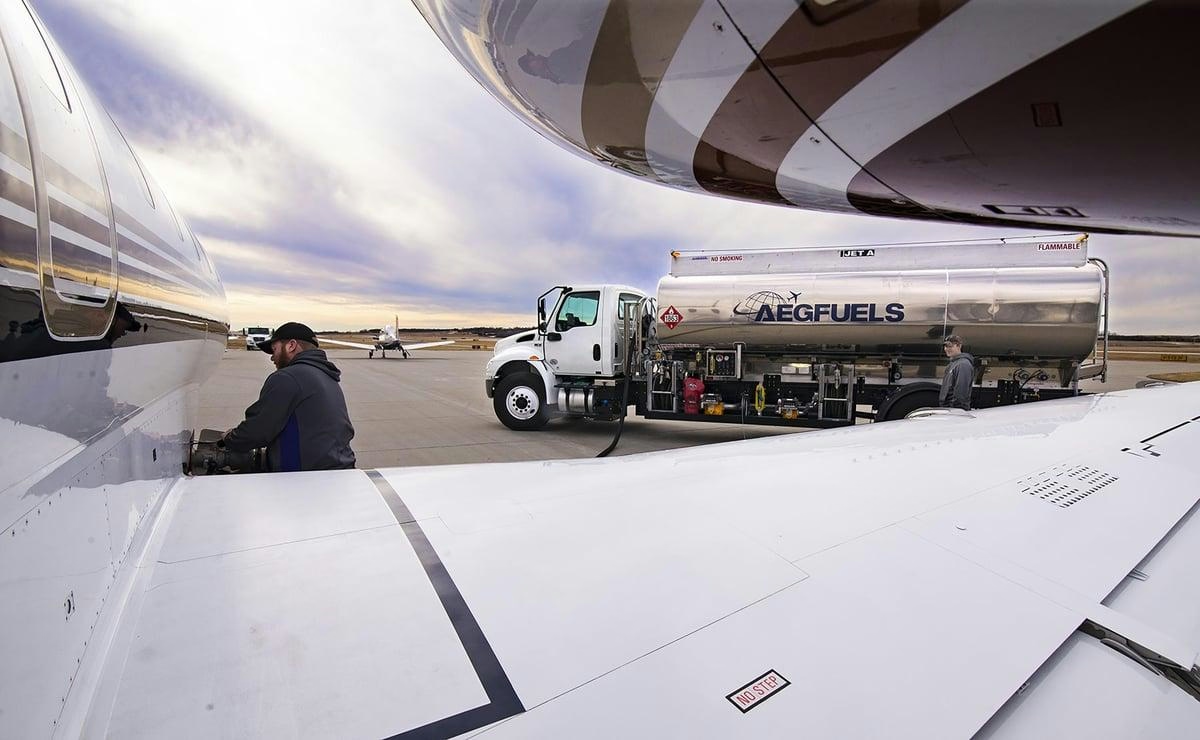
Global Fuel Shortages and Rising Energy Costs Amid Geopolitical Tensions A severe wave of fuel shortages and escalating energy costs is affecting major economies worldwide, including Russia, France, the United States, the United Kingdom, Germany, Vietnam, South Africa, and India. This crisis is unfolding against a backdrop of intensifying geopolitical tensions, refinery disruptions, and supply chain breakdowns. The resulting strain on global transport networks, aviation operations, and tourism sectors extends far beyond the immediate scarcity at fuel stations, revealing vulnerabilities in critical infrastructure and economic systems. Disruptions in Supply Chains and Economic Impact Repeated refinery outages, shipping bottlenecks, and volatile crude oil markets have destabilized fuel supply chains on a global scale. These factors have driven petrol and diesel prices sharply higher, squeezed aviation fuel margins, and increased operational costs for industries reliant on affordable energy. In many affected regions, the consequences are already evident through fuel rationing, transport delays, and rising expenses for airlines and tourism operators. The International Air Transport Association (IATA) has issued warnings that surging fuel costs could reduce global airline profitability by half by 2026, with fuel expenses projected to increase by $100 billion. The outgoing IATA director general attributed the spike in oil and jet fuel prices to the fallout from the U.S.-Iran conflict, which has compounded challenges stemming from the Covid-19 pandemic and the ongoing war in Ukraine. These pressures are compelling airlines to reassess route viability and pricing strategies, while tourism-dependent economies face declining demand as travel becomes more costly and operationally constrained. The energy crisis is also contributing to broader economic instability. In the United States, rising input costs are driving higher food inflation, with RaboResearch highlighting the elevated inflation risk posed by geopolitical and energy market dynamics across the food system. In Asia, share markets have declined amid fresh drone attacks in the Gulf, which have pushed oil prices and bond yields upward. Analysts caution that if the Strait of Hormuz remains closed through the end of the year and oil prices sustain levels near $150 per barrel into 2027, the likelihood of a global recession will increase significantly. Global oil inventories are under mounting pressure as well. UBS estimates that stocks fell to approximately 7.8 billion barrels by the end of April and could approach a historic low of 7.6 billion barrels by the end of May. This tightening of supply is expected to intensify the fuel crunch and exacerbate price volatility. Russia’s Refinery Disruptions and Regional Fuel Stress Russia is experiencing some of the most acute internal disruptions, with fuel shortages reported across more than 50 regions and occupied territories. Authorities have responded by implementing regional rationing and temporary limits on fuel purchases. These measures come amid refinery damage and logistical challenges that have worsened uneven fuel availability, particularly between western regions and other parts of the country. A Deepening and Interconnected Global Crisis What initially appeared as localized disruptions has evolved into a deeply interconnected global energy crisis. The convergence of refinery interruptions, geopolitical tensions, infrastructure vulnerabilities, and unpredictable crude oil flows is fundamentally reshaping how nations manage mobility, transport goods, and sustain economic growth. As energy security becomes increasingly fragile, countries and industries worldwide are being compelled to adapt to a new era marked by persistent fuel stress and economic uncertainty.
Brussels Airport and Safran Expand LEAP Engine Maintenance Facility with New Module Factory

Brussels Airport and Safran Expand LEAP Engine Maintenance Facility with New Module Factory

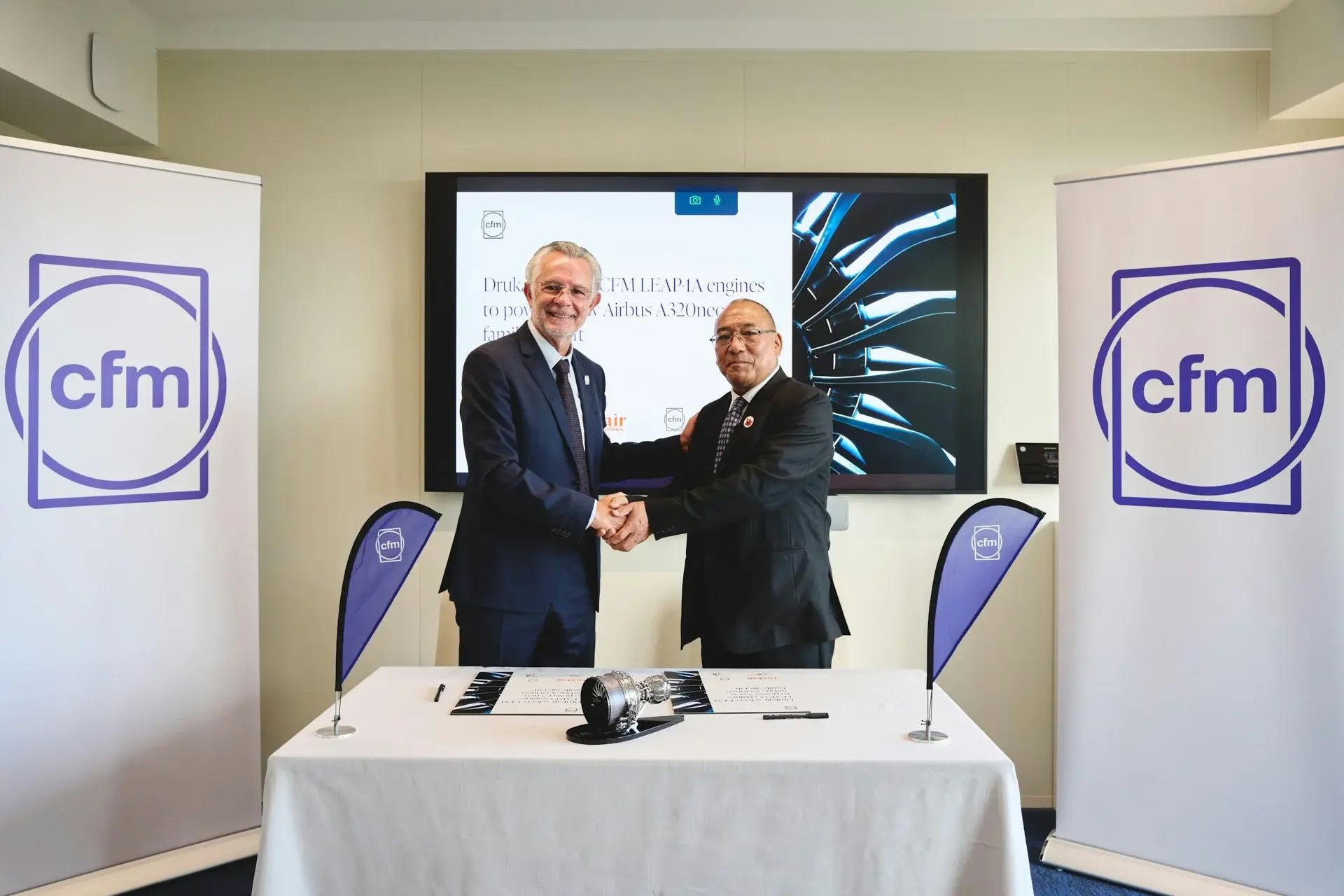
Brussels Airport and Safran Expand LEAP Engine Maintenance Facility with New Module Factory Brussels Airport and aerospace leader Safran have embarked on a significant expansion of their partnership with the construction of a new maintenance facility dedicated to aircraft engine modules. The 15,000 square meter extension at Safran Aircraft Engine Services Brussels will specialize in modular maintenance for CFM LEAP engine components, allowing individual engine parts to be serviced independently. This modular approach is anticipated to enhance operational efficiency, reduce turnaround times, and address the growing global demand for engine maintenance services. Expansion and Economic Impact The expanded facility is expected to handle up to 1,500 engine modules annually by 2028, creating approximately 250 new jobs and increasing the site’s workforce to over 600 employees. This development builds upon Safran’s existing LEAP engine maintenance workshop, which opened in 2024 and currently services engines for next-generation aircraft such as the Airbus A320neo and Boeing 737 MAX families. Arnaud Feist, CEO of Brussels Airport, described the investment as a strong endorsement of the airport’s industrial ecosystem and its role as a high-value economic hub in Belgium. Safran executives highlighted the project’s strategic importance in scaling global LEAP engine support and consolidating operations within a single, specialized location. Challenges and Industry Implications Despite the promising outlook, the expansion introduces new challenges. Managing increased operational complexity and maintaining strict compliance with aviation maintenance regulations will be essential as the facility grows. The move is also expected to intensify competition among engine manufacturers and maintenance providers, potentially prompting rivals to accelerate investments in their own maintenance capabilities to safeguard market share. Safran’s broader strategy, including its joint venture with SIA Engineering to expand maintenance, repair, and overhaul (MRO) services for LEAP engines, reflects a proactive approach to meeting global demand. This initiative may trigger further competitive responses across the aerospace industry. Commitment to Sustainability Sustainability is a central element in the design of the new facility. The site aims to achieve energy neutrality through on-site renewable energy production, incorporates rainwater reuse systems, and employs construction methods aligned with circular economy principles. This focus underscores both Brussels Airport’s and Safran’s commitment to environmentally responsible development. With this expansion, Brussels Airport is poised to reinforce its status as a leading European aerospace maintenance hub, while Safran strengthens its dedication to supporting the next generation of aircraft engines amid a rapidly evolving and competitive market.
Southwest Airlines Moves to AWS Cloud, Aims for AI Integration by 2028

Southwest Airlines Moves to AWS Cloud, Aims for AI Integration by 2028

Southwest Airlines Partners with AWS to Modernize Operations and Integrate AI by 2028 **NEW YORK, June 17, 2026** – Southwest Airlines Co. (NYSE: LUV) has announced a strategic partnership with Amazon Web Services (AWS) to transform its technology infrastructure, with the goal of achieving a fully cloud-based, AI-enabled architecture by 2028. This initiative is intended to enhance the airline’s operational speed, flexibility, and reliability, supporting its evolving business model and workforce of over 70,000 employees. Transition to Cloud and AI-Driven Modernization Under the terms of the agreement, Southwest will migrate from its existing on-premises systems to AWS’s cloud platform, utilizing advanced artificial intelligence and agent-based technologies. This modernization effort aims to streamline processes ranging from ticket sales and daily operations to customer service, simplifying the airline’s technology environment and improving system integration on a large scale. Lauren Woods, Executive Vice President and Chief Information Officer at Southwest Airlines, emphasized the strategic importance of this transition. She stated, “Southwest has always evolved our business with a focus on improving performance, efficiency, and reliability—and applying that same mindset to our technology with AWS is a core part of that strategy. From customer experience to operations, to how we build the systems behind it—all of it is coming together in a way that helps our teams move faster, make better decisions, and deliver for our customers.” Expanding AI Capabilities and Development Processes As part of the modernization, Southwest is expanding its use of AI and agent-based tools, including Amazon Quick and Kiro, AWS’s agentic coding service. Kiro is currently employed by more than 2,700 Southwest developers to refactor legacy code, automate testing, and generate cloud infrastructure. This has significantly accelerated the modernization of critical platforms such as Southwest.com. Swami Sivasubramanian, Vice President of Agentic AI at AWS, highlighted the impact of AI integration on the airline’s operations. He noted, “Southwest Airlines is using AI to deliver on its commitment to being a customer-obsessed airline. By deploying AI agents across customer experience, operations, and software development, they’re accelerating innovation for 134 million travelers—and proving that pioneering ambition paired with AWS’s agentic AI capabilities delivers real, measurable results at scale.” Beyond individual tools, Southwest is also adopting an AI-Driven Development Lifecycle (AIDLC) built on AWS. This approach introduces intelligent, agent-driven workflows designed to automate engineering tasks and accelerate project timelines, further enhancing the airline’s software development processes. Industry Context and Future Outlook Southwest’s ambitious cloud and AI integration initiative comes amid intensifying competition in the enterprise AI market. Leading technology providers such as Microsoft, Salesforce, ServiceNow, AWS, and Google are all competing to establish dominance in autonomous operational systems and AI governance. Southwest’s selection of AWS as its preferred cloud provider may prompt competitive responses, with rivals potentially accelerating their own AI initiatives or leveraging proprietary platforms to secure strategic advantages. Industry analysts suggest that Southwest’s reliance on AWS will also raise important discussions around interoperability, governance, and operational trust in enterprise AI. As the airline progresses toward its 2028 target, market attention is expected to focus on the pace of AI integration and its tangible effects on operational efficiency. Through this partnership, Southwest Airlines aims to position itself at the forefront of digital transformation within the airline industry, while navigating the broader challenges and opportunities presented by the rapidly evolving enterprise AI landscape.
Europe Strengthens Duty-Free Sector with Nigel Keal’s New ETRC Mandate

Europe Strengthens Duty-Free Sector with Nigel Keal’s New ETRC Mandate

Europe Strengthens Duty-Free Sector with Nigel Keal’s New ETRC Mandate Europe’s travel retail and duty-free industry is poised for a consequential year following the unanimous re-election of Nigel Keal as President of the European Travel Retail Confederation (ETRC) at its Annual General Meeting (AGM) in Madrid. Keal’s renewed leadership comes at a critical moment as the sector contends with evolving passenger expectations, emerging sustainability mandates, and shifting travel regulations. Strategic Priorities Amidst Regulatory and Economic Challenges Under Keal’s guidance, the ETRC aims to further unify Europe’s travel retail community, reinforcing the sector’s role as a vital contributor to international tourism and cross-border commerce. The AGM highlighted several strategic priorities for the coming year, including the implementation of the European Union’s Entry/Exit System (EES), adaptation to new sustainability legislation, and responses to geopolitical developments affecting international travel. Additionally, broader economic uncertainties such as inflation and fluctuating consumer demand remain pressing concerns for industry stakeholders. A notable challenge confronting the sector is the increasing complexity of trade defense measures. The European Commission’s expanded use of import quotas and tariffs—particularly targeting Chinese goods—has compelled manufacturers and retailers to reassess supply chains and sourcing strategies. These regulatory changes may influence consumer behavior and market dynamics, prompting competitors to realign sourcing or invest in domestic production to mitigate the impact of higher tariffs and duties. This evolving landscape adds further complexity to the duty-free market. Leadership and Industry Representation Following his re-election, Keal expressed gratitude to ETRC members for their continued trust and emphasized the importance of collaboration within the sector. He stated, “Our greatest strength lies in sharing expertise and a collective vision,” underscoring the industry’s capacity to adapt to changing market conditions. Expanding ETRC’s membership was identified as a key objective, with Keal pledging to work closely alongside the Managing Board, Supervisory Board, Secretariat, and member organizations to advocate for European travel retail interests at both national and EU levels. The ETRC leadership team represents all major segments of Europe’s travel retail ecosystem. Vice-President Brands Sarah Branquinho, who also serves as President of the Tax Free World Association, leads alongside Pedro Castro (External Affairs), Piret Mürk-Dubout (Maritime Affairs), Paul Neeson (Aviation Affairs), Nina Semprecht (Communications and Public Affairs), and Lylian Vignau (Marketing). This broad representation ensures that airports, airlines, ferry operators, maritime businesses, global brands, and duty-free retailers collectively influence policies shaping European travel and tourism. During the AGM, the ETRC Secretariat and representatives from national and regional associations reviewed the sector’s achievements over the past year and outlined future strategies. With passenger traffic rebounding and international tourism on the rise, the ETRC is focused on reinforcing advocacy efforts, supporting innovation, and promoting seamless travel experiences across Europe. As the duty-free sector navigates regulatory and market challenges, Keal’s renewed mandate is widely regarded as a stabilizing force guiding the industry through a period of significant transformation.
GE Aerospace CF34 Engine Sustains Regional Jet Operations

GE Aerospace CF34 Engine Sustains Regional Jet Operations

GE Aerospace CF34 Engine Sustains Regional Jet Operations Amid Emerging Challenges The GE Aerospace CF34 engine, though largely unnoticed by the average airline passenger, continues to underpin thousands of regional jet flights daily. Installed on aircraft such as Embraer and Bombardier models, the CF34 has established itself as a dependable and enduring powerplant within the regional aviation sector. However, as the industry undergoes significant transformation, the engine confronts increasing regulatory scrutiny and mounting competition. A Proven Workhorse in Regional Aviation Since its debut, the CF34 has earned a reputation for exceptional reliability and longevity. With over 6,000 units delivered and more than 100 million flight hours accumulated, it remains the preferred engine for many regional carriers. Its appeal lies in extended on-wing intervals and a comprehensive global maintenance infrastructure, which includes authorized repair facilities and readily available spare parts. These factors collectively reduce operational disruptions and maintenance costs for airlines. From a passenger perspective, the CF34 is characterized by a relatively quiet operation, producing a subdued hum rather than the louder noise associated with older engines. Originally derived from a military turbofan designed for the A-10 attack aircraft, the CF34 was adapted for commercial use with thrust capabilities ranging from 8,700 to 20,000 pounds. Current variants, such as the CF34-8 and CF34-10, power widely used regional jets including the Embraer E170/E175 and E190 series, as well as the Bombardier CRJ family. Navigating Regulatory and Competitive Pressures Despite its established performance record, the CF34 faces new challenges. Recent incidents involving aircraft powered by the CF34, notably the Hop-A-Jet crash, have prompted intensified oversight from aviation regulators. This increased scrutiny may lead to more stringent operational and maintenance protocols for airlines operating these engines. Concurrently, the competitive landscape is evolving rapidly. Manufacturers like Honeywell Aerospace are advancing alternative propulsion technologies, exemplified by the development of the SkyShot1600 engine intended for next-generation light class Collaborative Combat Aircraft. Such innovations have the potential to alter market dynamics, particularly as the industry prioritizes enhanced fuel efficiency and reduced emissions. Strategic Developments at GE Aerospace GE Aerospace is currently undergoing a strategic transition, investing significantly in hybrid-electric propulsion systems and seeking funding for new engine programs, including the GE426 designed for uncrewed fighter aircraft. While these initiatives aim to position the company at the forefront of future aerospace technologies, they may also shift focus and resources away from the regional jet segment where the CF34 has historically been dominant. The CF34 continues to be a vital component of regional aviation, valued for its durability and consistent performance. Nonetheless, as regulatory requirements become more rigorous and competitors introduce advanced technologies, GE Aerospace faces the critical task of maintaining the engine’s relevance in a rapidly evolving market. The CF34’s legacy remains intact, but its future will depend on the company’s ability to balance innovation with the operational demands of regional jet operators.
Civil Aviation Ministry to Upgrade AirSewa Portal with AI for Faster Grievance Resolution

Civil Aviation Ministry to Upgrade AirSewa Portal with AI for Faster Grievance Resolution

Civil Aviation Ministry to Upgrade AirSewa Portal with AI for Faster Grievance Resolution The Ministry of Civil Aviation has announced plans to enhance its AirSewa portal by integrating artificial intelligence (AI) into the Passenger Assistance Control Room (PACR), aiming to accelerate the resolution of air passenger grievances. This initiative reflects the ministry’s commitment to improving consumer experience and operational efficiency within India’s rapidly expanding aviation sector. Enhancing Passenger Grievance Redressal Since its inception in December 2023, the PACR has successfully addressed over 73,000 passenger complaints, achieving a resolution rate of 98%, according to official data. The control room was established in response to significant flight disruptions experienced by IndiGo, India’s largest airline. It functions as a collaborative platform, bringing together representatives from airlines, airports, the Airports Authority of India (AAI), and regulatory bodies such as the Directorate General of Civil Aviation (DGCA) and the Bureau of Civil Aviation Security (BCAS). Civil Aviation Secretary Samir Kumar Sinha emphasized the ministry’s ongoing efforts to launch a more robust and seamless version of the AirSewa portal within the next three to four months. Speaking at a briefing in New Delhi, Sinha highlighted the integrated nature of the current system, stating, “It is one platform (PACR). Everybody is working together to address the grievances... The civil aviation ministry is a consumer-facing ministry. How to resolve complaints in a bonafide, fastest possible manner, that is the journey we are proceeding on.” Leveraging AI for Operational Efficiency The upgraded AirSewa platform will incorporate AI technologies designed to streamline complaint handling and deliver faster, more efficient responses to passengers. On average, PACR receives between 300 and 400 complaints daily, with this figure rising to over 500 during periods of major disruption, such as the recent crisis in West Asia. The ministry also implements special preparedness protocols during anticipated disruption periods, including the fog season, to manage increased passenger grievances effectively. Passengers can submit complaints through multiple channels, including social media, phone calls, emails, and the AirSewa portal itself. Direct contact with PACR is available via the numbers 011-24604283 and 011-24632987. While the integration of AI is expected to significantly enhance operational efficiency and customer satisfaction, the ministry acknowledges challenges related to technology integration, user adoption, and regulatory compliance. This move is poised to establish a new standard in customer service within the aviation industry, potentially encouraging competitors to adopt similar AI-driven solutions to maintain their market position. Context Within India’s Aviation Market India continues to be one of the fastest-growing domestic aviation markets globally, with domestic air passenger traffic exceeding 57.5 million between January and April 2024. The ministry’s focus on technological advancement in grievance redressal aligns with broader industry trends toward AI adoption in customer service and operational management, underscoring the sector’s commitment to innovation and improved passenger experience.
Southwest Airlines Adapts Operations for the AI Era

Southwest Airlines Adapts Operations for the AI Era

Southwest Airlines Adapts Operations for the AI Era Southwest Airlines, traditionally known for its open seating policy, low fares, and customer-centric approach, is undergoing a profound transformation as the airline industry embraces artificial intelligence. This shift is driven by the need to enhance competitiveness and operational resilience in an increasingly complex environment. Modernizing Through Data and Technology The impetus for Southwest’s modernization accelerated following a severe winter storm in December 2022, which exposed critical weaknesses in the airline’s crew scheduling systems and led to widespread flight cancellations. Lauren Woods, who assumed the role of Executive Vice President and Chief Information Officer in early 2023, identified this crisis as a pivotal moment. She emphasized the imperative to prevent similar disruptions in the future by fostering a closer integration between technology and operational processes. Under Woods’s leadership, Southwest has undertaken a comprehensive overhaul of its technology infrastructure. The airline transitioned from traditional on-premises data warehouses to a cloud-based platform, creating what it terms an “AI common platform.” This new system consolidates data from three interconnected networks—customer, crew, and aircraft—into a real-time framework that provides operations teams with unprecedented situational awareness. On the operational front, Southwest now leverages sensor data from ground equipment such as tugs and de-icing vehicles to monitor aircraft readiness, adopting a model akin to a professional pit crew. Predictive analytics, informed by historical performance data, enable the airline to anticipate delays at specific airports and proactively allocate staff and resources to mitigate disruptions. Transforming the Customer Experience One of the most notable changes at Southwest is the transition from its longstanding open seating policy to assigned seating. This shift necessitated a complete redesign of the airline’s reservation systems. Woods described the process as akin to a “lung and heart transplant” for the commercial side of the business. The rollout was carefully managed through incremental phases, incorporating customer simulations, focus groups, and live data analysis to ensure a smooth transition, culminating in a full implementation in January. In addition to seating changes, Southwest introduced new offerings such as Getaways by Southwest and restructured its fare categories. These initiatives required significant technological enhancements but were designed to be gradually integrated into the customer experience. Industry-Wide AI Integration and Challenges Southwest’s adoption of AI technologies occurs amid broader industry efforts to harness advanced analytics and automation. At the recent Skift Data + AI Summit, experts underscored the operational and organizational challenges airlines face in embedding AI across functions including pricing, customer service, and flight management. While AI holds promise for improving efficiency and reducing costs, concerns persist regarding transparency and fairness, particularly in dynamic pricing algorithms. The airline’s recent interline partnership with Singapore Airlines is expected to influence its AI strategy further, offering opportunities for enhanced data sharing and operational collaboration. Meanwhile, industry leaders such as United Airlines CEO Scott Kirby have indicated a strategic pivot away from consolidation toward individualized airline approaches, highlighting the necessity of tailored AI adoption strategies. Prioritizing Security in the Digital Transformation Throughout this period of rapid change, security remains a foundational priority for Southwest. Woods emphasized that robust security and data governance are essential prerequisites for embracing AI and digital innovation, likening it to the height requirement for a ride—non-negotiable and fundamental. By investing strategically in technology, data integration, and security, Southwest Airlines aims not only to recover from past operational setbacks but also to establish itself as a leader in the evolving landscape of AI-driven aviation.
line