
حوّل رؤى الذكاء الاصطناعي إلى أفعال منسّقة

الرائج الآن
Categories
Instructional Flight Cut Short by Carburetor Icing
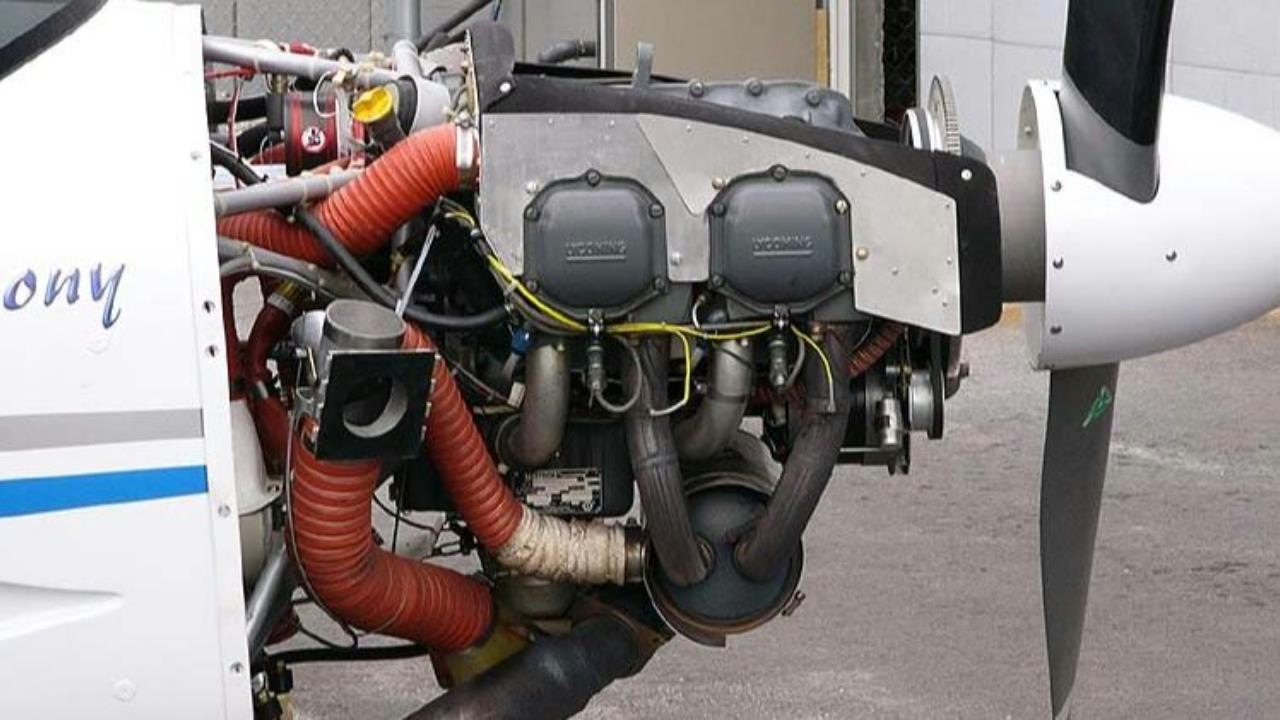
Instructional Flight in Montana Interrupted by Carburetor Icing
A routine instructional flight near Manhattan, Montana, was abruptly cut short when a Piper PA-18-150 experienced a total loss of engine power due to carburetor icing, according to a recent report by the National Transportation Safety Board (NTSB). The incident occurred shortly after takeoff during a dual instruction session between a certified flight instructor (CFI) and a pilot-rated student.
Sequence of Events and Emergency Landing
Shortly after becoming airborne, the aircraft’s engine RPM unexpectedly dropped to idle despite the throttle being fully open and both fuel tanks containing sufficient fuel. The instructor applied carburetor heat, which temporarily restored engine power; however, within approximately ten seconds, the RPM began to fluctuate erratically. Repeated attempts to manage the engine with carburetor heat and throttle adjustments failed, ultimately resulting in engine failure. The pilots were forced to execute an emergency landing in a nearby agricultural field. The aircraft overturned upon landing, causing significant damage to the vertical stabilizer. Fortunately, no injuries were reported.
Subsequent ground testing of the engine, once the aircraft was righted, revealed normal operation. Meteorological data from the time of the incident, when analyzed against carburetor icing probability charts, indicated environmental conditions favorable to carburetor ice formation, particularly at glide power settings. The NTSB concluded that carburetor icing was the probable cause of the engine failure.
Implications for Aviation Safety and Industry Response
This incident underscores the persistent challenges carburetor icing poses to flight instructors and pilots, especially during training flights where rapid response to mechanical issues is critical. Carburetor icing remains a significant hazard in general aviation, emphasizing the need for effective de-icing solutions.
In response to these ongoing risks, the aviation industry is increasing investment in advanced de-icing technologies. Market analysts project that the global aircraft de-icing market will expand from USD 1.62 billion in 2025 to USD 2.13 billion by 2031, reflecting growing demand for enhanced safety measures.
Several industry players are introducing innovative de-icing systems to address these challenges. For instance, American Airlines has recently adopted TKH Airport Solutions’ Icelink system, which standardizes weather integration and compliance reporting to improve operational safety and efficiency.
The NTSB’s August 2024 report serves as a critical reminder for pilots to remain vigilant regarding weather conditions conducive to carburetor icing. It also highlights the importance of staying informed about evolving de-icing technologies that can mitigate such risks. The report is intended as an educational tool to help pilots learn from past incidents and enhance safety practices in the cockpit.

Etihad Airways Suspends Airbus A380 Flights on Key Route

Aditya Birla Group Seeks Approval for Aircraft Leasing in GIFT City

Qatar Airways Highlights Innovation and Connectivity at Arabian Travel Market 2026

Hong Kong's Five-Year Plan Includes Andrew Fan's Aircraft Parts Processing Hub Proposal

ACIA Aero Leasing Delivers ATR72-600 to Air Nostrum

RTX Appoints Jill Albertelli as Head of Pratt & Whitney

TAT Technologies Joins Beyond Aero Hydrogen Aircraft Program

AURAK Study Highlights Barriers to Air Taxi Adoption in Emerging Economies

Xiamen Air Selects Altitude for 787 Maintenance at Heathrow

Etihad and Swissport Extend Global Partnership
