image

AeroGenie - مساعد الطيار الذكي الخاص بك.

اسأل أي شيء. حلل كل شيء. تصرف فورًا.

الرائج الآن

Categories

Investors React to Bristow Group's Role in UK Electric Air-Taxi Development
December 10, 2025By ePlane AI
Investors React to Bristow Group's Role in UK Electric Air-Taxi Development
0
0
Bristow Group
Electric Air-Taxi
eVTOL Operations

Investors React to Bristow Group's Role in UK Electric Air-Taxi Development

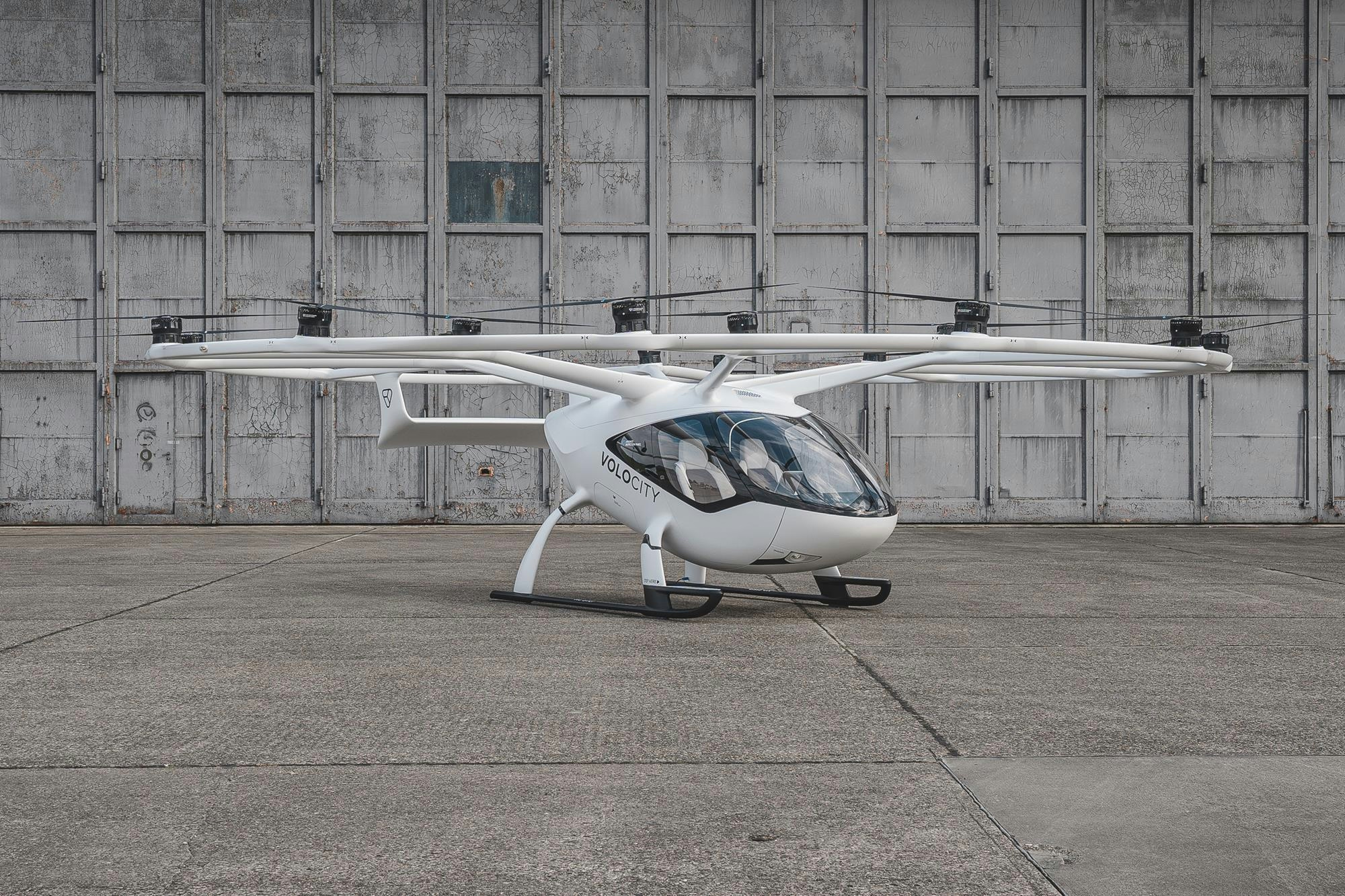
Vertical Aerospace has announced a strategic partnership with Skyports Infrastructure and Bristow Group to establish what may become the United Kingdom’s first electric air-taxi routes. The initiative aims to connect Canary Wharf with key transport hubs including Heathrow, Gatwick, Cambridge, and Oxford. Utilizing electric vertical takeoff and landing (eVTOL) aircraft alongside dedicated vertiport infrastructure, the project targets operational launch in early 2029.

A pivotal element of this collaboration is Bristow Group’s role as the operator. Drawing on its UK Air Operator Certificates and extensive global flight operations expertise, Bristow is positioned to transform emerging eVTOL technology into a practical and scalable urban transportation service. The partnership seeks to significantly reduce travel times on critical commuter and airport transfer routes, potentially reshaping regional mobility.

Investor Sentiment and Industry Challenges

The market is closely monitoring Bristow’s involvement in the UK electric air-taxi project, viewing it as a potential driver of long-term growth. Historically, Bristow’s investment appeal has centered on its resilient offshore and government services, supplemented by the optionality presented by next-generation vertical flight technologies. The recent air-taxi announcement reinforces this optionality but does not alter the company’s immediate focus on fulfilling existing contracts and managing substantial capital expenditures. These factors continue to represent both the primary catalysts and risks influencing the stock’s performance.

The broader eVTOL sector, however, faces significant challenges. The industry has encountered criticism for "certification tourism," where companies pursue regulatory approvals in jurisdictions with less stringent requirements before addressing the more rigorous certification processes in the United States and Europe. Progress toward certification has been slow, and no passenger eVTOL aircraft have yet been certified in major Western markets. This regulatory uncertainty has contributed to a sector-wide repricing, tempering investor enthusiasm amid the absence of commercially ready products.

Despite these obstacles, recent developments underscore the importance of commercial agreements and government backing as key growth drivers. For instance, Beta Technologies’ stock rose by 9% following the announcement of a $1 billion motor supply deal with Eve Air Mobility, highlighting the market’s responsiveness to tangible progress and strategic partnerships.

Bristow’s Growth Outlook and Valuation

Bristow’s engagement in the UK air-taxi initiative builds upon its prior investments in eVTOL technology, including participation in Norway’s Advanced Air Mobility Sandbox. Company leadership appears focused on positioning Bristow to capitalize on the commercial viability of eVTOL aircraft and the potential expansion of new service lines.

From a financial perspective, Bristow projects revenues of $1.9 billion and earnings of $129.4 million by 2028. This forecast implies an annual revenue growth rate of approximately 9% and an earnings increase of $10.3 million from current levels. The outlook suggests a potential 31% upside to the current share price, contingent upon the company’s ability to balance ongoing capital requirements with the successful execution of its core operations.

Investor valuations of Bristow vary considerably, with recent estimates ranging from $6.49 to $47.50 per share. This wide valuation spread reflects uncertainty regarding the company’s capacity to finance its fleet, fulfill government contracts, and leverage emerging eVTOL opportunities. Such divergence underscores the necessity for investors to carefully weigh multiple risk and return scenarios.

As the electric air-taxi sector continues to evolve, Bristow’s pioneering role in UK routes may enhance its long-term growth prospects. Nonetheless, investors should remain vigilant of the regulatory and commercial challenges facing the sector, alongside Bristow’s ongoing capital demands.

More news
M1 Wins $115 Million Contract for Air Force T-38 Maintenance

M1 Wins $115 Million Contract for Air Force T-38 Maintenance

M1 Awarded $115 Million Contract for U.S. Air Force T-38 Maintenance DENTON, Texas — M1 Support Services has secured a $115.4 million contract from the U.S. Air Force to provide operations, maintenance, and sustainment for the T-38 Aircraft Maintenance Program (AMP). The agreement, which extends through January 31, 2030, entrusts M1 with the responsibility of supporting 62 T-38A/AT-38B/T-38C Talon aircraft stationed at multiple Air Force bases, including Beale in California, Holloman in New Mexico, Langley in Virginia, and Whiteman in Missouri. The contract also encompasses support for the U.S. Army Air Operations Directorate at White Sands Missile Range and NASA facilities in El Paso, Texas. Enhancing Operational Readiness and Flexibility George Krivo, Chairman and CEO of M1 Support Services, expressed gratitude for the continued partnership with the Air Force. He highlighted the integration of several key innovations aimed at increasing aircraft availability and operational flexibility during this next phase of the T-38 program. Krivo emphasized M1’s unwavering commitment to safety and quality, underscoring the company’s dedication to delivering exceptional performance that meets the Air Force’s rigorous standards. The T-38 AMP plays a critical role in providing adversary air support for the F-22 community, as well as companion training capabilities for B-2 and U-2 pilots. Under the terms of the new contract, M1 will oversee comprehensive aircraft inspections, intermediate repairs, approved modifications, off-site repairs, and transient maintenance services, ensuring the sustained readiness of these vital training assets. Industry Context and Competitive Landscape M1’s contract award arrives amid intensified competition within the military aviation maintenance sector. Industry leaders such as Boeing recently secured a substantial $2.47 billion contract for additional KC-46A tanker aircraft, highlighting the scale and competitiveness of defense contracting. Boeing’s ongoing challenges with the KC-46A program have brought increased scrutiny to contractor performance across the industry, placing a spotlight on M1’s ability to execute the T-38 maintenance contract effectively. As competitors seek to leverage their broader portfolios to pursue similar maintenance contracts, M1 faces mounting pressure to maintain its market position. The company distinguishes itself as the only large-scale provider focused exclusively on aviation services, emphasizing a mission-first approach dedicated to supporting advanced military aircraft for the Department of Defense, allied forces, and partner nations. For further details, visit www.M1services.com.
All Four Engines Failed at 37,000 Feet, and the Captain Remained Calm

All Four Engines Failed at 37,000 Feet, and the Captain Remained Calm

All Four Engines Failed at 37,000 Feet, and the Captain Remained Calm At 37,000 feet above the Indian Ocean, passengers aboard British Airways Flight 9 were abruptly plunged into an unsettling silence. The familiar roar of the Boeing 747’s four engines ceased without warning. There was no turbulence—only an eerie stillness, accompanied by a faint smell of smoke and dimming cabin lights. Anxiety quickly spread through the cabin as passengers grasped the gravity of the situation. In the cockpit, Captain Eric Moody and his crew confronted an extraordinary emergency: all four engines had failed simultaneously. The Incident and the Captain’s Response The 1982 flight, en route from Kuala Lumpur to Perth aboard the Boeing 747 named City of Edinburgh, had unknowingly entered a cloud of volcanic ash emanating from Indonesia’s Mount Galunggung, which had erupted earlier that day. Volcanic ash, invisible to radar and easily mistaken for ordinary cloud, poses a severe hazard to jet engines. Within minutes, the abrasive ash caused all four engines to flame out, transforming the 350-ton aircraft into the heaviest glider in the sky. Captain Moody’s response to the crisis became emblematic of calm leadership under pressure. Over the public address system, he delivered a measured announcement: “Ladies and gentlemen, this is your captain speaking. We have a small problem. All four engines have stopped. We are doing our utmost to get them going again. I trust you are not in too much distress.” His understated tone helped to steady the passengers, some of whom initially believed the message to be a joke, while others gripped their seats in disbelief. Moody’s composure was precisely what the moment required. Navigating a Crisis and Its Aftermath With all engines offline, the 747 began a rapid descent at nearly 2,000 feet per minute. The flight crew calculated they had approximately 23 minutes before reaching the ocean below. Within this narrow timeframe, they faced the daunting tasks of restarting the disabled engines, navigating out of the volcanic ash cloud, managing the aircraft’s structural limits, and reaching a safe altitude with breathable air. Against the odds, after losing nearly 20,000 feet, the crew successfully restarted the engines and executed a safe landing, averting what could have been a catastrophic disaster. The incident not only became a seminal case study in crisis management but also prompted broader discussions about aviation safety. In its aftermath, scrutiny intensified regarding pilot fitness, particularly as the industry grapples with an aging pilot population, with some captains continuing to fly into their eighties. Concerns emerged about the capacity of older pilots to respond effectively to emergencies, while pilot associations struggled to recover from the operational disruptions caused by the Covid-19 pandemic. Market reactions reflected increased anxiety among passengers and industry stakeholders about the safety of aging aircraft and the imperative for rigorous pilot training. Competitors sought to reassure the public by emphasizing their own safety protocols and training standards, aiming to distinguish themselves amid a climate of heightened caution. The calm and professional leadership demonstrated on Flight 9 remains a benchmark for handling emergencies, even as the aviation sector continues to confront evolving challenges and expectations.
Why Aviation Oil Differs from Automotive Oil

Why Aviation Oil Differs from Automotive Oil

Why Aviation Oil Differs from Automotive Oil For many years, pilots and mechanics have questioned why aviation piston engine oils provide less anti-rust and anti-wear protection compared to automotive or heavy-duty engine oils. The explanation lies in the distinct operational demands and stringent regulatory framework governing the aviation industry. Regulatory Standards and Material Compatibility All oils used in certified piston aircraft engines must adhere to the Mil-L-22851 specification, now updated as SAE 1899. This standard guarantees compatibility with every spark-ignition aviation piston engine ever manufactured, emphasizing safety and reliability above all else. Unlike automotive oils, aviation oils are strictly prohibited from containing certain additives, particularly those that produce ash. Automotive and heavy-duty engine oils commonly incorporate ash-forming additives such as zinc dithiophosphate (ZDTP) to enhance anti-wear protection. ZDTP functions by chemically reacting with metal surfaces to form a protective layer, which is especially effective under high shear conditions found between components like cams and lifters. This sacrificial lubrication significantly increases the oil’s load-carrying capacity. However, these additives pose serious risks in aviation engines, many of which contain components made from softer metals such as copper and silver. Copper alloys are frequently used in exhaust valve guides, while silver is often found in master rod bearings of radial engines. ZDTP can tarnish copper, leading to reduced clearances and valve sticking, and it can corrode silver, resulting in bearing failures. Given the critical importance of safety in aviation, such risks are unacceptable. Historical Attempts and Lessons Learned In the 1990s, Phillips Petroleum attempted to improve wear protection in its X/C 20W50 aviation oil by introducing ZDTP, resulting in the X/CII formulation. Because this additive did not comply with the zero-ash requirement, the oil was marketed under a supplemental type certificate (STC). The product was eventually withdrawn after it caused valve sticking and silver bearing failures, underscoring the dangers of applying automotive-style additives in aircraft engines. Detergents and Dispersants in Aviation Oils Another notable difference lies in the use of detergents. While some aviation oils are labeled as “detergent oils,” they are technically ashless dispersant (AD) oils. True detergent oils, common in automotive applications, can loosen and suspend carbon and dirt particles, which may lead to engine fouling in aircraft engines. Therefore, aviation oils avoid such formulations to maintain engine cleanliness and reliability. Industry Challenges and Market Dynamics Aviation engines operate under higher temperatures and pressures than their automotive counterparts, necessitating specialized oil formulations. The aviation sector is also subject to more rigorous regulatory standards and safety requirements, which translate into stringent testing and approval processes for lubricants. These factors contribute to the demand for specialized aviation oils, often resulting in higher costs and intensified competition among manufacturers. In response, oil companies invest heavily in proprietary formulations designed not only to meet or exceed aviation standards but also to improve cost-efficiency and environmental sustainability. Conclusion Although aviation oils may appear to offer less anti-wear and anti-rust protection than automotive oils, these differences are fundamentally driven by the unique materials, operating conditions, and uncompromising safety standards of the aviation industry. Consequently, significant changes to aviation oil formulations remain unlikely, ensuring continued reliability and safety in flight operations.
Dexa Gains Momentum in the Birthplace of Aviation

Dexa Gains Momentum in the Birthplace of Aviation

Dexa Gains Momentum in the Birthplace of Aviation Pioneering Autonomous Drone Deliveries in Dayton Dayton-based Dexa has achieved a significant breakthrough by securing a rare Federal Aviation Administration (FAA) waiver for autonomous, beyond-line-of-sight (BVLOS) drone flights. This milestone not only advances the company’s ambitions but also reinforces Dayton’s legacy as the "Birthplace of Aviation." Under the leadership of CEO Beth Flippo, Dexa is harnessing artificial intelligence to revolutionize local delivery services, enabling businesses to transport goods within 15 minutes and deposit packages at precise locations—even in the absence of traditional addresses. From meals delivered directly to doorsteps to sunscreen airdropped onto beach blankets, Dexa is quietly transforming futuristic concepts into practical realities in Ohio. Beth Flippo’s journey began in her parents’ defense contracting firm in New Jersey, where she developed a wireless mesh network that allows drones to communicate in real time without relying on a central hub. Originally designed for military applications, this technology caught the attention of delivery companies, prompting Flippo to identify a unique commercial opportunity. In 2020, amid the uncertainties of the pandemic, she relocated her family to Dayton after securing a partnership with Kroger, positioning Dexa—formerly known as Drone Express—as a frontrunner in the emerging field of commercial drone deliveries. Navigating Regulatory Hurdles and Industry Growth The strategic move quickly yielded results, attracting media attention and a surge in demand from diverse sectors, including prepared food and medical supplies. Flippo acknowledges the challenges posed by aviation regulations, emphasizing the necessity of compliance despite growing market interest. Over the subsequent five years, Dexa evolved into a certified airline, attaining the highest levels of FAA certification for unmanned aircraft systems. The recent BVLOS waiver places Dexa in an exclusive cohort alongside industry giants such as Amazon, Walmart, and Zipline, a remarkable feat for a company with fewer than 30 employees. Flippo views Dexa’s small size as a competitive advantage, asserting, “The little guys are the hungry ones; we’re the ones that want it. We’re the ones who have suffered for it. It’s just like in life. Who would you bet on?” Dexa’s collaboration with Microsoft has further enhanced its technological capabilities. By integrating AI, the company has developed sophisticated mapping tools that identify safe and efficient airspace routes. The drones can analyze landscapes in real time, distinguishing between rooftops, porches, and swimming pools to determine optimal drop-off points, achieving an accuracy rate of 86 percent. Challenges and the Future of Sustainable Aviation Despite Dexa’s rapid progress, the broader drone and aviation industries face significant challenges, particularly regarding sustainability. The growing emphasis on sustainable aviation fuel (SAF) is reshaping market dynamics, with legislative efforts underway to restore SAF credits that reflect both regulatory support and the economic complexities of adoption. As demand for SAF intensifies—a trend underscored by experts at Bombardier—Dexa and its competitors may encounter new pressures. Some industry players are likely to accelerate their SAF initiatives, while others may continue relying on traditional fuels, depending on their strategic priorities and market positions. As Dexa continues to innovate from Dayton, its trajectory will depend not only on technological and regulatory achievements but also on its ability to adapt within an evolving landscape of sustainable aviation. In the historic birthplace of flight, the race to define the future of drone delivery is gaining unprecedented momentum.
uAvionix Software Update Integrates ForeFlight Compatibility

uAvionix Software Update Integrates ForeFlight Compatibility

uAvionix Introduces AV-30 Software Update with ForeFlight Integration uAvionix has unveiled version 3.2.0 of the software for its experimental AV-30-E instrument, marking a significant advancement through direct compatibility with ForeFlight, a widely used flight planning application. The update for the certified AV-30-C model is anticipated to be released shortly. Enhanced Flight Planning and Autopilot Functionality This software upgrade allows pilots to plan routes within ForeFlight and seamlessly transfer them to the AV-30 instrument. Once uploaded, the autopilot can follow the ForeFlight-defined flight plan, enhancing operational efficiency and situational awareness. Key features of the integration include the ability to use ForeFlight as a primary navigation source, direct transfer of waypoints and routes to the AV-30, and real-time in-flight updates. Pilots can modify active flight plans mid-flight—adding waypoints or rerouting to avoid adverse weather or comply with air traffic control instructions—with changes immediately reflected on the AV-30 display. John Chargo, an engineer at uAvionix, emphasized the transformative nature of the update, stating, “With 3.2.0, pilots get a truly streamlined and seamless ForeFlight-to-panel experience. Building a route in ForeFlight and having it appear instantly on the AV-30, ready for the autopilot to follow, transforms how we plan and fly. It’s an exciting step forward for making advanced capability accessible to every GA cockpit.” To utilize ForeFlight integration, users must install the AV-Link Wi-Fi bridge, which facilitates the transfer and updating of flight plans. Additionally, autopilot coupling requires the Advanced Autopilot Unlock feature. Considerations and Market Impact While the update promises a more integrated cockpit experience and improved situational awareness, it also presents potential challenges. Ensuring flawless interoperability with existing avionics and maintaining the reliability of real-time ADS-B data integration will be essential. Users may encounter technical compatibility issues that necessitate careful installation and operational oversight. Industry analysts anticipate a positive reception from operators seeking enhanced safety and situational awareness. The move is also expected to prompt competitors to accelerate similar software updates, focusing on integration with other popular flight tracking platforms to sustain their market positions. The AV-30-E software update is currently available, with the AV-30-C version expected soon. Further details are accessible at uAvionix.com.
Why the Airbus A320neo Family Uses Multiple Engine Options

Why the Airbus A320neo Family Uses Multiple Engine Options

Why the Airbus A320neo Family Uses Multiple Engine Options Among modern narrowbody airliners, the Airbus A320neo family is unique in offering multiple engine options. Unlike its competitors—the Airbus A220 (formerly Bombardier CSeries), COMAC C919, and Embraer E-Jet E2—which each rely on a single engine type, the A320neo provides airlines with a choice between two engines. Even Boeing’s direct competitor, the 737 MAX, is powered exclusively by the CFM International LEAP-1B engine. Market Strength and Design Considerations Airbus’s decision to equip the A320neo with both the Pratt & Whitney PW1100G Geared Turbofan and the CFM International LEAP-1A engines was influenced by several strategic factors, including the size of the market, risk tolerance, and the willingness of engine manufacturers to invest in new technologies. The A320neo’s design, particularly its higher landing gear compared to the Boeing 737, allowed it to accommodate larger, more advanced engines, providing a technical foundation for this dual-engine approach. The commercial success of the A320 family has been instrumental in enabling this strategy. By 2025, the A320 surpassed the Boeing 737 in cumulative deliveries, becoming the most-produced commercial passenger jet in history. Airbus’s scale and reputation afford it the capacity to absorb substantial development costs and instill confidence in original engine manufacturers (OEMs) to invest in new engine programs without requiring exclusivity. This contrasts with smaller manufacturers like Bombardier, which often face limitations in securing multiple engine partners due to their comparatively modest market presence. While much attention is given to aircraft manufacturers’ engine choices, less is discussed about OEMs’ decisions to decline participation in smaller programs. The sheer scale of the A320neo program provided Airbus with the leverage to secure two engine suppliers, a rare achievement in the narrowbody segment. Engine Suppliers and Industry Dynamics Initially, three OEMs vied to supply engines for the A320neo: Pratt & Whitney, CFM International (a joint venture between GE Aerospace and Safran), and Rolls-Royce. Although Rolls-Royce explored narrowbody engine options during the 2010s, it ultimately withdrew from this market segment to concentrate on business and widebody jet engines. This left Pratt & Whitney’s PW1100G and CFM’s LEAP-1A as the primary contenders. The following table illustrates the engine options and approximate total orders for several key narrowbody aircraft: | Aircraft | Engine Option(s) | Total Orders (approx.) | |--------------------|---------------------------------------|-----------------------| | Airbus A220 | PW1500G | 940 | | Airbus A320neo | PW1100G or CFM LEAP-1A | 11,366 | | Boeing 737 MAX | CFM LEAP-1B | 6,814 | | COMAC C919 | CFM LEAP-1C | 700–1,000 | | Embraer E2 | PW1900G | 490 | Challenges and Future Outlook While offering two engine options grants airlines greater flexibility, it also introduces complexity in production and supply chains. The competition between Pratt & Whitney and CFM International has led to challenges such as engine shortages and aircraft groundings. Recent issues, including software recalls and quality concerns, have raised investor apprehension and contributed to notable declines in Airbus’s share price. The competitive landscape remains dynamic. Ongoing negotiations between Pratt & Whitney and Airbus focus on securing future engine supplies, while Safran is investing in expanded maintenance facilities to support the growing demand for the LEAP engine. Concurrently, Airbus is preparing to make critical decisions regarding future engine and wing technologies by 2026, aiming to sustain its leadership position in the narrowbody market. The A320neo’s dual engine strategy thus reflects Airbus’s market strength, design advantages, and capacity to manage risk, even as it navigates the complexities of production and supply that will influence the future of narrowbody aviation.
Air Taxi Companies Excel at Public Relations

Air Taxi Companies Excel at Public Relations

Air Taxi Companies Excel at Public Relations The PR Race in the Electric Air Taxi Industry In the rapidly advancing sector of electric air taxis, public relations efforts have become as vital as technological innovation. Leading US eVTOL (electric vertical takeoff and landing) companies—namely Archer Aviation, Joby Aviation, and the recently public Beta Technologies—are highly active in their media outreach. These firms frequently announce new partnerships, acquisitions, market expansions, and certification milestones, often releasing multiple updates in quick succession. This intense communication strategy reflects a competitive drive to capture investor interest and maintain public visibility. A recent analysis by boutique firm SMG Consulting has quantified the disparity between PR activity and actual flight testing within the industry. Through a “tongue-in-cheek infographic,” SMG calculated the ratio of flight hours to press releases for major US electric aircraft companies up to December, providing insight into the communication dynamics at play. According to SMG’s findings, Beta Technologies leads with 63.5 flight hours per press release, while Archer Aviation issues a press release approximately every 18 minutes of flight time. Joby Aviation’s ratio falls between these two extremes. SMG notes that these figures may be influenced by differences in aircraft types; for example, Beta manufactures runway-capable aircraft in addition to eVTOLs, which affects flight hour accumulation. When focusing exclusively on eVTOL flight hours, the ratios become more concentrated. Joby Aviation emerges as the most prolific in PR relative to flight time, issuing one press release for every 3.2 flight hours. Beta follows with a press release every 36 minutes, and Archer maintains a release every 18 minutes of flight. This data highlights the industry’s heavy reliance on communications to sustain momentum and investor confidence, even as actual operational flight time remains limited. Challenges Beyond Public Relations Despite the prominence of PR, air taxi companies face significant challenges behind the scenes. Legal disputes have surfaced, most notably Joby Aviation’s lawsuit against Archer Aviation. Joby alleges that Archer improperly used proprietary information obtained from a former Joby employee to secure a critical partnership. This legal conflict underscores the high stakes and intense competition inherent in the race to commercialize electric air taxis. Market skepticism also persists, particularly as some companies announce plans to launch operations in regions such as the Middle East before obtaining necessary certifications in the United States and Europe. This approach has raised questions about regulatory preparedness and whether international market ambitions are being prioritized over domestic deployment. Meanwhile, competitive strategies continue to evolve. Archer Aviation, for example, is actively expanding its air taxi network in Miami, complementing its existing operations in the San Francisco Bay Area, New York, and Los Angeles. These expansions reflect both the ambition and pressure faced by eVTOL companies as they strive to translate media attention into tangible operational progress. As the industry accelerates toward commercial service, the interplay between publicity and actual advancement remains a defining characteristic—one that will be closely monitored by investors, regulators, and the public alike.
Saab unveils world-first 3D-printed, AI-designed aircraft fuselage

Saab unveils world-first 3D-printed, AI-designed aircraft fuselage

Saab Unveils World-First 3D-Printed, AI-Designed Aircraft Fuselage Saab has announced a pioneering development in aerospace manufacturing with the unveiling of a five-metre aircraft fuselage produced entirely through 3D printing. Utilizing Divergent Technologies’ additive production system, this demonstrator is slated for flight in 2026 and represents the first instance where an airframer has applied the rapid iteration and flexibility characteristic of software development to physical aircraft hardware. Saab envisions that, if successful, this approach could transform the industry by enabling aircraft to be redesigned, built, and upgraded at a pace previously exclusive to software releases. This innovation aligns with a broader evolution within Swedish aerospace, where Saab has consistently emphasized speed and adaptability as critical factors for battlefield superiority. The company’s strategic philosophy—observe, orient, decide, and act faster than opponents—has influenced everything from the modular design of the original Gripen fighter to its current digital engineering methodologies. Digital Foundations and Model-Based Engineering Saab’s latest breakthrough is deeply rooted in the advancements made during the Gripen E program, where model-based engineering became a foundational practice. By employing a shared digital twin of the aircraft, multidisciplinary teams were able to conduct early simulations, perform rapid trade studies, and make well-informed integration decisions prior to manufacturing. This shift from traditional paper drawings to comprehensive digital 3D definitions for every component and procedure facilitated the creation of more complex and optimized designs. The Gripen E’s avionics architecture further propelled this digital transformation by introducing hardware independence and segregating flight-critical from mission-critical software. This separation allowed for accelerated mission software updates and, according to Saab, positioned the Gripen E as the first production fighter to operate with an AI agent on standard avionics computers. Software-Defined Hardware: The Next Frontier Building upon these digital foundations, Saab’s Rainforest innovation unit has embarked on extending the flexibility of software development into hardware manufacturing. Axel Baathe, head of Rainforest, explained that while Gripen E customers can code mission-critical applications in the morning and deploy them by afternoon, the current challenge is to replicate this level of agility for physical structures. This concept, termed Software-Defined Hardware Manufacturing, combines model-based engineering with additive manufacturing and AI-driven optimization to render aircraft structures as adaptable as digital code. High-fidelity simulation models enable rapid identification of design improvements; however, traditional manufacturing processes remain a significant bottleneck due to the time and expense involved in producing tools, molds, and jigs. Industry Impact and Challenges Ahead Saab’s 3D-printed, AI-designed fuselage signals a potential paradigm shift in aerospace manufacturing, yet considerable challenges persist. The transition to this new model entails substantial upfront investment, regulatory complexities, and the necessity for extensive retraining of engineers to master advanced manufacturing techniques. Industry reactions have been mixed: while some traditional aerospace firms approach the technology with skepticism, more progressive companies are likely to recognize opportunities to reduce costs and accelerate production cycles. Competitors are expected to respond by investing in similar technologies or developing alternative solutions to safeguard their market positions. As Saab prepares for flight testing in 2026, the aerospace sector will be closely monitoring whether this software-inspired approach to hardware can fulfill its promise of enhanced speed, flexibility, and innovation.
Cowling Detaches in Flight and Strikes Windshield

Cowling Detaches in Flight and Strikes Windshield

Cowling Detaches in Flight and Strikes Windshield A Piper PA-28-180 encountered a mid-flight mechanical failure when the right side of its engine upper cowling became unlatched and struck the windshield during cruise between airports. Despite the left side of the cowling remaining secured, the incident caused substantial damage to the windshield. The pilot was able to maintain control and safely land the aircraft at an airport in Mesa, Arizona. Fortunately, no injuries were reported. Investigation and Findings A post-incident examination determined that the right front fastener pin, responsible for securing the upper cowling near the air intake, had separated from the cowling structure. This separation likely allowed the forward right side of the cowling to detach from the lower section and lift into the airstream. The resulting aerodynamic forces caused the right side latches to fail under overload. The National Transportation Safety Board (NTSB) identified the probable cause as the failure of the engine cowling’s right side latch pin and fasteners, which led to the partial separation of the cowling during flight. This event, documented under NTSB Identification 193480, underscores the critical importance of thorough pre-flight inspections and the secure fastening of engine components. Context Within Industry Safety Concerns This incident occurs amid heightened industry scrutiny regarding aircraft reliability and safety. Airbus, for example, has recently faced significant challenges following a major software recall affecting approximately 6,000 A320 family jets. The recall was initiated due to a vulnerability in the flight-control computers linked to a recent in-flight incident, resulting in the grounding of thousands of aircraft and widespread travel disruptions during a peak holiday travel period. Compounding these issues, reports of windscreen problems have caused diversions for flights operated by American Airlines and United Airlines, further intensifying concerns over product reliability. These developments have contributed to a sharp decline in Airbus shares, marking their steepest drop since April and reflecting broader market anxiety over ongoing technical difficulties. The NTSB continues to publish detailed accident reports such as this to serve as educational tools for pilots and operators, aiming to improve aviation safety through lessons learned from past events.
SMBC Aviation Capital Signs Agreement for 737 MAX 9 with United

SMBC Aviation Capital Signs Agreement for 737 MAX 9 with United

SMBC Aviation Capital Secures Agreement with United Airlines for 737 MAX 9 Fleet Expansion Aircraft lessor SMBC Aviation Capital has finalized a significant agreement with United Airlines for the purchase and lease-back of twenty Boeing 737 MAX 9 aircraft, with deliveries slated for 2025 and 2026. This transaction represents the third major collaboration between the two companies in recent years, following previous deals involving the lease of 20 Airbus A321neo aircraft from SMBC’s orderbook and a separate purchase-and-leaseback arrangement for 20 Boeing 737 MAX 8 jets. Strategic Alignment and Fleet Modernization United Airlines has emphasized that the latest agreement aligns closely with its long-term fleet strategy. Michael Leskinen, United’s Chief Financial Officer, underscored that the deal supports the airline’s ongoing efforts to modernize its fleet and enhance the overall customer experience. Leskinen also highlighted the strength of United’s partnership with SMBC Aviation Capital, noting the lessor’s pivotal role in the continued evolution of the airline’s fleet composition. Market Context and Competitive Pressures This agreement emerges amid heightened activity and intensifying competition within the global aircraft leasing sector. SMBC Aviation Capital faces challenges including regulatory scrutiny and the need to ensure compliance with evolving safety standards for the 737 MAX series. The market is witnessing increased rivalry from major lessors such as AerCap and Air Lease Corporation, who may respond with aggressive pricing or by expanding their own orders for the 737 MAX family. Further illustrating the competitive environment are recent commitments from airlines such as Ethiopian Airlines and Air Senegal to additional 737 MAX orders. Meanwhile, substantial orders from Middle Eastern carriers including Flydubai and Etihad Airways continue to influence market dynamics, intensifying competition among lessors vying to secure contracts with leading airlines. As the aviation industry advances in its recovery and fleet modernization efforts, the partnership between SMBC Aviation Capital and United Airlines exemplifies both companies’ strategic responses to evolving market conditions and their pursuit of a competitive advantage.
Ask AeroGenie










