
حوّل رؤى الذكاء الاصطناعي إلى أفعال منسّقة

الرائج الآن
Categories
ITA Joins Major Airlines in Unifying Content on Iris Platform with AI and Advanced Distribution Tools
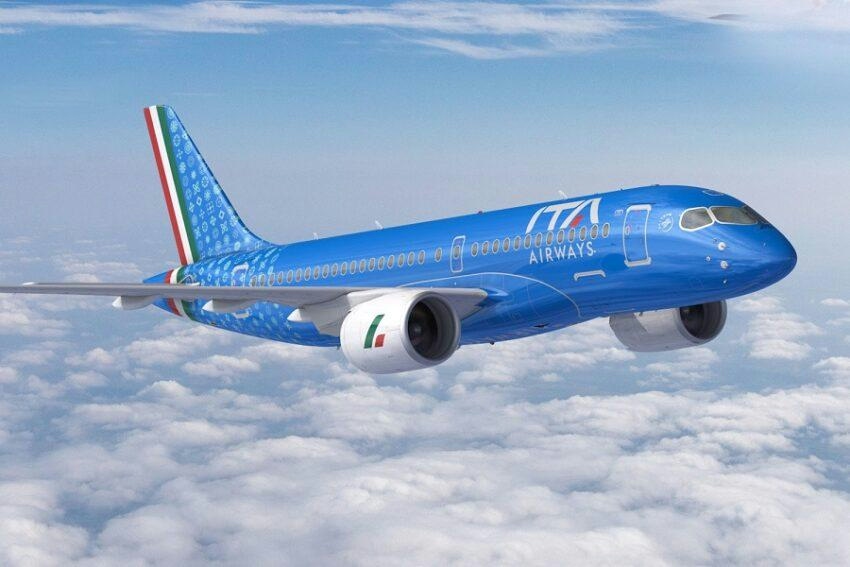
ITA Airways Integrates with Iris Platform to Enhance Travel Distribution
ITA Airways has joined a select group of prominent airlines—including Wizz Air, Transavia, Volotea, Turkish Airlines, and easyJet—in adopting the Iris platform, a unified airline content aggregator developed by TPConnects Technologies. This strategic integration aims to streamline travel distribution by consolidating content from both full-service and low-cost carriers into a single, centralized system accessible to travel sellers worldwide.
Unifying Fragmented Airline Content Through Advanced Technology
The Iris platform addresses persistent inefficiencies in the travel industry, where agencies have traditionally navigated multiple fragmented systems such as Global Distribution Systems (GDS), New Distribution Capability (NDC) content, and low-cost carrier data to access airline offerings. By unifying these disparate sources, Iris enables travel professionals to search, book, price, and manage air travel content through one comprehensive interface, significantly reducing operational complexity and improving workflow efficiency.
A notable advancement in the latest iteration of Iris is the integration of artificial intelligence (AI) agents and sophisticated distribution tools. These AI-driven features automate numerous manual processes, including booking, rebooking, and itinerary modifications, thereby allowing travel sellers to concentrate on higher-value activities such as client engagement. Furthermore, AI agents support real-time decision-making by enabling dynamic pricing adjustments based on current market demand and availability, enhancing both operational efficiency and customer service quality.
Challenges and Industry Implications
Despite the clear benefits, ITA’s adoption of the Iris platform and its AI-powered functionalities presents several challenges. Ensuring seamless compatibility with existing airline and agency systems remains a significant technical undertaking. Moreover, the increased reliance on data-driven processes raises important concerns regarding data privacy and compliance with evolving regulatory frameworks. As the airline industry continues to embrace these advanced distribution technologies, regulatory scrutiny is expected to intensify, compelling airlines and technology providers to prioritize transparency and adherence to compliance standards.
The market’s response to ITA’s integration reflects a broader industry trend toward innovative distribution strategies. Competitors are likely to enhance their own technological capabilities or advocate for regulatory measures to maintain competitive balance. This evolving landscape highlights the potential for market disruption, as continuous innovation becomes essential for airlines striving to sustain a competitive advantage in the rapidly advancing AI era.
By joining the Iris platform, ITA Airways positions itself at the forefront of digital transformation in travel distribution. The convergence of AI and unified content aggregation is reshaping the industry, underscoring the critical importance of adaptability and innovation for airlines and travel sellers operating in an increasingly complex and competitive global marketplace.

Etihad Airways Suspends Airbus A380 Flights on Key Route

Aditya Birla Group Seeks Approval for Aircraft Leasing in GIFT City

Qatar Airways Highlights Innovation and Connectivity at Arabian Travel Market 2026

Hong Kong's Five-Year Plan Includes Andrew Fan's Aircraft Parts Processing Hub Proposal

ACIA Aero Leasing Delivers ATR72-600 to Air Nostrum

RTX Appoints Jill Albertelli as Head of Pratt & Whitney

TAT Technologies Joins Beyond Aero Hydrogen Aircraft Program

AURAK Study Highlights Barriers to Air Taxi Adoption in Emerging Economies

Xiamen Air Selects Altitude for 787 Maintenance at Heathrow

Etihad and Swissport Extend Global Partnership
