
حوّل رؤى الذكاء الاصطناعي إلى أفعال منسّقة

الرائج الآن
Categories
JetZero Outlines Engine Strategy for Blended Wing Body Aircraft
JetZero Outlines Engine Strategy for Blended Wing Body Aircraft
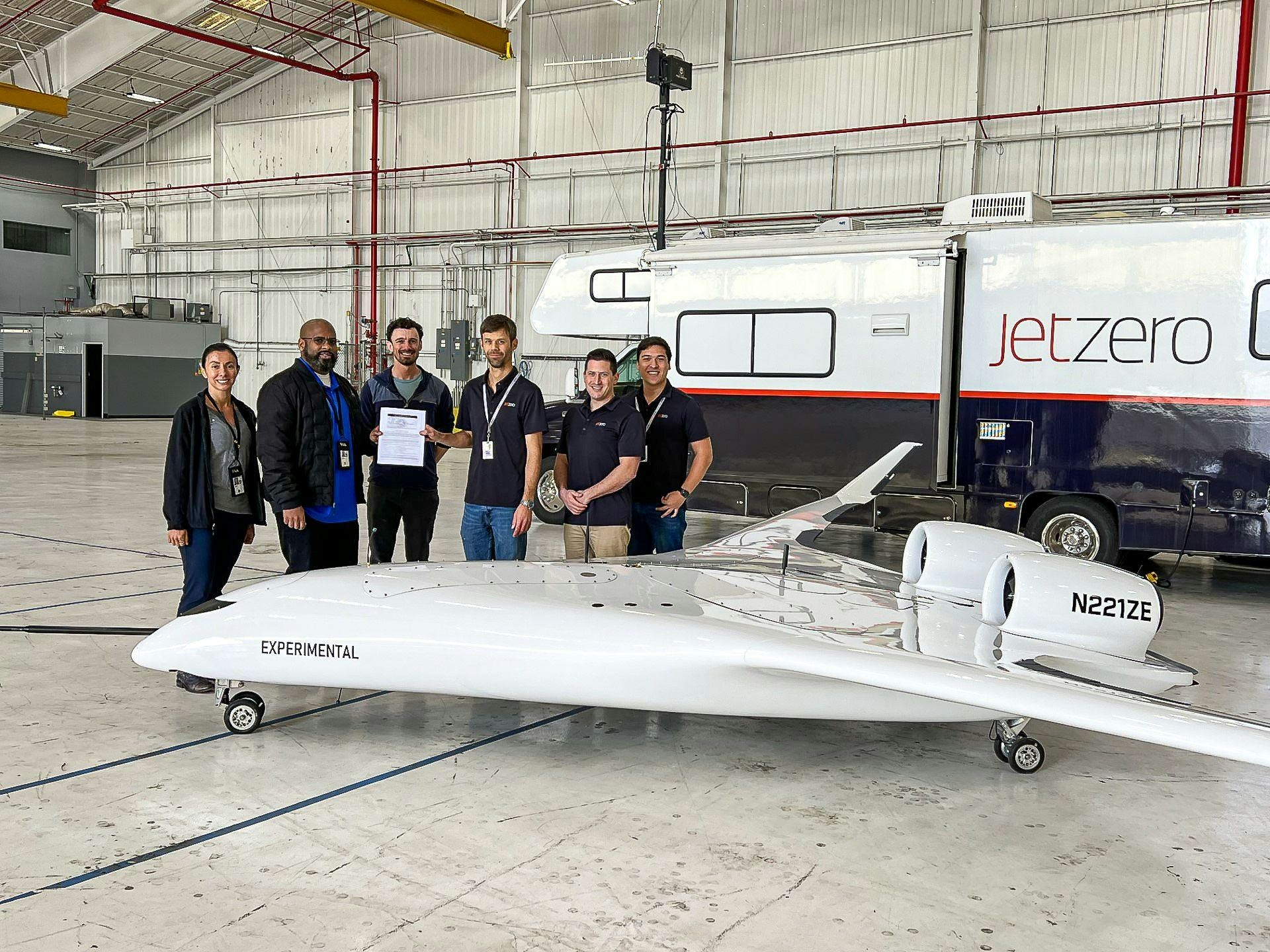
JetZero, the aerospace company pioneering a new family of Blended Wing Body (BWB) aircraft, is collaborating closely with the US Air Force to determine the optimal engine for its production models. The company’s BWB portfolio includes a military aerial refueling tanker, an all-cargo variant, and a commercial passenger aircraft designated the Z4. Construction of a full-scale demonstrator is already in progress, marking a significant milestone in the program’s development.
Engine Selection for the Demonstrator and Long-Term Challenges
For its demonstrator aircraft, JetZero has chosen the Pratt & Whitney PW2040 engine, a low-bypass turbofan originally developed in the 1970s. This engine currently powers the Boeing 757 and the Air Force’s C-17 transport aircraft. The PW2040 is particularly suited to the Z4’s intended cruising altitudes of 41,000 to 45,000 feet, where high-bypass engines—commonly used in modern commercial airliners—tend to lose efficiency. As such, the PW2040 represents a practical interim solution for the demonstrator phase.
However, JetZero faces considerable challenges in securing a long-term engine solution. No existing off-the-shelf engines meet the required thrust range of 45,000 to 50,000 pounds, and there are no known engines currently under active development in this class. The Air Force, while not prioritizing ultra-high efficiency for its tanker variant, has an urgent requirement to re-engine its C-17 fleet, which operates with a 40,300-pound thrust version of the PW2040. To address this, the Air Force plans to issue a request for information, termed a Commercial Solutions Opening (CSO), by the end of the year. Leading engine manufacturers such as GE Aerospace, Pratt & Whitney, and Rolls-Royce are expected to respond.
Potential Synergies and Industry Implications
An engine developed to meet the Air Force’s C-17 re-engining needs could potentially power JetZero’s BWB tanker and, by extension, its cargo and passenger variants. This alignment offers the possibility of streamlined development and procurement processes across both military and commercial sectors, potentially accelerating the adoption of BWB aircraft.
Nonetheless, JetZero’s engine strategy carries inherent risks. The company must overcome regulatory challenges associated with certifying new engine designs, particularly for unconventional aircraft configurations like the BWB. Technological uncertainties remain significant in developing propulsion systems tailored to these novel airframes. Additionally, the commercial aviation market may exhibit caution; traditional airlines, accustomed to conventional tube-and-wing aircraft, might question the operational advantages and maintenance demands of the BWB design. Established aircraft manufacturers could respond with a mix of collaboration or competitive marketing, emphasizing the proven efficiency and maturity of their existing propulsion technologies.
As JetZero progresses with its BWB program, the outcome of the Air Force’s engine initiative and the broader industry’s reaction will be pivotal in determining the future trajectory of these next-generation aircraft.

Etihad and Swissport Extend Global Partnership

Sepehran Airlines B737 Returns to Mashhad After Tyre and Engine Issues

Etihad Deploys Widebody Fleet to Meet Strong Demand

Korean Air Finalizes $36.2 Billion Deal with Boeing

Australia’s RFDS Queensland Section Orders Six King Air 260Cs

Korean Air Finalizes Order for 103 Boeing Jets and Engines

Embraer E195-E2 Features Distinctive Engine Placement Among Regional Jets

What Passengers Can Expect on Boeing’s New 777X Jet

How Ethiopian Airlines Became Africa’s Leading Carrier Amid Gulf Competition

Joby Aviation Extends Autonomous Flight Capabilities with Cross-Country Tour
