
حوّل رؤى الذكاء الاصطناعي إلى أفعال منسّقة

الرائج الآن
Categories
Joby Aviation Extends Autonomous Flight Capabilities with Cross-Country Tour

Joby Aviation Advances Autonomous Flight with Cross-Country Tour
Joby Aviation has embarked on a significant cross-country tour featuring its J208 autonomous aircraft, marking a pivotal development in the company’s pursuit of advancing autonomous flight technology and expanding its commercial applications. Spanning ten states over the course of a month, this journey not only demonstrates the increasing sophistication of Joby’s autonomy platform but also underscores its potential utility beyond passenger air mobility. The company envisions applications in commercial freight, medical transport, emergency response, and defense logistics, reflecting a broadening scope for autonomous aviation.
Demonstrating Capability and Building Partnerships
The J208 has already accumulated an impressive record, with over 400 flights and 800 automated flight hours, including participation in three U.S. military exercises. These real-world operations have validated the aircraft’s performance in complex logistics scenarios, fostering confidence among both commercial and government stakeholders. The ongoing tour offers Joby the opportunity to operate in diverse environments, further testing the aircraft’s capabilities while strengthening relationships with government agencies and industry partners.
Joby’s engagement with the White House-backed eIPP program, alongside collaborations with transportation authorities in Texas, North Carolina, and other states, supports its efforts to collect operational data, demonstrate integration within controlled airspace, and accelerate the development of autonomous aviation networks. The J208’s supervised autonomy model, wherein a ground-based remote pilot acts as Pilot in Command, provides a pragmatic approach toward broader deployment of autonomous aircraft.
Challenges and Market Dynamics
Despite these advancements, the expansion of autonomous flight faces considerable challenges. Regulatory approval processes and achieving widespread acceptance of autonomous aircraft remain significant obstacles. Joby must consistently demonstrate the safety and reliability of its technology, particularly as operations extend into more complex airspace and varied environmental conditions. The company also contends with skepticism from traditional aviation stakeholders, who remain cautious about integrating emerging technologies into established systems.
In response, competitors may intensify investments in similar autonomous technologies or pursue strategic partnerships to maintain their market positions amid evolving industry dynamics. Joby’s success will depend on its ability to address safety concerns, prove operational efficiency, and comply with stringent aviation regulations. Extensive testing and regulatory compliance will be critical factors influencing the company’s progress.
Market Performance and Outlook
Over the past year, Joby Aviation’s share price has declined by 56.2%, a steeper drop compared to the 11.3% decrease observed in the broader Aerospace-Defense sector. This reflects both the inherent volatility of the industry and investor caution surrounding emerging technologies.
Looking ahead, Joby’s continued advancement of autonomous flight capabilities, coupled with its navigation of regulatory and market challenges, will be essential to achieving large-scale commercial adoption. The ongoing cross-country tour highlights the company’s commitment to innovation and positions it as a potential leader in the rapidly evolving autonomous air logistics sector.
Strengthening Europe's Aviation Supply Chain Amid Uncertainty
He 111Z Zwilling: Twin Fuselages, Five Engines, One Pilot
Monacair Plans Electric Air Taxi Service Between Monaco and Nice by 2029
Somalia’s Starsky Aviation Plans International Expansion
Precision and Care Essential in Aerospace Coating Applications
Drukair Chooses LEAP Engines for Five Airbus Aircraft
GE Aerospace Advances XA102 Adaptive Cycle Engine Toward Assembly for U.S. Air Force Combat Aircraft
Russia Tests Air Taxis with Passenger Flights Possible in 2-3 Years
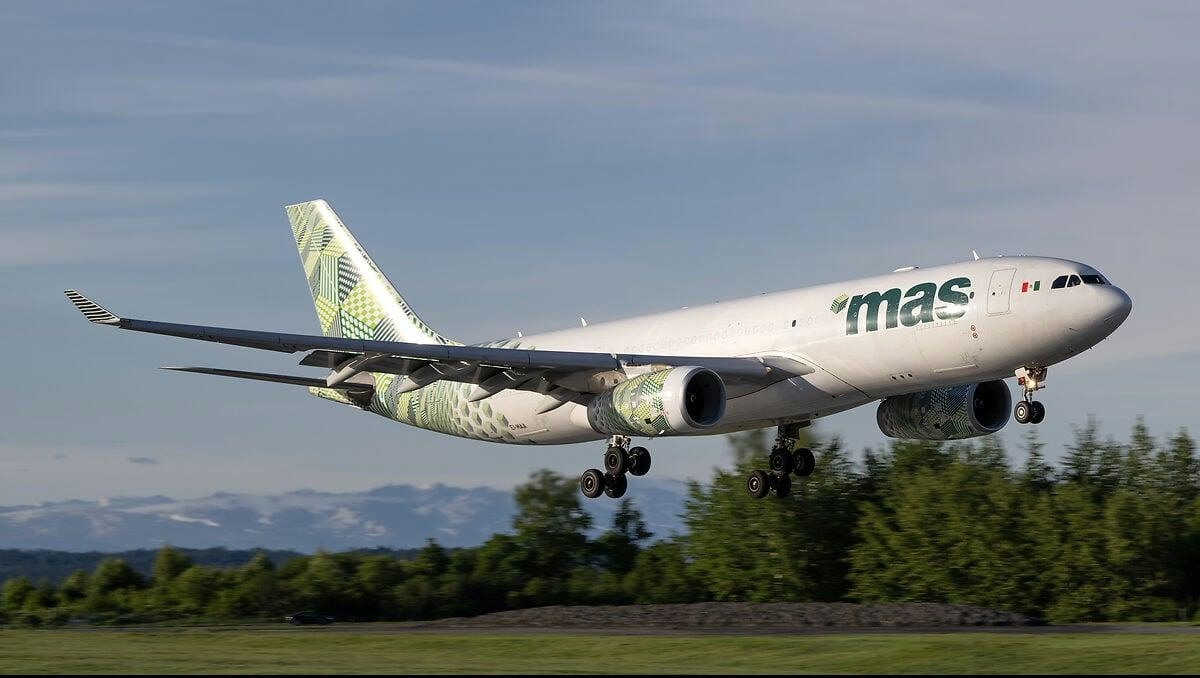
EPCOR and MAS Sign Five-Year A330 APU Support Agreement
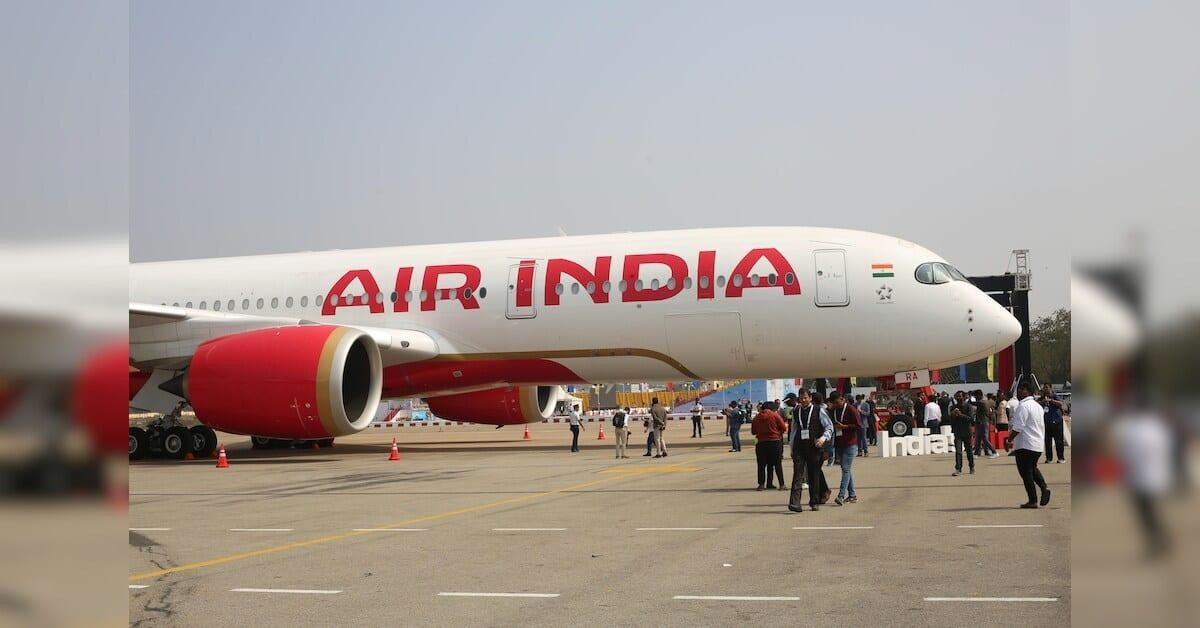
Air India Expands Use of Salesforce AI to Enhance Customer Service
