
حوّل رؤى الذكاء الاصطناعي إلى أفعال منسّقة

الرائج الآن
Categories
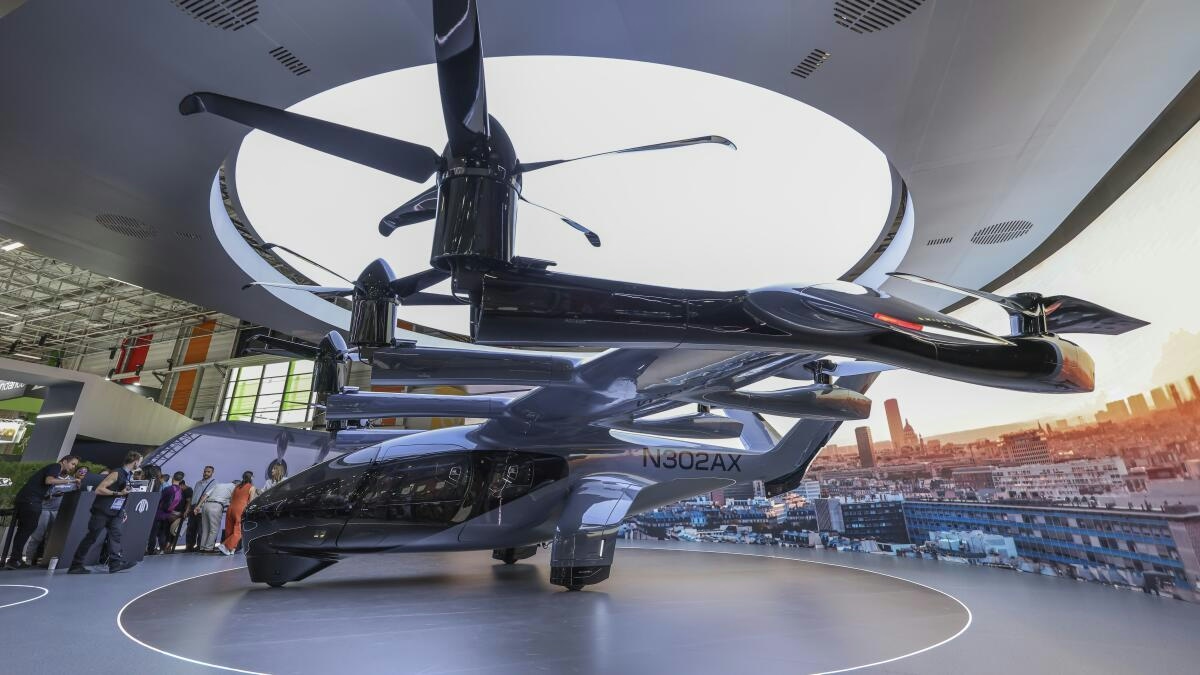
Joby Aviation Reaches Milestone with Piloted Electric Air Taxi
Joby Aviation Reaches Milestone with Piloted Electric Air Taxi
Progress in Advanced Air Mobility
Joby Aviation has successfully completed a piloted test flight of its electric air taxi, marking a pivotal advancement in the company’s journey toward commercial service within the burgeoning advanced air mobility sector. Conducted in the San Francisco Bay Area, this crewed demonstration represents significant progress in Joby’s ongoing test program and brings the company closer to its targeted service launch window between 2026 and 2027. Despite this achievement, full commercial deployment remains contingent upon obtaining type certification, production approval, and operational permissions from regulatory authorities.
Competitive Landscape and Industry Dynamics
This milestone arrives amid intensifying competition in the electric vertical takeoff and landing (eVTOL) market. Joby faces legal challenges, including a countersuit from rival Archer Aviation, which alleges that Joby concealed connections to Chinese entities to secure U.S. government contracts. Meanwhile, other competitors such as Ascendance and Eve Air Mobility continue to advance their own eVTOL initiatives, highlighting the rapidly evolving and contested nature of the sector.
Joby’s involvement in the eVTOL Integration Pilot Program and its ongoing demonstration flights are under close scrutiny by investors and industry analysts. Key indicators of progress will include regulatory updates, accumulated test flight hours, and any revisions to management guidance. While visible milestones often boost investor confidence and stock momentum, the absence of definitive launch dates means that market rallies can be short-lived, underscoring the importance of cautious risk management.
Implications for Australian Markets and Regulatory Considerations
Joby’s advancements have renewed interest in the potential applications of electric air taxis within Australian markets. Near-term opportunities may include airport shuttle services in Sydney and Melbourne, tourist routes in Queensland, and critical healthcare transport links. The design of Joby’s air taxi is particularly suited for short urban trips that must comply with stringent noise and safety regulations. However, any operations in Australia would require comprehensive approvals from the Civil Aviation Safety Authority, including rigorous pilot licensing, maintenance oversight, and community engagement to address noise concerns.
Initial trials in Australia are expected to focus on designated corridors and daylight operations, necessitating coordination among airports, state governments, and emergency services. Insights gained from Joby’s international program could inform the development of local advanced air mobility frameworks. Nonetheless, significant challenges remain, including ensuring reliability, battery performance, and redundancy standards meet strict regulatory requirements. Certification timelines may also be affected if design modifications become necessary, while supply chain readiness for critical components such as motors, batteries, and avionics remains a vital factor.
Investors are advised to monitor Joby’s test performance metrics, safety disclosures, and cash flow relative to key milestones to evaluate the company’s trajectory. The economic viability of routes will depend on variables such as passenger load factors, pricing strategies, energy costs, and maintenance schedules. Additionally, successful urban integration will require partnerships to develop vertiports and upgrade utility infrastructure. The broader narrative for Joby and its competitors will be strengthened by securing anchor customers, establishing tourism and airline partnerships, and obtaining supportive financing, government grants, and insurance arrangements.
Joby Aviation’s piloted test flight represents a concrete step forward in the pursuit of commercial electric air taxi services, yet the path to widespread adoption remains complex and fiercely competitive.

Etihad Airways Suspends Airbus A380 Flights on Key Route

Aditya Birla Group Seeks Approval for Aircraft Leasing in GIFT City

Qatar Airways Highlights Innovation and Connectivity at Arabian Travel Market 2026

Hong Kong's Five-Year Plan Includes Andrew Fan's Aircraft Parts Processing Hub Proposal

ACIA Aero Leasing Delivers ATR72-600 to Air Nostrum

RTX Appoints Jill Albertelli as Head of Pratt & Whitney

TAT Technologies Joins Beyond Aero Hydrogen Aircraft Program

AURAK Study Highlights Barriers to Air Taxi Adoption in Emerging Economies

Xiamen Air Selects Altitude for 787 Maintenance at Heathrow

Etihad and Swissport Extend Global Partnership
