
حوّل رؤى الذكاء الاصطناعي إلى أفعال منسّقة

الرائج الآن
Categories
Korean Air, Archer team up on military air taxi
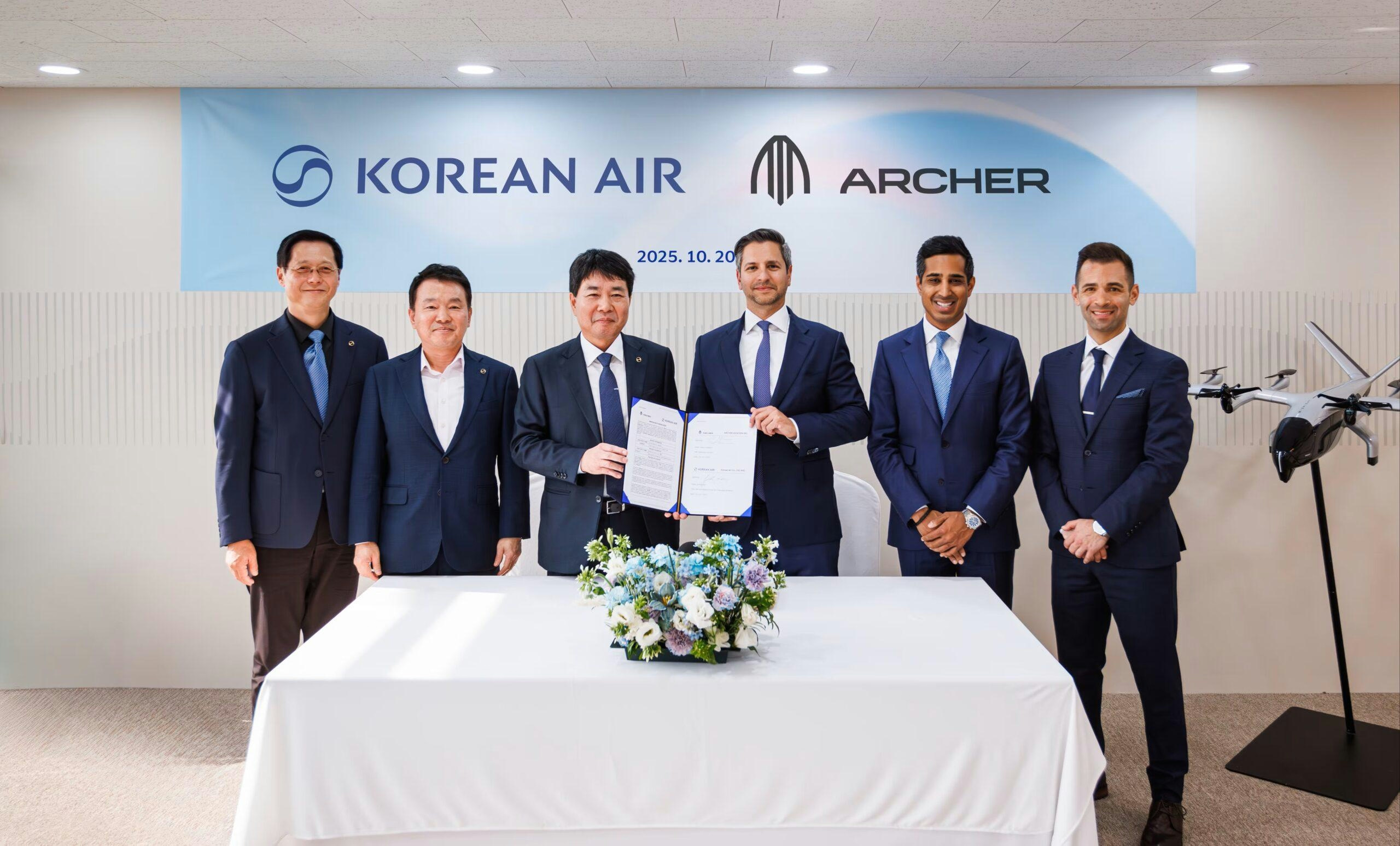
Korean Air and Archer Collaborate on Military Air Taxi Development
Korean Air has entered into a strategic partnership with U.S.-based electric aircraft manufacturer Archer Aviation to adapt Archer’s air taxi technology for military applications. The collaboration focuses on developing a platform capable of supporting troop deployment, medical evacuation, and rescue operations. This initiative aligns with South Korea’s ambition to establish a foothold in the emerging advanced air mobility (AAM) defense sector.
Adapting Civilian Technology for Military Use
Under the terms of the agreement, Korean Air will take charge of converting Archer’s Midnight aircraft for military purposes, including systems integration. The Midnight model has already undergone testing with the U.S. Air Force, providing a proven foundation for further development. Archer will contribute technical expertise and assist with airworthiness certification processes. Korean Air intends to leverage the aircraft’s design to expedite the creation of a next-generation military transport system tailored to South Korea’s challenging geography, characterized by mountainous regions and numerous islands.
South Korean defense authorities have identified AAM technology as a national priority, viewing it as a catalyst for growth within the defense industry and a means to enhance rapid mobility for troops and supplies. Officials regard the Korean Air-Archer partnership as a pivotal test case for the country’s military AAM ambitions. Success in this venture could yield critical certification experience, facilitate phased localization of technology, and bolster South Korea’s competitiveness in the global defense export market.
Certification and Strategic Implications
Korean Air anticipates that Archer’s experience with the U.S. Federal Aviation Administration will be instrumental in helping South Korea establish its own AAM certification framework. This advancement is expected to elevate the country’s capabilities to a world-class standard. The Ministry of Transport has indicated that synchronizing certification efforts with military development timelines could also support Seoul’s broader objective of launching commercial urban air mobility services by 2028.
A Korean Air official emphasized the strategic importance of the project, describing military AAM development as a “blue ocean opportunity” for South Korea to secure leadership in future aviation technologies and industry dominance. The partnership with Archer is viewed as a critical step toward capitalizing on this opportunity and establishing a new model for defense exports.
Challenges and Market Dynamics
Despite the promising outlook, the partnership faces significant challenges. These include navigating complex defense procurement processes, ensuring the technology meets rigorous military standards, and managing the financial demands associated with adapting civilian aircraft for military use. Market responses have been mixed; while some investors are optimistic about the defense sector’s growth potential, others remain cautious due to delays in civil aviation certification.
Competition in the dual-use aircraft market is intensifying, with companies such as Beta Technologies developing platforms for both military and civilian applications. Other firms are similarly exploring military contracts as a means to sustain their commercial air taxi projects.
The Defense Acquisition Program Administration is currently evaluating whether to include the Korean Air-Archer initiative in its fast-track pilot program. Inclusion would accelerate testing of the aircraft’s military capabilities and potentially attract additional domestic suppliers. Furthermore, Korean Air and Archer are in discussions regarding a long-term export strategy that could expand into a broader Korea-U.S. defense partnership, positioning them for an early lead in the global military AAM market.

Etihad Airways Suspends Airbus A380 Flights on Key Route

Aditya Birla Group Seeks Approval for Aircraft Leasing in GIFT City

Qatar Airways Highlights Innovation and Connectivity at Arabian Travel Market 2026

Hong Kong's Five-Year Plan Includes Andrew Fan's Aircraft Parts Processing Hub Proposal

ACIA Aero Leasing Delivers ATR72-600 to Air Nostrum

RTX Appoints Jill Albertelli as Head of Pratt & Whitney

TAT Technologies Joins Beyond Aero Hydrogen Aircraft Program

AURAK Study Highlights Barriers to Air Taxi Adoption in Emerging Economies

Xiamen Air Selects Altitude for 787 Maintenance at Heathrow

Etihad and Swissport Extend Global Partnership
