صورة

أيروجيني — مساعدك الذكي للطيران.

اسأل عن أي شيء. قم بتحليل كل شيء. تصرف فورًا.

الرائج الآن

Categories

Lockheed Martin Australia Reaches Milestone in C-130J Program Delivery
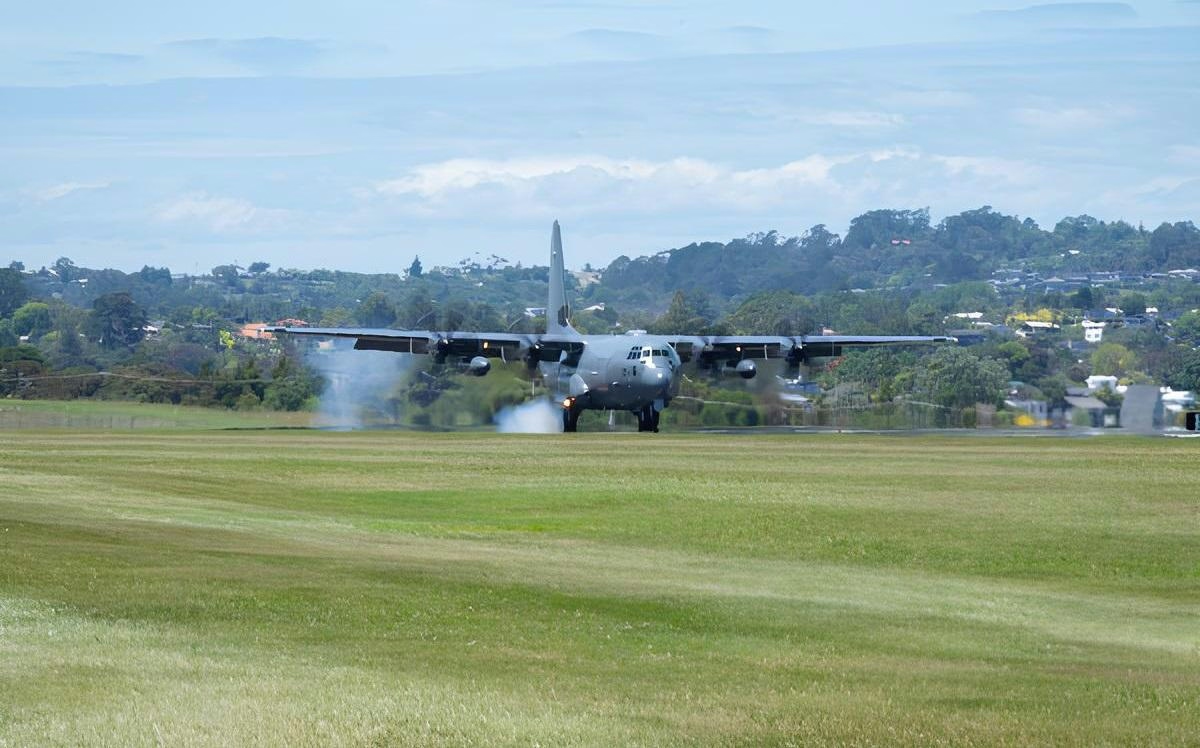
February 26, 2026By ePlane AI
Lockheed Martin Australia Reaches Milestone in C-130J Program Delivery
0
0
Lockheed Martin Australia
C-130J Super Hercules
Aerospace Manufacturing

Lockheed Martin Australia Achieves Milestone in C-130J Wing Flap Deliveries

Lockheed Martin Australia has marked a significant achievement with the delivery of its 300th wing flap ship-set for the C-130J Super Hercules aircraft, highlighting the strength and sophistication of Australia’s defence manufacturing sector. These composite wing flaps are produced by Quickstep, a subsidiary of ASDAM, at its Bankstown Airport facility in Sydney. As the sole global supplier of these critical components, Quickstep plays a vital role in the international aerospace supply chain, underscoring Australia’s strategic importance in global defence manufacturing.

Strengthening Partnerships and Sovereign Capability

The latest ship-set is destined for installation on the first of Australia’s new C-130J aircraft, further solidifying the partnership between Lockheed Martin and Quickstep. Toni Marzulli, vice president of operations at Lockheed Martin Australia, described the milestone as a significant achievement not only for Quickstep but also for Australian defence manufacturing as a whole. She emphasized Quickstep’s consistent delivery of mission-essential composite structures with the quality, scale, and precision demanded by global aerospace programs.

Rohan Stocker, Quickstep’s chief executive officer, highlighted the importance of being the sole global supplier of C-130J composite wing flaps, calling it a testament to the company’s skilled workforce and the strength of its collaboration with Lockheed Martin. He noted that the program has been foundational to Quickstep’s growth, sustaining highly skilled jobs and advancing manufacturing capabilities within Australia.

Challenges and Market Dynamics

Despite this milestone, Lockheed Martin Australia continues to navigate challenges within the C-130J program. Recent interruptions in deliveries, caused by certification issues related to communication packages, have underscored the complexities involved in maintaining seamless production and delivery schedules. Nevertheless, the company’s resilience and adaptability have helped maintain positive momentum.

The milestone has been met with favorable market reactions. Lockheed Martin recently revised upward its profit and revenue outlook for 2026, driven by rising geopolitical tensions and increased demand for military transport aircraft. This achievement also reinforces Australia’s sovereign industrial capability by integrating local industry into global supply chains.

Competitive Pressures in the Military Transport Sector

Competition in the military transport aircraft sector is intensifying. Embraer and the Mahindra Group have announced plans to establish a maintenance, repair, and overhaul facility in India for the C-390, contingent on winning the country’s Medium Transport Aircraft requirement. Lockheed Martin’s competitors already maintain extensive industrial involvement in India, adding pressure to sustain its competitive edge in the region.

Lockheed Martin Australia remains committed to building resilient sovereign capability and deepening collaboration with Australian industry partners. Marzulli reiterated the company’s pride in working with partners like Quickstep to strengthen sovereign capability and integrate Australian industry into global aerospace supply chains.

The delivery of the 300th wing flap ship-set not only represents a manufacturing milestone but also reinforces Australia’s growing role in the global defence industry amid evolving challenges and heightened competition.

More news
Alaris Aerospace Consolidates Global Operations in Florida Hub

Alaris Aerospace Consolidates Global Operations in Florida Hub

Alaris Aerospace Consolidates Global Operations in Florida Hub Alaris Aerospace Systems has announced a strategic consolidation of its four U.S. warehouse facilities into a single, purpose-built Global Fulfilment Centre located in Jupiter, Florida. This initiative aims to streamline the company’s operations, enhance service delivery, and support long-term growth while strengthening the resilience of its global supply chain. Centralizing Operations to Enhance Efficiency The consolidation represents a significant operational shift for Alaris, a specialist in aftermarket aircraft parts and supply chain solutions. By centralizing its warehousing activities, the company intends to improve efficiency in inventory management, order processing, and distribution. This centralization is expected to provide customers with a more consistent and reliable experience. Bikram Jaswal, Chief Executive Officer of Alaris Aerospace, emphasized the importance of the move, stating that the new fulfillment center will enable faster order processing, improved inventory accuracy, and a more uniform customer experience. He also highlighted that the consolidation positions the company to scale effectively in response to growing demand across both commercial and defense markets. Phased Transition and Operational Planning The transition to the new Global Fulfilment Centre will be carefully phased to ensure uninterrupted service. Alaris has developed a comprehensive operational plan that addresses inventory transfers, system integrations, and close coordination with customers and logistics partners. This approach is designed to minimize disruption throughout the migration process. Ravinder Rathore, Chief Operating Officer, noted that the phased approach allows for a careful migration of inventory and workflows while maintaining the high service standards expected by customers. He further explained that the company is investing in personnel, systems, and processes to ensure the consolidation results in net improvements for all stakeholders. Industry Challenges and Market Context The consolidation occurs amid broader challenges facing the aviation sector. A recent Florida Chamber Foundation case study highlights workforce shortages that could impact the state’s aviation industry, potentially complicating Alaris’s efforts to recruit and retain skilled talent for its expanded operations. Additionally, large-scale consolidations often attract regulatory scrutiny and present integration challenges, including aligning disparate systems and maintaining service quality during transitions. Market conditions, however, may provide some advantages. The recent increase in U.S. megadeals suggests a favorable environment for consolidation, with investors and industry analysts viewing such moves as opportunities to drive growth and operational efficiency. Nonetheless, competitors may respond strategically to capture market share during this period of transition, as has been observed in other sectors following major consolidations. As Alaris Aerospace undertakes this significant restructuring, the company faces a complex landscape of opportunities and risks. The success of the new Florida hub will depend not only on effective operational execution but also on the company’s ability to manage workforce challenges, regulatory requirements, and competitive pressures within a rapidly evolving aviation market.
AdVantage Thompson Maintains Innovative Approach as Business-Class Specialist

AdVantage Thompson Maintains Innovative Approach as Business-Class Specialist

AdVantage Thompson Maintains Innovative Approach as Business-Class Specialist Sustaining Leadership in a Competitive Market Thompson Aircraft Seating, a Northern Ireland-based manufacturer with nearly three decades of experience, continues to assert its position as a leading innovator in the business-class seating market. Operating from its factories in Portadown and Banbridge, the company has established a strong reputation through its flagship Vantage business-class seat. This product line now includes multiple variants designed for both widebody and narrowbody aircraft, featuring forward-facing and herringbone configurations tailored to evolving airline requirements. Andy Morris, Thompson’s chief commercial officer, emphasizes the company’s commitment to continuous improvement. He describes their seats as “living products” that undergo incremental enhancements to ensure each iteration surpasses its predecessor. This philosophy underpins Thompson’s ongoing efforts to meet the growing demand for premium travel experiences amid intensifying competition among airlines. Innovations and Product Developments At the recent Aircraft Interiors Expo (AIX), Thompson unveiled its latest innovation: the XL+ front row. This design optimizes previously unused cabin space by replacing the traditional crew storage monument above the footwell, thereby creating an enhanced business-class offering. The XL+ is available across Thompson’s product range, reflecting the company’s focus on maximizing passenger comfort and cabin efficiency. The Vantage family has expanded to include several offshoots. The forward-facing Vantage XL, tailored for the Airbus A330, and the more spacious XL+ variant for the A350 and Boeing 787, complement the original design. Additionally, the single-aisle Vantage Solo and the new Vantage Nova—a widebody seat arranged in a herringbone layout—broaden the company’s portfolio. The Vantage Nova is currently undergoing certification and is slated for its first delivery to an undisclosed A350 operator later this year. Thompson’s integration within China’s AVIC Cabin Systems since 2016 has further strengthened its market position. The company is supplying business-class seats for Lufthansa’s forthcoming 777-9 aircraft as part of the airline’s new Alegris cabin. Although the seat design is proprietary to Lufthansa, Morris confirms that the 777-9 remains a key element of Thompson’s product roadmap, underscoring the company’s strategic focus on future opportunities. Market Dynamics and Strategic Challenges While single-aisle aircraft constitute only 15% of Thompson’s deliveries, the expanding long-haul narrowbody segment presents significant growth potential. Airlines are increasingly deploying extended-range A321s, with JetBlue’s transatlantic A321LRs featuring Thompson’s direct aisle access Vantage Solo as a notable example. The retrofit market also offers lucrative prospects, as airlines postpone new widebody acquisitions and instead invest in cabin refurbishments. Morris notes that the aftermarket currently accounts for approximately 40% of Thompson’s business, with expectations for continued growth in this segment. Despite these achievements, Thompson faces challenges in maintaining its innovative edge amid a competitive and rapidly evolving landscape. The emergence of new managing general agents (MGAs) in adjacent sectors, who must balance distribution advantages against underwriting expertise, mirrors the strategic decisions confronting Thompson. The anticipated rise of agentic commerce—projected to reach $1.5 trillion globally by 2030—could significantly alter market dynamics, prompting competitors to seek early leadership through agentic frameworks. Although AVIC Cabin Systems has yet to release its 2025 financial results, early indicators suggest that Thompson’s revenue, profitability, and order backlog—now exceeding £1.3 billion ($1.7 billion)—are on an upward trajectory. The recent announcement of China Southern as the launch customer for the Vantage XL+ marks a further milestone in Thompson’s ongoing evolution as a specialist in business-class seating.
Expliseat Introduces TiSeat S Premium Aircraft Seat

Expliseat Introduces TiSeat S Premium Aircraft Seat

Expliseat Launches TiSeat S: A Lightweight Premium Seat for Regional Jets At the Aircraft Interiors Expo 2026 in Hamburg, French manufacturer Expliseat unveiled the TiSeat S, a new premium aircraft seat designed specifically for regional jets. Building on its reputation for lightweight titanium and carbon fiber economy class seats, the company is now expanding into the premium segment to address persistent challenges related to weight, cost, and passenger comfort in smaller aircraft. Innovation in Regional Business Class Seating The TiSeat S offers a 40% reduction in seat weight compared to traditional models, a critical advantage for airlines operating regional jets where weight savings directly impact fuel efficiency and operating costs. While the seat’s structure is largely concealed by substantial trim, it shares a common framework and design language with Expliseat’s economy class TiSeat 2X. This approach enables cost efficiencies and ensures a consistent passenger experience across different cabin classes. Amaury Barberot, CEO of Expliseat, emphasized the company’s commitment to delivering a premium product that combines comfort, efficiency, and consistency. “Business class travelers expect a seamless and elevated experience across their entire journey. With TiSeat S, we apply our proven lightweight technology to deliver a premium product that combines comfort, efficiency, and consistency across aircraft platforms,” he stated. The regional business class market has seen limited innovation over the past two decades, with airlines frequently expressing frustration over the lack of suitable options. Expliseat aims to fill this void by leveraging shared infrastructure with its economy line, making the TiSeat S both cost-effective and scalable. The company identifies the U.S. market as a key opportunity, where regional jets equipped with premium seating are common and where Expliseat’s economy seats have already gained traction. Features, Competition, and Market Outlook The TiSeat S is equipped with amenities such as storage compartments and power outlets, and it can accommodate embedded entertainment screens if required. Durability is a central focus, given the high-frequency usage typical of regional aircraft. Expliseat envisions airlines outfitting entire fleets with its seats, streamlining maintenance processes and enhancing the overall passenger experience. Despite these advantages, Expliseat faces stiff competition from established suppliers like Recaro, which are also expanding their business-class offerings. Major airlines, including Delta, are planning to introduce new business-class suites, raising the standard for premium seating. While carriers such as Air France and Jettime have already committed to retrofitting their fleets with Expliseat products, others may remain cautious due to the company’s relatively recent entry into the premium segment. Market reactions are expected to be mixed, with incumbent players likely to respond through price adjustments or enhanced features to protect their market share. The industry’s increasing focus on sustainability and innovation, underscored at events like AIX 2026, may further influence airline decisions as they evaluate new seating solutions. As Expliseat launches the TiSeat S, the company is betting that its lightweight, modular design will appeal to airlines seeking operational efficiency alongside an upgraded passenger experience in the competitive regional jet market.
GE Aerospace to Establish Engine Support Hub in India for F404-IN20

GE Aerospace to Establish Engine Support Hub in India for F404-IN20

GE Aerospace to Establish Engine Support Hub in India for F404-IN20 GE Aerospace has entered into a contract with the Indian Air Force (IAF) to establish a domestic depot facility dedicated to the F404-IN20 engines that power the Tejas light combat aircraft. This development marks a significant advancement in India’s pursuit of defence self-reliance. The new facility, to be operated by the IAF with technical support from GE Aerospace, will offer comprehensive training, maintenance support, spare parts, and specialised equipment. Once operational, the depot is expected to eliminate reliance on foreign repair centres, thereby reducing maintenance turnaround times and enhancing fleet availability. Strengthening Indigenous Defence Capabilities This initiative builds upon a longstanding partnership between GE Aerospace and the IAF, which has spanned over four decades. It aligns closely with India’s broader strategic objective of developing indigenous defence infrastructure. The establishment of the support hub is intended to bolster local sustainment capabilities for the Tejas programme, which has encountered challenges such as engine delivery delays and concerns over supply chain reliability. By localising maintenance and support, the facility aims to mitigate these issues, although GE Aerospace may face heightened scrutiny regarding its delivery schedules and logistical efficiency. Market analysts suggest that this move could intensify competition within India’s expanding defence sector, potentially prompting rivals like GKN Aerospace to enhance their offerings. Additionally, GE Aerospace will need to navigate complex logistical and regulatory frameworks as it establishes operations in India. Rita Flaherty, Vice President of Sales and Business Development for Defense & Systems at GE Aerospace, highlighted that the agreement reaffirms the company’s commitment to supporting India’s armed forces. She noted that the depot will ensure improved availability of the F404-IN20 engines and provide the IAF with dependable access to advanced propulsion technology. Broader Contributions to India’s Aerospace Ecosystem Beyond the F404-IN20 engine programme, GE Aerospace continues to play a pivotal role in the development of India’s aerospace sector across design, manufacturing, and sustainment domains. The company has made significant investments in skills development, having trained over 5,000 individuals in core manufacturing capabilities at its Pune facility. Its Edison Engineering Development Programme has produced 150 locally trained engineering graduates. In addition, the GE Aerospace Foundation, in partnership with United Way, launched the “Next Engineers” initiative in Bengaluru in September 2025. This four-year programme is designed to support 4,000 aspiring engineers through college and career readiness pathways, further contributing to the country’s talent pipeline. GE Aerospace’s engines power multiple Indian military platforms beyond the Tejas, including the Navy’s P-8I maritime patrol aircraft and MH-60R helicopters, as well as the Air Force’s AH-64 Apache helicopters. Its LM2500 marine gas turbines also provide propulsion for key naval assets such as the INS Vikrant aircraft carrier and the P-17 Shivalik-class frigates. As GE Aerospace advances with the establishment of the engine support hub, its capacity to resolve supply chain challenges and comply with India’s regulatory environment will be closely monitored by industry stakeholders and competitors alike.
Textron secures extension for T-6 trainer support

Textron secures extension for T-6 trainer support

Textron Secures Five-Year Extension for T-6 Trainer Support Textron Aviation Defense LLC, a subsidiary of Textron Inc., has been awarded a five-year contract extension by the U.S. Government to continue providing Sustaining Engineering and Program Management (SEPM) services for the T-6 trainer fleets operated by the U.S. Air Force, Navy, and Army. Originally granted in 2021, this contract now extends through 2029, ensuring ongoing systems engineering, program oversight, and support for maintenance, repairs, modifications, and structural integrity programs for the T-6A, T-6B, and T-6D aircraft. All related work will be carried out at Textron’s Wichita, Kansas facility. Travis Tyler, President and CEO of Textron Aviation Defense, highlighted that the contract extension reflects the government’s sustained confidence in Textron’s capabilities. He underscored the company’s dedication to maintaining aircraft availability and ensuring the T-6 fleet remains mission-ready, thereby supporting the training of future military pilots. The T-6 Texan II: A Leading Military Trainer Amidst Growing Competition The Beechcraft T-6 Texan II is widely regarded as a premier military training platform, noted for its relatively low acquisition, operating, and sustainment costs. Backed by Textron’s extensive aviation manufacturing heritage—spanning nearly a century and more than 255,000 aircraft delivered worldwide—the T-6 has established a reputation for reliability and efficiency. With an installed base that significantly surpasses its nearest competitor, the T-6 family has served as the world’s leading integrated training system for over two decades. Its active production line, supported by a Manufacturing Readiness Level of 10 and a resilient supply chain, further ensures its long-term viability. Despite this strong position, Textron faces increasing competition from major defense contractors such as Boeing and Lockheed Martin. Both companies are actively pursuing opportunities to replace the aging T-45 Goshawk with advanced training systems, particularly as the U.S. Navy seeks to modernize its training fleet. This competitive landscape poses challenges for Textron, as Boeing and Lockheed Martin are expected to leverage their existing capabilities and strategic partnerships in bids for the Navy’s forthcoming Undergraduate Jet Training System contract. Market responses to Textron’s contract extension have been mixed. While some stakeholders view the continuation of support as a positive measure to guarantee uninterrupted pilot training and fleet readiness, others regard it as a temporary solution that may delay broader modernization efforts for the Navy’s training aircraft. As competition intensifies, Textron’s ability to maintain its leadership will depend on its ongoing performance and adaptability within a rapidly evolving defense environment.
China Southern Airlines Receives New Boeing 737-8

China Southern Airlines Receives New Boeing 737-8

China Southern Airlines Expands Fleet with New Boeing 737-8 Delivery CDB Aviation, the Irish leasing subsidiary of China Development Bank Financial Leasing Co., has delivered a new Boeing 737-8 aircraft to China Southern Airlines, marking a significant addition to the carrier’s modern fleet. This latest delivery follows the arrival of two Airbus A321-251NX aircraft from CDB Aviation’s orderbook in August 2025, bringing the total number of aircraft leased long-term from the lessor to three. The transaction underscores the deepening partnership between China Southern and CDB Aviation, reflecting a shared commitment to fleet modernization and operational efficiency. Michelle Wu, Head of Commercial for Greater China at CDB Aviation, emphasized the strategic importance of the deal, highlighting the company’s dedication to providing customized financing solutions tailored to the needs of airline partners across the Greater China region. The introduction of the next-generation Boeing 737-8 is expected to bolster China Southern’s growth strategy, supporting both domestic and international expansion by enhancing fuel efficiency and overall performance. Navigating Market Challenges and Competitive Pressures The delivery of the Boeing 737-8 comes amid ongoing geopolitical tensions between the United States and China, which pose potential risks to Boeing’s production schedules and order fulfillment in the region. Despite these uncertainties, China Southern has demonstrated relative financial resilience, reporting the only profitable result among China’s three major airline groups in 2025. In contrast, competitors such as Air China have faced widening losses, highlighting the divergent fortunes within the Chinese aviation sector. The competitive landscape in the Asia-Pacific region continues to evolve as airlines respond to shifting market dynamics. Shandong Airlines recently leased 10 Boeing 737s from Chinese lessors, signaling growing regional demand for the model. Meanwhile, United Airlines’ decision to upgrade its Guam hub fleet with 737 MAX aircraft may intensify competition in the area. As China Southern integrates the new Boeing 737-8 into its operations, the airline aims to enhance its service offerings and maintain its competitive position amid these external pressures shaping the aviation industry.
Air India Secures IFC Financing for Widebody Aircraft Purchase

Air India Secures IFC Financing for Widebody Aircraft Purchase

Air India Advances Widebody Fleet Connectivity with Hughes IFC Partnership HAMBURG — Air India has selected Hughes Network Systems to provide high-capacity Ka-band satellite-based inflight connectivity (IFC) across a portion of its widebody aircraft. The announcement, made at the Aircraft Interiors Expo in Hamburg, outlines plans to install Hughes’ In-Flight-branded IFC service on new Airbus A350-1000 jets through Airbus’s HBCplus program, as well as retrofit the system on existing Boeing 787-8 and 777-300ER aircraft. The connectivity solution will utilize the RAVE Aerospace Ka-band terminal, which incorporates ThinKom Solutions’ 2517 VICTS hardware—a critical element of Airbus’s HBCplus platform—on both Airbus and Boeing models. While financial details of the agreement remain confidential, Hughes confirmed that the initial deployment will cover both new and current widebody aircraft within Air India’s fleet. Diversifying Connectivity Amid Industry Challenges This initiative reflects Air India’s broader strategy to diversify its IFC suppliers. The airline already employs Panasonic Avionics’ Ku-band system on select aircraft through a partnership with Tata Group’s Nelco. Hughes’ Ka-band service, operating via the JUPITER satellite network, aims to deliver a uniform onboard connectivity experience and operational framework across the fleet. The Ka2517 VICTS antenna is also compatible with forthcoming multi-orbit satellite services, including Telesat’s Lightspeed Low Earth Orbit (LEO) network, positioning Air India to adopt future connectivity enhancements. Dr. Satya Ramaswamy, Air India’s Chief Digital & Technology Officer, emphasized the growing passenger demand for seamless broadband connectivity. He stated, “Our strategic vision is to provide connectivity with home-broadband-like bandwidth and latency on Air India’s international and domestic flights so that connecting from our flights feels the same as connecting from home.” Dr. Ramaswamy further noted that partnering with Hughes as a global launch customer enables the airline to address regulatory and coverage challenges, with a goal to achieve home-broadband service levels within two years. Navigating Market and Geopolitical Headwinds Air India’s IFC expansion and fleet modernization plans come amid significant industry challenges. The rising cost of sustainable aviation fuel poses financial pressures on widebody acquisitions and connectivity upgrades, a concern underscored by incoming IndiGo chief Willie Walsh. Competitive dynamics are also shifting, with American Airlines’ relatively modest widebody order backlog raising questions about its long-haul strategy compared to Delta and United. Geopolitical tensions, particularly between the United States and China, add complexity to the aviation landscape, potentially affecting Boeing’s delivery schedules and order volumes in the Asia-Pacific region—a critical market for Air India’s growth ambitions. Additionally, regulatory scrutiny of India’s largest online travel agency, MakeMyTrip, may indirectly influence aviation market conditions and consumer demand. Despite these challenges, Air India’s collaboration with Hughes signals a firm commitment to fleet modernization and enhancing passenger experience. Hughes, though a newer entrant in the IFC sector, has rapidly expanded its presence with multi-orbit, multi-network solutions, including recent deployments with Delta Air Lines. As Air India advances its connectivity strategy, the airline faces the dual task of leveraging technological innovation while managing evolving market risks to sustain its competitive position in the global aviation industry.
Air Canada Introduces Lie-Flat Suites on New Airbus A321XLR

Air Canada Introduces Lie-Flat Suites on New Airbus A321XLR

Air Canada Unveils Lie-Flat Suites on New Airbus A321XLR Fleet Air Canada is poised to transform its premium travel offering with the introduction of lie-flat business class suites on its forthcoming Airbus A321XLR aircraft. Announced in collaboration with seat manufacturer Collins Aerospace at the 2026 Aircraft Interiors Expo (AIX) in Hamburg, Germany, this development positions the Canadian flag carrier at the forefront of enhancing long-haul comfort on next-generation narrowbody jets. Signature Business Class: A Widebody Experience on a Narrowbody Jet The airline’s new business class, branded as 'Signature,' will feature 14 custom-designed Aurora suites developed by Collins Aerospace. These lie-flat seats are arranged in a two-abreast configuration, angled away from the windows to optimize privacy and space. Created in partnership with design firm Acumen, the Aurora suites aim to replicate the comfort and luxury of widebody business class cabins within the constraints of a single-aisle aircraft. The design incorporates elegant lighting, premium materials, and bronze accents to cultivate a sophisticated ambiance. Cynthia Muklevicz, Vice President of Global Airlines & Lessors at Collins Aerospace, highlighted the suite’s purpose: “Aurora is designed to provide a widebody business class experience on single-aisle aircraft, offering passengers the comfort, space, and privacy expected on long-haul flights.” To address the challenge of delivering widebody comfort on a narrowbody frame, Air Canada and Collins Aerospace have tailored the Aurora suite specifically to the A321XLR’s dimensions. This design maximizes passenger living space, adds an additional row of premium seating, and expands galley capacity to accommodate long-haul catering requirements. Air Canada asserts that the Aurora suite establishes a new benchmark for lie-flat seating on narrowbody aircraft through its efficient use of space, advanced technology, and bespoke finishes. Economy Comfort and Market Competition In the economy cabin, the A321XLR will be outfitted with 168 Meridian+ seats from Collins Aerospace. These seats incorporate design elements inspired by widebody aircraft, featuring contoured architecture that enhances comfort by providing additional space for passengers’ hips, knees, and elbows. This initiative comes amid intensifying competition among North American carriers. United Airlines and Delta Air Lines are also investing heavily in lie-flat suites and premium amenities, escalating the contest for high-yield, long-haul travelers. Industry observers will be closely monitoring whether Air Canada’s new product can attract a greater share of premium passengers and justify the investment, particularly as competitors may respond with further enhancements. This competitive environment could potentially trigger a price war in premium seating as airlines vie for market dominance. Air Canada’s A321XLR aircraft are expected to enter service in the coming months, with attendees at AIX receiving an exclusive preview of the new seats. As narrowbody jets increasingly serve long-haul routes, Air Canada’s latest cabin upgrade signals a new era of comfort and competition in transcontinental air travel.
Honeywell Highlights the Growing Importance of Supply Chain Resilience

Honeywell Highlights the Growing Importance of Supply Chain Resilience

Honeywell Highlights the Growing Importance of Supply Chain Resilience As U.S. policies increasingly prioritize the development of robust industrial supply chains, Honeywell International Inc. (ISIN: US4385161066) stands at a strategic inflection point. The company’s expertise in automation and aerospace uniquely positions it to capitalize on government-backed reshoring initiatives and the broader global emphasis on supply chain resilience. Investors in the United States and other English-speaking markets are closely monitoring Honeywell’s capacity to convert these favorable policy trends into sustained earnings growth. Diversified Business Model and Industry Positioning Honeywell operates as a diversified technology leader, structured around four principal segments. Its Aerospace Technologies division supplies engines, avionics, and systems to both commercial and military aircraft manufacturers, maintaining a strong presence in a recovering aviation sector. The Honeywell Building Technologies segment focuses on automation and control systems for commercial buildings, emphasizing energy efficiency and occupant comfort. Performance Materials and Technologies produces specialty chemicals and process solutions tailored to refining and petrochemical industries. Meanwhile, Safety and Productivity Solutions delivers warehouse automation, barcode scanning technologies, and personal protective equipment. This balanced portfolio mitigates the risks associated with dependence on any single industry, providing resilience against sector-specific downturns. Honeywell’s strategic focus on high-margin software and recurring aftermarket services supports margin expansion and ensures stable free cash flow, even amid economic disruptions. The company’s commitment to innovation is underscored by annual research and development investments amounting to approximately 2% of sales, enabling it to remain at the forefront of technological advancement and to scale in line with global infrastructure demands, thereby delivering consistent returns to shareholders. Market Drivers and Challenges in Supply Chain Resilience Honeywell’s product range spans from avionics systems for leading aircraft manufacturers such as Boeing and Airbus to building management solutions for smart offices and advanced catalysts designed to produce cleaner fuels. The company holds a dominant position in commercial aviation, which is experiencing a post-pandemic rebound, and in industrial automation, a sector growing in importance amid global labor shortages. Key megatrends—including urbanization, the energy transition, and the surge in e-commerce—are fueling demand for Honeywell’s connected building systems, warehouse robotics, and sustainability-oriented solutions. Nevertheless, the drive toward supply chain resilience faces significant challenges. Geopolitical tensions, particularly ongoing conflicts in the Middle East, continue to disrupt global supply networks, resulting in increased transportation, energy, and raw material costs that ultimately translate into higher consumer prices. Manufacturers are contending with upstream supply interruptions and fluctuating consumer demand, with 89% reporting substantial impacts from tariffs and trade policy shifts. In the United Kingdom, an over-reliance on a limited number of supply chain sources has emerged as a critical vulnerability. In response to these pressures, competitors are intensifying investments in supply chain due diligence and deploying AI-enabled oversight tools to identify emerging risks. Honeywell’s diversified business model and focus on integrated digital solutions position the company well to assist customers in navigating these complex challenges. Outlook Amid Evolving Market Dynamics As industries continue to digitize and governments place greater emphasis on securing supply chains, Honeywell’s integrated solutions and diversified portfolio offer a degree of stability in an increasingly uncertain environment. The company’s ability to adapt to evolving market conditions and geopolitical risks will be pivotal in sustaining long-term value for investors.
SES and JAL Collaborate on Expanded Multi-Orbit In-Flight Connectivity

SES and JAL Collaborate on Expanded Multi-Orbit In-Flight Connectivity

SES and Japan Airlines Expand Multi-Orbit In-Flight Connectivity Across Widebody Fleet Japan Airlines (JAL) is set to enhance its in-flight internet capabilities by equipping over 40 widebody aircraft with SES’s advanced multi-orbit connectivity solution. This significant upgrade will be implemented across both new Airbus A350-900 and Boeing 787-9 aircraft, involving a combination of line-fit installations and retrofits. The initiative builds on a partnership between the two companies that has spanned more than a decade. Deployment Across Boeing and Airbus Fleets The rollout includes fitting 21 Boeing 787-9s with SES’s multi-orbit system, featuring the Gilat Sidewinder antenna. Of these, ten aircraft will be equipped during production, while the remaining eleven will undergo retrofitting. The retrofit program, initially previewed at the Singapore Air Show in February 2026, will enable these aircraft to connect to enhanced low Earth orbit (LEO) satellite constellations via the Eutelsat OneWeb network, while retaining access to SES’s geostationary (GEO) satellites. In parallel, JAL will install SES’s connectivity kit on 20 forthcoming Airbus A350-900 deliveries. These aircraft will be factory-fitted with the Sidewinder electronically steered antenna (ESA), ensuring they are online from the moment of delivery. This represents a notable development as a non-HBCplus line-fit option for Airbus, addressing previous challenges in integrating Ku-band solutions into the program, a necessity SES’s Rob Baird had anticipated. These 41 widebody aircraft commitments complement JAL’s earlier announcement to equip its future Boeing 737-8 single-aisle fleet with multi-orbit in-flight connectivity, with deliveries expected to begin in 2027. Achieving line-fit offerability with Boeing marks a major milestone for SES, following efforts initiated by Stellar Blu in 2023 to introduce the Sidewinder terminal to Boeing aircraft under a Technical Services Agreement. While the program remains in final stages, Boeing will deliver these aircraft fully outfitted with the new system. Strategic Importance and Industry Challenges Junko Sakihara, JAL’s Deputy Senior Vice President for Customer Experience, highlighted the airline’s commitment to reliability and innovation, stating, “Our decision to provide the SES inflight connectivity to our long-haul passengers is due to the multi-orbit redundancy, reliability, and continuous innovation.” Despite the promising expansion, SES and JAL face several challenges. SES CEO Adel Al-Saleh has pointed to the complexities of navigating diverse regulatory environments across global markets and managing supply chain issues as significant hurdles. The evolving geopolitical landscape presents both commercial opportunities and obstacles. Additionally, the competitive environment is intensifying, with airlines increasingly adopting multi-provider and multi-orbit strategies to enhance passenger connectivity. For instance, JetBlue and Delta Air Lines plan to incorporate Amazon’s LEO services alongside existing providers, reflecting a broader industry trend toward diversified satellite connectivity solutions. SES’s strategic partnership with OneWeb for LEO access positions the company advantageously against traditional satellite operators, which are increasingly focusing on government and enterprise markets rather than competing directly with new entrants such as Starlink and Amazon. As airlines strive to deliver seamless, high-speed connectivity, the ability to offer flexible, multi-orbit solutions is emerging as a critical differentiator. The expanded collaboration between SES and JAL underscores both companies’ dedication to advancing in-flight service innovation and enhancing the customer experience amid a rapidly evolving and competitive market for in-flight connectivity.
line










