صورة

حوّل رؤى الذكاء الاصطناعي إلى أفعال منسّقة

انضم إلى قائمة الانتظار لـ AeroGenie اليوم!

الرائج الآن

Categories

LOT Polish Airlines Selects Airbus A220 for Expanding Market
April 24, 2026By ePlane AI
LOT Polish Airlines Selects Airbus A220 for Expanding Market
0
0
LOT Polish Airlines
Airbus A220
Fleet Expansion

LOT Polish Airlines Selects Airbus A220 for Expanding Market

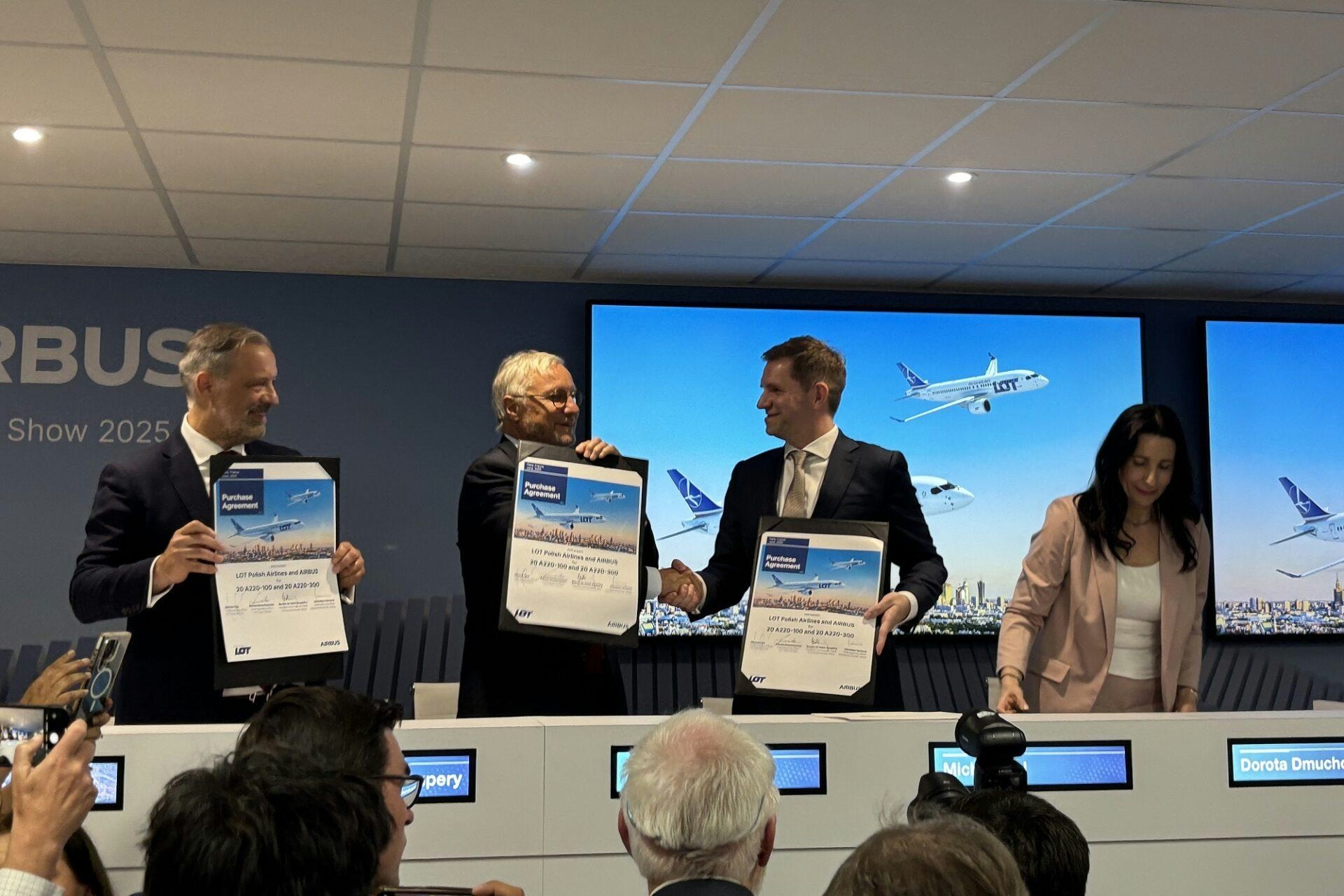
LOT Polish Airlines’ decision to order 40 Airbus A220 aircraft at last year’s Paris Airshow represents a pivotal shift in its fleet strategy, attracting considerable attention within the aviation sector. This move, which resulted in Embraer losing a deal it had nearly secured, has been widely interpreted as influenced by political considerations. While Embraer contends that its E2 jets would have better suited LOT’s operational needs, the Polish carrier remains resolute in its conviction that the A220 aligns more closely with its future market demands.

Strategic Rationale and Industry Perspectives

At the CAPA Airline Leader Summit in Berlin, LOT’s Chief Commercial Officer reaffirmed the airline’s confidence in the A220, underscoring its appropriateness for the carrier’s evolving network and passenger expectations. The summit, which also addressed broader industry challenges such as fuel shortages and geopolitical instability, included a dedicated session on the Airbus A220. Airbus’s Head of Single Aisle Marketing, Benjamin Peiron, highlighted the aircraft’s latest updates and operational advantages, while Cathal Kyle, Senior Vice President of Marketing at lessor Azorra, offered additional insights into market dynamics.

A principal advantage of the A220 lies in its Airspace cabin, designed to create a consistent and enhanced passenger experience across the Airbus fleet. This cabin concept is being adopted by major airlines including Air Canada, Lufthansa, and Qantas, reflecting a wider industry trend toward standardization and improved comfort. For LOT, the integration of the Airspace cabin is expected to elevate its onboard product and provide a competitive edge in a crowded market.

Challenges Amid Fleet Renewal and Market Competition

LOT’s ambitious fleet renewal occurs against a challenging backdrop. Airbus reported a decline in first-quarter deliveries for 2026 compared to the previous year, raising concerns about potential supply chain or production bottlenecks that could affect LOT’s delivery schedule and operational rollout. The airline will need to closely monitor these developments to mitigate risks of disruption as it phases in the new aircraft.

Simultaneously, the competitive landscape is intensifying. Rival carriers are responding to shifting market conditions by upgrading their fleets and announcing new routes. April 2026 is expected to witness a surge in new route launches from airlines such as Alaska Airlines, Aer Lingus, Aeromexico, and United Airlines. This heightened activity places additional pressure on LOT to ensure that its A220 integration proceeds efficiently and on schedule, enabling the airline to maintain a strong market position.

As LOT Polish Airlines advances its A220 strategy, the carrier faces a complex interplay of opportunities and challenges. The success of this initiative will depend not only on the aircraft’s capabilities but also on LOT’s ability to navigate supply chain uncertainties and respond effectively to intensifying competitive pressures.

More news
Etihad Airways Considers Large Widebody Aircraft Order Amid Growing Demand

Etihad Airways Considers Large Widebody Aircraft Order Amid Growing Demand

Etihad Airways Considers Large Widebody Aircraft Order Amid Growing Demand Strategic Fleet Expansion to Support Recovery and Growth Etihad Airways is preparing to place a significant order for large widebody aircraft as it anticipates sustained growth in passenger demand and seeks to recover capacity lost due to recent regional conflicts. The Abu Dhabi-based airline, under the leadership of CEO Antonoaldo Neves, is reportedly planning a "double-digit" order of widebody jets, reflecting strong confidence in the carrier’s ongoing recovery and future expansion prospects. Neves has indicated that Etihad expects its flight operations to increase by 8% by mid-June 2026 compared to the previous year. This growth target is part of the airline’s efforts to rebuild its network following service reductions implemented in March amid the onset of the Iran war. The planned fleet expansion forms a central element of Etihad’s broader AED80 billion dirham (approximately USD 21.8 billion) growth strategy, which includes the addition of 20 aircraft and up to 3,000 new staff annually over the next five years. Recent Orders and Industry Context Etihad’s recent fleet developments include a firm order for six Airbus A330-900neo aircraft signed in November 2025, complemented by commitments to lease nine additional A330-900neos from lessor Avolon. The airline has also expanded its orderbook for the Airbus A350 family, further enhancing its long-haul capabilities and modernizing its fleet. This aggressive expansion aligns with a wider industry trend, as major airlines seek to capitalize on recovering travel demand and update their fleets with more efficient aircraft. Ethiopian Airlines is reportedly in discussions with Airbus for a potential order of six A350 widebody jets alongside approximately 20 A220 regional aircraft. Similarly, Scandinavian carrier SAS AB is nearing a widebody order with Airbus, while Lufthansa has adopted a diversified approach by placing widebody orders with both Airbus and Boeing. As Etihad aims to restore its pre-conflict capacity by mid-2026 and increase its market share, the anticipated widebody aircraft order underscores the airline’s commitment to growth and its optimistic outlook on the future of international air travel.
Dispute Over Maintenance Between Wizz Air and Serbian Regulator Intensifies

Dispute Over Maintenance Between Wizz Air and Serbian Regulator Intensifies

Dispute Over Maintenance Between Wizz Air and Serbian Regulator Intensifies Allegations and Regulatory Concerns Tensions have escalated between Wizz Air and Serbia’s Civil Aviation Directorate over aircraft maintenance practices at Belgrade Nikola Tesla Airport. The low-cost carrier has strongly denied allegations of non-compliance with local regulations amid a dispute that coincides with broader regulatory changes threatening the airline’s operations in Serbia. These changes could compel Wizz Air to close its Belgrade base by November 2026, a development the airline contends contradicts the European Common Aviation Area Agreement. Recent reports indicate that the Serbian regulator identified Wizz Air’s use of maintenance providers at Belgrade airport who allegedly lacked the necessary local approvals. During a routine inspection, the Bulgarian firm Global Maintenance was singled out for not holding the specific Serbian certification required for line maintenance, despite possessing general technical certifications and offering services across Bulgaria, Macedonia, and Serbia. The regulator’s position is that Global Maintenance did not meet Serbia’s regulatory standards. Compliance Efforts and Operational Impact According to local media sources, the Civil Aviation Directorate granted Wizz Air a 30-day period to address the compliance issues, but the deadline reportedly passed without resolution. Subsequently, Wizz Air engaged a second maintenance provider, which also allegedly failed to satisfy all regulatory requirements, leading to the suspension of its license. In response, Wizz Air began deploying its own technical personnel from Hungary to conduct maintenance activities in Belgrade, a strategy that has reportedly increased the airline’s operating costs. The dispute has now been escalated to the European Union Aviation Safety Agency (EASA) for further examination. Wizz Air issued a formal statement rejecting the allegations, emphasizing its commitment to safety and regulatory compliance. The airline asserted that it operates fully in accordance with all applicable aviation safety requirements and that every aircraft in its fleet is maintained to the highest international standards by certified personnel using approved procedures. Wizz Air also highlighted that, following unexpected regulatory changes imposed by the Serbian Civil Aviation Directorate, it took proactive measures by deploying qualified engineering staff to Belgrade to ensure continued compliance and operational safety. Broader Implications and Market Outlook The regulatory developments in Serbia pose significant challenges for Wizz Air, with the potential closure of its Belgrade base threatening its market share in the country. Industry analysts suggest that this situation could create opportunities for rival low-cost carriers to expand their presence in the Serbian market. Despite the uncertainties and increased operational costs, Wizz Air maintains a robust financial outlook. The airline anticipates breaking even for the full year as revenues strengthen, even while managing near-term challenges, including those linked to the ongoing conflict in the Middle East.
Joby Aviation Stock: Is the Dream of Electric Air Taxis Worth the Price of Admission?

Joby Aviation Stock: Is the Dream of Electric Air Taxis Worth the Price of Admission?

Joby Aviation Stock: Is the Dream of Electric Air Taxis Worth the Price of Admission? Joby Aviation has positioned itself at the forefront of the electric air taxi revolution, envisioning a future where urban transportation takes to the skies. As the company accelerates toward a commercial launch, investors are carefully evaluating whether the current valuation justifies the ambitious promise of this emerging technology. Challenges on the Path to Market The journey to market leadership is fraught with obstacles. Joby faces significant internal challenges, including disputes and legal battles with competitors such as Archer Aviation and Vertical Aerospace. These conflicts pose risks of delaying critical certification milestones, which are essential for commercial operations, and may undermine investor confidence during a pivotal phase of the company’s development. Progress and Regulatory Milestones Despite these hurdles, Joby has achieved several important milestones. The company recently completed successful point-to-point demonstration flights in New York City, demonstrating the practical viability of its electric vertical takeoff and landing (eVTOL) aircraft within complex urban environments. On the regulatory front, Joby has secured Federal Aviation Administration (FAA) approval to operate in ten states, with an additional nine states authorized through the eVTOL Integration Pilot Program. These regulatory endorsements represent significant progress toward the goal of nationwide commercial service. Financial Position and Market Sentiment From a financial perspective, Joby reported $24 million in revenue for the first quarter—a modest figure that nonetheless indicates early traction in a nascent industry. More notably, the company maintains a strong balance sheet with $2.5 billion in cash reserves. This financial strength is further reinforced by strategic investments, including a $500 million infusion from Toyota, which brings not only capital but also valuable manufacturing expertise. Market sentiment remains cautious, reflecting the unproven nature of the electric air taxi sector and the uncertain timeline for widespread adoption. Investors are closely monitoring Joby’s ability to meet near-term milestones amid mounting regulatory and competitive pressures. Outlook for Urban Air Mobility Joby’s expanding FAA approvals and ongoing demonstration flights suggest a promising trajectory in the emerging urban air mobility market. Should the company successfully navigate its legal and operational challenges, it is well positioned to become a leader in this transformative sector. At present, the cost of entry into Joby’s vision of electric air taxis remains substantial, encompassing both significant risks and potential rewards. Investors must weigh whether the company’s recent advancements and robust financial backing sufficiently offset the uncertainties that lie ahead.
Boeing 777X Achieves Key FAA Certification, Advancing U.S. Aerospace

Boeing 777X Achieves Key FAA Certification, Advancing U.S. Aerospace

Boeing 777X Advances with Key FAA Certification The U.S. aerospace industry has reached a pivotal milestone as Boeing’s 777X program secured a critical regulatory approval, moving the aircraft closer to commercial deployment. The Federal Aviation Administration (FAA) has authorized Boeing to commence Type Inspection Authorization (TIA) Phase 4B testing, a decisive stage in the certification process that brings the aircraft under direct federal evaluation. This development, announced by Boeing executives at a major international aviation event in Brazil, has revitalized optimism among global airlines. The 777X, particularly the 777-9 model, is now nearer to entering service with prominent carriers, including those in Qatar and other regions seeking to upgrade their long-haul fleets with more advanced and efficient aircraft. Significance of TIA Phase 4B Approval The approval for Phase 4B testing marks a transition from Boeing’s internal assessments to comprehensive FAA oversight. During this phase, FAA flight test pilots and engineers conduct detailed examinations of the aircraft’s safety systems, operational procedures, and responses to abnormal scenarios. It represents the most technically demanding segment of flight testing remaining for the 777-9, covering critical areas such as advanced avionics, stability and control, and human factors engineering. Stephanie Pope, CEO of Boeing Commercial Airplanes, emphasized the importance of this achievement, noting the company’s goal to complete flight testing within the year and deliver the first 777-9 aircraft in 2027. However, FAA Administrator Bryan Bedford cautioned that full certification might not be finalized until 2027, indicating potential delays in the program’s timeline. Rigorous Certification Process and Industry Implications The FAA’s certification framework for the 777X involves five distinct phases of Type Inspection Authorization. Having completed the less extensive Phase 4A, Boeing now faces the more comprehensive and stringent Phase 4B. This stage is recognized as one of the most rigorous technical evaluations an aircraft must pass before receiving clearance to carry passengers. It ensures that any design or systemic issues are identified and resolved under direct regulatory supervision, upholding the stringent safety and engineering standards of U.S. commercial aviation. As global regulatory standards continue to tighten, Boeing’s progress through these demanding compliance phases signals renewed momentum for the manufacturer. While the broader market response and competitor strategies remain to be seen, this advancement reinforces the prominence of U.S. aerospace engineering on the international stage and promises improvements in efficiency and capacity for long-haul air travel. With the 777X program advancing through its final and most challenging certification stages, the aviation industry remains attentive as Boeing prepares to deliver its next-generation widebody aircraft to airlines worldwide.
Families of AI 171 Crash Victims Confront Fear and Anxiety

Families of AI 171 Crash Victims Confront Fear and Anxiety

Families of AI 171 Crash Victims Confront Fear and Anxiety Nearly a year after the devastating crash of AI 171 in Ahmedabad, which claimed 260 lives, the families of the victims remain engulfed in profound grief, fear, and anxiety. For many, the trauma has extended far beyond the immediate tragedy, becoming an enduring part of their daily existence. This ongoing distress is further intensified by the uncertainty surrounding the final investigative report, which has yet to be released. Personal Stories of Loss and Lingering Trauma Rafik Arab, a resident of Diu, lost his 25-year-old son Faizan in the crash. Faizan, who was studying Islamic theology in the United Kingdom, was returning to London after visiting his family. Rafik recalls the haunting final message from his son: "Papa, I have boarded the flight and I am going." Since that day, the family has been unable to fly, and even the sound of an airplane overhead triggers painful memories of the lives lost in an instant. Faizan’s mother and two younger brothers continue to struggle with his absence, their lives irrevocably altered. Similarly, Mukti Vansadiya from Surat lost her parents, Divya and Arjunsinh, who were on their first international trip to visit their elder daughter in London. Mukti described her parents as her "only light." The family had chosen the Ahmedabad flight specifically so her parents could travel among Gujarati-speaking passengers, hoping to ease their journey. Her last memory of them at the airport—touching their feet for blessings—remains vivid. Hours later, a phone call shattered her world. The aftermath of the tragedy plunged Mukti into depression and anxiety. She left her job at a travel agency and underwent months of counseling before finding work as a social worker. Despite this, the trauma persists. She explained that any mention of airplanes revives her anxiety, accompanied by a dull ache in her chest. Mukti has resolved never to fly again and avoids all media coverage related to the crash. Broader Implications and Industry Response The emotional toll on the victims’ families is reflected in wider repercussions across financial markets and the technology sector. Following the crash, Korean stocks experienced a sharp decline as investors sold off technology shares, raising concerns about the stability of the ongoing bull market. Industry competitors have also responded with caution. Companies such as Palantir have expressed skepticism regarding the reliability of major AI models, fearing that incidents like the AI 171 crash could cast doubt on their products and prompt questions about safety and regulatory oversight. Within the tech industry, there is an ongoing struggle to balance innovation with safety. Anthropic’s decision to limit the release of its advanced AI model, Mythos, underscores efforts to mitigate potential risks while continuing technological advancement. As the families of AI 171 victims continue to confront their grief and anxiety, they do so amid a climate of industry reflection and market uncertainty. The awaited investigation report remains a critical point of focus, offering the possibility of personal closure and raising broader questions about safety, responsibility, and the future trajectory of technology.
AI Express Withdraws from Noida and Hindon Airport Launches

AI Express Withdraws from Noida and Hindon Airport Launches

AI Express Withdraws from Noida and Hindon Airport Launches Amid Operational Challenges Scaled-Back Launch at Noida International Airport Noida International Airport (NIA) is scheduled to begin operations next Monday, albeit with a reduced scope following the indefinite postponement of Air India Express flights from the new facility. The airport’s initial operations will be led by IndiGo, with Akasa Air commencing services the following day. IndiGo is expected to maintain its position as the dominant carrier at NIA for the foreseeable future. This shift comes as Air India Express, the budget arm of the Tata-backed Air India Group, withdraws from both Noida and Ghaziabad’s Hindon Airport amid mounting financial losses and operational difficulties. Operational and Safety Concerns Impacting Air India Express The decision to pull Air India Express from these airports coincides with a period of intense scrutiny for Air India. The airline is currently grappling with operational turbulence, including the imminent release of the final report on the Ahmedabad crash and ongoing safety violations that have raised questions about its reliability. These developments have prompted cautious market reactions, with competitors likely to leverage their focus on safety and operational efficiency to strengthen their market positions. Sources within the industry attribute the withdrawal primarily to cost-cutting measures by the Air India Group. The group appears reluctant to invest in new facilities at airports serving regions already covered by Delhi’s Indira Gandhi International Airport (IGIA). The reduction in Air India Express flights is part of a broader network rationalisation strategy aimed at aligning capacity with market demand. Presently, Air India Express operates exclusively from Delhi IGIA within the National Capital Region. Decline in Hindon Airport Operations and Infrastructure Constraints The exit of Air India Express has significantly reduced flight activity at Hindon Airport. Once handling approximately 25 daily aircraft movements during the previous winter, the airport now manages only eight daily flights, with IndiGo operating five and Star Air three. This decline accelerated following IndiGo’s scaling back of operations and Air India Express’s withdrawal of its 10 daily flights. Hindon’s operational challenges, including limited infrastructure with only two parking bays for commercial aircraft and restricted daylight operating hours, have further exacerbated the situation. These constraints occasionally force incoming flights to divert to Delhi IGIA, highlighting the airport’s limited capacity. Broader Industry Pressures and Future Prospects The Indian aviation sector is also contending with external pressures such as rising operating costs influenced by the ongoing conflict in West Asia. Airlines across the country have been compelled to rationalise routes and frequencies, reflecting a global trend. In response, Hindon Airport is undertaking infrastructure expansion efforts, including the addition of parking bays and plans to enlarge its passenger terminal to accommodate anticipated future growth. The challenges faced by Air India coincide with broader transformations in the Indian economy, particularly within the IT outsourcing sector, which is increasingly shaped by the rise of artificial intelligence. According to NASSCOM, AI’s expanding role may indirectly impact sectors like aviation, potentially altering market dynamics and operational strategies. Despite the current difficulties, industry officials express cautious optimism. A senior airline executive remarked, “We are waiting to take off once the current challenges subside. The runway is there. The intent is there.” As Noida International Airport prepares to open, the aviation sector looks forward to a period of renewed stability and growth.
AI Enters Aviation Crash Investigations, Prompting Response from NTSB

AI Enters Aviation Crash Investigations, Prompting Response from NTSB

AI and Aviation Crash Investigations: The NTSB’s Response to Synthetic Audio The National Transportation Safety Board (NTSB) has confirmed that cockpit voice recordings related to the 2025 UPS Flight 2976 crash, which have been circulating online, were artificially reconstructed using advanced AI technology. These audio clips were not created from scratch but were reverse-engineered from a spectrogram image inadvertently published by the NTSB as part of its investigation materials. The agency has issued a public warning, urging both the media and the public to disregard these recordings, which falsely purport to capture the final moments of the flight crew. Federal regulations strictly prohibit the release of cockpit voice recorder audio, and the NTSB customarily publishes only written transcripts after a thorough review process. In this instance, the accidental release of spectrogram images alongside publicly available transcripts enabled the synthesis of audio that mimics the original recordings. This incident highlights the increasing challenges of protecting sensitive data in an era where AI tools can reconstruct sound from visual representations. NTSB’s Immediate Actions and Ongoing Investigation Following the emergence of the AI-generated audio, the NTSB temporarily suspended public access to its entire investigation docket system. This measure affects thousands of cases and restricts access to 42 ongoing investigations, including the UPS Flight 2976 crash. The agency is currently reviewing its internal protocols and considering additional safeguards to prevent similar breaches in the future. To date, officials have not identified the individuals responsible for creating or distributing the synthetic recordings. The clips rapidly gained traction on social media in the days after the November 4, 2025 crash, accumulating millions of views before aviation experts and fact-checkers exposed inconsistencies. The NTSB emphasized that these recordings are not official and do not represent any verified evidence from the investigation. The UPS Flight 2976 Crash and Investigation Status The fabricated audio pertains to the crash of UPS Flight 2976, a McDonnell Douglas MD-11F cargo aircraft that crashed shortly after takeoff from Louisville Muhammad Ali International Airport. The tragedy resulted in the deaths of all three crew members aboard the aircraft, as well as 11 individuals on the ground. A twelfth ground fatality occurred weeks later due to injuries sustained in the accident. The NTSB has deployed a specialized team to collect flight data, examine the wreckage, and interview relevant personnel. A preliminary report is expected within the agency’s standard 30-day timeframe for major accident investigations. Until the official findings are released, the NTSB has urged the public to approach any unofficial audio, video, or documents with skepticism. The agency warned that fabricated content can distort public understanding and impose additional emotional burdens on the families and colleagues of those affected. Emerging Challenges in Accident Investigation This incident exposes a new and complex challenge for accident investigators: the ability of AI tools to reconstruct audio from spectrogram images—visual representations of sound frequencies—enables the creation of synthetic recordings from materials previously deemed safe for public release. In aviation, where pilot voices are often accessible through training materials and public interviews, the risk of realistic-sounding fabrications is particularly acute. Aviation safety experts caution that synthetic recordings can have far-reaching consequences beyond reputational harm. They can influence litigation, shape early media narratives, and complicate the investigative process by introducing misinformation that investigators must actively counter while conducting technical analyses. Although the NTSB has previously contended with manipulated photographs and rumors, the emergence of fabricated cockpit audio represents a novel and significant challenge. The agency reiterated that authentic cockpit voice recorder material remains strictly protected under federal law. It is currently reviewing its procedures to safeguard the integrity of future investigations in light of these technological developments.
World’s First Flying Taxi May Launch Public Service This Year, Potentially Replacing Helicopters

World’s First Flying Taxi May Launch Public Service This Year, Potentially Replacing Helicopters

World’s First Flying Taxi Poised for Public Service Launch This Year Helicopters may soon face significant competition as Joby Aviation, a California-based company, prepares to introduce the world’s first flying taxi service. After years of development and extensive testing, the company anticipates that its electric vertical takeoff and landing (eVTOL) aircraft could begin carrying paying passengers before the end of the year. These innovative vehicles are designed specifically for short urban journeys, offering quieter, fully electric flights with the ability to take off and land vertically—similar to helicopters but with distinct advantages for city travel. Advancements in Urban Air Mobility For decades, the concept of flying taxis was largely confined to science fiction. Joby Aviation now asserts that this vision is on the verge of becoming reality. Their all-electric aircraft, equipped with six rotors, can accommodate a pilot and four passengers, reaching speeds of up to 200 miles per hour. Unlike traditional helicopters, Joby’s design significantly reduces noise pollution and produces no direct emissions during flight, making it particularly well-suited for densely populated urban environments. The company has completed thousands of test flights and recently showcased its aircraft in New York City, including demonstration routes between Manhattan and JFK Airport. Joby is targeting the launch of its first commercial passenger operations in Dubai later this year, while simultaneously preparing for limited operations in the United States through a government-supported air taxi initiative. Potential Impact and Industry Challenges Electric air taxis promise to deliver the convenience of helicopters while mitigating many of their drawbacks. Their quieter operation, zero-emission flights, and ability to circumvent urban traffic congestion could revolutionize transportation within major cities. Joby has also formed a partnership with Uber to integrate air taxi bookings into the ride-hailing app, facilitating seamless transitions between ground and air travel. Furthermore, Joby’s acquisition of parts of Blade Air Mobility’s passenger business provides access to established helicopter routes and clientele, aiding the transition to electric aircraft. Despite these promising developments, the industry faces considerable challenges. Rigorous certification processes and regulatory hurdles remain significant obstacles, contributing to delays and legal disputes among leading companies such as Joby, Archer, and Vertical. These ongoing court battles and shifting certification timelines have dampened investor enthusiasm and may slow the widespread adoption of air taxis. Although the eVTOL Integration Pilot Program, initiated under the Trump administration, aims to accelerate development, persistent legal conflicts threaten to impede progress. Nevertheless, momentum continues to build. Should regulatory approvals be secured and legal disputes resolved, 2026 could mark a pivotal year in which flying taxis transition from futuristic concepts to everyday urban transportation, potentially reshaping city skies and challenging the longstanding dominance of helicopters.
Airbus Showcases Defence and Civil Aviation Advances at ILA 2026

Airbus Showcases Defence and Civil Aviation Advances at ILA 2026

Airbus Showcases Defence and Civil Aviation Advances at ILA 2026 The ILA Berlin Air Show 2026 has emerged as a critical forum for aerospace innovation, convening industry leaders, civil and military operators, and technology pioneers to confront the intertwined challenges of technological transformation and strategic resilience. As Europe’s foremost aerospace event, ILA 2026 provides Airbus with a prominent platform to reaffirm its dedication to decarbonising aviation and enhancing European defence capabilities. Advancing European Defence and Strategic Autonomy In the context of evolving geopolitical tensions, strategic autonomy has become a paramount objective for Europe. Airbus plays a central role in supporting these defence ambitions, particularly as a key partner for Germany. The company’s portfolio includes vital technologies such as the Eurofighter, which safeguards European airspace, the SatcomBw satellite system that ensures mission-critical communications, and the H225 and NH90 helicopters deployed for security operations and troop mobility. These assets are integral to the German Armed Forces, federal police, and emergency services. Airbus continues to upgrade its existing platforms, including the A400M transport aircraft, H145M light utility helicopter, and A330 MRTT tanker, incorporating advanced capabilities to meet evolving operational demands. Simultaneously, the company is developing next-generation variants tailored for maritime patrol and electronic warfare missions. These innovations are designed to integrate seamlessly into a future combat air system, envisioned as a collaborative ‘system of systems’ where diverse assets are interconnected through a unified digital network, enhancing operational effectiveness across domains. Uncrewed Aerial Systems and Emerging Market Trends At ILA 2026, Airbus is positioning itself as a leader in the rapidly expanding field of Uncrewed Aerial Systems (UAS). The company is showcasing a range of platforms, including the Eurodrone, engineered for long-endurance strategic intelligence missions, and tactical assets such as Capa-X, Flexrotor, and Aliaca, which offer agility and versatility. The U145 uncrewed rotorcraft variant, optimized for logistics and firefighting applications, has attracted particular market interest. Additionally, the Bird of Prey interceptor drone represents a cost-effective solution for neutralising aerial threats swiftly. Despite these advancements, Airbus faces significant regulatory and operational challenges in integrating these sophisticated uncrewed systems into both civilian and military frameworks. Navigating these complexities will be essential for the company to fully realise the potential of its UAS portfolio. Competitive Pressures and Technological Innovation The competitive environment at ILA 2026 is intensifying, with companies such as Elbit Systems unveiling new airborne laser and drone technologies targeted at German and broader European military customers. These developments present a potential challenge to Airbus’s dominance in military applications, underscoring the imperative for continuous innovation and strategic adaptability within the aerospace sector. Collaborative Combat and the Future of Defence Operations Airbus is articulating a forward-looking vision for collaborative combat through its Tactical Operating Centre demonstration at ILA. This exhibit highlights how interoperable platforms can enable European forces to operate cohesively in contested environments. The company’s software-driven, platform-agnostic systems facilitate multi-domain operations, with artificial intelligence enhancing capabilities beyond conventional connectivity. A notable example is the crewed-uncrewed teaming concept, where rotorcraft such as the H145M are networked with tactical UAS platforms via Airbus’s H-Teaming solution. This integration transforms helicopters into flying command posts within secure data networks. In fixed-wing operations, the Valkyrie platform, equipped with the Multiplatform Autonomous Reconfigurable and Secure (MARS) Mission System, positions Airbus to deliver an operational sovereign uncrewed collaborative combat aircraft (UCCA) with air-to-ground capabilities by 2029. This platform is intended to operate in tandem with the Eurofighter, forming a potent crewed-uncrewed team for the German Air Force. As Airbus awaits a pivotal decision on the Future Combat Air System (FCAS) program, expected to be announced during ILA 2026, the company’s strategic trajectory in defence aviation stands to be significantly influenced by the outcomes of this year’s event.
Are Engine Manufacturers Responding to Rio's Call?

Are Engine Manufacturers Responding to Rio's Call?

Are Engine Manufacturers Responding to Rio's Call? Industry Pressure Mounts Amid Engine Shortages At the recent International Air Transport Association (IATA) Annual General Meeting in Rio de Janeiro, senior executives from the world’s foremost engine manufacturers faced intense scrutiny from airline leaders frustrated by ongoing engine shortages and reliability concerns. The airline industry’s patience is clearly wearing thin as persistent supply constraints continue to disrupt operations globally. The challenges confronting engine manufacturers stem from their inability to keep pace with surging demand. United Airlines CEO Scott Kirby highlighted that the scarcity of available engines will remain a significant bottleneck for at least the next five years. This shortage has already grounded hundreds of Airbus A320neo aircraft worldwide, as airlines endure prolonged delays for engine inspections and repairs. Much of the disruption has been traced to a manufacturing defect in Pratt & Whitney’s geared turbofan (GTF) engines, which has forced airlines to sideline affected aircraft for extended periods. Recurring Reliability Issues and Industry Response The criticism directed at Pratt & Whitney was echoed in concerns about other major manufacturers. Rolls-Royce, for instance, has grappled with durability problems affecting its Trent 1000 engine on the Boeing 787 since 2016. Similar issues have since emerged with the Trent 7000 powering the Airbus A330neo, as well as with the XWB-84 and -97 engines used on the A350. These recurring technical setbacks have raised serious doubts among airlines regarding the reliability and longevity of engines promised by manufacturers. Airlines contend that they have not only paid premium prices for engines that have failed to meet performance expectations but have also borne the operational and financial burdens of grounded fleets. The market response has been sharply critical, with calls for more resilient and responsive engine supply chains. Industry leaders are urging manufacturers to increase production capacity and accelerate innovation to prevent future shortages and rebuild trust. As the aviation sector looks ahead, the message from Rio is unequivocal: engine manufacturers must take decisive action to resolve quality and supply challenges. Whether original equipment manufacturers (OEMs) will respond with the urgency demanded by airlines remains uncertain, but the pressure for meaningful change has never been more pronounced.
line









