صورة

حوّل رؤى الذكاء الاصطناعي إلى أفعال منسّقة

انضم إلى قائمة الانتظار لـ AeroGenie اليوم!

الرائج الآن

Categories

Mexico to Host Forum on Sustainable Aviation Fuel with 2026 Rollout Target
May 5, 2026By ePlane AI
Mexico to Host Forum on Sustainable Aviation Fuel with 2026 Rollout Target
0
0
Sustainable Aviation Fuel
Bioturbosina
Mexico Aviation Policy

Mexico to Host Forum on Sustainable Aviation Fuel with 2026 Rollout Target

Government Initiative to Advance Sustainable Aviation Fuels

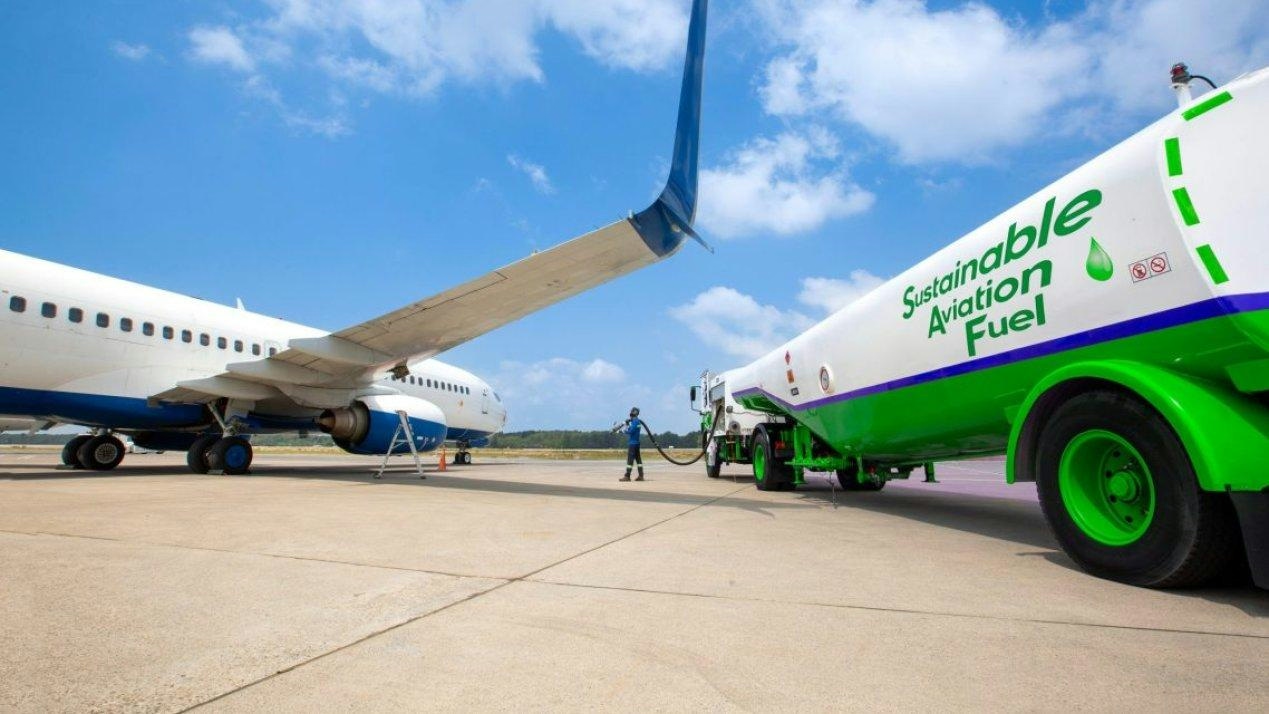
Mexico’s federal government has announced plans to convene its fifth technical forum on sustainable aviation fuels (SAF), with the objective of integrating bioturbosina into the national aviation supply chain and enabling low-emission flights by 2026. This initiative is spearheaded by the Ministry of Infrastructure, Communications and Transportation through Aeropuertos y Servicios Auxiliares (ASA) and the Federal Civil Aviation Agency, in coordination with the Ministry of Energy. Authorities emphasize that the forum will serve as a platform to align public policy and accelerate the transition toward cleaner aviation fuels.

The event is scheduled to take place at the International Training Center of ASA (CIIASA) “Ing. Roberto Kobeh González” and will gather international stakeholders to discuss critical topics such as policy frameworks, certification processes, technological advancements, financing mechanisms, demand generation, and SAF production. A particular focus will be placed on fostering regional integration across Latin America. The government aims to facilitate collaboration among regulators, producers, and airlines to coordinate deployment strategies and strengthen the SAF value chain.

ASA’s Role and Pilot Projects

As Mexico’s primary aviation fuel supplier, ASA has reaffirmed its commitment to sustainability and the decarbonization of air transport. The agency highlights its logistical capacity to incorporate SAF into the national fuel supply, a capability deemed essential as domestic production scales up or imports become available. In line with this, ASA is developing a pilot blending project at the Mexico Fuel Station, designed to enable the incorporation of bioturbosina into aircraft fuel supplies within the current year. This pilot will validate logistics, technical standards, and regulatory compliance necessary for SAF integration, paving the way for Mexico’s first green flights.

Since 2024, ASA has collaborated with stakeholders across the aviation and energy sectors, international organizations, and research institutions to secure feedstock availability and ensure production aligns with international sustainability standards. These standards are critical for certification and cross-border supply. The government has established seven strategic workstreams—covering infrastructure, certification, regulation, innovation, technology, feedstocks, and financing—to address challenges such as certification pathways, capital investment requirements, and scaling production.

Challenges Amid Global Market Pressures

Despite these efforts, Mexico’s ambitions for SAF face considerable challenges. Global demand for sustainable aviation fuels has surged, particularly in Europe, where airlines have tripled their SAF usage to comply with EU mandates. This increased demand has affected U.S. soybean oil prices and compelled American producers to rely more heavily on domestic feedstocks, driving up vegetable oil prices and underscoring the volatility of the global fuel market. The 2026 global fuel crisis and rising jet fuel prices have further exposed the aviation industry’s vulnerabilities, forcing airlines to consider fare increases of at least 20% to maintain financial viability.

Currently, SAF accounts for only 0.7% of the aviation sector’s fuel consumption, constrained by high costs, limited infrastructure, and ongoing sustainability concerns. The sector’s decarbonization trajectory remains uncertain, prompting calls for a multi-faceted approach that includes cautious SAF adoption, carbon offsetting, and investment in advanced e-fuels and domestic supply chains.

Industry Outlook and International Perspectives

The International Air Transport Association (IATA) has warned that aircraft delivery delays and the costs associated with environmental compliance will continue to exert pressure on airlines throughout 2026. IATA Director General Willie Walsh highlighted that supply chain disruptions have compelled airlines to operate older, less fuel-efficient aircraft, resulting in increased fuel consumption and maintenance expenses. IATA estimates that delivery delays added over $11 billion in costs in 2025, with approximately two-thirds attributable to fuel and maintenance.

As Mexico prepares to host its SAF forum and advance its 2026 rollout plans, the country confronts a complex landscape of both opportunities and obstacles in its pursuit of sustainable aviation.

More news
Russia Delivers First Production PD-8 Engines Despite Sanctions

Russia Delivers First Production PD-8 Engines Despite Sanctions

Russia Delivers First Production PD-8 Engines Despite Sanctions A Milestone in Russian Aviation Sovereignty Russia’s United Engine Corporation (UEC) has marked a significant milestone by delivering the first two serially produced Aviadvigatel PD-8 turbofan engines to the Yakovlev SJ-100 program. This development, confirmed by UEC-Saturn CEO Ilya Konyukhov during a government meeting on technological sovereignty, represents a crucial step in Moscow’s pursuit of technological self-sufficiency amid stringent Western sanctions. Although the delivery provides powerplants sufficient for only a single production aircraft, it signals progress toward the government’s ambitious goal of producing 142 SJ-100 aircraft by 2030. The technical achievement is particularly noteworthy given the PD-8’s incorporation of a domestically designed Full Authority Digital Engine Control (FADEC) system. This critical technology had been a focal point of Western sanctions aimed at restricting Russia’s access to advanced digital engine management systems. The successful independent development of a working FADEC system addresses a key challenge that sanctions sought to impose, though questions remain about Russia’s ability to produce these engines reliably and at scale. From Western Dependence to Domestic Innovation The PD-8’s serial production began in late June 2026, with the first two engines completed in approximately ten weeks. This marks a dramatic departure from the original Sukhoi Superjet 100 (SSJ100), which was heavily reliant on Western technology. The SSJ100’s PowerJet SaM146 engine was produced through a joint venture between Russia and France’s Safran, combining European safety standards with proprietary digital control systems. This partnership ended abruptly in March 2022 following Russia’s invasion of Ukraine, when Safran withdrew support and the European Union Aviation Safety Agency revoked the SSJ100’s type certificate. The resulting shortage of spare parts forced Russian airlines to resort to cleaning and reusing worn components, underscoring both the impact of sanctions and Russia’s willingness to accept operational risks to maintain its fleet. In response, Russia undertook a comprehensive redesign of the aircraft, replacing over 80 percent of previously imported components—including avionics, landing gear, auxiliary power units, environmental control systems, and the engine itself—with domestically produced equivalents. The rebranded SJ-100, now developed under the Yakovlev name within the state-owned United Aircraft Corporation (UAC), has become the centerpiece of Russia’s civil aviation self-sufficiency strategy, with the PD-8 turbofan engine at its core. Technical and Market Challenges Ahead The FADEC system, which serves as the computational heart of a modern jet engine by managing all operating parameters without manual override, is among the most complex and closely guarded technologies in commercial aviation. The PD-8’s independently developed FADEC represents a significant technical leap for Russian engineering. Nevertheless, substantial challenges remain. The PD-8 engines must undergo extensive testing and certification to meet international standards, while Russia continues to face the task of training specialists for maintenance and support. Domestic airlines have expressed cautious optimism regarding the new engines, but skepticism persists in international markets amid ongoing geopolitical tensions. Competitors may accelerate their own domestic engine development programs to reduce reliance on Russian components, and there could be increased pressure for stricter certification processes on engines produced under sanctions. While the delivery of the first PD-8 engines marks a breakthrough for Russia’s aviation industry, the critical test will be whether production can be scaled reliably and whether these engines can gain broader acceptance in the global market.
Air India Sends Legacy B787-8 to Boeing’s Shanghai Facility for Retrofit

Air India Sends Legacy B787-8 to Boeing’s Shanghai Facility for Retrofit

Air India Initiates Retrofit of Legacy Boeing 787-8 Fleet at Shanghai Facility Air India has commenced sending its legacy Boeing 787-8 aircraft to Boeing’s maintenance facility in Shanghai for retrofitting, marking a significant step in the airline’s efforts to modernize its wide-body fleet. Previously, these aircraft were primarily serviced at Boeing’s Maintenance, Repair, and Overhaul (MRO) center in Victorville, California. The addition of the Shanghai facility is expected to accelerate the retrofit process amid ongoing operational challenges. Retrofit Program and Fleet Composition The airline recently dispatched one Dreamliner to Shanghai, while two others remain under retrofit in Victorville. To date, retrofit work has been completed on three of Air India’s 26 legacy 787-8 aircraft. The decision to utilize the Shanghai facility comes in response to limited maintenance slot availability and persistent supply chain disruptions, which have contributed to delays in the retrofit schedule. Air India’s wide-body fleet currently includes over 60 aircraft, comprising 35 Dreamliners, 19 Boeing 777-300ERs, and six Airbus A350-900s. The airline plans to expand this fleet with the addition of three wide-body aircraft this year: one Boeing 787-9 and two Airbus A350-1000s. Among the Dreamliners, 26 are Boeing 787-8s, three are newly acquired 787-9s, and six are 787-9s inherited from the former Vistara airline. Strategic Importance and Industry Context The retrofit initiative is a key component of Air India’s broader strategy to modernize and expand its fleet. Industry analysts have offered mixed reactions, acknowledging the importance of these upgrades for enhancing operational efficiency and customer experience. While competitor responses remain uncertain, experts suggest that a modernized fleet could bolster Air India’s competitive standing in the rapidly evolving Indian aviation market. In a recent townhall meeting, Air India CEO and Managing Director Campbell Wilson revealed that the Air India Group, which includes Air India and Air India Express, anticipates inducting over 100 new aircraft within the next two years. He further noted that 16 Boeing 787-8 aircraft are slated for retrofit in 2027, highlighting the scale and ambition of the airline’s fleet renewal program. Although Air India has not issued an official statement regarding the latest retrofit developments, the success of this program is widely regarded as critical to the airline’s expansion plans and its objective of providing a more modern and reliable travel experience for passengers.
Boeing Trades Its Air Taxi Bet For Archer Stock

Boeing Trades Its Air Taxi Bet For Archer Stock

Boeing Trades Its Air Taxi Bet for Archer Stock Boeing is recalibrating its strategy in the urban air mobility sector by divesting several non-core businesses, including Wisk Aero, drone manufacturer Insitu, and airspace-services firm SkyGrid. In exchange, the aerospace giant will acquire a nearly 20% equity stake in Archer Aviation. Rather than receiving cash, Boeing will be compensated with Archer shares valued at just over $1 billion, based on the closing price on Thursday, once the transaction is completed. Strategic Refocus and Financial Streamlining This transaction aligns with Boeing’s broader objective to streamline its operations and reinforce its financial stability by concentrating on its primary business of manufacturing and delivering commercial aircraft. The move follows the recent $10.6 billion cash sale of its Jeppesen navigation-data unit, further demonstrating Boeing’s commitment to divesting non-essential assets and sharpening its corporate focus. The market has reacted favorably to the deal with Archer. The company’s market capitalization has risen from $4.8 billion to levels approaching that of its main competitor, Joby Aviation, which currently stands at $8.0 billion. This increase is largely driven by Archer’s diversified revenue streams, particularly from defense contracts and autonomous technology. These factors have helped reposition Archer from a speculative, cash-burning air taxi startup into a more stable and attractive investment. Challenges and Opportunities for Archer Archer’s strategic pivot towards defense and autonomous software has mitigated the risk of depleting funds before its electric vertical takeoff and landing (eVTOL) aircraft achieve commercial viability. In contrast, competitors such as Joby Aviation remain heavily invested in infrastructure development for their air taxis but lack the financial cushioning provided by defense-related revenue. Nonetheless, Archer faces significant challenges ahead. The company must secure regulatory certification for its eVTOL aircraft and successfully integrate the three acquired businesses—Wisk Aero, Insitu, and SkyGrid—into a unified and efficient operation. The complexity of merging these entities presents operational and strategic hurdles that could influence Archer’s future trajectory. If Archer manages to overcome these obstacles, it could establish itself as a dominant force in the eVTOL market. Conversely, failure to achieve certification or integration could jeopardize its recent stock gains and market standing. For Boeing, the deal signifies a calculated shift from direct involvement in air taxi development to holding a substantial stake in a company with growing momentum and diversified revenue streams. As the urban air mobility sector continues to evolve, both Boeing and Archer are wagering that this strategic realignment will prove advantageous in the race to commercialize next-generation flight.
Loose Throttle Knob Linked to Takeoff Accident

Loose Throttle Knob Linked to Takeoff Accident

Loose Throttle Knob Linked to Takeoff Accident A recent accident involving a tailwheel-equipped Aeronca 65-TAC at Clearwater, Florida, has been attributed to a loose throttle knob, according to a National Transportation Safety Board (NTSB) report released in August 2024. The incident underscores the critical importance of component integrity and maintenance in aviation safety. Incident Overview The pilot reported that after completing standard pre-takeoff checks, he taxied onto the runway and advanced the throttle to full power to initiate takeoff. Shortly into the takeoff roll, the aircraft veered sharply to the left. Despite applying right rudder input, the pilot was unable to regain directional control. The airplane subsequently left the runway, traversed adjacent grass, and collided with the airport perimeter fence, resulting in substantial damage to both wings. The pilot sustained minor injuries. Following the accident, an inspection conducted by a Federal Aviation Administration (FAA) official revealed no evidence of preimpact mechanical malfunctions or failures in the aircraft’s flight controls or trim systems. However, investigators found a wooden knob, previously attached to the forward seat’s throttle control, lying on the cockpit floor. This knob, which was not an original component of the aircraft, had detached just before the airplane left the runway. The pilot indicated that the loss of the knob prevented him from reducing engine power, rendering him unable to stop the aircraft before impact. Findings and Implications The NTSB determined the probable cause of the accident to be the pilot’s failure to maintain directional control during the takeoff roll. A contributing factor was identified as the pilot’s inability to control engine power following the separation of the throttle knob. This incident raises broader concerns within the aviation industry regarding the use and maintenance of aftermarket modifications. It highlights the necessity for rigorous inspections to ensure that all components, particularly those affecting engine and flight controls, comply with regulatory standards and are securely installed. The Federal Aviation Administration and other regulatory bodies are expected to increase scrutiny of non-standard components and modifications to critical flight systems. Such oversight may lead to delays in certification processes and require extensive testing and redesign of throttle control mechanisms to enhance safety. Industry and Market Reactions Historically, safety issues of this nature have prompted temporary declines in aerospace company stock prices and intensified scrutiny from investors and stakeholders. Competitors often leverage such incidents to highlight their own safety records and technological advancements, thereby increasing pressure on affected companies to validate the reliability of their systems. The NTSB’s report serves as a cautionary reminder for pilots and operators to verify that all aircraft components meet regulatory requirements and are properly secured. The full accident report is available from the National Transportation Safety Board and serves as an educational resource for pilots and industry professionals.
Akwa Ibom Expands Investment in Aviation Sector

Akwa Ibom Expands Investment in Aviation Sector

Akwa Ibom Expands Investment in Aviation Sector Akwa Ibom State has reaffirmed its dedication to advancing its aviation industry, with particular emphasis on the full operationalization of the Aircraft Maintenance, Repair, and Overhaul (MRO) facility at Victor Attah International Airport in Uyo, alongside the continued expansion of the Ibom Air fleet. Governor Umo Eno articulated this commitment during a series of high-level meetings with representatives from SAMCO Group Europe and Airbus in Montreal, Canada, held in anticipation of the Pre-Delivery Inspection of Ibom Air’s newest Airbus A220-300 aircraft. Strategic Partnerships and Capacity Building The discussions primarily focused on enhancing the technical and maintenance capabilities required to support the growing Ibom Air fleet and to establish Akwa Ibom as a premier aviation hub within Nigeria. Governor Eno engaged with Constant Van Shani, CEO of SAMCO Group Europe, to explore a strategic partnership aimed at managing and operating the MRO facility. The Governor emphasized the state’s pursuit of a practical collaboration that would not only improve aviation infrastructure but also generate skilled employment opportunities, cultivate a sustainable local workforce, and reduce dependence on foreign maintenance services. Highlighting the administration’s significant financial investments in completing the MRO facility, Governor Eno stressed the importance of developing indigenous expertise for the sector’s long-term sustainability. He stated, “Our goal is to go beyond conventional consultancy, focusing on technical training, technology transfer, and capacity building.” This approach is designed to nurture highly skilled aviation professionals locally, thereby reinforcing the sector’s foundation. SAMCO Aviation Services B.V., based in the Netherlands and specializing in civil aircraft maintenance, expressed readiness to partner with Akwa Ibom. Van Shani affirmed the company’s commitment, stating, “We are here to get it done beyond consulting,” and welcomed the state’s proactive stance. Strengthening Ibom Air and Regional Aviation Prospects In a related engagement, Governor Eno met with Hadi Akoum, Airbus Vice President of Sales for Africa, to acknowledge Airbus’s ongoing partnership with Ibom Air and its role in facilitating the delivery of new aircraft. The Governor described Ibom Air as a strategic economic asset integral to the state’s ambitions to enhance tourism, connectivity, trade, and investment. He reiterated the government’s resolve to make strategic investments that ensure the airline’s commercial viability and operational robustness. Akoum highlighted Ibom Air as a significant Airbus customer in Africa, underscoring the capabilities of the A220-300 aircraft and Airbus’s strong production pipeline. Opportunities and Challenges Ahead Akwa Ibom’s expansion in the aviation sector unfolds amid a landscape of both promising opportunities and notable challenges. The development of a robust MRO facility is viewed as essential to support the airline’s growth trajectory and to attract further investment in tourism and commerce. Industry observers suggest that Akwa Ibom’s initiatives may stimulate increased investor interest and potentially encourage other Nigerian states to upgrade their aviation infrastructure to maintain competitiveness. Nevertheless, the sector faces headwinds, including concerns raised by labor unions regarding ticket sales charges and the issue of non-unionization. These challenges could impact the industry’s appeal to investors and its long-term stability. Addressing such issues will be critical as Akwa Ibom endeavors to consolidate its position as a key player in Nigeria’s aviation landscape.
Air One Names Gavrilin to Lead APAC Freighter Expansion

Air One Names Gavrilin to Lead APAC Freighter Expansion

Air One Appoints Ilya Gavrilin to Lead Asia-Pacific Freighter Expansion Global aviation group Air One has appointed Ilya Gavrilin as Business Development Director for the Asia-Pacific region, entrusting him with the leadership of the company’s scheduled and charter freighter expansion across this critical market. Based at Air One’s newly established regional headquarters in Hong Kong, Gavrilin will be responsible for driving strategic commercial growth, enhancing client relationships, and supporting the expansion of the group’s managed fleet, which currently comprises 11 Boeing 747-400Fs and two 777Fs. Extensive Experience in Air Cargo and Freight Forwarding Gavrilin brings over 15 years of expertise in the air cargo and freight forwarding industries. Prior to joining Air One, he served as vice president at EURES Express in Hong Kong, where he cultivated partnerships with cargo airlines. His career also includes more than a decade with Volga-Dnepr Airlines and Volga-Dnepr Group, where he held senior commercial positions across Europe and the Asia-Pacific. Notably, he played a pivotal role in establishing Volga-Dnepr’s presence in Hong Kong and later served as deputy commercial director for Boeing 747 charters and head of integrated logistics services. Strategic Expansion Amid Market Challenges Gavrilin’s appointment comes at a crucial juncture as Air One seeks to navigate the complexities of the Asia-Pacific air cargo market, which has undergone significant disruption and transformation following the pandemic. The region’s shifting regulatory environment, variable demand patterns, and persistent supply chain challenges present both opportunities and obstacles for growth. Industry analysts anticipate that Air One’s strategic initiatives under Gavrilin’s leadership will attract close scrutiny regarding operational efficiency and long-term sustainability. Competitors in the region are expected to monitor Air One’s developments closely, with some likely to intensify their own expansion efforts or recalibrate strategies to protect market share. This competitive landscape highlights the importance of Gavrilin’s role in fostering innovation and securing new business opportunities for Air One and its partners. Leadership Endorsement and Recent Developments Guneet Mirchandani, chairman of Air One, expressed strong confidence in Gavrilin’s capabilities, stating, “As a seasoned commercial leader with deep expertise across major Asia-Pacific markets, Ilya will help drive our expansion across the region. His focus is to build on our well-established presence as a leading provider of freighter capacity and to leverage our scheduled and charter capabilities to open new business opportunities for our clients as well as for Air One and our partners.” Since its inception in April 2020, Air One Aviation has provided extensive all-cargo capacity from the Asia-Pacific region, operating more than 2,843 Boeing freighter flights connecting APAC with Europe and other destinations. Over 70% of these flights originated from Asia-Pacific countries. In September 2025, supported by fleet growth, Air One launched its inaugural Boeing 747F scheduled services between Asia-Pacific and Europe, currently operating two weekly rotations between Hong Kong and East Midlands Airport in the United Kingdom. Gavrilin’s appointment underscores Air One’s commitment to consolidating and expanding its presence in the dynamic Asia-Pacific air cargo market, even as the company confronts intensified competition and the ongoing challenges of a rapidly evolving industry landscape.
Airlines Resume Flights with Grounded Jets, but Engine Costs Persist

Airlines Resume Flights with Grounded Jets, but Engine Costs Persist

Airlines Resume Flights Amid Lingering Engine Cost Challenges Airlines worldwide are gradually returning previously grounded jets to service, yet the financial repercussions of an extended engine crisis continue to burden the industry. While operational hurdles related to aircraft availability are being addressed, the persistent costs associated with engine maintenance and repairs remain a significant challenge, driven by technical defects and ongoing supply chain disruptions. Technical Setbacks and Operational Impact The crisis originated from durability issues in newer aircraft engines, notably a powder-metal defect in Pratt & Whitney models that necessitated accelerated inspections and removals. These technical problems were exacerbated by shortages in labor, parts, and repair capacity, compelling airlines to ground fleets and incur substantial operational disruptions. For instance, Air New Zealand experienced engine problems that sidelined up to 20% of its fleet at the peak of the crisis. To maintain its flight schedule, the airline resorted to leasing additional aircraft and engines, a strategy that, according to Chief Executive Nikhil Ravishankar, will take another 12 to 18 months to fully unwind. The associated costs have only been partially mitigated by supplier compensation. Similarly, GOL Linhas Aéreas faced significant operational setbacks, grounding Boeing 737 MAX jets due to technical issues and soaring maintenance expenses. This led to 900 flight cancellations and disrupted travel for approximately 250,000 passengers, highlighting the broader economic impact on airline operations. Rising Maintenance Costs and Industry Response To sustain flight operations, carriers have increasingly relied on leasing replacement engines and aircraft, resulting in elevated expenses for overhauls, parts, and leases even as the number of grounded jets declines. Compounding these challenges are delays in new aircraft deliveries from manufacturers such as Boeing and Airbus, which have forced airlines to keep older jets in service longer than anticipated, thereby incurring higher engine maintenance costs. An analysis of U.S. Transportation Department data by Reuters illustrates the scale of the issue. Among six major U.S. airlines, spending on engine labor, repairs, and materials surged approximately 68% between 2019 and 2025, while flight hours increased by only 10%. In the first quarter of this year alone, maintenance expenditures in these categories rose 17% compared to the previous year, despite flight hours growing by less than 2%. Although the data do not specify exact causes, industry experts attribute the rise to a combination of technical difficulties, aging fleets, and deferred maintenance. The financial strain has elicited varied responses across the sector. Some carriers, such as LATAM Airlines, have adjusted their financial outlooks upward, while others, including Brussels Airlines, have paused expansion plans amid high fuel prices and operational headwinds. The industry is also facing intensified scrutiny regarding reliability and reputation, placing additional pressure on airlines to balance cost management with customer expectations. Challenges for Engine Manufacturers and Future Outlook Engine manufacturers have largely refrained from public comment on the ongoing issues. However, analysts note that newer engine models, while offering improved fuel efficiency, entail significantly higher overhaul costs due to limited repair options and a scarcity of used parts. According to data from Ascend by Cirium, overhaul and mandatory parts-replacement expenses for newer LEAP and GTF engines—used predominantly on Airbus A320neo and Boeing 737 MAX aircraft—have approximately doubled since 2019 compared to older engine models. As airlines continue to navigate the complexities of shedding costly leases and adapting to persistent technical and supply chain challenges, the enduring effects of the engine crisis remain a defining factor in the financial landscape of global aviation.
Heart’s X1 Aircraft Completes First Flight

Heart’s X1 Aircraft Completes First Flight

Heart Aerospace’s X1 Aircraft Completes Maiden Flight Heart Aerospace has marked a pivotal achievement with the successful inaugural flight of its X1 demonstrator, which the company claims to be the largest battery-electric aircraft to date. The flight took place on August 12 at Plattsburgh International Airport in New York, where Heart has established its dedicated flight-test facility for the X1 program. Details of the First Flight The piloted X1 remained airborne for 27 minutes, reaching an altitude of 1,100 feet above ground level. Powered entirely by an electric propulsion system delivering over one megawatt of power, the aircraft demonstrated its capabilities across all critical flight phases, including taxiing, takeoff, climb, maneuvering, and landing. The X1 features a wingspan of 106 feet and a length of 76 feet, with a takeoff weight exceeding 25,000 pounds. The test was conducted under an FAA Special Airworthiness Certificate in the Experimental Category, underscoring the regulatory framework supporting this milestone. Heart Aerospace emphasized that the mission was designed to validate all-electric flight at a scale relevant to commercial airline operations. Notably, the entire flight consumed approximately five dollars’ worth of electricity, illustrating the potential for substantial reductions in operating costs compared to traditional jet-fueled aircraft. Implications and Challenges Ahead The X1 program is central to Heart’s broader strategy to advance electric aviation technologies aimed at lowering aircraft operating expenses and mitigating airlines’ vulnerability to fluctuating jet fuel prices. The company’s progress has garnered positive attention from the aviation market, with several airlines expressing interest in the prospect of reduced operating costs alongside a diminished environmental footprint. Despite this progress, Heart Aerospace faces significant challenges as it moves forward. Securing full regulatory approval, realizing the anticipated cost savings in operational settings, and ensuring the aircraft’s reliability and safety remain critical hurdles. The wider aviation industry is closely monitoring these developments, with competitors expected to intensify investments in electric aircraft technologies to remain competitive. As Heart Aerospace continues its flight-test program, the advancements demonstrated by the X1 have the potential to influence the trajectory of electric aviation, potentially reshaping both the economic and environmental dimensions of commercial air travel.
King Aerospace Appoints Sam Jackson as COO

King Aerospace Appoints Sam Jackson as COO

King Aerospace Appoints Sam Jackson as Chief Operating Officer King Aerospace has announced the appointment of Sam Jackson as its new Chief Operating Officer, reinforcing the company’s dedication to operational excellence across government, military, and private aviation sectors. In this capacity, Jackson will be responsible for overseeing operations at King Aerospace’s various facilities, ensuring that daily activities align with the company’s strategic goals while supporting growth across its diverse markets. Extensive Industry Experience Jackson brings more than two decades of leadership experience within the aviation industry, with expertise spanning maintenance, repair and overhaul (MRO), operational performance, and financial management. Prior to joining King Aerospace, he served as general manager and vice president of operations at Airborne Maintenance & Engineering Services, where he managed a workforce of approximately 800 employees across maintenance, engineering, materials, and quality divisions. His previous positions include vice president of maintenance at Flightstar Aircraft Services and director of maintenance at HAECO Americas. Strategic Implications for King Aerospace The appointment of Jackson underscores King Aerospace’s unique position in serving government, military, and VVIP/corporate aviation clients. The company continues to navigate the complexities of maintaining high customer expectations while managing the seamless transition between military and VIP aircraft maintenance projects. Jackson’s extensive background is anticipated to enhance the company’s operational capabilities and address these challenges effectively. Industry analysts suggest that Jackson’s leadership could bolster investor confidence, given his proven track record in operational management across multiple aviation sectors. At the same time, competitors may be prompted to strengthen their own operations in government and private aviation to maintain market competitiveness. King Aerospace remains committed to providing aircraft modification and maintenance support for corporate, VVIP, government, military, and special missions operators, positioning itself as a leader in delivering customized aviation solutions across a broad spectrum of sectors.
StandardAero Secures MRO Contract for Precision Air PW127M Engines

StandardAero Secures MRO Contract for Precision Air PW127M Engines

StandardAero Secures MRO Contract for Precision Air PW127M Engines Exclusive Multi-Year Agreement Strengthens Partnership StandardAero has entered into an exclusive, multi-year contract with Tanzania’s Precision Air to provide maintenance, repair, and overhaul (MRO) services for the Pratt & Whitney Canada PW127M engines that power the airline’s ATR fleet. This agreement encompasses the PW127M turboprops installed on Precision Air’s nine ATR 42-500/600 and ATR 72-500 aircraft, further solidifying the longstanding collaboration between the two companies. Under the terms of the contract, StandardAero will perform engine MRO services at its overhaul facilities located in Summerside, Canada, and Gonesse, France, with supplementary support from its service centre in Nairobi, Kenya. As the world’s largest independent Pratt & Whitney Canada-authorised PW100 Designated Overhaul Facility, StandardAero brings over four decades of experience supporting PW100 operators. The company was also the first independent MRO provider for this engine family, beginning operations in 1984. Integration and Operational Enhancements Christian Shirima, Head of Maintenance at Precision Air, emphasized that the renewed partnership builds upon StandardAero’s prior support, which included hot-section inspections, overhauls, leased engines, and unscheduled shop visits. Precision Air intends to deepen this collaboration by integrating StandardAero’s engine programmes more closely into its ATR maintenance planning and quality assurance systems. This integration will involve coordinated scheduling and enhanced technical data exchange. Furthermore, the airline plans to align engine maintenance activities and technical updates with its Approved Training Organization. This alignment aims to ensure that both technicians and flight crews receive current training on engine systems, troubleshooting techniques, and safety protocols, thereby enhancing operational reliability and safety standards. Industry Challenges and Competitive Landscape Despite this significant contract win, StandardAero faces broader challenges within the aviation MRO sector that may affect its growth trajectory. The company, like many of its peers, is grappling with a shortage of skilled technicians and rising labor costs, factors that could limit its capacity to expand operations. These concerns are reflected in market sentiment, with StandardAero’s share price declining by 10.5% over the past year, as investors weigh recent contract successes against ongoing operational pressures. The MRO market remains highly competitive. Independent providers such as AAR and ST Engineering are advancing their service offerings with innovations like rapid blade repairs and sophisticated predictive analytics. Meanwhile, Pratt & Whitney Canada continues to grow its direct MRO footprint, having recently secured contracts with Emerald Airlines, Arajet, and Avolon. These developments underscore the challenging environment in which StandardAero operates, as airlines increasingly demand both reliability and technological innovation in engine maintenance solutions. The renewed agreement with Precision Air underscores StandardAero’s ongoing commitment to supporting regional carriers across Africa and beyond, even as it navigates evolving market dynamics and intensifying competition.
line









