
حوّل رؤى الذكاء الاصطناعي إلى أفعال منسّقة

الرائج الآن
Categories
Middle East Advances AI Integration in Airports, Airlines, and Hotels
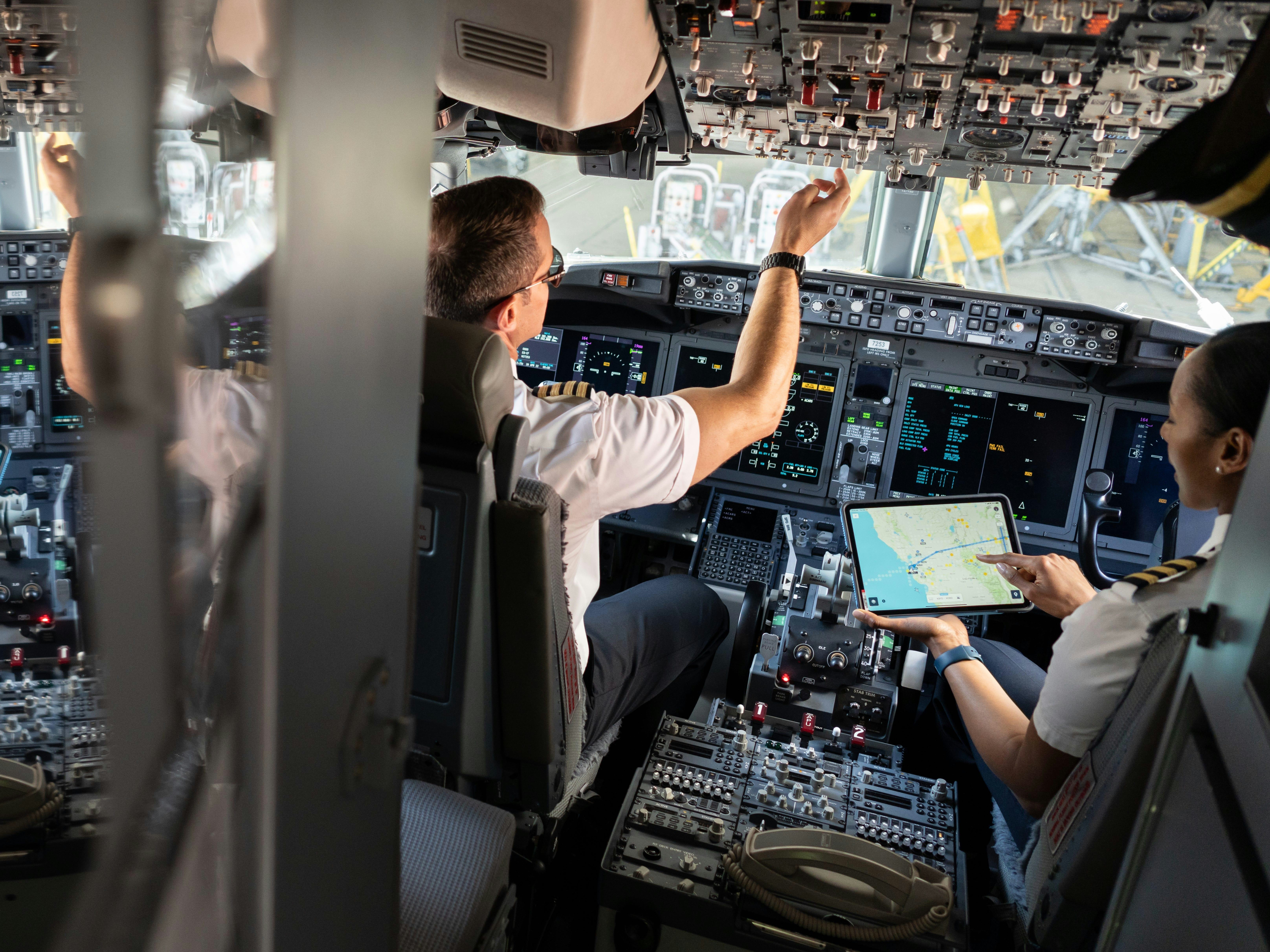
Middle East Advances AI Integration in Airports, Airlines, and Hotels
The Middle East is rapidly establishing itself as a global leader in the integration of artificial intelligence across the tourism, aviation, and hospitality sectors. Regional airlines, airports, and hotel groups are moving beyond experimental AI initiatives to embed predictive intelligence, autonomous systems, and agentic AI into their daily operations. This strategic shift is driving significant investment in digital infrastructure and positioning the region at the forefront of next-generation travel innovation.
From Pilot Projects to Enterprise-Wide AI Adoption
Artificial intelligence in the Middle East’s travel industry has evolved from isolated pilot programs into a fundamental operational capability. Rather than relying on limited automation, organizations are now deploying AI across entire enterprises. Predictive engines and advanced AI agents are being integrated into airline networks, airport systems, and hotel management, enabling faster decision-making and more efficient service delivery.
This transition represents a shift from reactive problem-solving to proactive, intent-driven management. AI systems are increasingly capable of identifying potential disruptions before they affect travelers, thereby enhancing operational resilience and improving customer satisfaction throughout the travel experience.
Transforming Airline Operations with AI
Middle Eastern airlines are harnessing AI to navigate the complexities of modern aviation operations. Large Language Models and intelligent agents support real-time decision-making related to aircraft assignments, crew scheduling, and fleet rotations, particularly during unforeseen disruptions. These AI systems rapidly analyze multiple scenarios to recommend the most efficient solutions, reducing dependence on manual planning processes.
As airlines contend with airspace restrictions, variable weather conditions, and fluctuating passenger demand, AI’s capacity to optimize operations has become indispensable. Nonetheless, the region faces a "Reinvention Gap"—the challenge of advancing from basic automation to true co-intelligence, where human expertise and AI collaborate seamlessly to foster innovation.
Smarter Airports Through AI Integration
Airports across the Gulf Cooperation Council are accelerating the adoption of AI-driven systems to enhance operational performance. Scalable AI platforms now monitor aircraft movements, gate allocations, and passenger flows in real time. Industry data indicates that these systems have reduced ground delays by 6% and increased gate utilization by 25%, thereby maximizing infrastructure efficiency and smoothing passenger journeys during peak travel periods.
To fully capitalize on AI’s potential, airports must unify disparate data sources, integrate AI across organizational silos, and orchestrate effective collaboration between human operators and machines. Competitors in the region are responding by emphasizing data unification and human-centric approaches, transforming technological challenges into competitive advantages.
AI in Air Traffic and Cargo Management
Beyond airports and airlines, AI is reshaping the broader aviation ecosystem. At the Global AI Aviation Summit 2026, innovations in AI-powered air traffic management and automated logistics corridors were highlighted, demonstrating how predictive intelligence can anticipate congestion before bottlenecks arise. These advancements are optimizing aircraft movements, improving cargo handling efficiency, and reducing delays across the supply chain.
The Human Factor and Market Impact
As the Middle East advances its AI integration, the emphasis on human talent and a people-first mindset remains paramount. Achieving a sustainable AI advantage requires not only cutting-edge technology but also skilled professionals capable of orchestrating the interplay between AI and human intelligence. Market responses underscore the importance of credible editorial coverage and third-party validation in establishing AI credibility. Organizations that prioritize both data integrity and human expertise are best positioned to lead in the evolving travel landscape.
Through these strategic initiatives, the Middle East is not only transforming its tourism and aviation sectors but also setting new benchmarks for global travel innovation.

Hong Kong's Five-Year Plan Includes Andrew Fan's Aircraft Parts Processing Hub Proposal

ACIA Aero Leasing Delivers ATR72-600 to Air Nostrum

RTX Appoints Jill Albertelli as Head of Pratt & Whitney

TAT Technologies Joins Beyond Aero Hydrogen Aircraft Program

AURAK Study Highlights Barriers to Air Taxi Adoption in Emerging Economies

Xiamen Air Selects Altitude for 787 Maintenance at Heathrow

Etihad and Swissport Extend Global Partnership
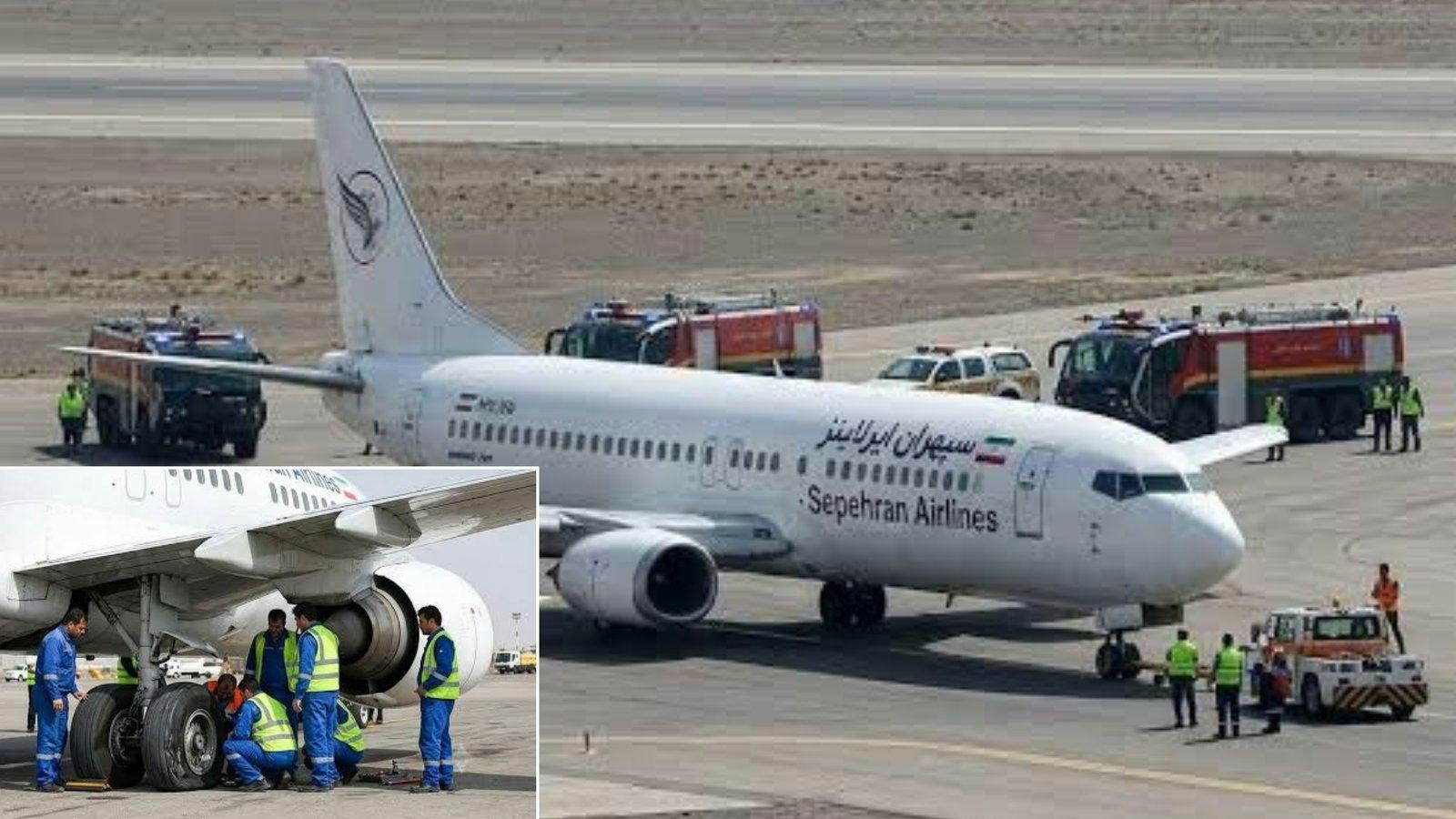
Sepehran Airlines B737 Returns to Mashhad After Tyre and Engine Issues

Etihad Deploys Widebody Fleet to Meet Strong Demand

Korean Air Finalizes $36.2 Billion Deal with Boeing
