
حوّل رؤى الذكاء الاصطناعي إلى أفعال منسّقة

الرائج الآن
Categories
MTU Aero Engines Shares Rise on Increased Engine Orders Amid Aerospace Recovery
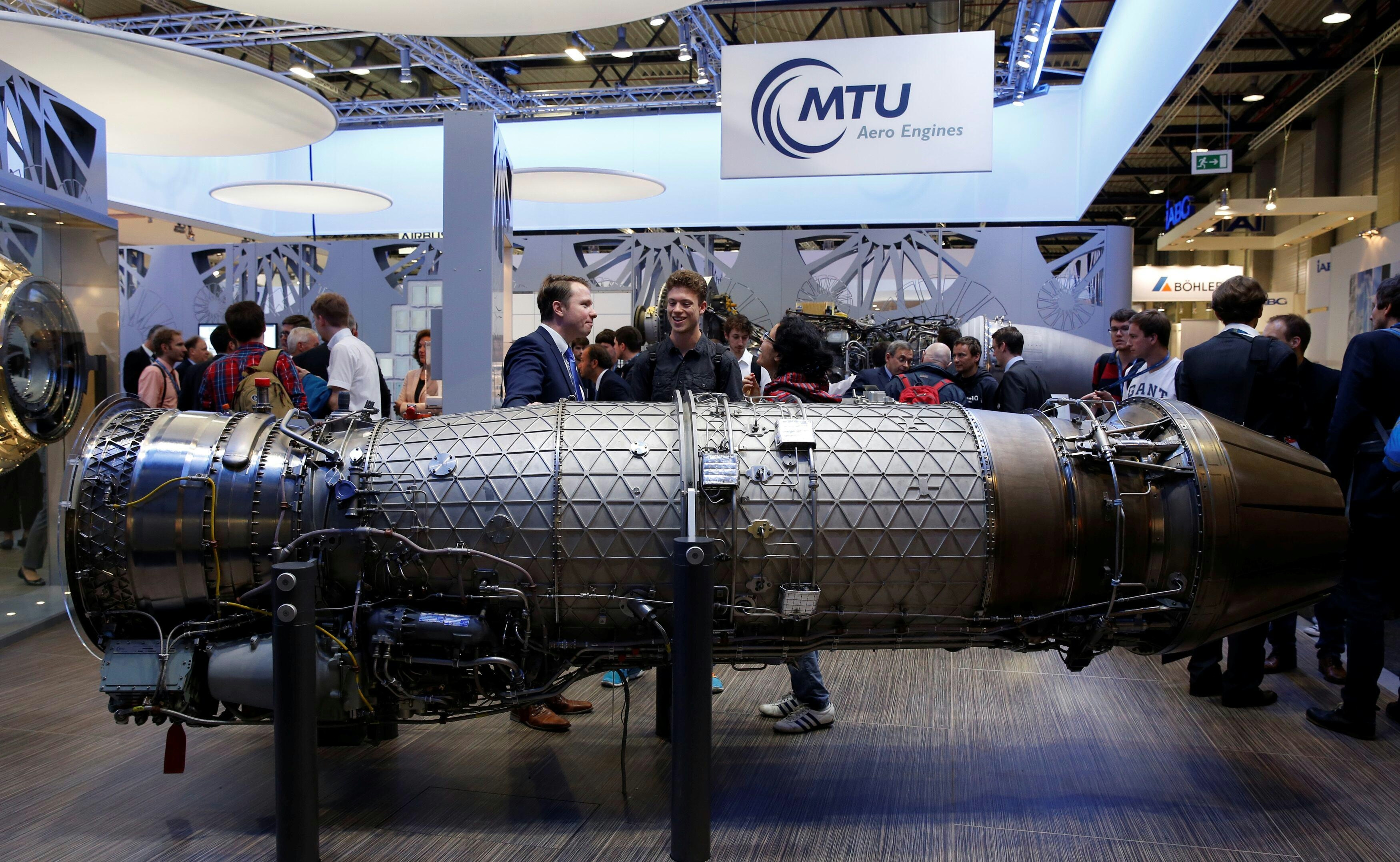
MTU Aero Engines Shares Rise on Increased Engine Orders Amid Aerospace Recovery
MTU Aero Engines shares advanced on the Xetra exchange following the company’s announcement of a substantial increase in new engine orders. This surge has reinforced its order backlog and highlighted its critical role in the ongoing recovery of the aerospace sector. The German engine specialist, listed under ISIN: DE000A0D9PT0, has garnered significant attention from investors in the DACH region seeking exposure to both commercial aviation and defense markets.
Robust Order Intake and Market Drivers
In its latest update, MTU Aero Engines revealed the securing of significant contracts spanning both military and commercial engine segments, extending its order backlog well into the next decade. The company finalized deals worth hundreds of millions of euros for geared turbofan (GTF) modules and military engine overhauls. The uptick in commercial aviation activity, driven by increased fleet utilization, has directly benefited MTU’s maintenance, repair, and overhaul (MRO) operations, which remain a high-margin component of its business.
A notable contributor to MTU’s recent performance is the ongoing servicing demand for Pratt & Whitney’s GTF engines. As a major partner in the GTF program, MTU reported that maintenance of these engines accounted for approximately 40% of its commercial maintenance revenue last year, with expectations for this figure to rise to between 40 and 45 percent in the current year. Additionally, MTU is experiencing growth in servicing the GE90 engine, which powers Boeing 777-300ER and 777F aircraft, and anticipates further increases in deliveries of GTF and GEnx engines as aircraft production rates accelerate.
Defense Stability and Sector Tailwinds
MTU’s defense contracts, particularly those related to the Eurofighter and A400M programs, provide a stabilizing influence on its order book. In response to geopolitical tensions, European governments—including Germany—have increased defense spending, bolstering demand for MTU’s EJ200 engines used in the Eurofighter. This combination of commercial and defense business reduces the cyclicality typically seen in pure commercial aerospace peers.
The broader aerospace recovery is also contributing to MTU’s positive momentum. Global air travel demand is accelerating in the post-pandemic environment, with the International Air Transport Association (IATA) projecting 4.7 billion passengers by 2026. Engine manufacturers like MTU stand to benefit disproportionately as higher aircraft utilization drives increased maintenance and shop visits. MTU shares recently traded around €280 on Xetra, reflecting investor confidence in the company’s robust backlog and market positioning.
Execution Risks and Outlook
Despite these encouraging developments, MTU faces several execution risks. The company has yet to finalize the number of engines ordered by Airbus, which has negatively affected its guidance and the anticipated ramp-up for the current year. Component shortages, particularly in titanium and composite materials, have previously delayed production increases, although MTU reports progress in securing these supplies. Margin pressures stemming from inflation and rising labor costs in Germany persist, but ongoing investments in automation are intended to mitigate these challenges. While original equipment manufacturer (OEM) contracts with fixed pricing limit upside potential, they provide volume stability.
Positioned at the intersection of commercial aviation recovery and increased defense spending, MTU Aero Engines offers investors focused exposure to high-margin engine production and maintenance. As the company continues to navigate supply chain and production challenges, its diversified backlog and strong sector positioning remain key drivers of market interest.
BBN Airlines Becomes IATA Member

FAA Orders Breeze Airways and Delta to Inspect Airbus A220 Fuel Hoses

Philippine Aviation Navigates Expansion and Costs Amid Fuel Price Volatility
On April 26, 1971, an SR-71 Blackbird Flew Over 15,000 Miles in 10.5 Hours, Limited by Liquid Nitrogen Supply
Boeing 747 Airframe Valued Less Than One Landing Gear Component

The Rear-Fan Engine Behind the Crash of the World's Fastest Airliner
Morphing Aircraft Skin Improves Safety and Fuel Efficiency

BRICS Nations Commit to Enhanced Cooperation on Sustainable Transport and Green Aviation
CFM Turbine Upgrade Doubles LEAP Engine Service Life in Harsh Conditions
CFM Upgrade Doubles LEAP Engine Lifespan in Harsh Climates
