
حوّل رؤى الذكاء الاصطناعي إلى أفعال منسّقة

الرائج الآن
Categories
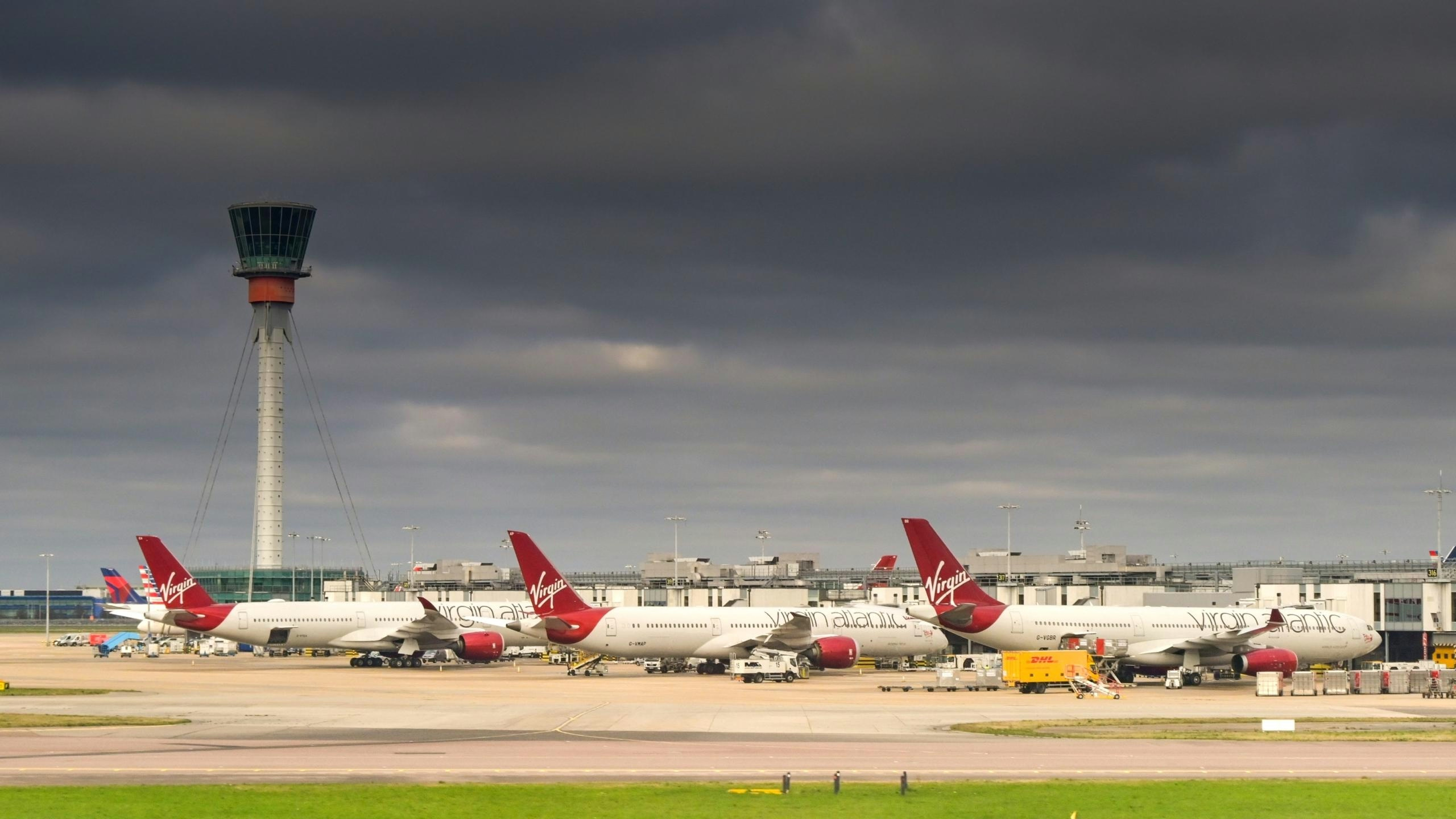
New AI System Streamlines Airport Stand Allocation in UK and Asia
New AI System Streamlines Airport Stand Allocation in UK and Asia
Airports in the United Kingdom and Asia are undergoing a significant transformation with the introduction of advanced artificial intelligence systems aimed at optimizing aircraft stand and gate allocation. Major international hubs such as London Heathrow, Singapore Changi, and Indira Gandhi International Airport in Delhi are experiencing unprecedented passenger volumes, intensifying the need to maximize the use of limited airport infrastructure efficiently.
Enhancing Operational Efficiency with StandManager
The latest innovation, known as StandManager, is revolutionizing airport operations by replacing traditional manual scheduling with AI-driven, real-time decision-making. Previously, stand and gate assignments were based on fixed schedules and simple rules, which limited airports’ ability to respond swiftly to flight delays or early arrivals. StandManager overcomes these limitations by continuously analyzing live operational data, including flight progress, ground handling status, and gate occupancy, to dynamically adjust stand and gate usage throughout the day.
For passengers, this advancement translates into smoother connections, fewer last-minute gate changes, and reduced terminal congestion. A notable feature of the system is its dynamic buffer calculation, which predicts arrival and departure windows using real-time performance data rather than relying on rigid time blocks. When flights are anticipated to arrive early or late, StandManager automatically recalibrates schedules, minimizing idle time and passenger confusion.
This AI-driven approach is especially advantageous for travelers navigating busy routes between cities such as Paris and Rome or managing complex multi-city itineraries across Europe, Asia, and North America. By enabling more intelligent space management, airports can maintain fluid operations even during peak travel periods.
Broader Implications for the Travel Industry
The deployment of AI systems like StandManager is also reshaping the wider travel industry. Traditional intermediaries—including online travel agencies, global distribution systems, and travel management companies—face increasing disruption as AI agents automate many aspects of travel planning and airport operations. This shift threatens to erode the established value propositions of these intermediaries, prompting investor concerns about potential declines in market valuations for affected firms.
In response, some competitors are adapting by incorporating AI technologies into their services or developing new offerings that extend beyond the capabilities of AI alone. The evolving market landscape appears to favor suppliers such as airlines and hotels, which stand to gain from streamlined operations and enhanced passenger experiences. Meanwhile, intermediaries confront shrinking profit margins and uncertainty regarding their future roles.
The adoption of AI-powered stand allocation systems like StandManager marks a pivotal change in airport management and the broader travel ecosystem. As airports in high-traffic regions harness real-time data to optimize operational decisions, travelers can anticipate more reliable journeys, even as the industry contends with the challenges and opportunities presented by rapid technological advancement.

Etihad Airways Suspends Airbus A380 Flights on Key Route

Aditya Birla Group Seeks Approval for Aircraft Leasing in GIFT City

Qatar Airways Highlights Innovation and Connectivity at Arabian Travel Market 2026

Hong Kong's Five-Year Plan Includes Andrew Fan's Aircraft Parts Processing Hub Proposal

ACIA Aero Leasing Delivers ATR72-600 to Air Nostrum

RTX Appoints Jill Albertelli as Head of Pratt & Whitney

TAT Technologies Joins Beyond Aero Hydrogen Aircraft Program

AURAK Study Highlights Barriers to Air Taxi Adoption in Emerging Economies

Xiamen Air Selects Altitude for 787 Maintenance at Heathrow

Etihad and Swissport Extend Global Partnership
