
حوّل رؤى الذكاء الاصطناعي إلى أفعال منسّقة

الرائج الآن
Categories
Nigerian Airlines Struggle to Sustain Operations Through Leasing
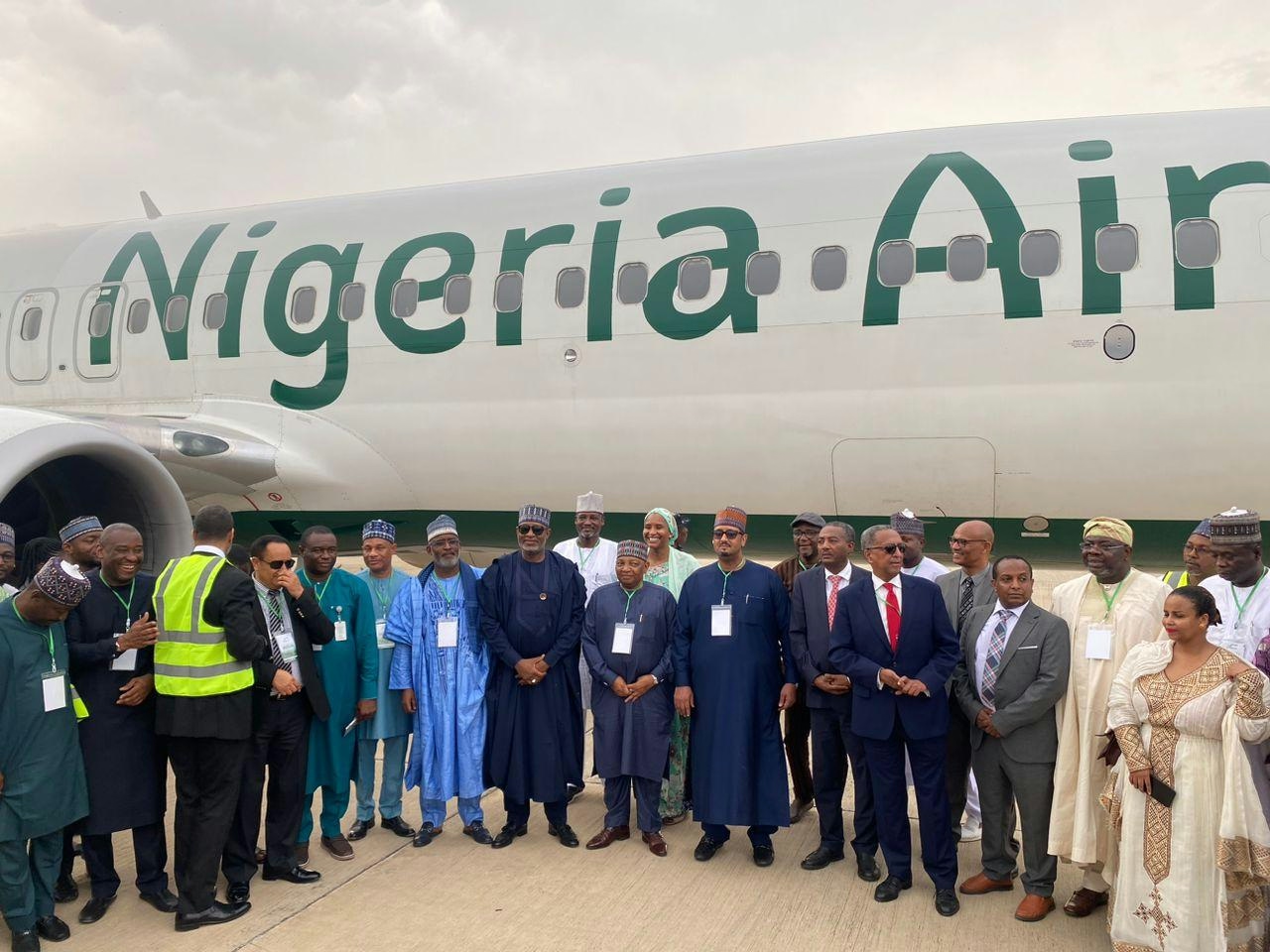
Nigerian Airlines Face Financial Challenges Amid Heavy Reliance on Leasing
Nigerian airlines are confronting significant financial pressures due to their continued dependence on aircraft leasing, a practice industry experts warn is undermining long-term sustainability and restricting access to vital investment. Gbenga Onitilo, Managing Partner at Aeronexus, highlighted in an interview with The Guardian in Lagos that the sector’s reliance on both wet and dry lease arrangements represents a fundamental structural weakness. This issue compounds existing difficulties such as soaring aviation fuel prices, foreign exchange volatility, and rising operational costs.
The Currency Mismatch and Financial Vulnerability
A critical challenge for Nigerian carriers lies in the mismatch between revenue and lease payment currencies. While airlines generate income primarily in naira, their lease obligations are denominated in US dollars, exposing them to severe foreign exchange risks. Onitilo described this as a "quiet financial crisis" affecting the balance sheets of domestic airlines, one that is often overlooked amid concerns over ticket pricing, fuel costs, and currency fluctuations. He emphasized that beneath these visible challenges lies a persistent drain on cash flow caused by the sector’s "addiction to aircraft leasing."
To illustrate the scale of the problem, Onitilo estimated that an airline operating four narrow-body aircraft under operating leases could face monthly payments ranging from $400,000 to $700,000, all payable in foreign currency. As the naira continues to depreciate, airlines bear the full brunt of these costs, while passenger fares remain fixed in local currency, further squeezing profit margins.
The financial strain is intensified by the high interest rates associated with foreign-sourced aircraft leases, which can reach as much as 30 percent. In response, the newly established Nigeria Aircraft Leasing Company has introduced more favorable leasing rates, a development welcomed by the industry. This initiative is expected to reduce operational expenses and enhance financial sustainability for Nigerian carriers. However, it may also increase competition for leasing services, as other African airlines seek to capitalize on these improved terms.
Ownership as a Path to Financial Stability
Onitilo stressed that the heavy lease liabilities weaken airlines’ balance sheets, limiting their ability to secure financing from banks and investors. He noted that financial institutions prefer to support airlines that own tangible assets, which can serve as collateral. Drawing comparisons with international carriers such as Emirates, Turkish Airlines, and Ethiopian Airlines, he pointed out that these airlines have strengthened their financial positions through aircraft ownership. Ownership, he argued, allows airlines to leverage their fleets to obtain development financing, negotiate more favorable maintenance contracts, and enhance investor confidence.
“Owned aircraft, even when partially financed through debt, appear on the balance sheet as capital assets. They are depreciable, collateralized, and create borrowing capacity,” Onitilo explained. He cited Ethiopian Airlines’ ownership model as a key factor in its ability to attract development finance and build institutional credibility—advantages that are difficult to achieve with a portfolio heavily reliant on leasing.
While acknowledging that outright aircraft acquisition demands substantial capital investment, Onitilo maintained that ownership offers superior long-term benefits compared to leasing. The urgency for Nigerian airlines to adopt this strategy is heightened by global pressures, including the recent fuel price shock triggered by the conflict in Iran. This development has led to a significant downward revision of global airlines’ profit forecasts for 2026, potentially exacerbating the fragile financial position of Nigerian carriers and underscoring the need for a strategic shift in their business models.

Etihad and Swissport Extend Global Partnership

Sepehran Airlines B737 Returns to Mashhad After Tyre and Engine Issues

Etihad Deploys Widebody Fleet to Meet Strong Demand

Korean Air Finalizes $36.2 Billion Deal with Boeing
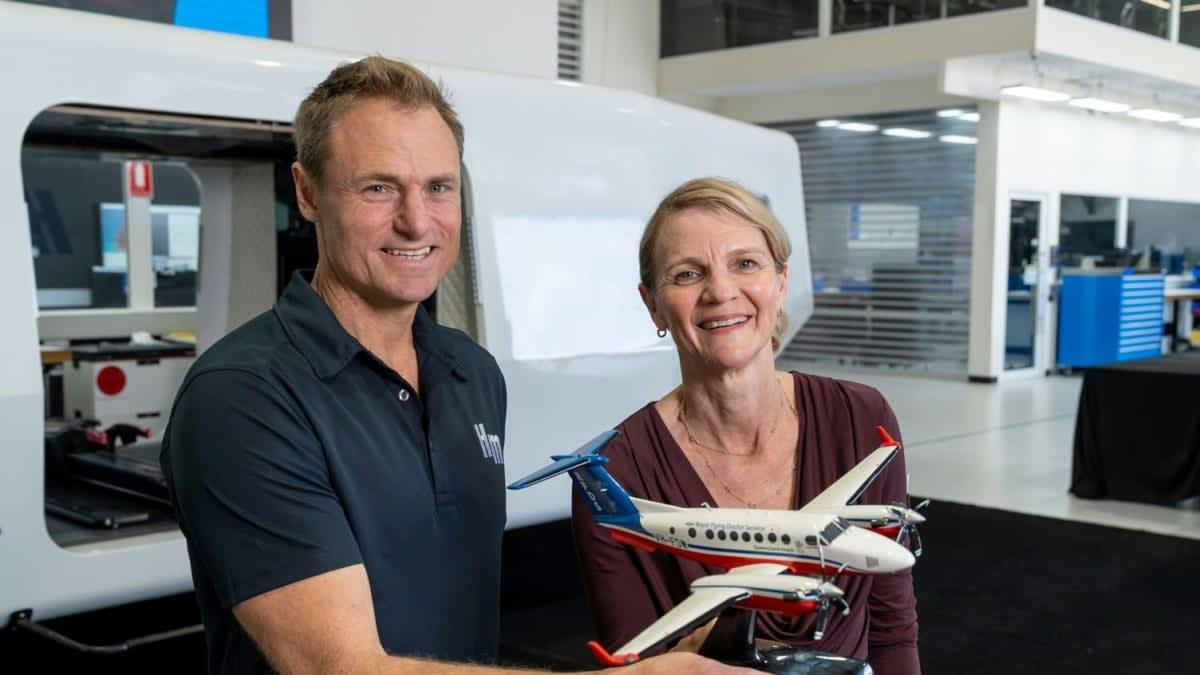
Australia’s RFDS Queensland Section Orders Six King Air 260Cs

Korean Air Finalizes Order for 103 Boeing Jets and Engines
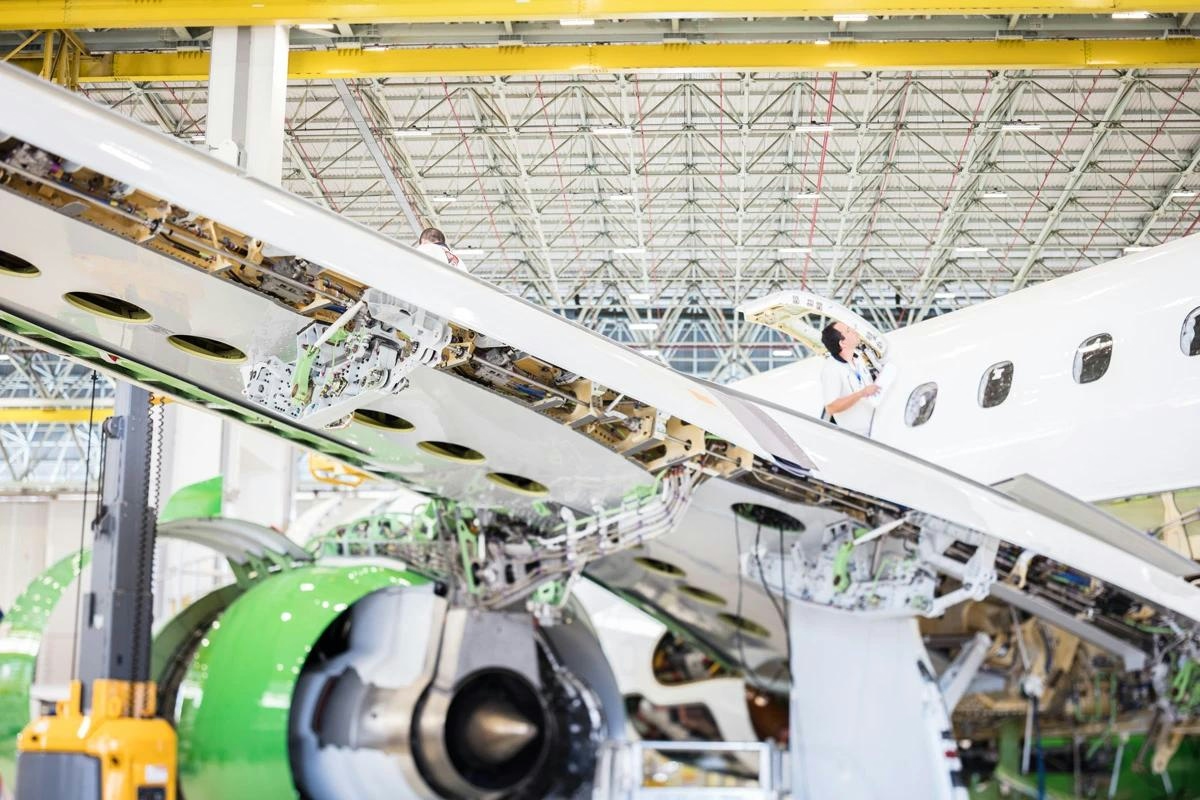
Embraer E195-E2 Features Distinctive Engine Placement Among Regional Jets
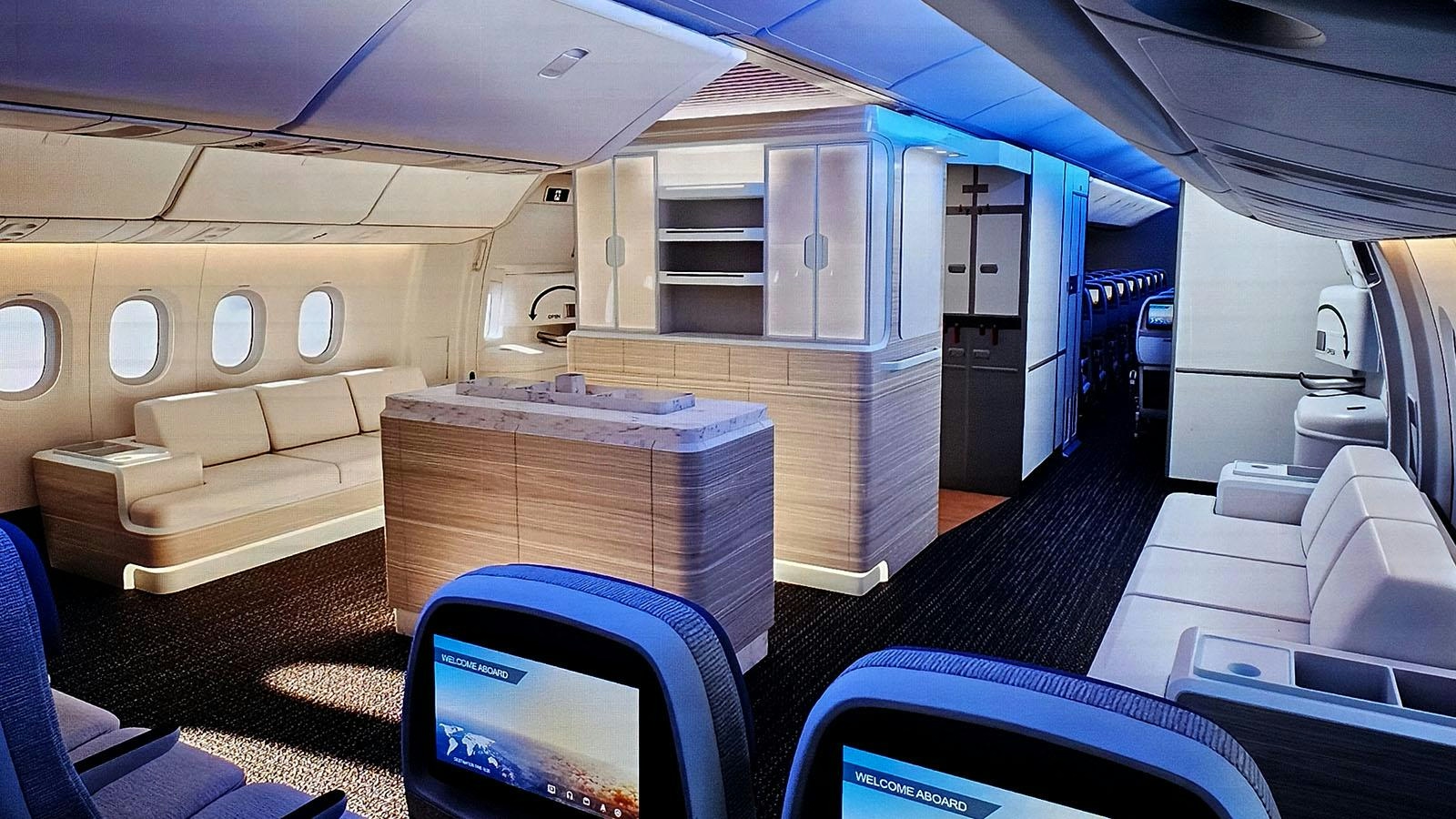
What Passengers Can Expect on Boeing’s New 777X Jet
How Ethiopian Airlines Became Africa’s Leading Carrier Amid Gulf Competition

Joby Aviation Extends Autonomous Flight Capabilities with Cross-Country Tour
