
حوّل رؤى الذكاء الاصطناعي إلى أفعال منسّقة

الرائج الآن
Categories
Nigerian customs crack down on foreign-registered bizjets
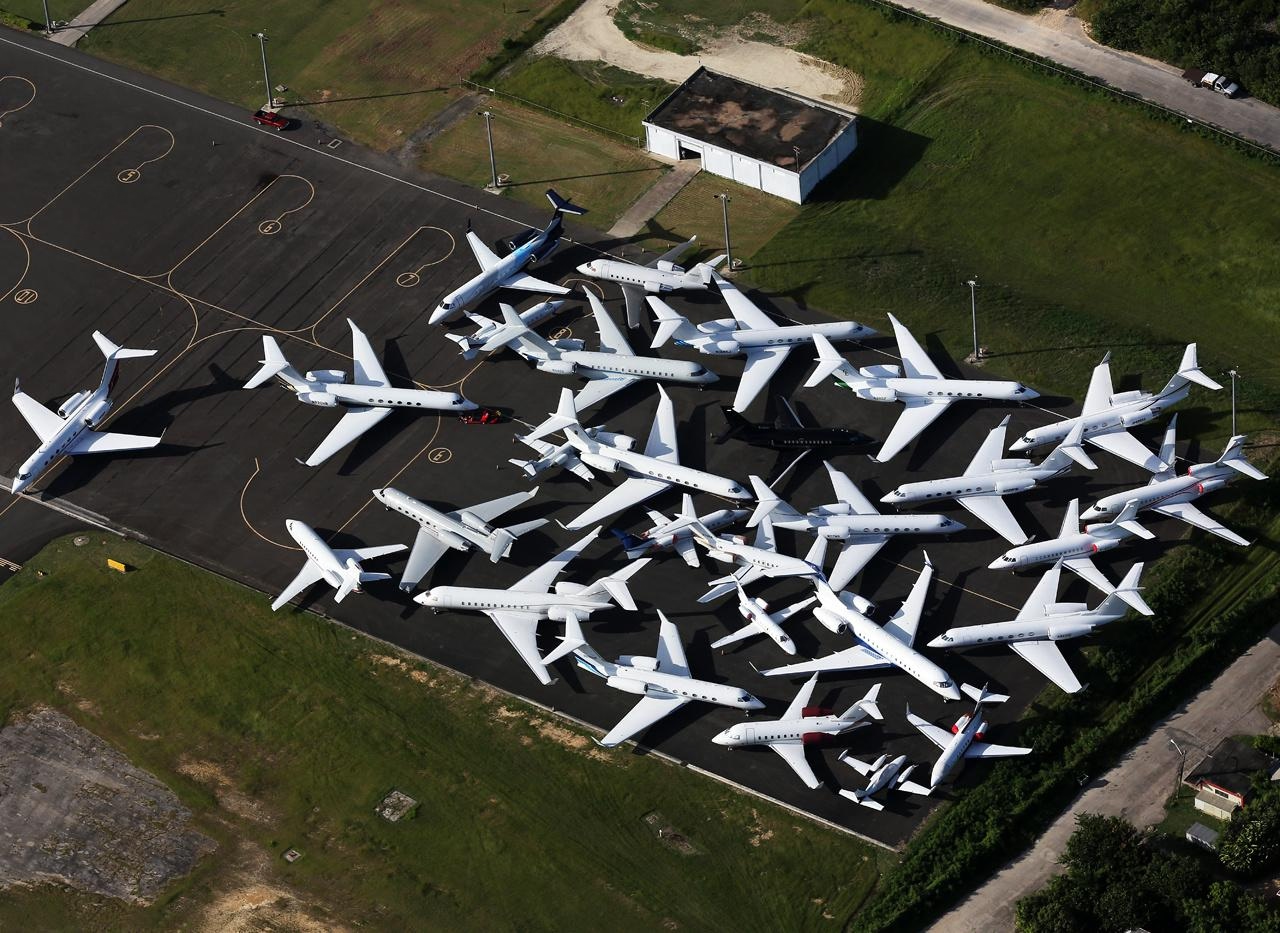
Nigerian Customs Enforce Grounding of Foreign-Registered Business Jets
In early June 2025, the Nigeria Customs Service temporarily grounded nearly 60 foreign-registered business jets at Lagos and Abuja airports, citing unpaid import duties as the primary cause. The aircraft, operated privately under permits for non-commercial flights (PNCFs), were released on June 4 after owners reportedly agreed to settle outstanding dues within a month. Despite the scale of the operation, customs officials have not disclosed specific details about the affected jets and have remained unresponsive to requests for comment.
Background and Regulatory Context
This enforcement action forms part of a broader initiative launched by Nigerian authorities in late 2024 aimed at compelling aircraft owners to re-register their jets locally. Customs officials contend that the continued use of foreign registrations enables owners to circumvent import taxes, resulting in significant revenue losses for the government. Although warnings about potential groundings were issued as early as October 2024, no enforcement measures were implemented until this recent crackdown.
Data from ch-aviation indicates that there are currently 73 business jets based in Abuja and Lagos. Of these, only 25 are registered in Nigeria, while the remainder are registered in various foreign jurisdictions, including the United States (25), San Marino (nine), the Cayman Islands and the Isle of Man (five each), and Austria, Canada, Mauritius, and Portugal (one each). The fleet encompasses a range of aircraft from very light jets to ultra-long-range models, with the Challenger 600-series being the most common, accounting for 16 units.
Implications for Nigeria’s Business Aviation Sector
The crackdown is poised to have significant repercussions for Nigeria’s business aviation industry. Operators may face increased financial burdens due to tariffs and regulatory fines, which could incentivize a shift toward domestically registered aircraft or drive up prices for jets compliant with Nigerian regulations. This regulatory shift may also alter market dynamics, as competitors could lobby for policy revisions or adjust their business strategies to align with the evolving environment.
Furthermore, the heightened enforcement may prompt some operators to consider alternative routes or relocate their operations to countries with more favorable regulatory frameworks, potentially affecting the broader business aviation market in the region. As the deadline for settling import duties approaches, industry stakeholders remain attentive to how these regulatory changes will influence the future landscape of business aviation in Nigeria.

Etihad Airways Suspends Airbus A380 Flights on Key Route

Aditya Birla Group Seeks Approval for Aircraft Leasing in GIFT City

Qatar Airways Highlights Innovation and Connectivity at Arabian Travel Market 2026

Hong Kong's Five-Year Plan Includes Andrew Fan's Aircraft Parts Processing Hub Proposal

ACIA Aero Leasing Delivers ATR72-600 to Air Nostrum

RTX Appoints Jill Albertelli as Head of Pratt & Whitney

TAT Technologies Joins Beyond Aero Hydrogen Aircraft Program

AURAK Study Highlights Barriers to Air Taxi Adoption in Emerging Economies

Xiamen Air Selects Altitude for 787 Maintenance at Heathrow

Etihad and Swissport Extend Global Partnership
